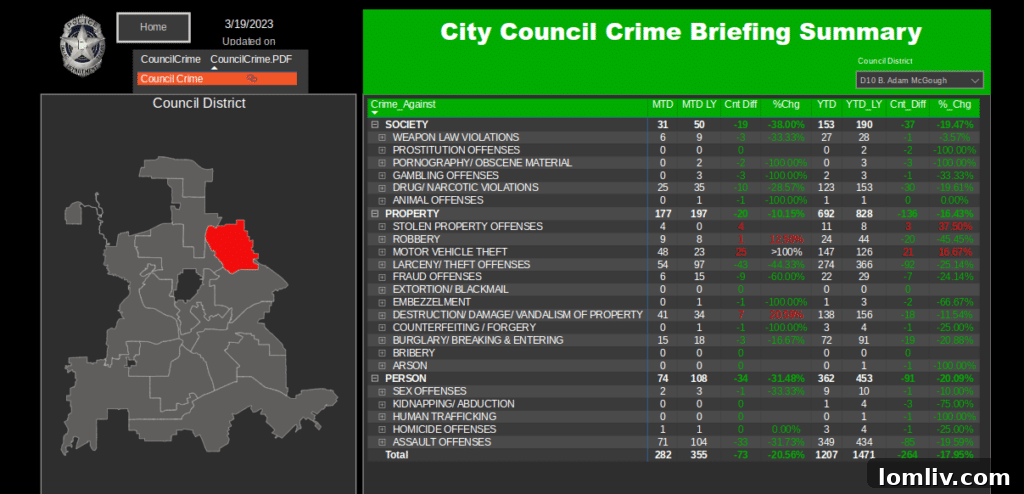
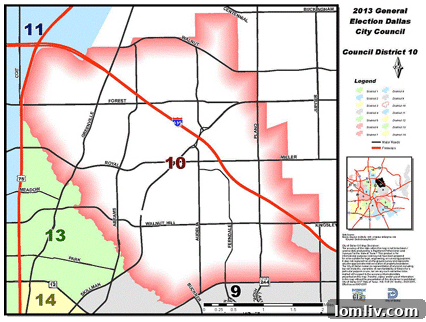
As the new year unfolded in Dallas City Council District 10, particularly within the Lake Highlands community, residents quickly became aware of a concerning trend in public safety. Within the initial three months of the year, the area recorded three homicides, a substantial 349 assaults, and 274 reported thefts. These statistics, while serious, prompt a deeper examination into the overall crime landscape of District 10.
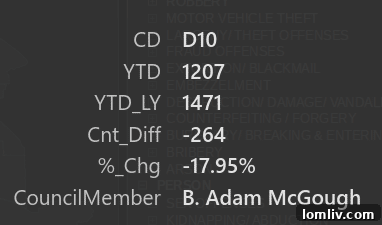
Intriguingly, despite these recent incidents, the broader picture for District 10 reveals a positive shift in crime rates compared to the previous year. According to the comprehensive crime statistics dashboard provided by the City of Dallas, property crimes have seen a significant 16 percent decrease. Crimes against persons have also dropped notably by 20 percent. Collectively, District 10 has reported an encouraging 18 percent overall reduction in crime year-to-date. This downward trend offers a glimmer of hope and speaks to ongoing efforts in public safety.
However, beneath these encouraging statistics, a complex and often contentious debate is brewing among residents and the candidates vying for the District 10 Dallas City Council seat. The primary concern revolves around proposed developments that would introduce a significant influx of affordable housing into the district. For many, the apprehension is palpable: could these projects, despite their stated social benefits, inadvertently lead to a spike in the hard-won crime reduction seen in D10?
With current District 10 Councilman Adam McGough not seeking re-election in May due to term limits, a competitive race is underway. Four prominent candidates are actively campaigning for the District 10 seat, each bringing unique perspectives to the forefront of this crucial discussion: Sirrano Keith Baldeo, Brian Hasenbauer, Kathy Stewart, and Chris Carter. Their campaigns are heavily influenced by the community’s concerns regarding the interplay of housing, development, and public safety.
Brian Hasenbauer, a former community development commissioner and one of the candidates, acknowledges the underlying fears within the community. He notes that residents often express anxiety about concentrations of poverty, a sentiment vividly articulated at a recent neighborhood meeting specifically addressing the proposed Cypress Creek at Forest Lane development. This meeting underscored the deep-seated concerns many hold regarding the potential socio-economic shifts these projects could bring.
Hasenbauer, however, also seeks to dispel common myths surrounding affordable housing. He explained to daltxrealestate.com that “Affordable housing has a lot of misconceptions, and one of them is that affordable housing development today is similar to past projects where 100 percent of the units are for those on housing vouchers or need public assistance.” He clarifies that this perception is outdated and inaccurate. “This is no longer true, and most affordable housing units are for those with jobs such as teachers, police officers, bus drivers, and hard-working citizens who are just trying to make ends meet.” His perspective highlights a crucial distinction, aiming to reframe the conversation around who precisely benefits from and resides in modern affordable housing projects.
In line with his nuanced view, Hasenbauer advocates for multi-family housing projects where “affordable” units constitute 40 percent or less of the total. He believes this approach is essential “to ensure neighborhood support and to provide for a more balanced income distribution,” thereby integrating diverse income levels without overwhelming existing community structures or resources.
Navigating Housing and Crime Concerns in Lake Highlands
District 10 encompasses several vibrant and highly desirable communities, including the esteemed Town Creek, where residents proudly report an impressive record of over two years without a single violent crime. Similarly, the extensive 696-home Moss Farm development actively champions safety as a paramount concern for its community members. Furthermore, the burgeoning Goose at White Rock Valley development is set to introduce 36 energy-efficient homes, each valued in the substantial $700,000s, further illustrating the area’s affluence and family-friendly appeal.
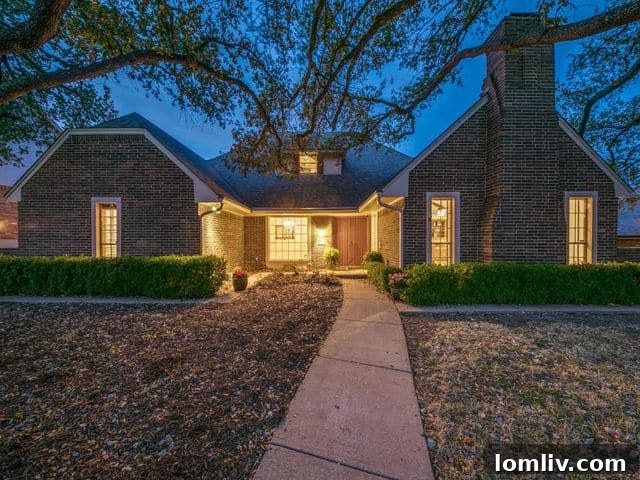
Beyond residential desirability, the community boasts strong civic pride, recently celebrating a high school basketball team that magnificently secured a state title. Education remains a cornerstone, with local youth primarily attending Richardson ISD schools, an institution that earned a commendable B rating from the Texas Education Agency. These elements collectively paint a picture of District 10 as a community characterized by stability, strong public services, and a high quality of life, generally not perceived as a hotbed for criminal activity.
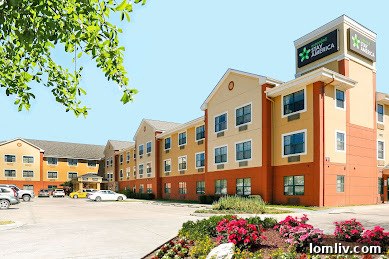
However, even within this generally tranquil backdrop, specific areas have historically presented challenges. One property, notoriously dubbed the “Hotel from Hell” by frustrated neighbors, stands out when examining past high-profile illegal activities in Northeast Dallas. Located on the north side of Vantage Point Drive near Greenville Avenue, this site, which previously operated as an Extended Stay America, became a focal point for criminal concerns.
At a critical community meeting in October, Dallas Police Lt. Brian Payne provided sobering details to residents. He confirmed that numerous arrests had been made at the hotel for serious offenses, including murder, drug trafficking, sex crimes, and stolen vehicles. The severity of the situation prompted involvement from federal agencies, with both the FBI and the Drug Enforcement Agency participating in investigations that ultimately led to at least two former hotel employees being sent to federal prison. This history highlights the potential for specific locations, even within otherwise safe communities, to attract and concentrate criminal elements.
Following intensive police intervention, the situation at the former “Hotel from Hell” has dramatically improved. Authorities report that the site is now mostly vacant, and, consequently, crime has been significantly reduced or entirely eliminated in the immediate vicinity. This demonstrates the impactful role of targeted law enforcement efforts. Looking forward, a proposal to repurpose this property into voucher-based affordable housing, complete with comprehensive wraparound services, is scheduled for review by the city council in May. This controversial proposal reignites the debate about the relationship between housing types and crime rates, particularly in an area eager to maintain its hard-won safety.
Examining Crime Trends in Low-Income Housing Developments
The discussion surrounding affordable housing and its potential impact on crime often carries inherent biases and misconceptions. However, expert opinions from organizations like the Dallas Eviction Advocacy Center and representatives from the DHA (formerly the Dallas Housing Authority) offer an alternative perspective. Attorney Mark Melton of the Eviction Advocacy Center and DHA officials have frequently emphasized to daltxrealestate.com that individuals holding housing vouchers typically prove to be excellent tenants. This is largely because they are often employed and are highly motivated to adhere to their lease agreements and program guidelines to retain their crucial housing assistance. This perspective challenges the generalization that affordable housing automatically correlates with increased crime.
Yet, this positive outlook is not universally shared, especially among some District 10 City Council candidates. Chris Carter, a formidable contender for the May election, has openly expressed strong opposition to the proposed rezoning of the Extended Stay America site. Carter is actively campaigning not only to defer but to entirely stop the rezoning that would pave the way for affordable housing at this location. He controversially asserts that the project is intended for “homeless housing” and argues that proponents of the rezoning have failed to adequately engage with surrounding business owners and residents, thereby neglecting critical community input.
Dallas Police Lt. Payne, during the same October community meeting, provided a pragmatic, albeit cautious, assessment of crime in multi-family developments. He acknowledged that while crime reports can indeed trend higher in such environments, the type of crime often differs depending on the nature of the housing. “We have issues no matter what occurs here,” Payne stated, referring to the hotel property. “If it stays extended-stay, we’ll have one type of crime. If it becomes an apartment complex, we’ll have a different type of crime. When you have a whole bunch of people, unfortunately, some of those people are going to commit crimes.” His comments suggest that density, rather than income level alone, can be a contributing factor, and different living arrangements present different challenges for law enforcement.
Another District 10 City Council candidate, Sirrano Keith Baldeo, while having his own criticisms of Chris Carter’s plan to increase police officer salaries, seemingly aligns with the sentiment that an increase in low-income housing developments could negatively impact District 10’s crime rate. Baldeo passionately voiced his concerns on a Facebook post and in comments on a daltxrealestate.com report concerning the proposed Cypress Creek at Forest Lane project. He asserted, “They will never put this project in Lake Highlands because it [would outrage] that community because they know better.” He further alleged that “This project is dumped in the minority community because they do not have the power or resources to fight it.” Baldeo expressed deep worries about the project’s potential strain on local infrastructure and social fabric, arguing, “[There] is no economic growth or businesses to support this project. It will overcrowd the area, [strain] the resources in District 10, and put an undue burden on an already-stressed area. Crime is at its highest in that area, so dumping more poverty housing serves what purpose? We need to control the overflow we already have in District 10, not [dump] more poverty housing, disguised as affordable housing.” His strong rhetoric underscores the intensity of the debate and the community’s desire to protect its existing character.
Kathy Stewart, another prominent candidate for District 10, also contributed her insights to the evolving conversation about the area’s crime rates and the potential repercussions of the Cypress Creek at Forest Lane development. Stewart commended the recent reduction in crime, stating, “The reduction in crime for District 10 is welcome news and evidence of the hard work and strategy of our command staff and officers at Northeast.” However, she pointedly raised specific concerns about the Forest Lane area itself. “I do think that Forest Lane is still struggling with high crime and that brings us to the Cypress Creek project and the question of whether this is a good location for an affordable housing project,” she articulated. Stewart highlighted a critical detail about the proposed unit breakdown: “The proposed breakdown of units is the following: 55 percent of the units will be made available to residents with 30 to 80 percent of the Area Median Income, not typically the teachers, police officers, and bus drivers many people previously described as the future residents of Cypress Creek.” This distinction suggests that the target demographic for these units may not align with the widely communicated “working-class professional” narrative, potentially intensifying community apprehension. She concluded by affirming the community’s right to robust engagement: “Our community continues to ask the hard questions of the developer and that is what we should be doing.”
A Broader Look: Comparing District 10’s Crime Profile to Other Districts
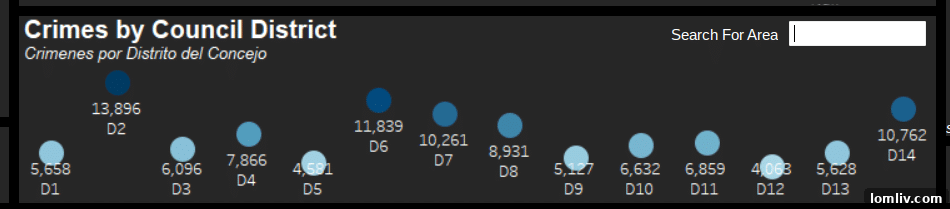
To fully contextualize the crime situation in District 10, it’s essential to compare its statistics with those of other Dallas City Council districts. Last year, District 2, encompassing the vibrant but sometimes volatile Deep Ellum entertainment district, recorded the highest crime rate in the city, with a staggering 13,896 reported crimes. This district tragically made headlines recently when two individuals were killed in a shooting outside the Bitter End bar on March 15, illustrating the severe public safety challenges faced in certain high-traffic areas.
In contrast, District 10 positioned itself midway among the city’s 14 districts, ranking eighth with 6,632 reported crimes in the past year. While certainly not the lowest, this figure is significantly less than District 2 and indicates a more moderate crime profile across the entire district. For further perspective, District 12 recorded the lowest number of reported crimes in 2022, with 4,063 incidents, setting a benchmark for community safety within Dallas.
The city’s overall efforts in crime reduction have garnered high-level recognition. U.S. Sen. John Cornyn publicly applauded the Dallas Police Department’s success in significantly reducing violent crime over the past two years. During a March 1 Senate Judiciary Committee hearing, Senator Cornyn even cited Dallas as a national model for effective urban governance in public safety. “I’m proud of the good work that the chief has done in the Dallas Police Department along with the mayor and the city council there in Dallas to promote smart policing and public safety,” Cornyn stated, underscoring the collective achievement of the city’s leadership and law enforcement.
However, despite these accolades and overall positive trends, the issues of crime and police staffing remain central and highly contentious topics as candidates prepare for the upcoming May 6 election. Local safety concerns, even with city-wide improvements, resonate deeply with voters who are directly impacted by incidents within their neighborhoods.
D10 candidate Brian Hasenbauer, for example, has outlined a comprehensive strategy to bolster public safety. He advocates for aggressive recruitment of new police officers and firefighters, recognizing the critical need for adequate staffing. Furthermore, he proposes the establishment of a new training facility at the University of North Texas Dallas and emphasizes the importance of stabilizing the police and fire pension fund to ensure long-term sustainability and attractiveness of these vital professions. Beyond these institutional reforms, Hasenbauer also stresses community-level interventions. “We also need to focus on proper lighting in residential neighborhoods, enhancing and supporting neighborhood crime reduction programs through [Volunteers in Patrol] programs, and ensuring that our schools are safe with [school resource officers] at every campus,” Hasenbauer detailed. These proposals illustrate a multi-faceted approach, combining strategic resource allocation with proactive community engagement and preventative measures, all aimed at fostering a safer District 10.
Editor’s Note: This is the second installment in our series on neighborhood crime by Dallas City Council district. Have you been the victim of a crime in a Dallas neighborhood or shopping center? We encourage you to share your experience with us at [email protected], as community insights are invaluable to our ongoing coverage.