In a significant legislative move, the Dallas City Council recently passed an amendment to its existing prostitution ordinance, a decision sparking widespread debate across the community. Proponents of the change assert that this revised legislation provides law enforcement officers with crucial new tools to address and apprehend all individuals involved in acts of prostitution. However, critics, including some council members, acknowledge that while the ordinance targets illegal activity, it notably falls short of tackling the deeply entrenched and more pervasive issues of modern-day slavery and human trafficking that often underpin such illicit operations. This complex interplay of law enforcement, public safety, and human rights places Dallas at the forefront of a challenging national conversation.
The council’s decision has ignited a passionate discussion, particularly concerning its potential impact on vulnerable populations. District 7 Councilman Adam Bazaldua cast the sole dissenting vote against the amendment, articulating strong reservations. He argued that the amendment inadvertently fosters a problematic “Not In My Backyard” (NIMBY) mentality. Bazaldua contends that instead of offering vital support services and pathways out for those coerced into prostitution, the ordinance primarily serves to move the problem out of public sight, rather than addressing its root causes. This approach, he suggested, is neither humane nor just, failing to provide meaningful assistance to those most in need.
“This is us catering to NIMBYism and allowing for ‘out of sight, out of mind’ to be the answer,” Councilman Bazaldua stated emphatically. “That is not humane. That is not just. It merely shifts the burden and perpetuates a cycle of victimisation without offering genuine solutions or systemic change.”
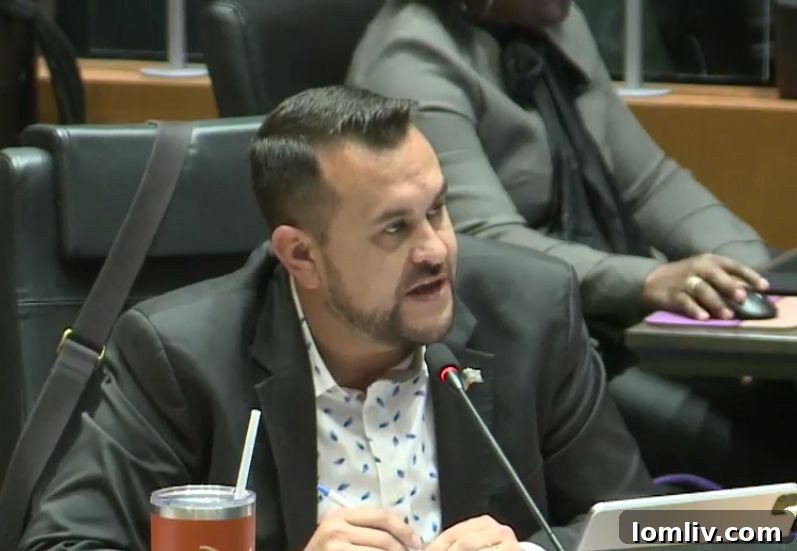
Bazaldua further elaborated on his concerns, highlighting that the amended ordinance risks subjecting women to increased harassment for their involvement in circumstances they often did not choose. He drew parallels between this new measure and existing “quality of life” ordinances, such as those targeting panhandling, suggesting that such laws often prioritize the comfort of complainants over the critical need to address underlying societal issues. “This is a tool similar to other tools we’ve seen, like panhandling, that is more about those who complain about it than helping and getting to the root cause of the issue,” Bazaldua explained, underscoring his belief that the amendment is fundamentally misdirected.
In his impassioned remarks, Bazaldua argued that the council was approving language that would essentially perpetuate the very problem it claimed to solve. “We are targeting victims… This doesn’t help the victims of sex trafficking on our streets,” he asserted. “This may help people who are driving on their way to and from work to not see what they don’t want to see, but that does not help overall the problem that is on our streets. In fact, it probably pushes it into the dark more, making it harder to identify and assist those trapped in cycles of exploitation.” His words underscore a critical concern about the ordinance’s practical impact versus its stated intentions regarding human trafficking in Dallas.
While Councilman Bazaldua’s was the only vote against the amended ordinance during the October 11 council meeting, it was clear that concerns about the pervasive issue of human trafficking extended beyond his singular opposition. Many council members and community stakeholders acknowledged the profound challenge that sex trafficking presents in Dallas, even if they differed on the most effective legislative approach to combat it. This underlying consensus on the severity of human trafficking underscores the complexity of crafting effective public policy in this sensitive area.
Decoding the Amended Dallas Prostitution Ordinance: Enhanced Enforcement or Eroding Empathy?
The core of the controversy lies within the specifics of the amendment approved last week. It introduces more precise definitions and incorporates complex legal language pertaining to the factors that must be meticulously considered when determining whether an individual has “manifested the purpose and intent of inducing, enticing, soliciting, or procuring another to commit an act of prostitution.” This detailed wording aims to provide clearer guidelines for law enforcement, ostensibly reducing ambiguity in arrests related to prostitution and associated activities in Dallas.

Beyond clarifying intent, the amendment also specifies a penalty not to exceed $500 for violations. According to Dallas City Attorney Tammy Palomino, these changes are designed to give the ordinance “more teeth,” empowering the Dallas Police Department with enhanced capabilities to make arrests and more effectively deter prostitution. Palomino defended the new language, asserting its legal soundness and comprehensive scope.
“This language is not vague, it is not arbitrary, and it applies to the buyer, the seller, and the panderer,” Palomino stated, emphasizing the ordinance’s broad reach. “We believe this is a very solid approach, ensuring that all parties involved in the act of prostitution can be held accountable under the law. Our goal is to create a robust legal framework that supports effective law enforcement while remaining fair and transparent.”
The daily realities of prostitution often fuel calls for stronger enforcement. William Martin, a resident of District 6, shared his firsthand experience, stating that he encounters prostitution on his daily commute to work. He voiced support for the ordinance, seeing it as a necessary step for community well-being. “Rewriting the ordinance is a great step forward,” he remarked, reflecting a common sentiment among residents frustrated by visible illicit activity. However, Martin, like Councilman Bazaldua, acknowledged a critical limitation: “Hopefully that’s going to work for us, but it’s not going to solve the human trafficking problem and acknowledge that it is actually human trafficking.” This highlights a persistent disconnect between addressing overt prostitution and tackling its underlying criminal enterprises.
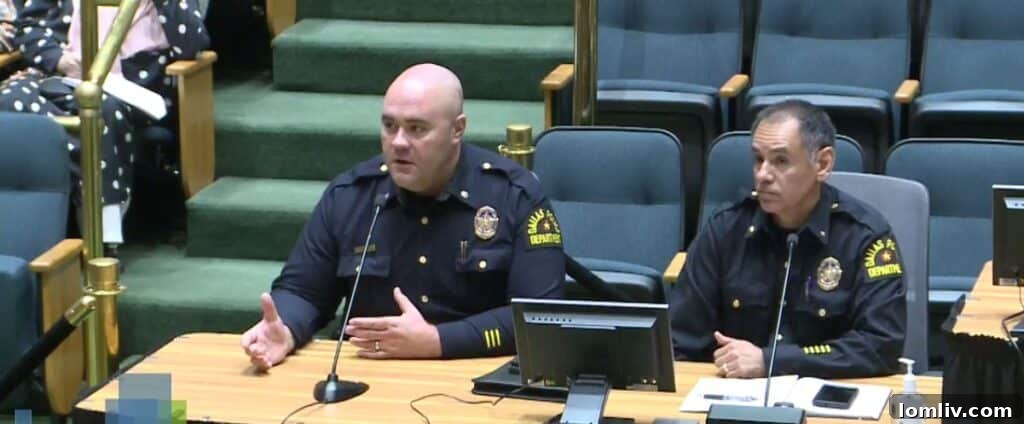
Dallas Police Major Devin Paulk, who commands the Special Investigations Division, offered insight into the police perspective. He noted that the majority of women involved in such acts are often offered social services, although not all choose to accept the assistance. This points to the complex interplay of enforcement and support, and the challenges faced by law enforcement in addressing the multifaceted nature of prostitution and sex trafficking.
Councilman Bazaldua, however, remained skeptical about the practical application of these services and the overall efficacy of the ordinance in combating trafficking. He implied that calls related to prostitution are often not prioritized by patrol units, suggesting that the amended language might serve more as “a probable cause tool to harass those who are victims of sex trafficking versus actually getting to the root of the problem.” This critique raises fundamental questions about whether the new ordinance will truly differentiate between victims of coercion and those who may be perceived as willingly engaging in prostitution, or if it will primarily impact vulnerable individuals who are, in fact, victims.
Major Paulk countered this by affirming the police department’s deep understanding of the human trafficking aspect of prostitution. He stated that officers “work tirelessly to arrest and investigate the individuals perpetrating that crime,” emphasizing their commitment to combating organized exploitation. He also underscored the dual responsibility of the police force. “By the same token,” he explained, “we also have a duty to assist the citizens of Dallas in taking care of the quality of life issues that they’re experiencing in front of their businesses.” This statement encapsulates the difficult balance law enforcement must strike between addressing serious crimes like human trafficking and responding to community concerns about visible street-level prostitution.
Does Dallas’ Amended Prostitution Ordinance Go Far Enough? A Critical Examination
The debate surrounding Dallas’s amended prostitution ordinance extends to whether its provisions are sufficiently robust to bring about meaningful change and truly address the city’s public safety and human trafficking challenges. Deputy Mayor Pro Tem Carolyn King Arnold, a vocal proponent of stronger measures, believes that more assertive legislative wording is essential to improve areas within the community where illicit activity has demonstrably spiraled out of control. Her perspective emphasizes the tangible impact of such activities on residents and businesses, advocating for a firmer stance.
“We need it in order to get quality of life for economic development,” King Arnold stated, linking the ordinance directly to broader urban revitalization goals. “We can’t get decent housing. We can’t get the level of equity that we’re looking for without having some sense of stability and public safety.” Her remarks highlight the intricate connection between public order, community development, and equitable opportunities, suggesting that curbing visible prostitution is a prerequisite for broader societal improvement in Dallas.
Councilwoman Cara Mendelsohn, who chairs the council’s influential Public Safety Committee, expressed her strong support for the amendment, noting that the matter had undergone thorough discussion at the committee level without significant unresolved questions. Mendelsohn acknowledged the compassionate intent of her colleague, Councilman Bazaldua, but offered a stark counterpoint regarding the realities of prostitution. “I think my colleague has the right heart for this,” Mendelsohn conceded. “I think the issue is about wanting to protect women and not criminalize this. The reality is that prostitution is not ‘Pretty Woman’ with Julia Roberts. It’s sexual slavery and it’s abuse. It’s exploitation. It’s human trafficking. The potential for violence is always present. It’s the continued victimization of young women.”
Mendelsohn passionately articulated the belief that the Dallas Police Department requires precisely such a robust tool to intervene and help young women caught in these horrific circumstances. For her, the ordinance represents a necessary enforcement mechanism that, despite appearances, is fundamentally about protection and liberation. “We’re going to provide it for you,” she affirmed, directly addressing the police department’s need for effective instruments to combat exploitation. “I’m very much in support of this, as it empowers law enforcement to address a deeply harmful practice and protect vulnerable individuals.”
Councilwoman Gay Donnell Willis echoed similar sentiments, articulating that while the ordinance might appear punitive and seemingly target a “certain population,” its ultimate purpose is to provide police with a critical “point of entry.” This entry point, she argued, is vital for initiating investigations that can lead to the end of abuse and slavery, rather than merely punishing individuals. Her perspective frames the ordinance as a strategic lever for dismantling larger criminal enterprises, particularly those involved in human trafficking.
Major Paulk reinforced this strategic view, noting that the ordinance is designed to provide an enforcement mechanism that allows police to arrest not only individuals engaged in street-level prostitution but, crucially, also the “johns and pimps” who perpetuate the demand and exploitation. He candidly admitted the department’s ultimate objective, which often involves pursuing more severe charges against traffickers. “We of course would like higher charges, and that is our end goal, especially with the pimps,” Paulk explained. “But sometimes this is that tool to start the investigation, to gather evidence, and to build cases that can eventually lead to those higher-level arrests and convictions. It provides an immediate means to disrupt the cycle of exploitation and begin the process of unravelling complex trafficking networks within Dallas.”