The city of Dallas finds itself at a critical juncture, grappling with the complex and often contentious issue of short-term rental (STR) homes operating within its residential neighborhoods. What was anticipated to be a decisive vote by the Dallas City Council last month, aimed at finally resolving whether these popular rental properties could continue to exist in residential zones, was ultimately postponed. This delay underscores the intricate nature of the debate, highlighting the significant economic, social, and logistical considerations that must be addressed before a definitive policy can be established.
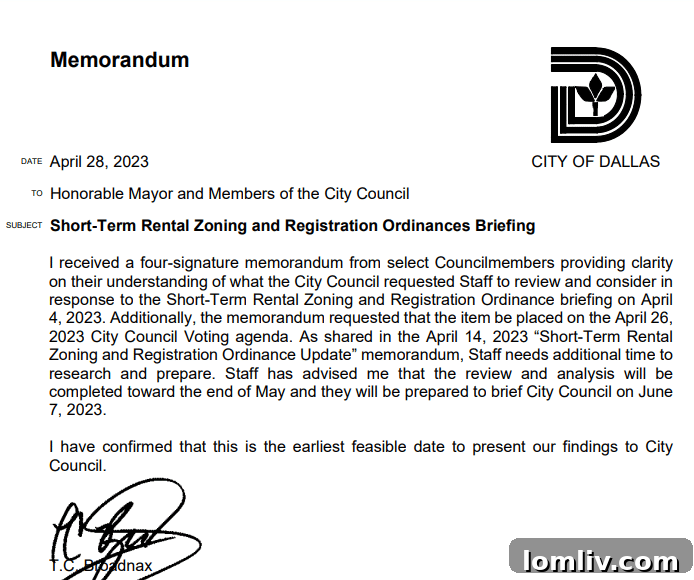
Instead of reaching a conclusion, the council opted to give city staff substantial additional tasks, signaling a deeper dive into the multifaceted aspects of STR regulation. City Manager T.C. Broadnax confirmed this strategic pause, indicating that staff would need to prepare another comprehensive briefing. In a recent memo circulated among City Council members, Broadnax communicated that the extensive review and analysis are projected to conclude by the end of May. This timeline sets the stage for a crucial discussion, with staff poised to brief the City Council on June 7, following closely on the heels of the May 6 City Council elections and potential runoffs on June 10. The timing of this briefing is particularly significant, as newly elected or re-elected council members will be instrumental in shaping the future of STRs in Dallas.
The debate surrounding short-term rentals in Dallas has been a protracted one, reflecting a national trend where cities strive to balance property owners’ rights and economic opportunities with the desire to preserve the residential character and peace of neighborhoods. This ongoing saga has seen numerous proposals, public hearings, and impassioned arguments from various stakeholders, each advocating for solutions that align with their interests. The City Council’s decision to delay the vote illustrates not a lack of resolve, but rather an acknowledgment of the profound impact any decision will have on Dallas communities, residents, and the local economy.
For those seeking a comprehensive understanding of this long-running debate, extensive resources are available. The archives of daltxrealestate.com offer a detailed chronological account of the years-long discourse surrounding STRs in Dallas, providing invaluable historical context. Furthermore, the most recent seven-hour City Council briefing on the matter is publicly accessible, allowing interested parties to witness the depth of discussion and the various viewpoints expressed by council members and the public alike. Insights into the City Plan Commission’s recommendations, including their “Keep It Simple Solution,” are also readily available, showcasing the groundwork laid by city planners.
Navigating Recommendations and the Quest for Data-Driven Solutions
At its core, the City Council’s discussion has centered on striking a balance between allowing short-term rentals to operate and mitigating their potential negative impacts. A clear majority of council members have expressed keen interest in implementing robust regulations and punitive measures specifically targeting STRs that are documented sources of nuisances or involved in criminal activities within neighborhoods. This sentiment underscores a desire to protect the quality of life for long-term residents, addressing concerns such as excessive noise, parking congestion, increased traffic, and potential safety issues that can arise from transient occupants.
Several elected officials have put forth distinct proposals aimed at redefining where STRs can legally operate. One significant suggestion advocates for confining STRs exclusively to districts already zoned for hotels, thereby delineating clear commercial zones for transient lodging and preserving residential areas. Another perspective favors a hybrid solution, which would empower neighborhood residents to petition for the creation of an overlay district. Such a district would allow communities to collectively ban STRs from their specific areas, without imposing a citywide prohibition that might affect other neighborhoods where STRs operate without issue and contribute positively to tax revenues and tourism.
The council’s April 14 briefing distinctly revealed an urgent desire among city officials to swiftly address the problem of “rogue” STRs – those operations that flout regulations and disrupt the peace of residential communities. However, the path to effective intervention is complicated by a significant hurdle: the absence of comprehensive, citywide data regarding STR operations and their true impact. This data deficit makes it challenging to craft targeted policies and assess the potential effectiveness and costs of various enforcement strategies. Furthermore, the prospect of implementing a citywide neighborhood ban on STRs presents its own set of challenges, including potentially prohibitive enforcement costs, legal complexities, and the risk of impacting legitimate operators who contribute positively to Dallas’s economy.
To gain a broader perspective on this multifaceted issue, insights from neutral parties are invaluable. Phil Crone, the executive officer of the Dallas Builders Association, offered his thoughts on STRs. He clarified that the Dallas Builders Association has maintained a neutral stance on the matter, primarily focusing on broader housing policy. However, Crone emphasized the association’s overarching support for diverse housing types and permissible land uses that can accommodate the growing population of Dallas. Personally, Crone expressed perplexity at Dallas’s perceived regressive approach to both short-term rentals and accessory dwelling units (ADUs).
He highlighted that many other major cities are actively embracing these housing solutions, recognizing their value. According to Crone, STRs and ADUs provide crucial flexibility in housing options, offer additional income streams that can significantly offset the increasing burden of property taxes for homeowners, and, in turn, contribute to the stabilization of neighborhoods by allowing residents to better afford to stay in their homes. This perspective brings an important dimension to the debate, linking STR policy not just to nuisance control, but also to broader issues of housing affordability, economic stability for residents, and the efficient utilization of urban space.
Deep Dive: Further Consideration for Comprehensive Short-Term Rental Policy
The city staff has been tasked with undertaking an exhaustive analysis across several critical domains, as detailed in an April 14 memo from City Manager Broadnax. This renewed analytical effort aims to provide the City Council with a robust, data-driven foundation for making informed policy decisions regarding short-term rentals. The areas of focus reveal the complexity and multifaceted nature of integrating STRs into Dallas’s urban fabric:

- Zoning Alternatives: The Planning and Urban Design department is actively exploring alternatives to the City Plan Commission’s initial recommendations. This involves a comprehensive review of various land-use solutions and zoning options, moving beyond a simple ban or broad allowance. Key aspects include preparing detailed maps showcasing existing multi-family zoning districts and conducting a thorough analysis of current STR operations within specific zoning classifications and Council Districts. This research will help understand how different zoning frameworks might accommodate or restrict STRs, assessing the feasibility and implications of each approach. The goal is to identify nuanced zoning strategies that can effectively manage STR growth while minimizing negative impacts on established residential areas, potentially through conditional use permits or specific overlay districts.
- Enforcement Strategies: Code Compliance is tasked with addressing crucial questions regarding the feasibility and implementation timeline of enforcement. Council members have queried the possibility of launching an enforcement program within six months, a significantly accelerated timeline compared to the initially proposed 12-month model. This department will also delve into the practicalities of enforcing policies related to “onsite caretakers” – individuals responsible for managing STR properties – and the unique challenges associated with STRs operating within multi-family housing complexes. Understanding the operational intricacies and resource requirements for these different enforcement models is paramount to developing an effective and sustainable regulatory framework.
- Comprehensive Data Analytics: Responding to repeated requests from Council Members for more granular data, the Data Analytics team will spearhead an extensive analysis focusing on the multifaceted impact of STRs. The initial phase involves collaborating with the City Controller’s Office to identify and incorporate additional STR addresses into the dataset, aiming for the most comprehensive inventory possible. Subsequent coordination with the Dallas Police Department (DPD), Dallas Fire-Rescue (DFR), Dallas 311 (the city’s non-emergency service line), and Code Compliance will be crucial. This inter-departmental collaboration will allow for the aggregation of incident reports, service calls, and complaint data, providing a holistic picture of how STRs impact public safety, emergency services, and neighborhood quality of life. This robust data will be indispensable for quantifying nuisances and demonstrating the tangible effects of STRs.
- Certificate of Occupancy (CO) Implications: A significant point of discussion revolves around the implications of mandating a Certificate of Occupancy for residential structures used as STRs. Development Services, in conjunction with Code Compliance and the City Attorney’s Office, will explore the far-reaching effects of such a requirement. This includes analyzing the potential impact on existing property owners, the administrative burden on city departments, and the financial implications of establishing new processing and inspection fees. If a CO becomes mandatory, Development Services will need to design and implement an entirely new operational workflow, encompassing an inspection strategy, staff training programs, public outreach initiatives, and metrics for ongoing evaluation. This would represent a substantial shift in how residential properties are regulated for transient use, ensuring they meet specific safety and operational standards typically associated with commercial lodging.
This detailed scope of work underscores the City Council’s commitment to a thorough and equitable resolution. By meticulously examining zoning, enforcement, data, and occupancy requirements, Dallas aims to develop a policy that not only addresses the concerns of its residents but also acknowledges the economic contributions of short-term rentals. The upcoming June 7 briefing will be a pivotal moment, shaping the future landscape of urban living and tourism within the city.