Dallas, a city synonymous with rapid growth and dynamic urban development, is preparing for a significant investment in its future. The Dallas City Council is actively progressing with plans for a 2024 Bond Program, an ambitious initiative designed to channel approximately $1 billion into essential infrastructure projects. This monumental investment aims to address the escalating needs of a burgeoning metropolis, ensuring that Dallas continues to thrive as a functional, accessible, and desirable place to live and work for all its residents.
For Dallas residents eager to understand the specifics of potential projects, patience will be key as the intricate process of project identification and prioritization unfolds. Early discussions at the committee level have centered on critical logistical details, including the estimated cost of conducting a bond election—projected to be around $1 million—and the strategic timing of this ballot measure. A cornerstone of this democratic undertaking will be the appointment of a dedicated advisory board, entrusted with the vital responsibility of meticulously evaluating and recommending projects that best serve the community’s diverse and evolving needs.
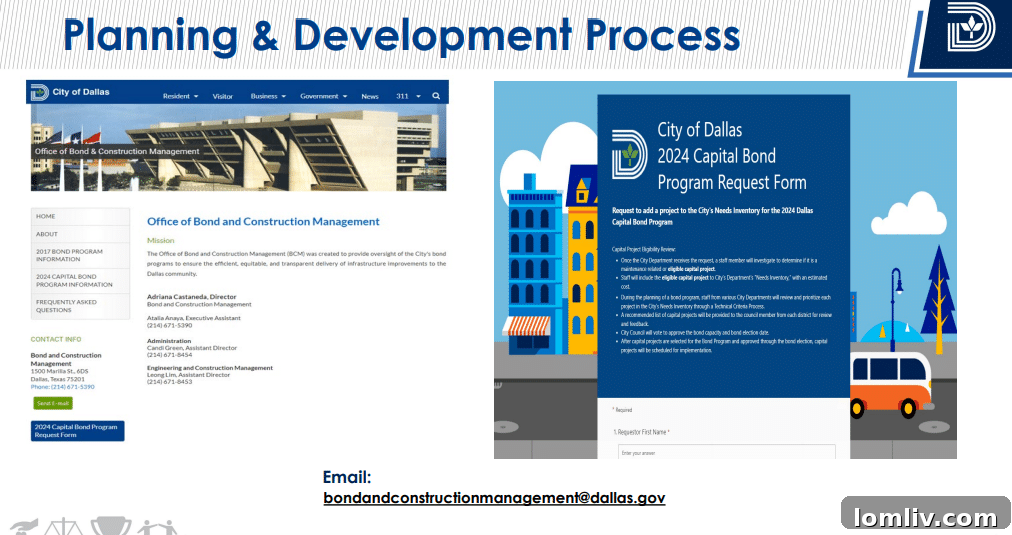
In a move to enhance transparency and foster broad civic participation, the City Council will release a formal request form. This mechanism is designed to gather comprehensive citizen input on bond projects, ensuring that the community’s voice is heard and incorporated into the decision-making process. This commitment to public engagement is pivotal, striving to create a bond package that genuinely reflects the collective priorities and urgent requirements of Dallas’s vibrant neighborhoods.
Understanding the nature of a bond program is crucial for informed civic participation. Essentially, a bond program represents a form of voter-issued debt, meticulously structured to fund substantial improvements to a city’s fundamental infrastructure. This encompasses a wide array of vital public assets, including the repair and upgrade of alleys, major streets, and sidewalks, the enhancement of parks and recreational spaces, the modernization of crucial drainage systems, and the construction or renovation of public facilities. These essential upgrades are financed through general obligation bonds, a financial instrument that legally obligates the city to repay the debt over a specified period. It is important for taxpayers to recognize that the debt service—the regular payments of principal and interest—is directly supported by their tax contributions, forging a direct link between their investment and the tangible improvements across the city.
Shaping Dallas’s Future: Council Perspectives and Critical Priorities
The strategic direction and philosophical underpinnings of the 2024 Bond Program were brought into sharp focus during a critical Transportation and Infrastructure Committee meeting held on January 17. Chaired by Deputy Mayor Pro Tem Omar Narvaez, this session provided a vital forum for Dallas City Council members to articulate their perspectives, voice their concerns, and outline their key priorities for the impending bond election and the equitable distribution of its substantial funds. The discussions underscored a shared dedication to enhancing Dallas, albeit with nuanced differences regarding procedural timelines and specific project emphases.
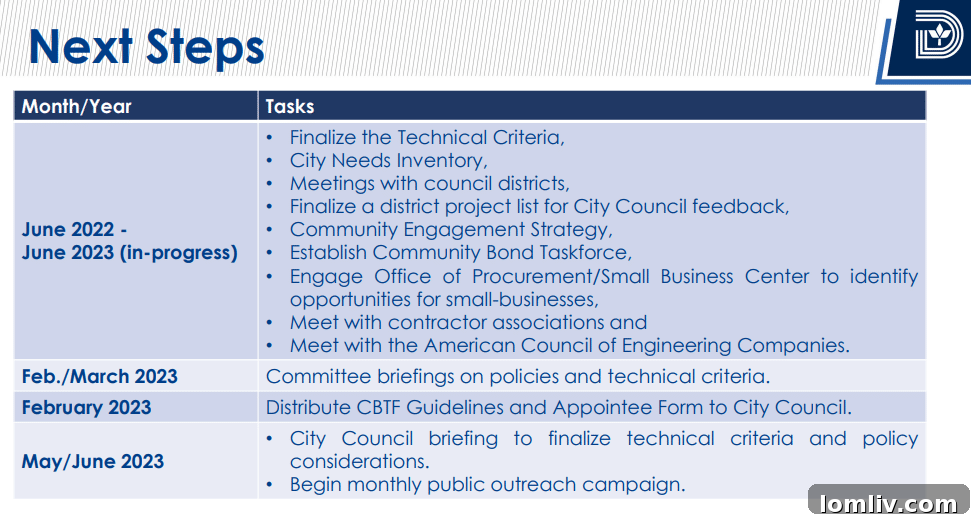
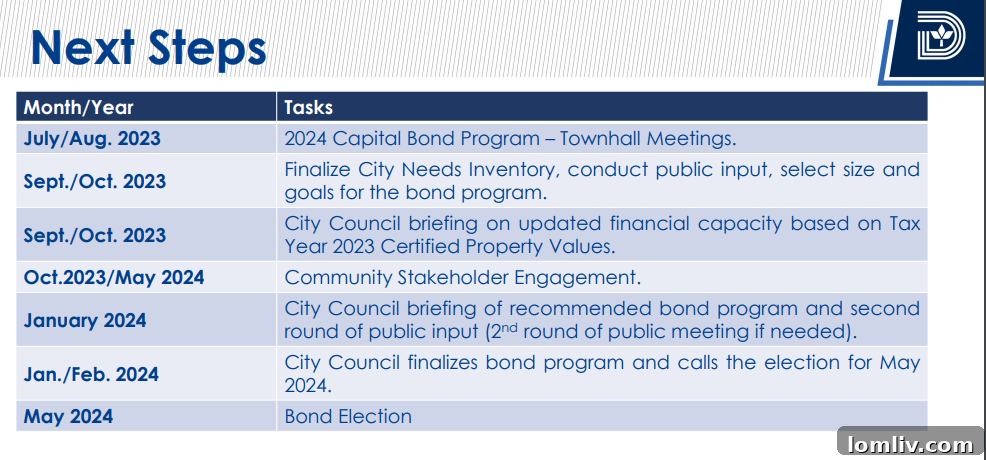
A fundamental element in the program’s successful execution will be the establishment of a 15-member Community Bond Task Force. This esteemed body, carefully appointed by the Dallas City Council, will assume the significant responsibility of comprehensively reviewing and ultimately selecting projects deemed most suitable for inclusion in the bond package. Following their initial recommendations, specialized subcommittees will be tasked with the meticulous development of each proposed proposition, ensuring thorough planning and robust justification. According to the preliminary project timeline, this task force is anticipated to present its recommendations for the 2024 Capital Bond Program to the Dallas City Council by January, setting the stage for subsequent crucial deliberations and approvals.
However, the proposed timeline faced scrutiny from District 12 Councilwoman Cara Mendelsohn, who raised a pragmatic point. She suggested that strategically aligning the bond election with a scheduled city council election in May 2025 could lead to considerable savings in administrative and operational costs. This perspective champions fiscal prudence and the efficient utilization of public funds. In contrast, Deputy Mayor Pro Tem Narvaez passionately advocated for a more immediate election, emphasizing the urgent and pressing nature of the city’s infrastructure deficiencies. “We have a lot of needs; we’ve got to get to work,” Narvaez asserted with conviction, adding, “We really should have already started this process.” His stance highlights the belief that any delay in addressing critical infrastructure issues could lead to exacerbated problems and potentially higher costs in the long run.
The proposed allocation of funds also sparked considerable debate among council members. Councilwoman Mendelsohn voiced apprehension regarding a staff proposal that suggested a reduction in funding for essential community assets such as public parks, libraries, and crucial public safety facilities. These institutions are widely regarded as pillars of community well-being and instrumental in maintaining a high quality of life for Dallas residents, making any proposed reduction a significant concern. Concurrently, District 13 Councilwoman Gay Donnell Willis emerged as a strong proponent for substantial investment in flood protection and robust storm drainage infrastructure. She compellingly articulated the often-underappreciated urgency of these “unsexy” but utterly indispensable projects. “It’s not sexy, but it’s just something that tends to get pushed down and get short shrift,” Willis remarked, emphasizing the dire consequences: “We’ve got so much erosion going on. It is affecting lives, and we’ve got to have our eyes on the horizon.” Her powerful advocacy underscores the critical need for proactive, preventative measures that protect property, ensure public safety, and contribute to long-term environmental and urban stability.
One of the most persistent and formidable challenges facing any municipal bond program in a rapidly expanding city like Dallas is the overwhelming and continuous need for street infrastructure improvements. District 7 Councilman Adam Bazaldua candidly acknowledged the profound difficulty of making a substantial impact on the city’s myriad street projects through a single bond issue, primarily due to the astronomical costs involved. He astutely identified a prevalent disconnect between the expectations of the average voter and the practical limitations of bond funding. “It’s almost disingenuous for the average voter to think they’re voting on a bond proposition, as they did in2017, and to say five years later, ‘Why do my streets still look like this?’” Bazaldua elaborated. He further explained that citizens often “don’t realize we’re not even scratching the surface.” This critical perception gap, he argued, arises from a dual challenge: insufficient public communication regarding the sheer magnitude of the city’s infrastructure maintenance deficit and the inherent limitations of the funds available. Bazaldua concluded with a stark assessment: “The reality is we could devote our entire capacity in 2024 to our infrastructure needs for our streets and still not get it done. I’d like us to not continue spinning our wheels unless we’re really going to make a huge impact unless we have a good way to educate our public on what that looks like.”
Deputy Mayor Pro Tem Narvaez unequivocally reinforced Bazaldua’s sobering analysis, providing concrete figures to highlight the monumental scale of the challenge. “If you add up streets, sidewalks, and alleys, we’re talking over $4 billion in deferred maintenance,” he revealed, painting a vivid picture of the accumulated neglect. He then contextualized this by referencing the previous bond program: “In the last bond, we did about $563 million for transportation and infrastructure. People thought it was all for streets. It was for streets, alleys, and sidewalks. We got to hit a lot of major streets, but that’s not going to get us into the smaller interior streets that folks are most upset about.” These collective statements underscore the critical imperative of transparent public communication and judicious strategic prioritization to ensure that the 2024 Bond Program delivers tangible, impactful results that genuinely address the daily experiences and frustrations of Dallas residents. This challenge demands innovative solutions and clear explanations of what can realistically be achieved.
Amidst these significant policy discussions, a procedural point emerged regarding the timing of appointing members to the advisory board. Councilwoman Mendelsohn and Councilwoman Willis expressed valid concerns about making such crucial appointments just a few months prior to a city council election, raising questions about potential political influences or ensuring continuity of vision. Conversely, Councilman Bazaldua and Deputy Mayor Pro Tem Narvaez firmly argued that the urgent necessity of advancing governance and proactively addressing pressing city needs should not be unduly delayed by electoral cycles, emphasizing the critical importance of maintaining momentum in the bond program’s development and implementation.
The Mechanics of a Major Investment: Orchestrating the Bond Election
Behind the scenes, the intricate mechanisms of the city government are tirelessly at work, laying the groundwork for the monumental undertaking of the 2024 Bond Program. Adriana Castaneda, the Director of Bond and Construction Management, is spearheading this complex effort. She reported that her dedicated team has been engaging in ongoing, monthly collaborations with various city infrastructure departments, meticulously discussing the development and strategic planning processes for the bond. This integrated, collaborative approach is vital for ensuring that all relevant departments are synchronized and contribute to a unified, cohesive strategy.
Castaneda further illuminated the foundational work being undertaken, stating: “Part of those conversations have included finalizing the technical criteria and policy that will be utilized to select and prioritize the projects recommended for the next capital bond program.” This rigorous framework is indispensable for ensuring that project selection is not arbitrary but based on clearly defined, quantifiable standards that align with the city’s overarching strategic objectives and operational imperatives. Such criteria might encompass factors such as immediate community impact, long-term sustainability, cost-effectiveness, and regional significance, among others.
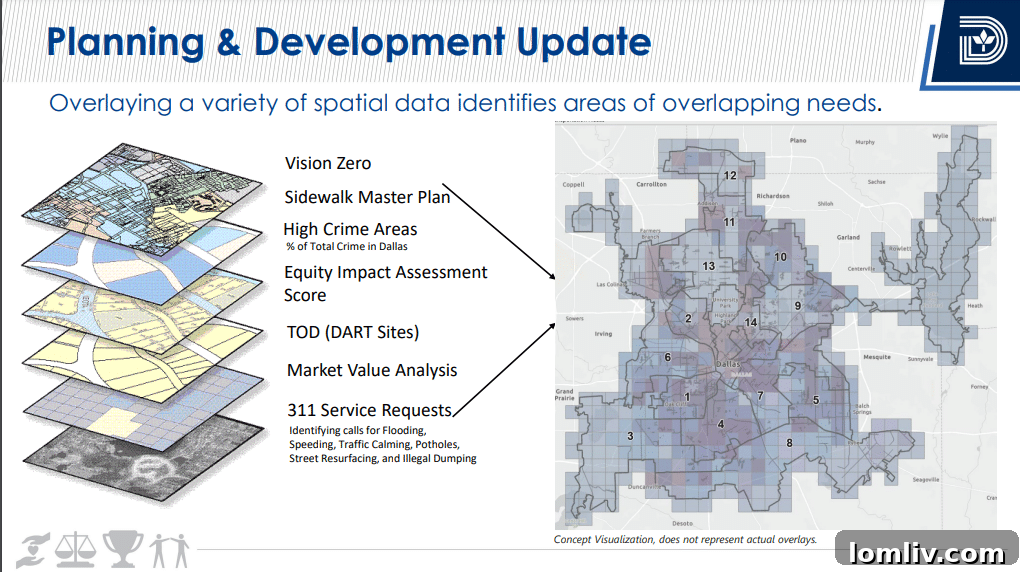
Crucially, the project selection and prioritization process transcends purely technical considerations; it deeply integrates a significant equity component, reflecting Dallas’s unwavering commitment to inclusive urban development. This commitment is directly informed by the council-adopted Racial Equity Plan and further enriched by invaluable insights and guidance from the Office of Equity and Inclusion. This means that projects will undergo evaluation not solely on their engineering merit or financial feasibility, but also on their potential to redress historical disparities, promote equitable access to vital resources, and uplift historically underserved communities across Dallas. By embedding equity into the core of the program, the bond aims to ensure that its transformative benefits are broadly and fairly distributed, fostering a more just and inclusive urban landscape.
To further refine and solidify the list of projects, specialized council committees, including Economic Development and Housing and Homeless Solutions, will play an integral role. These committees will submit their specific technical criteria for priority projects within their respective domains, guaranteeing that a comprehensive array of urban challenges and opportunities is meticulously considered. This multi-layered approach ensures that the bond program is both expansive in scope and highly responsive to the diverse facets of city life.
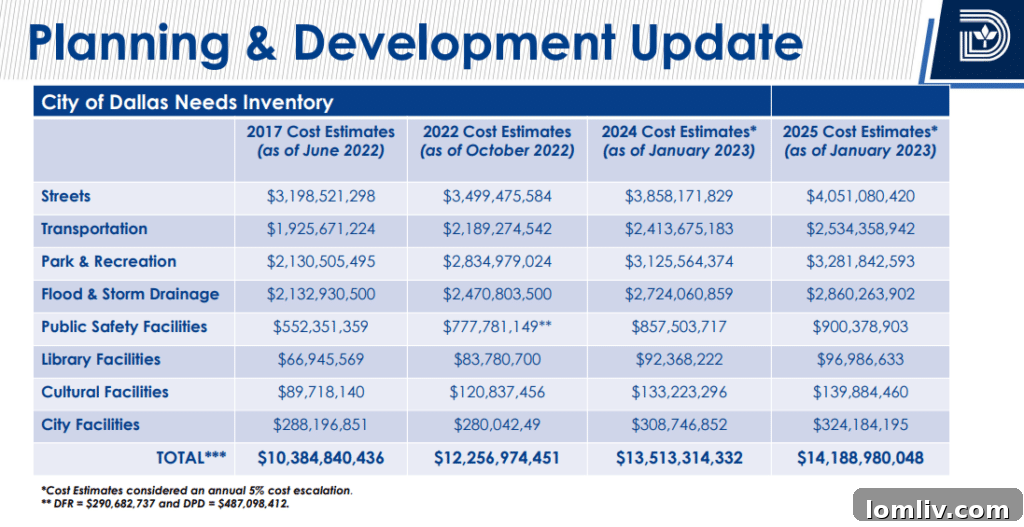
The sheer scale of Dallas’s infrastructure requirements is genuinely staggering. Castaneda revealed that the city’s comprehensive “needs inventory” for 2024 encompasses an astonishing figure: more than $13.5 billion in potential projects. This colossal sum vividly illustrates the long-standing accumulation of deferred maintenance and the continuous, escalating demands of a rapidly expanding urban environment. It starkly highlights the immense disparity between what is urgently needed and what can realistically be achieved within the confines of a single bond cycle, underscoring the necessity for profound strategic choices.
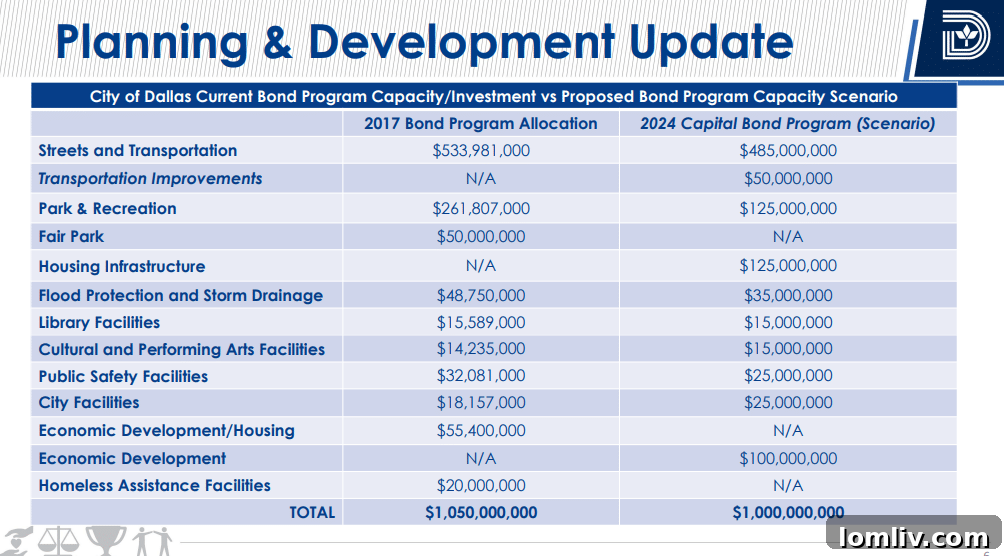
Against this backdrop of extensive needs, the anticipated financial capacity for the 2024 general obligation bond program is projected to be approximately $1 billion. This forecast, which is based on an assumption of $200 million over five years of issuance, as detailed in Castaneda’s presentation, clarifies the challenging fiscal realities confronting the city. It unequivocally signifies that difficult decisions and stringent prioritization will be paramount, as only a fraction of the identified needs can be realistically addressed at this time. This stark reality further emphasizes the strategic importance of the task force and the City Council in meticulously selecting projects that promise maximum impact and enduring benefit for the Dallas community.
To optimize the efficiency and amplify the impact of the available funds, city staff are proactively coordinating proposed bond projects with other existing city initiatives. A prime example of this synergy is the collaboration with the Sidewalk Master Plan, where concerted efforts are being made to identify potential cost-sharing opportunities. Such strategic coordination not only maximizes the utilization of taxpayer dollars but also ensures a more integrated and holistic approach to urban planning and development, effectively preventing redundant efforts and fostering crucial synergy across various departments.
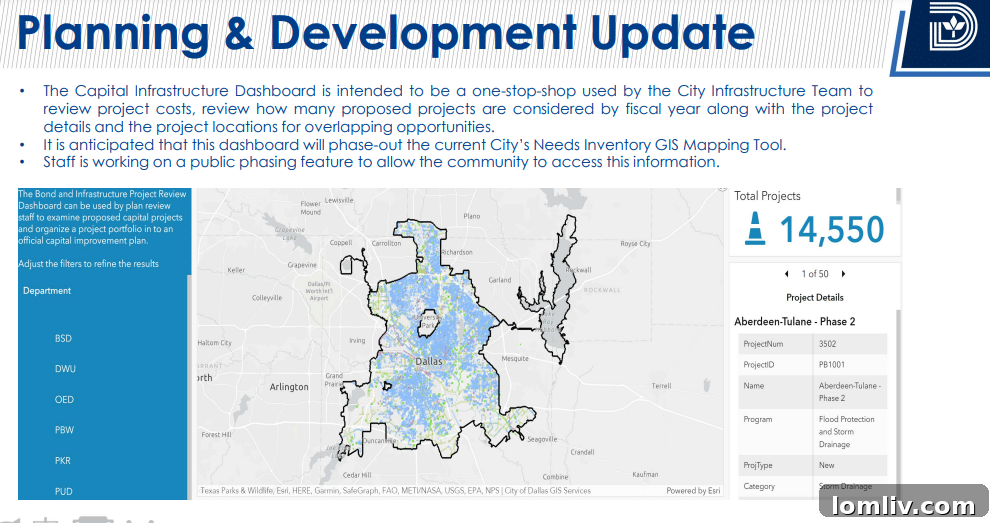
Transparency and broad public accessibility remain fundamental tenets of the 2024 Bond Program. To facilitate this, a detailed, user-friendly website is currently under vigorous development, designed to serve as a comprehensive, centralized hub for all relevant information. Castaneda articulated its multifaceted purpose: “This dashboard is intended to be a one-stop shop for the city infrastructure team to review project costs, scopes of work, where they align in project schedules, and to identify potential opportunities where projects overlap or intersect.” Beyond its invaluable utility for internal planning, this robust platform is being meticulously crafted with the public in mind. “We are working with data analytics to make this a friendly, public-facing feature. We want to make sure the public has access to project information,” she added. This steadfast commitment to transparency ensures that residents can effortlessly track progress, understand expenditure patterns, and remain fully informed throughout the entire lifecycle of the bond program.
Looking Ahead: The Road to Decision and Empowered Community Engagement
The journey toward the 2024 Bond Program reaching the ballot is an inherently rigorous and multi-faceted process, one that demands not only meticulous planning and insightful deliberation but also robust and sustained public engagement. The Dallas City Council is scheduled to receive a comprehensive briefing on the bond program at 9 a.m. on Wednesday, February 15. This upcoming session is anticipated to be a pivotal moment, likely solidifying initial proposals, addressing any lingering questions, and crucially setting the stage for the next phases of in-depth public consultation and precise project refinement.
As Deputy Mayor Pro Tem Narvaez aptly summarized, “We’ve got a lot of work to do in the time frame that we have.” The inherent compression of the timeline, coupled with the immense scope of identified needs and the public’s entirely understandable desire for visible and impactful improvements, collectively creates a significant and complex challenge. The gravity of the task at hand is clearly not lost on the council members. “Asking the voters to spend $1 billion is a lot to ask,” Narvaez acknowledged, underscoring the profound responsibility incumbent upon the city’s leadership to be both judicious and transparent. He concluded with a powerful statement that resonates deeply at the heart of democratic governance and public trust: “We’ve got to get it right on the things that they want. This is their bond. This is their taxpayer money that’s going to pay this debt back over time.”
This resonant statement serves as a potent and timely reminder that the 2024 Bond Program is, at its core, a collective endeavor. It represents a profound opportunity for Dallas residents to directly influence and shape the foundational infrastructure that underpins their daily lives, impacts their economic prospects, and ultimately defines the character and future trajectory of their beloved city for generations to come. Therefore, staying thoroughly informed, actively participating in public forums, and providing constructive, thoughtful input will be absolutely crucial for every Dallas citizen as the bond program systematically moves from conceptual discussions to concrete, actionable implementation. The ultimate success and lasting impact of this vital initiative will undoubtedly stand as a testament to a shared civic vision, strategic and responsible investment, and vibrant, continuous community engagement, collectively ensuring that Dallas continues its remarkable trajectory as a truly vibrant, resilient, and equitable urban center in the 21st century.