The simmering tensions between Dallas Area Rapid Transit (DART) officials and Dallas City Council members have finally boiled over, culminating in a contentious resolution regarding excess sales tax revenue. What began months ago as a dispute over the municipality’s rightful share of funds has evolved into a significant discussion about trust, accountability, and the future of public transportation infrastructure in the rapidly growing Dallas region. The financial implications of this long-standing disagreement are substantial, impacting not only the city’s budget but also critical community projects and the residents who depend on a robust transit system. This complex negotiation process has laid bare the challenges of inter-agency cooperation and the delicate balance required to ensure equitable distribution of resources for urban development.
Initial discussions hinted at a challenging road ahead, but few anticipated the depth of the disagreement that would unfold. The matter, which saw DART and the City of Dallas at loggerheads over a promised $111 million in excess sales tax revenue, ultimately proceeded to mediation. This high-stakes arbitration resulted in a revised agreement, drastically reducing the city’s expected allocation. Dallas was compelled to accept a significantly lower sum, primarily because DART asserted it had already committed a portion of these anticipated city funds towards “betterment projects” directly within Dallas’s municipal limits. Furthermore, DART levied penalties against the city, citing what they described as intentional delays in permitting and plan reviews for the crucial Silver Line project. These accusations fundamentally altered the financial landscape of the agreement, fueling resentment and distrust between the two major entities responsible for the region’s urban fabric.
The repercussions of this mediation came to a head during a pivotal June 14 city council meeting, where the revised agreement was presented for approval. Council members found themselves in an unenviable position, reluctantly agreeing to accept $90 million – a considerable reduction from the initially anticipated $111 million. This decision, though made under duress, highlighted the critical need for these funds within the city, despite the significant compromise. The air in the council chambers was thick with apprehension, as several members expressed deep reservations about the revised terms, questioning the fairness of the deal and its potential long-term implications for the city’s financial autonomy and its relationship with DART. The vote was a testament to the difficult choices faced by city leadership when confronted with complex inter-agency disputes.
Among the most vocal critics was District 12 Council Member Cara Mendelsohn, who voiced profound skepticism regarding the city’s actual chances of receiving the full $90 million. Her concerns resonated with a significant portion of the community, reflecting a broader sentiment of mistrust that had developed throughout the protracted negotiations. Mendelsohn’s foreboding assessment painted a picture of potential future pitfalls, suggesting that even with an agreement in place, the city might face further obstacles or unexpected deductions from DART. Her public statements underscored the precarious nature of the deal and the deep-seated anxieties within the city government about DART’s commitment to its promises. This perspective added a layer of caution to an already fraught situation, prompting a wider debate on the security and enforceability of such interlocal agreements.
Under the terms of the new agreement, the allocated funds are not simply general revenue for the city. Instead, they are strictly earmarked for specific purposes: completing projects that directly benefit DART’s extensive public transportation system or for providing complementary transportation services within the city of Dallas. This stipulation underscores the transit-centric nature of the funds, ensuring that the excess sales tax revenue is reinvested into improving regional mobility and accessibility. While beneficial for the transit system, this restriction limits the city’s flexibility in how it can utilize these much-needed dollars for other pressing municipal needs. It forces a strategic allocation of resources that aligns with DART’s operational goals, further tying the city’s urban development initiatives to the broader transit agenda.
Councilman Omar Narvaez, who chairs the vital transportation and infrastructure committee, articulated the stark reality facing the council. Emphasizing the urgent need for the funds, particularly for vulnerable neighborhoods, Narvaez stated, “These are not funds that we can just sit around and wait on.” He conveyed DART’s unwavering stance, describing it as a clear “take it or leave it” proposition, leaving the city with little room for further negotiation. Narvaez underscored the gravity of rejecting the offer, highlighting that to walk away from $90 million, despite the unsatisfactory terms, would be a disservice to the residents who desperately require these resources. His pragmatic view suggested that while the agreement was imperfect, securing the funds now was paramount for immediate and tangible community benefits, outweighing the potential gains of further prolonged and likely fruitless negotiations.
Broken Trust With DART: A Deepening Divide
The perceived mishandling of the agreement ignited a wave of criticism from residents and community leaders alike, with many pointing fingers at the city staff’s negotiation tactics. Maura Schreier Fleming, a concerned resident from District 12, was among several voices who expressed strong disapproval. Fleming minced no words, asserting that “Dallas city staff needs to exercise a lot stronger and wiser negotiating skills with DART.” Her critique extended to DART itself, noting that the transit authority “has a history of making false statements to the public and elected officials to gain an advantage.” This sentiment speaks to a deeply rooted skepticism about DART’s operational transparency and its engagement with the communities it serves, suggesting that the current dispute is not an isolated incident but rather indicative of a broader pattern of contentious interactions. The public’s concern signals a critical need for enhanced accountability and more robust advocacy from city officials in future dealings.
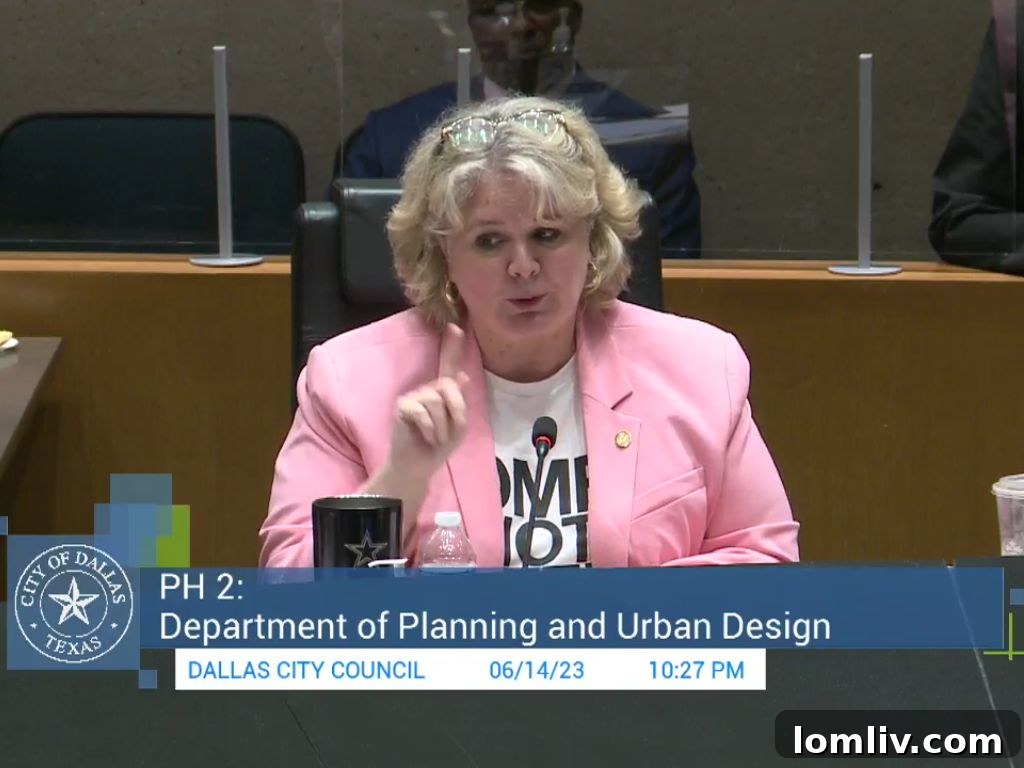
Council Member Mendelsohn echoed and amplified this sentiment, expressing grave concerns about the underlying interlocal agreement between the City of Dallas and DART. She contended that the agreement was poorly and vaguely written, seemingly designed to strategically hold the city’s funds hostage. Mendelsohn forcefully argued that Dallas had been unfairly targeted by DART, receiving differential treatment compared to the twelve other member cities within the transit authority’s service area. This accusation of disparate treatment resonated deeply, suggesting a systemic issue in how DART manages its relationships with its constituent municipalities. Her analysis painted a picture of an imbalanced power dynamic, where the contractual language potentially undermined Dallas’s leverage and financial interests, thereby fostering a climate of resentment and further eroding the already fragile trust between the two entities. The alleged vagueness in the agreement could lead to future interpretations unfavorable to Dallas, perpetuating financial uncertainties.
“This is a proposal to penalize ourselves with our own tax dollars,” Mendelsohn warned her colleagues, highlighting the self-defeating nature of accepting terms that she believed were inherently unfair. Her impassioned plea urged the council to pursue a solution that was not only legally sound but also genuinely equitable. She cautioned that approving the current deal, under the assumption that it would resolve the issue, was a dangerous gamble. Mendelsohn predicted that the city might never truly see the expected dollars, and by the time this became evident, it would be too late to rectify the situation. Her final admonition underscored the council’s fiduciary duty: “If you approve today, you will be risking any dollars because you will have given away your authority and your fiduciary duty.” This powerful statement stressed the long-term risks of capitulation and the council’s responsibility to protect the city’s financial integrity, suggesting that the compromise might set a detrimental precedent for future inter-agency negotiations.
What’s Next For DART And Dallas: Navigating a Fractured Relationship
During the intense June 14 briefing, City Manager T.C. Broadnax provided crucial insights into why Dallas had been singled out for differential treatment among DART’s member cities. Broadnax explained that the transit authority specifically accused the City of Dallas of causing significant delays in permit and design reviews, particularly impacting projects like the crucial Silver Line. These alleged holdups formed the basis of DART’s rationale for adjusting the financial terms and imposing penalties on the city, directly contributing to the reduction in Dallas’s excess sales tax revenue allocation. This explanation, while offering a reason for DART’s actions, did little to alleviate the city council’s concerns about fairness and accountability, instead highlighting the profound breakdown in communication and operational synergy between DART and Dallas’s city departments. The accusation itself became a central point of contention, leading to an acrimonious debate over responsibility for project timelines.
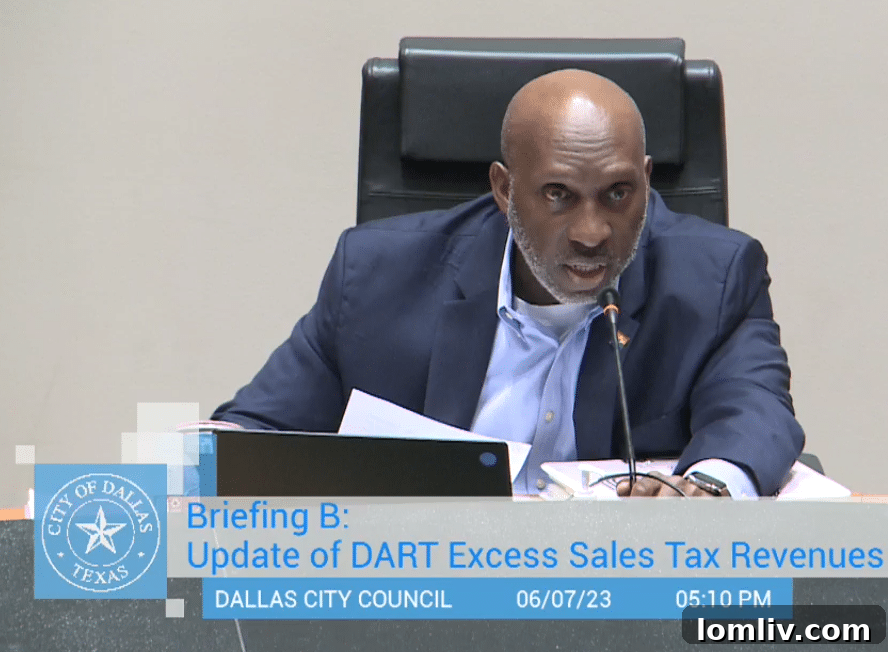
The negotiations ultimately culminated in a conditional agreement: DART would place approximately $30 million into escrow, with the release of these funds contingent upon the city’s demonstrated ability to maintain “good standing” and actively rebuild trust with the transit authority. Broadnax articulated this as a critical step towards mending the fractured relationship, emphasizing the city’s need to prove its reliability and commitment to future projects. This provision essentially places the onus on Dallas to demonstrate improved performance and cooperation, acting as a probationary period for the city to regain DART’s confidence. While offering a path to recover a portion of the disputed funds, it also underscores the deep level of distrust that has permeated the relationship, transforming a financial transaction into a test of inter-agency faith and operational efficiency. The conditions for release add another layer of complexity to the city’s financial planning, tying a substantial sum to future performance metrics.
Facing the council, Broadnax delivered a stark ultimatum: “If we don’t sign the [interlocal agreement], we’re not going to get any resources.” He unequivocally stated that the city had exhausted all avenues for negotiation, stressing that DART would not amend the agreement further. Broadnax implored the council to move forward, acknowledging their frustrations but emphasizing the pragmatic necessity of securing the funds. He took personal responsibility, assuring them, “You can put the heat on me and my team to perform going forward to ensure that we get the $90 million.” The city manager also pledged diligent efforts to resolve any potential penalties outlined in the memorandum of understanding before they could impact the $90 million. His message was clear: despite reservations about DART or the specific projects, delaying the decision would only harm the city, effectively causing it to default on its original ILA and forego much-needed funding for vital community services. The urgent tone highlighted the critical balance between principle and practical necessity.
“Let’s move on,” Broadnax urged, emphasizing the immediate need for action to prevent further delays in the city receiving its much-needed resources. He acknowledged potential dissent, noting, “People may not like the project, they may not like DART.” However, he underscored the fundamental reality of the situation: “At the end of the day, the money is green, we’ve got needs, it’s their resources to give, and they don’t have to give them.” Broadnax articulated the harsh truth that DART held the upper hand, and rejecting their terms would mean the city receiving nothing at all. He painted a grim picture of the alternative, stating that the only recourse would be to effectively tell DART, “I guess you don’t get a train,” implying a complete breakdown of services and mutual obligations. Such an outcome, he warned, would place the city in default of the original Interlocal Agreement, creating an even more dire financial and operational crisis. His directness aimed to galvanize the council towards a pragmatic decision, prioritizing the immediate flow of funds over prolonged, ineffective resistance.
Adding another layer to the council’s concerns, a comprehensive June 9 memo from Assistant City Manager Robert Perez further addressed various council questions and objections. Critically, the city attorney’s office itself raised significant concerns about the specific wording and implications of the interlocal agreement, suggesting that its provisions might be disadvantageous or ambiguous for Dallas. Broadnax reaffirmed that, indeed, no other DART member city had been subjected to the same terms or scrutiny as Dallas. Yet, he noted, other municipalities had ultimately signed their respective interlocal agreements, driven by the pragmatic desire to secure their allocated funds. This disparity in treatment underscored Dallas’s unique and challenging position, highlighting the pressure faced by the city to conform to terms that its legal counsel found problematic, solely to access essential financial resources for public projects.
Broadnax reiterated DART’s unyielding stance: the transit authority had unequivocally stated its refusal to amend the agreement any further. This left the Dallas City Council with a binary choice: either accept DART’s terms, despite their reservations and the substantial reduction in funds, or forgo the entirety of the excess sales tax revenue. This inflexible position from DART placed immense pressure on the council members, forcing them to weigh the immediate financial needs of the city against the principles of fairness and the desire for a more equitable deal. The lack of any further negotiation leverage transformed the decision into a stark accept-or-reject scenario, underscoring the power dynamics at play and the limited options available to the city in this contentious dispute. The finality of DART’s declaration made any further delay or attempt to renegotiate appear futile.
Countering DART’s narrative that project delays stemmed from the city’s permitting and review processes, Council Member Mendelsohn offered a different, more critical perspective. She directly attributed the project delays to DART’s own “incompetence and poor project management.” This accusation shifted the blame squarely onto the transit authority, challenging DART’s claims of city-induced obstacles. Mendelsohn’s assertion highlighted a fundamental disagreement over accountability for project timelines and cost overruns, suggesting that DART’s internal operational inefficiencies were the true culprits, rather than any intentional obstruction from Dallas city staff. Her argument implied that the penalties imposed on Dallas were unjust, stemming from DART’s failure to manage its own projects effectively, thereby adding a significant point of contention to the already strained relationship and further eroding trust.
Despite her strong objections and deep-seated concerns, Mendelsohn acknowledged the critical need for the funds. “I want this money, too,” she affirmed, highlighting her commitment to securing every possible dollar for the city, recognizing that the issue extended far beyond her specific district. However, her pragmatic desire for the funds was tempered by a bleak prediction: “I’m just going to tell you, we will not see this money. It will further erode our relationship [with DART] when that happens.” This statement reflected her conviction that the current agreement was flawed, setting the stage for future disputes and a deepening of the existing animosity. Her words served as a stark warning to her colleagues, suggesting that the short-term gain of accepting the $90 million might come at the cost of long-term stability and trust in the vital DART-Dallas partnership, potentially leading to an even more challenging operational environment in the future.
In a final attempt to defer the contentious decision, Mendelsohn proposed delaying the matter until the first agenda meeting in August, leveraging the council’s recess for the month of July. Her objective was to allow more time for review, reconsideration, or perhaps to strategize for a more favorable outcome. However, this proposal was ultimately met with resistance. The prevailing sentiment among the council, heavily influenced by City Manager Broadnax’s persistent emphasis, was that DART had unequivocally closed the door on further amendments to the interlocal agreement. Therefore, a delay, as argued, would not yield any new solutions or a better deal, serving only to postpone the inevitable and further delay the flow of critical funds to the city. The decision to move forward underscored the council’s resignation to DART’s firm stance and the immediate financial pressures facing Dallas.
Ultimately, a clear majority of the council members sided with Broadnax’s repeated assertion that DART had no intention whatsoever of amending the interlocal agreement. The message was unambiguous: further delays would be fruitless. Broadnax, in a moment of palpable frustration, conveyed the futility of holding out for a better deal. “I feel like the words coming out of my mouth, people don’t understand,” he expressed, underscoring the challenge of communicating the inflexibility of DART’s position. He then employed a vivid analogy to drive his point home: “To want and think [an amended agreement] is a possibility, you might as well ask if a unicorn is going to float in here. It’s not going to happen.” This powerful imagery effectively conveyed the absolute finality of DART’s offer, convincing the council that their only viable path was to accept the terms as presented, despite lingering dissatisfaction and profound skepticism about the long-term impact on the city-DART relationship. The vote cemented a reluctant compromise, but the underlying tensions and fractured trust between the entities remain significant challenges for the future of Dallas’s public transportation and urban development.