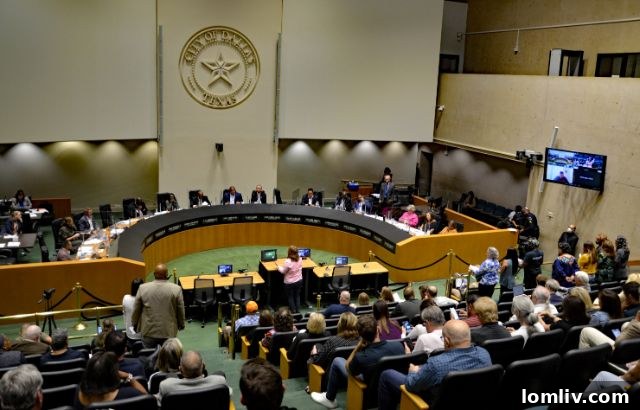
As the May 4 Dallas bond election draws near, the Dallas City Council has reached an unofficial consensus on a preliminary allocation of funds, signaling a significant step towards shaping the city’s future. During a pivotal meeting, council members tentatively agreed to earmark approximately $310.5 million for vital park improvements and green spaces, alongside a crucial $61 million dedicated to housing initiatives. This initial agreement provides a framework for the upcoming ballot propositions, reflecting the diverse needs and priorities across the Dallas community.
The Wednesday meeting saw the Dallas City Council convene as a “Committee of the Whole,” a procedural mechanism allowing for extensive discussion and straw votes without immediate binding decisions. This format facilitated open debate on the proposed bond allocations, ensuring all perspectives were considered before moving forward. The proposal that ultimately gained traction, championed by Mayor Pro Tem Tennell Atkins and formally introduced by District 12 Councilwoman Cara Mendelsohn, received approval with a 9-6 vote. While not yet legally binding, this vote establishes a clear direction for the 2024 Dallas bond package, setting the stage for further public discourse and official action.
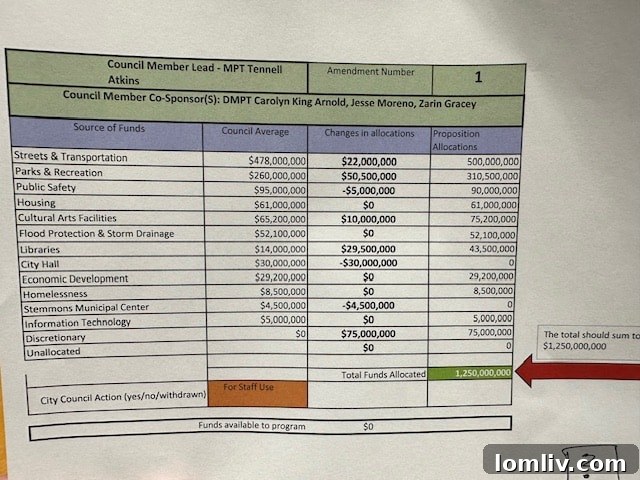
The council’s vote revealed a clear division among elected officials regarding the proposed framework for the 2024 Dallas bond election. Those who supported the proposal, emphasizing its potential to address critical city-wide needs, included Mayor Pro Tem Tennell Atkins, Councilwoman Cara Mendelsohn, Mayor Eric Johnson, Deputy Mayor Pro Tem Carolyn King Arnold, District 2 Councilman Jesse Moreno, District 3 Councilman Zarin Gracey, District 6 Councilman Omar Narvaez, District 10 Councilwoman Kathy Stewart, and District 14 Councilman Paul Ridley. Their unified stance underscored a belief in the proposal’s balanced approach to infrastructure, community development, and public services.
Conversely, six council members voiced their opposition, suggesting the need for further adjustments or a different prioritization of funds. These dissenting votes came from District 1 Councilman Chad West, District 5 Councilman Jaime Resendez, District 7 Councilman Adam Bazaldua, District 9 Councilwoman Paula Blackmon, District 11 Councilwoman Jaynie Schultz, and District 13 Councilwoman Gay Donnell Willis. Their concerns often centered on specific funding levels for certain categories or the overall fiscal strategy, highlighting the complex challenges of allocating limited resources across a diverse and rapidly growing city like Dallas.
In the coming weeks, Dallas residents will have the opportunity to engage directly with their elected officials on these crucial decisions. A series of town hall meetings are scheduled for April, providing a vital platform for public input and discussion on the proposed bond allocations. These meetings are essential for ensuring transparency and incorporating community feedback into the final bond package that will be presented to voters on May 4. Citizens are encouraged to attend and share their perspectives on how these investments will shape the future of Dallas.
The journey to this preliminary agreement has been a lengthy one, marked by extensive deliberation and numerous proposals. A staff memorandum issued the previous Friday detailed a wide array of bond allocation possibilities put forth by various council members. However, during Wednesday’s extended meeting, none of these individual proposals gained sufficient traction to move forward independently. This underscores the necessity of compromise in large-scale municipal planning, where diverse interests must converge on a shared vision for the city.
Councilman Adam Bazaldua eloquently summarized the sentiment among many participants, stating, “It’s very clear that no one is going to walk away 100 percent happy.” He further emphasized the importance of ensuring that “compromises have been felt across the board,” not only within the broad categories of allocation but also concerning the specific priorities of individual council members. This acknowledgment of inevitable trade-offs highlights the intricate balancing act involved in crafting a bond package that aims to serve the entire Dallas populace.
A notable aspect of the proposed Dallas bond election framework is the allocation of $75 million in “discretionary funds.” These funds are distributed among the mayor and all 14 council members, granting them the flexibility to address unique needs and projects within their respective districts. This empowers local representatives to respond to specific community demands that might not be covered by broader bond categories. Councilwoman Mendelsohn confirmed to daltxrealestate.com that her full $5 million for District 12 would be directed towards parks, having already submitted this allocation to the bond office. This demonstrates how discretionary funds can be leveraged to support hyper-local initiatives and priorities.
For those interested in a comprehensive understanding of the discussions, the January 31 special-called Dallas City Council bond meeting is available for viewing online. Access to the full proceedings can be found here. Watching the deliberations offers valuable insight into the arguments, compromises, and decision-making processes that led to the current bond framework, allowing citizens to be fully informed ahead of the upcoming election.
Housing Initiatives Poised to Receive $61 Million in Dallas Bond Funds
The proposed $61 million allocation for housing within the Dallas bond election framework has sparked considerable debate, reflecting the city’s urgent need for affordable and accessible housing solutions. Councilman Chad West, for example, expressed his disappointment that housing did not secure a larger portion of the overall bond package. However, he also articulated a strategic vision, noting that funds designated for economic development and homelessness could be creatively utilized to support housing initiatives, particularly in addressing shelter and community development needs.
Councilman West elaborated on his approach, stating, “Some of the other categories, I foresee us being able to use toward housing.” He specifically referenced plans to advocate for an innovative mixed-use housing project situated atop a library in District 1, showcasing how multi-faceted projects can leverage various funding streams. By combining “Economic development dollars and also the homelessness category,” West believes the city can collectively approach or even exceed $150 million dedicated to housing-related projects. This integrated strategy highlights the interconnectedness of urban challenges and the potential for synergistic solutions within the Dallas bond allocations.
Beyond housing, the unofficially approved bond proposal outlines allocations for several other critical sectors. Approximately $43.5 million has been designated for libraries, supporting these vital community hubs for education, digital access, and cultural enrichment. Economic development is slated to receive $29.2 million, a sum intended to foster job creation, attract businesses, and stimulate local commerce. Furthermore, $8.5 million is proposed for homelessness initiatives, underscoring Dallas’s commitment to addressing this pressing social issue through various support services and intervention programs. These allocations collectively aim to bolster the city’s infrastructure and social safety nets.
Interim Director of Housing and Neighborhood Revitalization Cynthia Rogers-Ellickson provided crucial insights into the implementation strategy for the housing bond funds. Should Dallas voters approve the bond in May, her staff plans to strategically direct these investments towards projects within the three Southern Dallas “target areas” identified in the comprehensive Dallas Housing Policy 2033. This targeted approach ensures that resources are concentrated in areas with the greatest need, maximizing the impact on affordable housing development and community revitalization.
Ellickson further clarified a significant shift in how these housing funds will be utilized. “The housing bond that’s now here is for infrastructure that is tied to development projects,” she explained. This marks a departure from previous practices where economic development bonds covered both construction of units and associated infrastructure. “We’ve never had that separated before. We’ve always worked out of Economic Development’s bond… to do both activities — construction and development of units as well as infrastructure. This is just separating out the infrastructure piece from economic development activity.” This refined approach aims to streamline funding for essential housing infrastructure, making the process more efficient and transparent.
Dallas Parks Poised for Significant Investment with $310.5 Million in Bond Funds
The allocation of $310.5 million for Dallas parks within the proposed bond package represents a substantial investment in the city’s green infrastructure and recreational spaces. Councilwoman Kathy Stewart, one of the newest elected officials, emerged as a vocal and passionate advocate for parks, highlighting their profound importance to community well-being and quality of life. She recounted her recent experience attending a Park and Recreation Board meeting, expressing deep admiration for the dedication and meticulous effort put forth by volunteer public servants in curating the extensive project list.
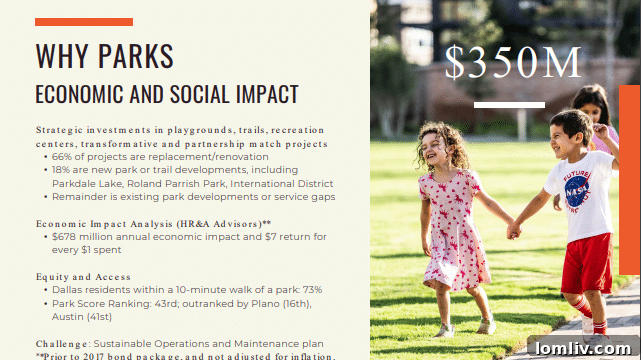
“It wasn’t easy,” Councilwoman Stewart remarked, reflecting on the arduous process. “These people roll up their sleeves and they go around and around. They do it well and they do it with respect… I’m thinking about all of the work that went into these numbers and how difficult it has been.” Her comments underscore the complex and often contentious nature of prioritizing park projects, balancing neighborhood needs with city-wide recreational goals. While the current proposal stands at $310.5 million, it’s noteworthy that the Community Bond Task Force had initially recommended a higher figure of $350 million for parks, indicating the tight fiscal constraints faced by the council.
Despite the significant proposed funding, the parks allocation has not been without its critics. Councilman Zarin Gracey voiced strong concern that any reduction in parks funding below the $300 million mark would lead to “punitive” and “unacceptable” cuts, particularly impacting long-neglected areas of Southern Dallas. He passionately highlighted a proposed reduction in funding for a critical project at Glendale Park, an area that has historically struggled with underinvestment in its public spaces. Gracey’s powerful statement encapsulated the frustration of many in Southern Dallas: “For me to be sitting up here this morning trying to go around lobbying, using political capital for $4 million for a park in Southern Dallas people have been asking for since 1980 is absolutely unacceptable.” This emphasizes the equity challenge inherent in bond allocations and the long-standing demands from certain communities.
Park and Recreation Director John Jenkins addressed the criticisms, explaining that his staff and the parks advisory board were compelled to make difficult cuts based on various funding scenarios, without prior knowledge of the council’s ultimate decision on overall funding levels. He emphasized the department’s impartiality and dedication to serving all communities. The department has faced considerable pressure from various advocacy groups, including skate park advocates, staunch supporters of Old City Park, and proponents of White Rock Lake dredging. Many of these groups anticipate receiving less funding than initially requested, illustrating the widespread impact of budget constraints. Jenkins affirmed his commitment to fairness, stating, “I would never be punitive toward any of you all or any community. That’s not who I am.”
Councilwoman Mendelsohn’s Key Perspectives and Strategic Stance on the Dallas Bond
Councilwoman Cara Mendelsohn, despite ultimately supporting Mayor Pro Tem Atkins’ proposal, articulated several key talking points and preferences that offered a nuanced perspective on the Dallas bond election. She formally expressed a preference for a November election over the proposed May date, suggesting that a later timeline might allow for more thorough public engagement and refinement of the bond package. Furthermore, Mendelsohn openly questioned the wisdom of utilizing the city’s entire $1.25 billion bond capacity, advocating for a more fiscally conservative approach to city debt.
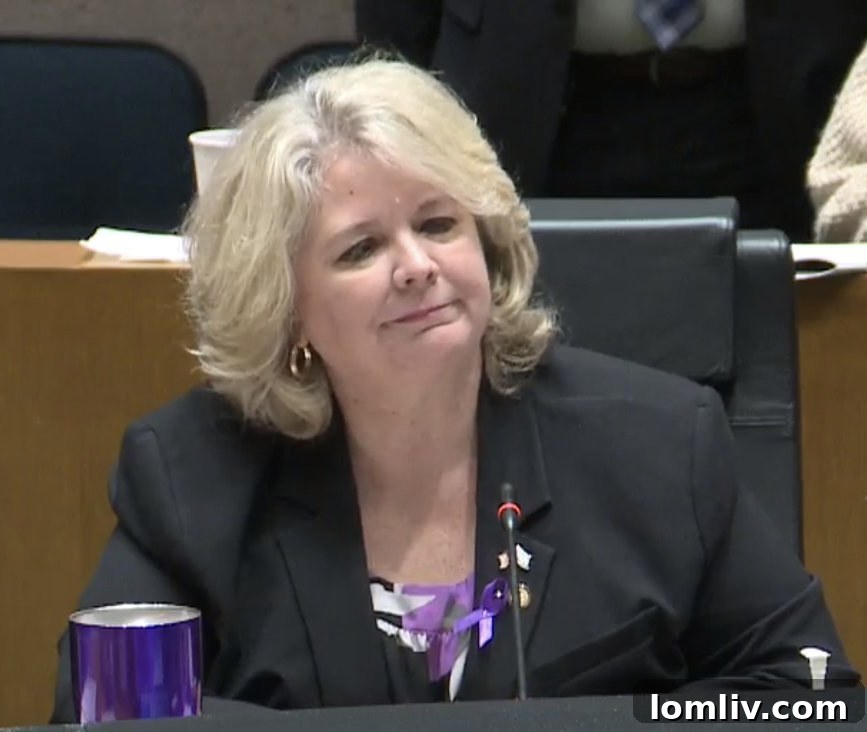
A central tenet of Mendelsohn’s argument revolved around the critical need for increased funding for information technology (IT), particularly in the wake of a disruptive cyberattack that temporarily paralyzed city operations the previous year. She repeatedly underscored the severe risks associated with underfunding IT infrastructure, echoing a powerful statement from Chief Information Officer Bill Zielinski. “The bigger risk we have is to not invest in IT,” Mendelsohn reiterated. “Every other thing we do does not matter if IT fails. If you guys haven’t learned that yet, if you do not include money for IT, when it goes down, it is your fault.” This assertive stance highlighted the urgency of safeguarding the city’s digital backbone for operational resilience and public safety.
City officials acknowledged the challenges in allocating bond dollars to IT, particularly the constraints that might tie their hands for future expenditures if initial amounts are not approved. Despite the initial hesitancy and various proposals, the framework ultimately approved for the Dallas bond election did include a commitment of $5 million for Information Technology. While perhaps less than what some advocates, including Councilwoman Mendelsohn, might have preferred, it signifies a recognition of the importance of digital infrastructure in modern city governance and the lessons learned from recent cybersecurity incidents.
Ultimately, Councilwoman Mendelsohn’s support for the Atkins plan stemmed from what she perceived as strong allocations for critical areas such as streets, parks, and public safety. These foundational services are often seen as pillars of city functionality and resident well-being. She also weighed in on the housing debate, reiterating her fiscal policy perspective: “I think we get closer to what was originally envisioned by our bond task force by saying housing at $61 million.” She further clarified her position, stating, “Again, we have more than a dozen ways to fund affordable housing in this city and taking out debt to do it is just a bad fiscal policy in my opinion.” This viewpoint emphasizes alternative funding mechanisms and a cautious approach to leveraging municipal debt for certain social programs.
A notable omission from the current proposal is any specific funding for much-needed upgrades to the deteriorating Dallas City Hall building. This suggests that while critical infrastructure and community services were prioritized, some long-standing municipal facility needs may be deferred or addressed through alternative means. City Manager T.C. Broadnax assured council members that the process remains flexible, allowing them to continue submitting amendments until a final, binding vote on the ballot propositions is taken later this month. The crucial deadline for formally calling a May election is February 14, underscoring the tight timeline for these significant decisions.
In a final address to the council, City Manager Broadnax reinforced the democratic control inherent in the process, reminding them, “At the end of the day, y’all have complete control over every proposition and every dollar.” This statement empowers the council members to make informed and responsible decisions that will directly impact Dallas residents for years to come. As the city moves closer to the May 4 Dallas bond election, public engagement and ongoing dialogue will be paramount in shaping a bond package that truly reflects the aspirations and needs of this dynamic metropolitan area. Residents are encouraged to stay informed, participate in upcoming town halls, and make their voices heard on these vital investments in Dallas’s future.