

Navigating Dallas’s Fiscal Future: A Deep Dive into the City Budget and Tax Relief Efforts
As the City of Dallas prepares to unveil its comprehensive budget on August 8th, a detailed 72-page presentation to the Dallas City Council has offered a crucial preliminary glimpse into the city’s financial outlook for the coming fiscal years. This early review provides taxpayers and stakeholders with ample information to digest, setting the stage for critical discussions on municipal spending, revenue generation, and strategic priorities.
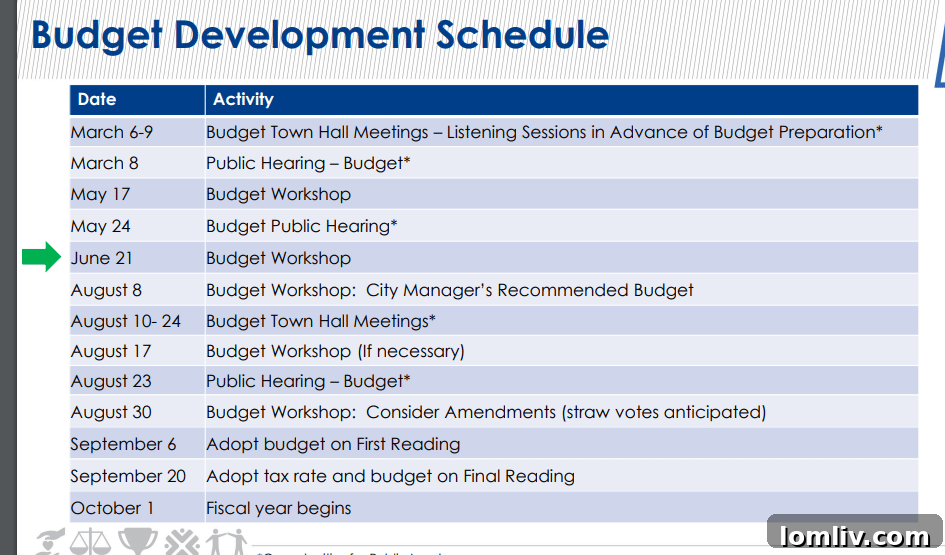
During a pivotal June 21 briefing, Chief Financial Officer Jack Ireland presented an overview of the proposed 2023-24 and 2024-25 budget, addressing initial inquiries and laying out key financial projections. This session is a vital precursor to the official budget presentation, allowing council members and the public to understand the underlying fiscal strategies and potential impacts on various city services and residents.
The City Council’s previous fiscal actions underscore a commitment to financial prudence and taxpayer relief. In September 2022, the council adopted a substantial $4.75 billion budget for the current fiscal year, concurrently marking the seventh consecutive year of a reduced property tax rate. This consistent trend highlights the city’s efforts to balance robust public services with a lighter tax burden on its citizens. With the council scheduled for recess in July, the anticipation builds for intensive budget hearings in August and September, culminating in the adoption of a new fiscal year budget commencing October 1st.
Beyond the annual budget cycle, city leaders are also strategically planning for a significant 2024 bond election. This crucial initiative aims to secure funding for much-needed infrastructure upgrades and capital projects that are essential for Dallas’s continued growth, livability, and economic vitality. From improving roads and public facilities to investing in critical urban development, the bond election is expected to address long-term strategic investments that will shape the city’s future.
Understanding Dallas Property Taxes: Rates, Valuations, and Relief Efforts
Property taxes represent a cornerstone of municipal funding, directly impacting homeowners and contributing significantly to the city’s operational budget. During the recent briefing, CFO Jack Ireland presented several detailed slides elucidating the intricacies of Dallas’s property tax structure. The current property tax rate stands at 74.58 cents per $100 of assessed valuation, a figure critical for calculating individual homeowner tax bills.
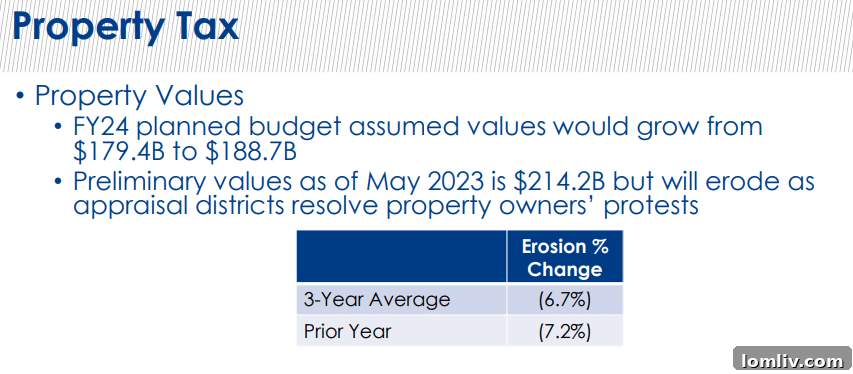
Ireland emphasized to elected officials that while preliminary property values were estimated at an impressive $214.2 billion, these figures are subject to change. He cautioned that these preliminary estimates tend to “erode as property owners protest their values.” This protest process is a fundamental right for property owners to challenge their assessed valuations, potentially leading to adjustments that can affect the city’s total taxable base. The precise, certified value – the definitive figure that will guide budget calculations – will only be available in July, once the Dallas Central Appraisal District finalizes and certifies these valuations. This certification is a critical step, as it provides the concrete financial foundation upon which the final budget will be built.
Homestead Exemptions: Providing Tax Relief for Dallas Residents
In a significant move aimed at providing tangible relief to vulnerable populations, the City Council, on June 14, approved a substantial increase in the homestead exemption. This exemption, specifically for senior citizens and disabled persons, was raised from $115,500 to $139,400. This marks the fifth such increase in just seven years, demonstrating a consistent commitment by the Dallas City Council to support its most vulnerable residents amidst rising property values and the ongoing statewide debate on property tax relief.
CFO Ireland elaborated on the profound impact of this policy, explaining that “a senior citizen who has a homestead exemption and the over-65 exemption, if their property value is $174,250 or less, they would pay zero city property taxes.” This statement highlights the significant benefit of these exemptions, effectively shielding eligible homeowners from municipal property tax burdens up to a certain valuation threshold. The measure not only alleviates financial pressure on seniors and disabled individuals but also reflects Dallas’s broader strategy to enhance affordability and ensure that long-time residents can remain in their homes, contributing to the city’s diverse and stable communities.
Dallas City Council Feedback: Shaping the Budget Through Dialogue and Priorities
The budget process is a dynamic interplay of financial realities, community needs, and council priorities. Janette Weedon, Director of Budget and Management Services, provided crucial insights into the city’s operational costs, noting that personnel expenses constitute approximately 70 percent of the general fund budget. This substantial allocation underscores the city’s reliance on its workforce to deliver essential services across all departments.
The city’s budget includes 15,900 budgeted positions, with roughly 11,900 of these positions funded directly from the general fund. A significant portion of this, specifically 50 percent, is dedicated to public safety, covering police and fire departments. As of June 2023, the actual headcount of employees on the city payroll stood at 13,415. The disparity between budgeted positions and current headcount points to ongoing challenges in recruitment and retention across various departments, particularly in critical areas like public safety.
Key Council Discussions: Personnel, Public Safety, and Fiscal Efficiency
Council members engaged in a robust discussion covering several critical areas, including the necessity of cost-of-living increases for city employees, potential adjustments to the minimum wage, the ongoing challenge of the pension fund deficit, and the unavoidable reliance on overtime pay in understaffed public safety departments. These points highlight the complex balancing act the city faces: ensuring competitive compensation to attract and retain talent, managing long-term financial obligations, and maintaining essential service levels.
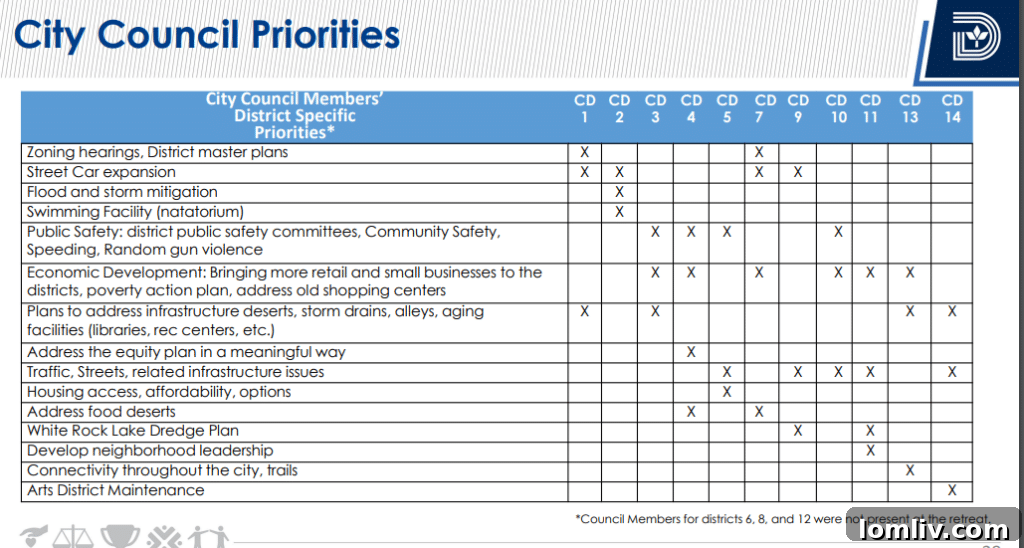
To ensure that the budget truly reflects community and council priorities, members of the Dallas City Council were given until June 30 to submit their top three priorities to City Manager T.C. Broadnax, if they hadn’t already done so during an April 5 strategic visioning retreat. This structured input mechanism is vital for aligning the city’s financial plan with its overarching strategic goals, which often center around public safety, housing, and economic development. Furthermore, Weedon confirmed that the results of a comprehensive community survey and insights gathered from various community engagement sessions will also be integrated into the budget process. This commitment to incorporating citizen feedback is crucial for fostering transparency and ensuring that the budget addresses the actual needs and concerns of Dallas residents. Council members were also actively encouraged to host budget town hall meetings in their respective districts, further extending the reach of public participation in this critical civic process.
Debating Sales Tax Projections and Overtime Funding
One notable concern raised during the briefing came from District 12 Councilmember Cara Mendelsohn, who voiced apprehension over the proposed budget’s sales tax revenue projections of just $431 million. She expressed concern that this figure might be an underestimation, noting a pattern where the city often ends up performing “massive budget amendments” throughout the year to account for higher-than-budgeted sales tax revenue. CFO Ireland responded by clarifying that the proposed budget to be released in August would likely project a higher figure of $448 million, reflecting updated forecasts.
Mendelsohn critically linked this potential under-budgeting of sales tax revenue to funding for “special projects” and, more pointedly, to the issue of overtime pay in essential departments like police and fire. She advocated for a more “accurate accounting” of the true financial needs, particularly for overtime, suggesting that relying on amending the budget with higher sales tax revenues later in the year is not an optimal or transparent approach. Her comments underscore a desire for more precise initial budgeting, reducing reliance on reactive amendments and ensuring that critical departmental needs, such as overtime for public safety, are accurately planned and funded from the outset.
Justifying Fee Increases with Enhanced Efficiencies
District 3 Councilman Zarin Gracey brought another important perspective to the table, inquiring about proposed fee increases within the budget. His core point was that any increase in fees should be accompanied by a demonstrable increase in efficiencies to justify the additional burden on residents and businesses. “If there is an increase in fees, I would like to see an increase in efficiencies alongside that to justify it,” Gracey stated. He acknowledged external economic pressures such as inflation and rising costs but emphasized the city’s responsibility to mitigate these impacts through internal improvements.
Gracey’s call for efficiency reflects a common taxpayer sentiment: if costs are going up, there should be clear evidence that the city is also striving to operate more effectively, reduce waste, or find cost savings elsewhere. This principle encourages city departments to continuously seek innovative solutions, streamline processes, and optimize resource allocation, ensuring that any financial adjustments are not merely passed on to the public but are part of a broader commitment to fiscal responsibility and service enhancement.
Looking Ahead: The 2024 Bond Election and Dallas’s Future Infrastructure
Beyond the immediate fiscal year, Dallas is also laying the groundwork for its future through the upcoming 2024 bond election. This critical vote will determine the city’s ability to fund substantial infrastructure and capital projects that are vital for sustaining growth, improving quality of life, and enhancing urban resilience. Such projects typically encompass a wide range of essential areas, including road improvements, maintenance of public buildings, upgrades to water and sewer systems, development of parks and recreational facilities, and investments in public transit infrastructure.
A significant focus of the 2024 bond election is the proposed allocation of $150 million specifically for housing initiatives. This emphasis on housing reflects Dallas’s commitment to addressing affordability challenges, expanding access to safe and quality housing, and supporting diverse communities. As Dallas continues to grow, strategic investments in housing infrastructure become increasingly important for ensuring equitable development and preventing displacement. The bond election represents a forward-thinking approach to financing these long-term investments, allowing the city to secure funds for projects that will benefit residents for decades to come without solely relying on annual operating budgets.
Conclusion: A Transparent and Engaged Path to Dallas’s Fiscal Health
The journey towards adopting Dallas’s 2023-24 and 2024-25 budget is a multifaceted process, marked by detailed financial briefings, rigorous council discussions, and invaluable community engagement. From managing property tax rates and expanding homestead exemptions to navigating complex personnel costs and ensuring public safety, the city’s financial leaders and elected officials are tasked with balancing numerous competing priorities. The ongoing dialogues regarding sales tax revenue projections and the demand for efficiency alongside fee increases underscore a collective commitment to fiscal prudence and transparency.
As Dallas moves closer to the August 8th budget unveiling and subsequent public hearings, the active participation of residents and stakeholders will remain paramount. The 2024 bond election further emphasizes the city’s long-term vision for infrastructure and housing, promising sustained development and improved quality of life for all its citizens. Through transparent processes, responsive leadership, and community collaboration, Dallas aims to chart a course for robust fiscal health and continued prosperity, ensuring that its financial decisions today lay a strong foundation for a thriving future.