Costco’s Long-Awaited Arrival in Dallas: A Win for Residents and Revenue
For years, the prospect of a Costco Wholesale location within Dallas city limits remained an elusive dream for many residents. What once began as a light-hearted April Fools’ joke about the retail giant acquiring the opulent Hicks-Crespi Estate on Walnut Hill Lane has now transformed into a tangible reality. While the luxurious estate found a new owner in Andy Beal in a very real transaction, Costco’s persistent pursuit of a Dallas presence has finally culminated in a prime location.
After scouting numerous potential sites, from bustling dealership plots on East Northwest Highway to strategic intersections like Coit and Churchill just west of Central Expressway, the wholesale powerhouse has officially landed. This long-anticipated arrival at the Coit and Churchill intersection is set to bring a wave of excitement to North Dallas, promising to reshape local shopping habits, inject significant life into the municipal economy, and enhance the overall retail landscape of one of the nation’s fastest-growing metropolitan areas. This announcement marks the end of a protracted search, signaling a new chapter for both Costco and the city of Dallas, and promising substantial benefits for its residents and fiscal health.
Dallas City Council Backs Costco with Significant Economic Development Grant
A pivotal moment in this journey occurred when the Dallas City Plan Commission recently gave Costco its unequivocal green light. Building on this momentum, the city’s Office of Economic Development has proposed a Chapter 380 economic development grant, “not to exceed $3,000,000,” to facilitate the project. This strategic incentive is designed to ensure the retail giant establishes its first superstore within Dallas city limits, thereby channeling its substantial sales revenues directly into the city’s coffers. The funding for this initiative is not arbitrary; it originates from a specifically designated 2012 bond proposition, earmarked to attract and retain businesses vital to Dallas’s sustained growth and prosperity.
For District 11, where the new Costco will be situated, this represents the first significant incentive money spent in over a decade, highlighting the project’s importance. From a municipal finance perspective, the decision is a clear strategic win. The City of Dallas desperately needs to bolster and diversify its revenue base, and attracting a high-volume retailer like Costco is a direct, impactful, and proven way to achieve this. Arguments against such an incentive often overlook the broader economic multipliers and the long-term fiscal benefits that accrue to the city and its residents. This investment is not merely about a single store; it’s about stimulating widespread economic activity, creating numerous local jobs, and ensuring a robust and stable financial future for Dallas.
Councilman Kleinman Highlights Long-Term Revenue and Project Hurdles
City Councilman Lee Kleinman, a key advocate for the project, has passionately underscored the substantial return on investment anticipated from the $3 million grant. He estimates that sales tax revenues alone could exceed ten million dollars over the next ten years, directly attributable to the new Costco location. This projection vividly demonstrates the justification for the incentive, transforming a prudent, one-time investment into a sustained and significant revenue stream for the city. Kleinman also revealed the intensity of the negotiations, noting he pushed Costco considerably hard last year, to the point where they nearly withdrew from discussions. His persistence, however, ultimately paid off, securing a deal that promises immense value for the city and its residents.
When questioned about the necessity of economic incentives for a company of Costco’s stature, Kleinman affirmed their importance, especially given the inherent complexities and costs of developing a large-scale retail site. He also pointed out that the chosen location, while excellent, is slightly smaller than Costco’s ideal footprint for maximizing profitability. J. Hammond Perot, assistant director in the Office of Economic Development, echoed this sentiment in an email, stating, “They wouldn’t do the deal without the support due to overall project costs. We had been trying to get a Costco for over 10 years, and that’s what it took.” This insight reveals that the grant was not merely a bonus for Costco but a critical component in making the Dallas project financially viable and attractive for the retail giant, securing a presence the city had long sought.
“We had been trying to get a Costco for over 10 years, and that’s what it took,” confirmed J. Hammond Perot, assistant director in the Office of Economic Development, highlighting the significant effort and strategic necessity of the incentives to bring this major retailer to Dallas.
Jennifer Murillo, director of real estate development for Costco, shared with the City Plan Commission that “the company has been looking for a site in Dallas for many years.” She detailed that the 13.2-acre Coit Road location, situated near the southwest corner of North Central Expressway and LBJ Freeway, was secured after coming up for auction. This land, previously under the ownership of the Texas Department of Transportation, offers unparalleled access despite being approximately 3 acres smaller than Costco’s preferred site. Murillo emphasized its appeal, noting its excellent accessibility and “fully developed infrastructure in place,” making it a highly attractive, albeit slightly constrained, option for their first Dallas location.
State-of-the-Art Retail Experience and Community Integration
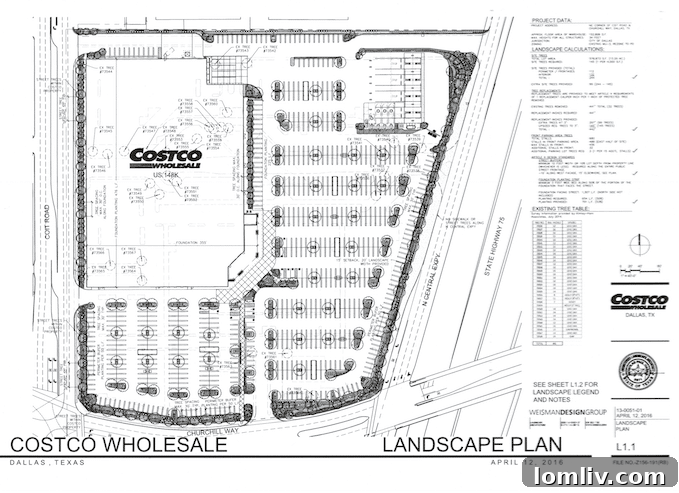
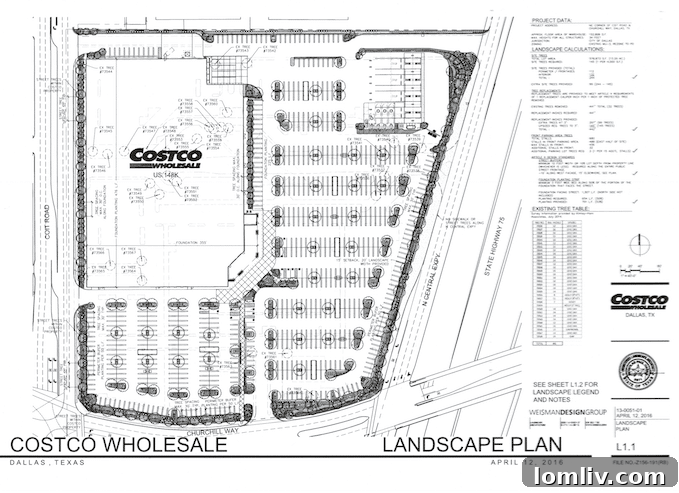
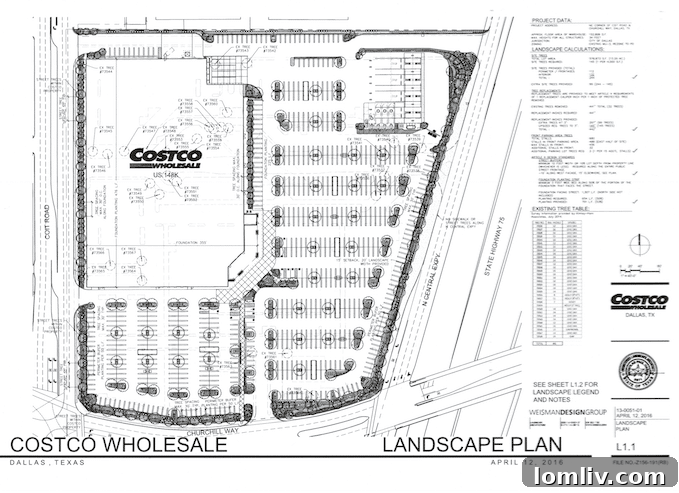
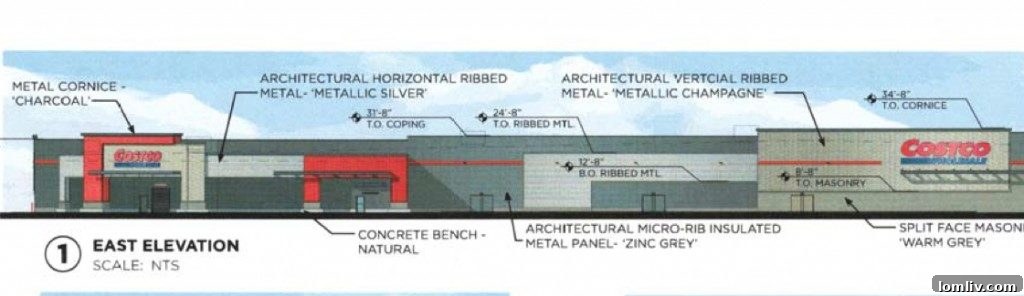
The proposed Costco store promises a comprehensive and robust retail experience within its expansive 151,000-square-foot facility. It will feature 16 state-of-the-art fueling stations, a generous 703 parking stalls—significantly more than city requirements—and the full suite of member services that define the Costco brand. These offerings include a modern pharmacy, a bustling in-house bakery, and a comprehensive tire center, all designed to meet the diverse needs of Dallas consumers. While the inclusion of a liquor store is yet to be confirmed, the overall offering is designed to provide unparalleled value and convenience.
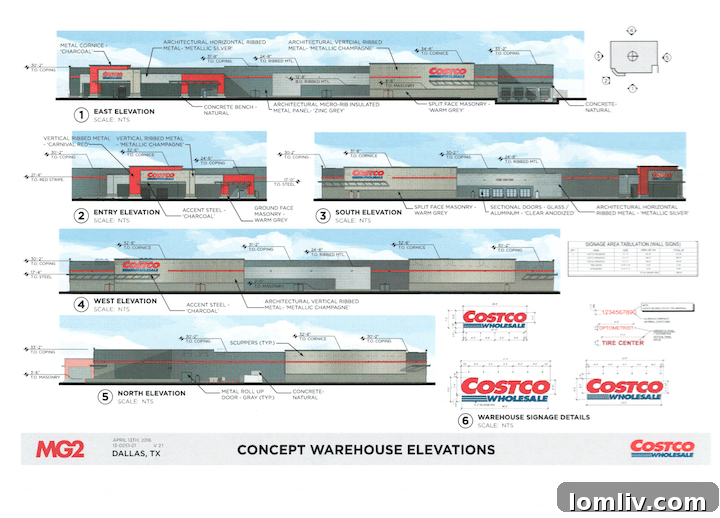
Notably, Costco has also collaborated with the CityDesign Studio to enhance the store’s aesthetic appeal, ensuring it integrates harmoniously and thoughtfully with the surrounding urban environment. This commitment to community and visual quality extends beyond the building itself; the landscaping plan is particularly ambitious, calling for 244 trees – a remarkable 99 more than are strictly required by city regulations. This thoughtful approach to design, environmental integration, and exceeding urban planning standards underscores a mutual win for both the retailer and the community, creating a visually pleasing, highly functional, and environmentally conscious retail space. It exemplifies a true “win-win” scenario.
For the City of Dallas, the establishment of this Costco is more than just a new store; it’s a critical component in addressing a pressing financial challenge. The city has been experiencing a rapid decline in revenue from traditional sources, such as telephone land lines, and a noticeable decrease in sales tax revenues from shopping centers due to the inexorable rise of online commerce. In this evolving economic landscape, it is imperative for Dallas to actively seek and implement logical and sustainable strategies to expand and diversify its revenue base. The new Costco represents a significant step in this direction, promising to capture retail spending that currently flows out of the city to surrounding suburbs, thereby strengthening the local economy.
Stemming Revenue Leakage: Bringing Shoppers Back to Dallas
The highly anticipated opening of a Costco in Dallas is set to significantly redirect a large segment of shoppers who currently travel to surrounding suburbs like Plano (East and West), Duncanville, Fort Worth, Arlington, Southlake, Lewisville, Frisco, and Rockwall for their wholesale needs. This includes a substantial demographic of affluent consumers from areas such as the Park Cities, who will now have a much closer, convenient, and attractive shopping option right within Dallas. This “revenue leakage,” where valuable sales tax dollars have been flowing out of the city to support the economies of its neighbors, has long been a concern for Dallas officials, and the new Costco is a direct measure to stem this outflow.
Dormand Long, a former businessman and consumer activist known for his history of suggesting innovative revenue-increasing strategies for the city, passionately emphasizes the immediate value proposition of a Costco membership. “It is pretty easy to pay for a Costco membership with the fifteen cents per gallon savings on gasoline, particularly as the gas is the highest grade available, top tier,” Long notes. His previous suggestions for urban innovation, such as studying Denver and Seattle’s success in converting coin parking meters to modern kiosks – an initiative that boosted Denver’s parking and overdue fines by $42 million, enough to fully fund its public library system – highlight his keen understanding of how cities can strategically enhance their financial health through smart, targeted initiatives. The Costco project fits squarely into this visionary approach to municipal economic development.
The “Costco Effect” on Local Home Values and Community Amenities
Beyond the immediate influx of sales tax revenue, the Coit/Churchill site offers additional, less direct but equally significant community benefits. Strategically positioned away from single-family residential neighborhoods, a Costco development often has a profound and positive influence on nearby home values. Various studies have consistently shown that properties situated within a reasonable driving distance of esteemed retailers like Costco, Trader Joe’s, or Whole Foods experience a significant enhancement in their market value. This phenomenon, often dubbed the “Costco Effect,” reflects the strong value consumers place on convenient access to high-quality amenities, affordable goods, and desirable services, thereby boosting the desirability of surrounding neighborhoods.
Dormand Long, while generally hesitant about municipal subsidies for privately owned enterprises, views this particular deal as a pragmatic and necessary exception. He states, “While I am generally opposed to municipal subsidies to privately owned enterprises, this appears to be an option that would fund direly needed library, streets and other much needed improvements in the City of Dallas.” His assessment underscores the critical need for new, reliable revenue streams to support essential public services, and the Costco project is seen as a pragmatic and effective solution to that challenge. Costco’s enduring success, he adds, fundamentally stems from its unwavering responsiveness to the desires and needs of its served markets, consistently maintaining some of the highest customer service ratings in the competitive retail sector.
Councilman Kleinman, often considered one of the biggest fiscal hawks on the City Council, wholeheartedly agrees with the positive implications of this development. He points out the absurdity of the current situation where prime urban land has lain fallow for years while Dallas residents are compelled to drive north to Plano’s two Costco locations on Central Expressway and the Dallas North Tollway to fulfill their shopping needs. He also commends the Texas Department of Transportation (TxDOT) for making the land available, recognizing its immense potential to finally serve a greater community and economic purpose within Dallas.
Addressing Criticisms and Understanding Costco’s Business Model
Despite the widespread enthusiasm and projected benefits, not all city council members share the same level of excitement. Councilman Phillip Kingston, for instance, has voiced strong opposition, contending that Costco, being a financially robust and successful corporation, should not require any municipal incentives whatsoever. He has publicly stated his unwillingness to support the grant, citing his principled stance against corporate subsidies. However, proponents hope he might reconsider his position, weighing the significant economic benefits and enhanced convenience for his constituents and the city as a whole against the principle of corporate subsidies, especially when the funds are already earmarked for economic development.
Understanding Costco’s unique business model helps shed light on its operational strategies and profitability. There is ongoing speculation that Costco may raise its membership fees, which are a critical component of its profitability, accounting for “almost 70% of the $3.6 billion in operating profits it generated last year.” Furthermore, the company made headlines with its strategic decision to discontinue accepting American Express cards after June 19th, transitioning exclusively to VISA as its primary credit card partner. Historically, Costco has appealed to a demographic of higher net worth consumers, many of whom often carried American Express cards (or preferred cash for payments) and were accustomed to paying annual fees ranging from $55 to $110 for Executive Level memberships. For these loyal shoppers, an incremental increase of $5 or $10 per year is often negligible, especially if they can offset it with generous cash back rewards from their new VISA co-branded card, maintaining the perceived value of their membership.
A curious side note that impacts broader consumer trends: the recent pattern of American Express losing key partnerships, such as Admiral’s Club and JetBlue, and now Costco, raises pertinent questions about its future market position and overall appeal for premium cardholders. This broader shift in payment ecosystems impacts consumer choices and loyalty in the high-end credit card market.
A survey from Millionaire Corner, an investment site owned by the Spectrem Group in Lake Forest, Ill., though a couple of years old, still offers remarkably relevant insights into the shopping habits of affluent individuals:
… among those with a net worth of $5 million or more (excluding their primary residence), Home Depot stands out as the favorite store, regularly visited by 57%, followed closely by Costco (46%), Lowe’s (44%), and Target (41%). Interestingly, a third of these high-net-worth individuals also report shopping at Walmart.
Equally revealing are the places they generally avoid: only a mere 2% of the surveyed investors (based on 1,200 individuals with net worths spanning less than $100,000 to over $5 million) ever frequent luxury department stores like Lord & Taylor. Similarly, a surprisingly low 8% of the highest net-worth shoppers choose to shop at Neiman Marcus.
This compelling data powerfully reinforces the argument: Costco caters effectively to a broad and affluent demographic, making it an ideal choice for Dallas’s economic development objectives. Its presence is not just about retail convenience; it’s about strategic fiscal growth and enhancing the quality of life for a significant portion of the city’s population. We need a Costco in Dallas—it represents an optimal and strategic use of already earmarked economic investment funds, and there is no doubt that the return on investment for the city will be substantial, enduring, and multifaceted, benefiting both the municipal budget and its discerning residents.