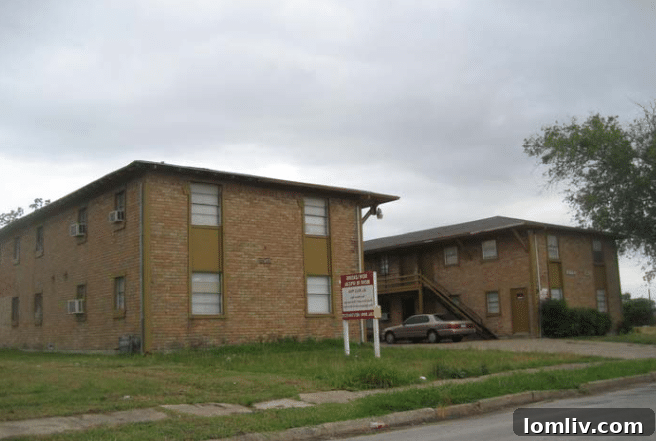
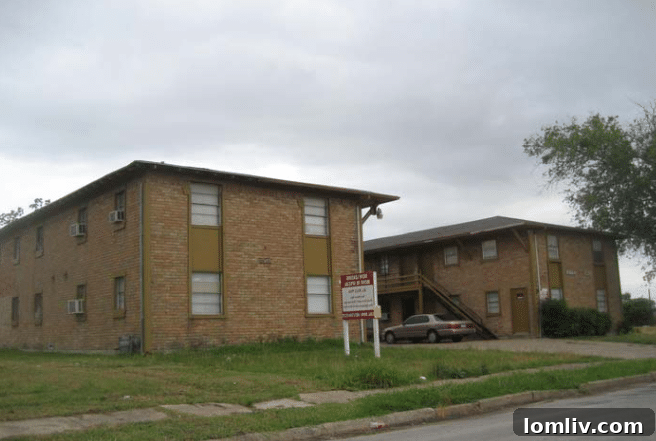
The city of Dallas is grappling with a multifaceted housing crisis, where stories of unimaginable living conditions and illegal evictions are far too common. Take, for instance, a residential complex in Dallas that many believe is beyond repair and should be razed. Here, residents contend with a shocking lack of basic necessities, including unreliable running water and non-functional air conditioning, even as violent crime is a regular occurrence. Children are reduced to playing with a half-empty water bottle because essential toys and recreational equipment are scarce. The threat of illegal evictions looms large, often forcing vulnerable families into homelessness, leaving them to live out of their vehicles in discount store parking lots.
This dire scenario is not an isolated incident but a pervasive issue highlighting the urgent need for comprehensive solutions in Dallas. The city faces a complex web of challenges, from unscrupulous slumlords engaging in illegal eviction practices that exacerbate homelessness, to a critical shortage of genuinely affordable housing options, and the prevalence of high-crime neighborhoods where property ownership and economic stability remain elusive.
In response to these pressing issues, a dedicated coalition of city officials, law enforcement agencies, legal advocates, and concerned community stakeholders has united. Their collective mission is to develop and implement innovative strategies aimed at reducing crime rates in local neighborhoods, fostering safer environments, and significantly improving the quality of life for Dallas’s most vulnerable and overlooked populations.
Identifying and addressing these high-risk areas is a crucial first step. HomeByFour.com previously pinpointed seven high-crime neighborhoods in Dallas, underscoring the severity of the challenge. The Dallas Police Department (DPD) has also actively engaged in these efforts, outlining comprehensive strategies for violent crime reduction and detailing their ongoing initiatives to enhance police visibility and foster community-oriented policing within these affected zones. These proactive measures are fundamental to re-establishing trust and order in areas long neglected.
At the forefront of these innovative solutions are local attorney Mark Melton and his wife, Lauren Melton, who serves as CEO of the Dallas Eviction Advocacy Center. They have pioneered a groundbreaking “saturation theory” for legal aid that has proven so remarkably effective that other major metropolitan areas are now seeking to replicate its success. The Meltons actively collaborate with senior city staff, the DPD, and the local apartment association. Together, they engage in critical discussions encompassing code enforcement and property remediation, public safety enhancements, proactive crime prevention strategies, and vital rehousing initiatives across various apartment complexes citywide. This collaborative working group, convened by Dallas Director of Government Affairs Carrie Rogers, has also initiated a crucial dialogue regarding the amendment of Chapter 27 of the Dallas City Code, which specifically outlines the minimum property standards essential for safe and habitable living conditions.
Reflecting on the progress and the collective spirit, Carrie Rogers affirmed, “This is solvable with a willing spirit, the right resources, and good communication.” Her statement encapsulates the optimistic yet determined approach taken by this coalition.
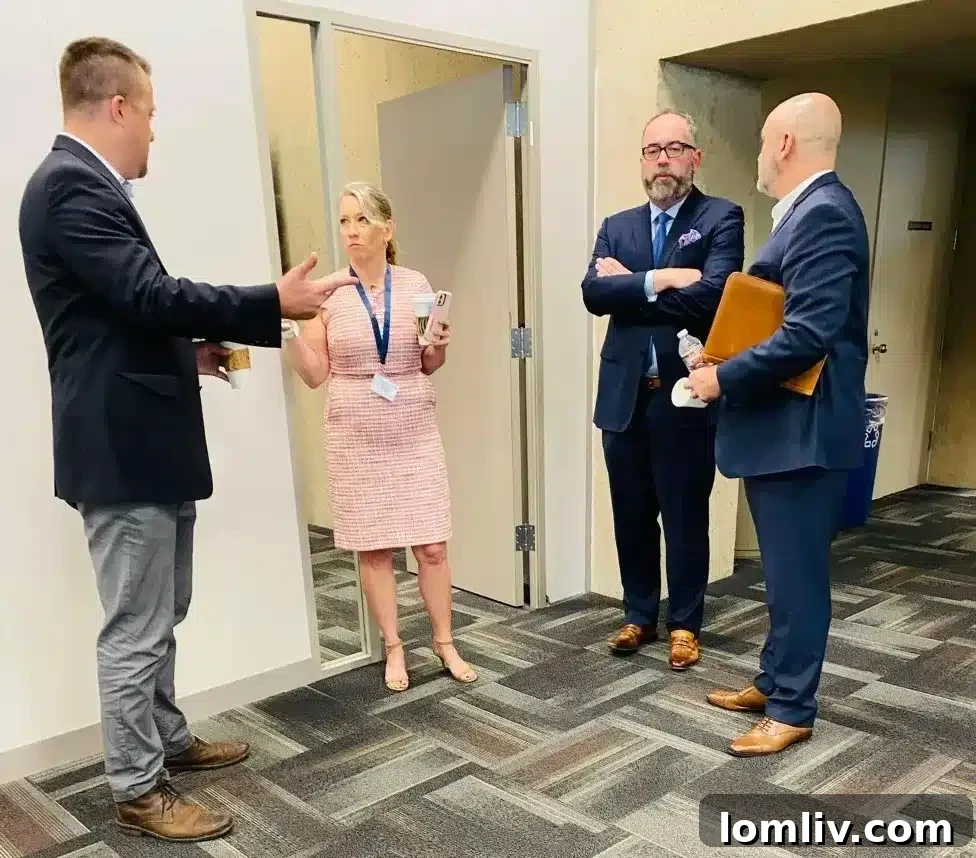
Following the group’s inaugural meeting, Mark Melton shared his enthusiasm in a social media post, stating, “The state of many of our communities is simply unacceptable, and I’m glad to say that everyone is on board for developing some outside-of-the-box ideas for addressing these issues directly and effectively.” This sentiment underscores the shared commitment to innovative problem-solving. The “working group” has scheduled its second pivotal meeting for July 21st, signaling sustained momentum in their efforts.
Jennifer Brown, Dallas’s manager of public information, communications, outreach, and marketing, emphasized the severity of the property standards issue in an email to Daltxrealestate.com. She noted, “There are properties that have a long way to go to meet minimum property standards.” To tackle this, the City of Dallas has significantly increased staffing for its multi-family property code enforcement team. This augmentation is complemented by strategic partnerships with the DPD and the Office of Integrated Public Safety Solutions (OIPSS). Furthermore, the city is actively collaborating with business and community partners to amend Chapter 27 of the Dallas City Code – Minimum Property Standards. Brown clarified the city’s intent: “The city’s intention is to efficiently utilize our staff and resources to focus on properties which have egregious violations present as well as bad business practices,” ensuring that efforts are directed where they are most critically needed.
The Problem: Systemic Neglect and Unsafe Housing in Dallas
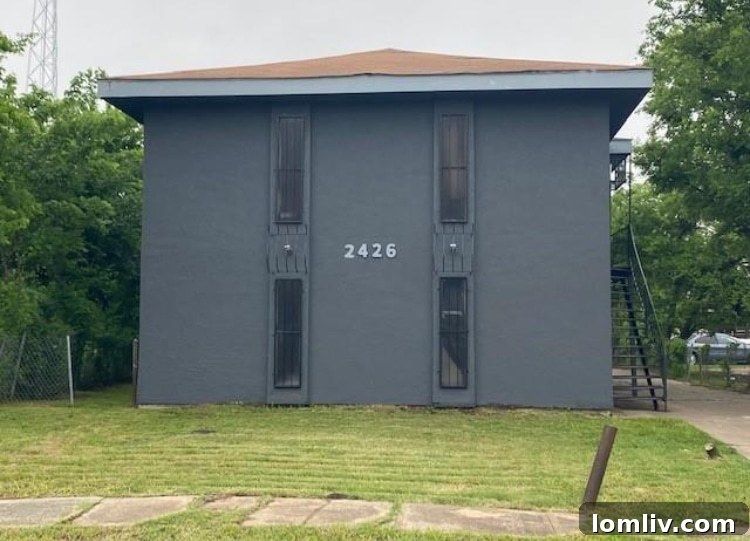
The heart of Dallas’s housing crisis often lies in areas like South Boulevard/Park Row, notoriously listed as the most dangerous place to live in Dallas. This historic district, originally developed by the Jewish community in the early 1900s near Fair Park, now presents a stark contrast to its past. The decline of such areas showcases the city’s broader struggle with maintaining equitable living standards across its diverse neighborhoods. Property values and desirability are severely impacted, with few opportunities for growth or investment. For example, a rare current listing in the South Boulevard/Park Row area features a 10-unit structure at 2426 Meyers Street, priced at $489,000 by James Glynn with JG Real Estate, which has remained on the market for over two months, illustrating the slow pace of investment in these challenging areas.
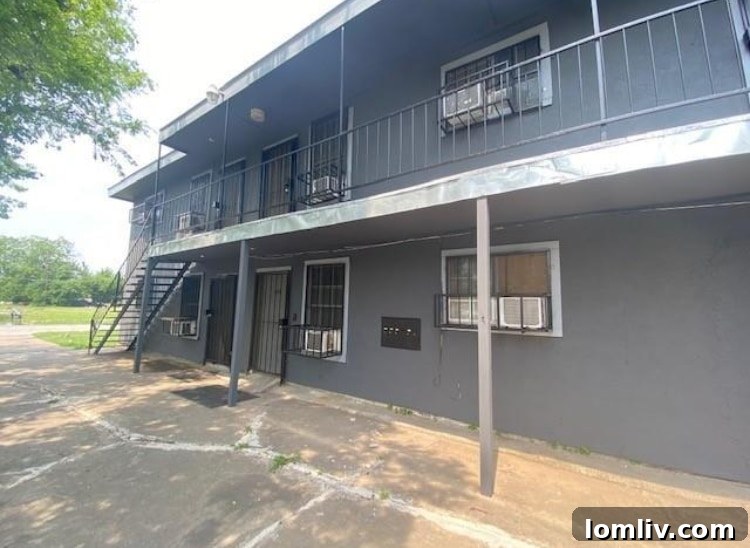
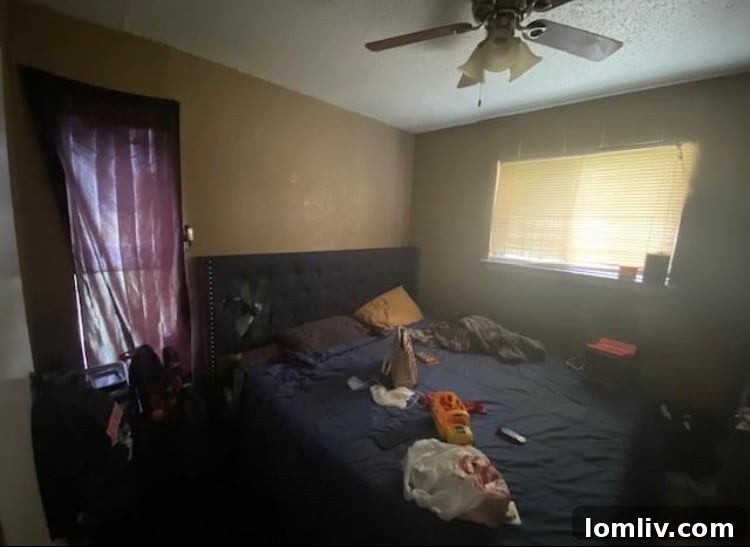
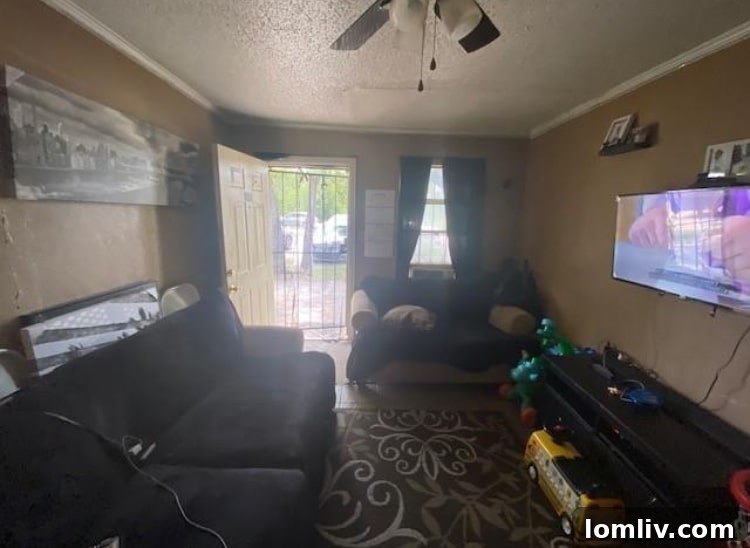

The housing complexes at 2625 Meyers St. and 2627 Meyers St., collectively known as Reed Manor, epitomize the crisis within this challenging area. According to Mark Melton, these properties are “almost uninhabitable,” a stark warning he reinforced during an interview with a Daltxrealestate.com reporter: “You should not go there. Like, do not go there by yourself.” This chilling advice highlights the extreme danger and neglect prevalent at the site.
The eight-unit apartment complex, constructed in 1965, is not only dilapidated but also a focal point for dangerous activities. While units rent for approximately $800 a month, the transient nature of its occupants makes it difficult to ascertain legitimate residents from individuals engaged in drug dealing and gang-related activities. Melton’s assessment of the structural integrity is equally grim: “I’m not an engineer, but it probably does need to be bulldozed.” The city recently took a decisive step, appointing a “receiver” to oversee the project’s operation. This move could lead to either extensive renovations to meet basic safety and living standards or, more likely, the demolition of the structurally unsound buildings, freeing the land for potential redevelopment that genuinely serves the community.
Jennifer Brown elaborated on the city’s legal actions: “The city filed a lawsuit against the property owner to address the outstanding code violations and ongoing criminal activity at the apartments at 2625 and 2627 Meyers Street.” A court order was secured, compelling the owner to rectify all violations and implement crime prevention measures. However, the owner’s failure to comply led the court to appoint a receiver, granting them full possession and control of the property. The receiver is now tasked with addressing both code violations and criminal activities, a comprehensive responsibility aimed at restoring safety and habitability.
However, this transition immediately created a new crisis: occupants, many current on rent payments, were issued 24-hour eviction notices. Mark Melton swiftly intervened, identifying that while the action might not have been malicious, it was certainly inconsiderate and lacked any provision for rehousing the displaced residents. He noted the extreme vulnerability of the tenants: “These are poor people without a lot of resources. None of these people have leases. They’re handing over a money order once a month.” This informal arrangement leaves tenants with minimal legal protection and makes them easy targets for arbitrary displacement.
Melton, alongside other dedicated attorneys from the Dallas Eviction and Advocacy Center, successfully negotiated an agreement to ensure that these evictions would proceed lawfully and with due consideration for the tenants. Melton emphasized a broader humanitarian principle: “We need to be thoughtful about rehousing people, not just unhousing them.” He extended this concern to other problematic properties across Dallas, mentioning, “We have this problem across the city — there are apartments full of mold. [An Oak Cliff apartment complex] didn’t have hot water for three weeks. We want to compassionately take care of people in these apartments and talk about how we can improve their quality of life.”
Jennifer Brown acknowledged the significant contribution of multi-family properties to Dallas’s violent crime statistics and code violations, noting they are major drivers of 311 service requests, nuisance abatement cases, and community prosecution efforts. To combat this, OIPSS and the Code Compliance Department launched the Action Team Model, a proactive approach to address issues at multi-family properties, supporting DPD’s Nuisance Abatement Unit and Community Prosecution efforts. Brown highlighted the effectiveness of building relationships with property owners, stating, “Most – not all – but most property owners are good actors or may be new owners desiring to reform a property.” However, she was unequivocal about the presence of “bad actors” and the city’s focus: “But make no mistake, we have bad actors doing the wrong thing. The performance of the property is what we care about – the safety of our residents.” She also stressed the city’s non-discriminatory approach to assistance: “Our office is not in the business of selecting which residents we help – if they are worthy or not worthy. All residents deserve the right to a safe and habitable home.” To uphold this right, the city has expanded its multi-family property code enforcement team, which conducts inspections based on 311 calls and performs comprehensive, graded inspections. Properties failing to achieve compliance within a reasonable timeframe face fines, citations, and potential escalation to the City Attorney’s Office, signifying a serious commitment to enforcing standards.
The Solution: Collaborative Action and Community Empowerment
In the face of these formidable challenges, Dallas is forging ahead with innovative solutions that blend enforcement with community support. A prime example is The Volara apartment complex in Oak Cliff, which has been assigned two full-time Dallas police officers. These officers have demonstrated an extraordinary commitment to the residents, taking a deep interest in their well-being and becoming integral parts of the community, as observed by Mark Melton. Alongside police presence, code compliance officers are also dedicated to the area, ensuring property standards are met. Beyond enforcement, the Park and Recreation Department is actively exploring programming options for children, aiming to provide safe and engaging activities. Efforts are even underway to reopen a nearby boxing gym, pending a crucial code inspection, offering a structured outlet for youth.
Melton highlighted the success of this integrated approach, stating, “Community policing is happening, which is really good. We’ve got people there interacting with them. There’s an officer raising money for kids to go to summer camp at a rec center, the exact thing you should be doing in a community policing environment.” This hands-on engagement fosters trust and provides positive role models, transforming the relationship between residents and law enforcement.
The spirit of community extends beyond official initiatives. On a recent Mother’s Day weekend, volunteers brought joy and resources to the area, distributing pizzas, art supplies, toys, and even an ice cream truck. These acts of kindness demonstrate the profound impact of collective goodwill. Melton articulated the broader societal implications: “There are things we can do to make people’s lives easier and stable. Every week I drive into some part of town that is stressed in every sense of the word. At some point, I am driving past a full patio of people drinking mimosas on a Sunday afternoon. There is a kind of a tale of two cities.” This stark contrast underscores the urgent need for advocates to amplify the voices of those struggling to provide basic necessities for their children. Historically, these communities have been marginalized, but current advocacy efforts are striving to bring their struggles into the public consciousness.
The working group, meticulously convened by Carrie Rogers, is actively developing innovative strategies to address persistent code compliance issues with resistant landlords. A key focus of their work involves a thorough review and potential amendment of the section of the city code that sets minimum standards for rental properties. Any proposed changes will ultimately require approval from the Dallas City Council, ensuring democratic oversight. Melton noted the collaborative spirit: “I think everyone agrees there is a problem here. We didn’t get to a point where we said, ‘Here’s a plan.’ The idea here is to actually do it right. We’re looking at other cities to see if there are any best practices.” This commitment to learning and adapting from successful models ensures that Dallas’s solutions are both effective and sustainable. Meanwhile, the Dallas Eviction Advocacy Center’s “saturation theory” has garnered significant attention, with other metropolitan areas actively studying its model. Melton was invited in April to present this theory before the Equal Access to Justice Commission, signifying its growing recognition as a national best practice.
Saturation Theory: Rebalancing Power in Eviction Courts
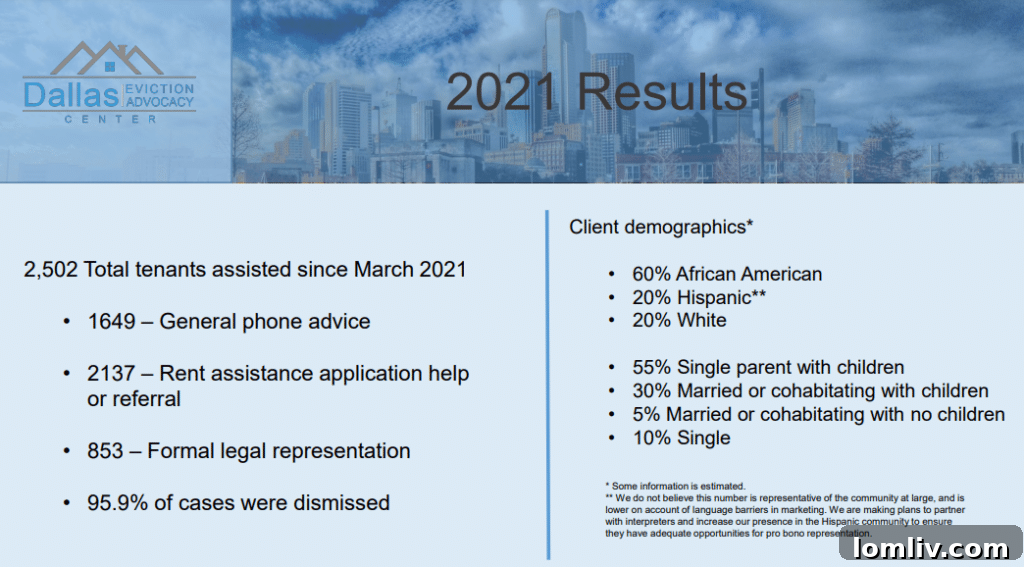
The genesis of the “Saturation Theory” lies in the profound challenges unleashed by the COVID-19 pandemic in Texas in 2020. As lockdowns and economic disruptions rendered many unable to work, a wave of lawful and unlawful evictions threatened to engulf vulnerable families. Mark Melton, recognizing the immense need, immersed himself in eviction law to provide immediate assistance. What began as a personal initiative quickly blossomed into a grassroots movement, with 40 to 50 volunteers swiftly joining his cause. In less than a year, this dedicated group had provided crucial legal support to an astounding 6,500 tenants, preventing countless instances of homelessness.
As businesses gradually reopened in early 2021, the nature of the work shifted from emergency relief to more formal legal advocacy, and the initial wave of volunteers began to diminish. In response, Melton and his wife, Lauren, strategically enlisted a team of full-time lawyers. Their innovative approach involved saturating the Justice of the Peace (JP) courts, stationing an attorney in each of the city’s 10 JP courtrooms. These lawyers were ready and available to provide immediate legal counsel to individuals facing removal from their homes, effectively transforming the eviction process into a more equitable one.
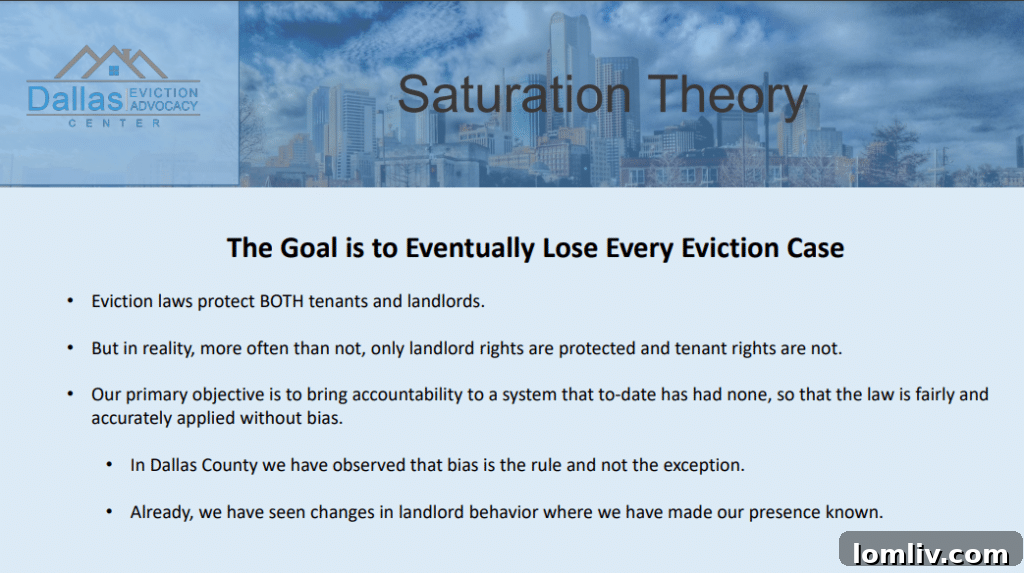

Melton articulated the core problem and the solution with striking clarity: “We’ve got a situation out there where we’ve got a huge percentage of these eviction cases where everybody’s doing it wrong. If you can show, or even say, a tenant is behind on rent, a judge will grant you an eviction.” He pointed out the systemic gamble by landlords: “Landlords gamble, and what’s the point in taking the time to do it right when the judge is just going to grant it anyway?” The “Saturation Theory” directly counters this imbalance. “The way that we operate is we stand up there and ask people if they need a lawyer. All I’ve got to do is ask the landlord if they gave notice and did it properly. Is there any evidence that they owe you rent? Almost always the answer is no. These things take three minutes.” This rapid intervention exposes procedural errors and lack of evidence, often leading to dismissal or proper legal handling of cases. “If we could represent all of these people, the 70 percent of evictions that happen unlawfully would evaporate. The whole model is to stay in one city until you reach complete saturation.” This strategic presence ensures that landlords are compelled to adhere to legal procedures, thus protecting tenant rights and preventing unjust evictions.
The human cost of unchecked evictions is profound. When people are evicted with just 24 hours’ notice, they are stripped of the time and financial resources necessary to secure new housing. Melton starkly illustrated the devastating consequences: “You can literally drive to any Walmart in Dallas and there will be multiple families living in their cars in the parking lot.” This reality underscores the critical role of the Eviction Advocacy Center in stemming the tide of homelessness.
The Eviction Advocacy Center, where Melton serves as board president, has been bolstered by generous donations and vital funding from a range of philanthropic organizations, including Margot Perot, The Meadows Foundation, and United Way, among others. These private contributions are fundamental to the center’s operational independence and agility. Melton emphasized the cost-effectiveness of prevention: “The real cost to do this at scale and solve the whole problem is between $3 [million] and $4 million. According to [Housing and Urban Development], the cost of one homeless person — with mental health services, the food pantry, and jails — is about $40,000 per person. So for $4 million, you can help 100 homeless people or you can stop thousands of people from being homeless in the first place.” The center’s deliberate choice to forgo government funding is also strategic: “We flat-out refuse to take government money because it comes with too much red tape. There’s a whole body of law on what they can and can’t do. My funders know exactly what I’m doing. I don’t care how much money you make or if you’re undocumented.” This independence allows the center to provide assistance to all individuals in need, without bureaucratic constraints or discriminatory criteria.
Melton maintains that while the challenge is substantial, it is not insurmountable. “The saturation theory is the only way to do it,” he asserted. “The checkpoint here is the JP courts because that’s where everybody has to go to get their evictions. That’s what changes the whole system, when the landlord figures out that they have to start doing it right. We’ve changed the balance of power. Everyone is going to benefit.” This rebalancing of power ensures fairness and accountability, leading to better outcomes for both tenants and landlords who follow proper legal procedures. Jennifer Brown expressed deep gratitude for Melton’s efforts, stating, “We are grateful for what he is doing, and for helping to elevate the issue among city leadership and our community partners.” His work exemplifies the extraordinary commitment required to protect the most vulnerable in the community.
Dangerous Neighborhoods and Comprehensive Safety Initiatives
Beyond the critical housing issues, Dallas is actively addressing public safety in its most vulnerable communities. In addition to the South Boulevard/Park Row neighborhood, other communities identified by HomeByFour.com as particularly dangerous include Cedar Crest, South Dallas, the Convention Center District, Cockrell Hill, Northwest Dallas, and Wolf Creek. These areas present concentrated challenges for residents and city officials alike. Conversely, the same study identified several safest neighborhoods, offering a stark contrast and highlighting areas of stability and high quality of life. These include Preston Highlands, Campbell Green, Prestonwood, Greenland Hills, Lakeview Heights, Wilshire Heights, and Highlands of McKamy. Understanding this geographical disparity is crucial for targeted interventions.
Dallas Police Chief Eddie Garcia recently briefed the city council on comprehensive crime reduction strategies, emphasizing a multi-pronged approach. “In order for any plan to work, you need support from one city and community and you need incredible and professional proactive men and women. We are fortunate to have both,” Garcia stated during the three-hour June 15 briefing. This highlights the indispensable synergy between law enforcement and community engagement.

Police administrators at the June meeting detailed key strategies, including “hotspot policing,” a data-driven approach that focuses resources on areas experiencing concentrated crime. This strategy not only increases police visibility but also improves awareness of repeat offenders, aiming to deter criminal activity. Furthermore, the engagement extends beyond city agencies. Business owners have actively expressed their commitment to contribute to a safer Dallas, particularly in the city’s vibrant entertainment districts, which are vital for tourism and local economy. The Deep Ellum Foundation, a key stakeholder in one of Dallas’s most popular entertainment zones, recently released its own comprehensive community safety plan, demonstrating a proactive stance from the private sector.
Public health institutions are also playing a crucial role in preventative safety. Sarah Bradley, injury prevention and outreach coordinator of the trauma services department at Methodist Dallas Medical Center in Oak Cliff, discussed the hospital’s collaborations. They have partnered with organizations such as 24 Hour Dallas, Mothers Against Drunk Driving, and responsibility.org on initiatives designed to reduce harm and enhance safety within the nightlife economy through a preventative approach. Bradley underscored the urgency of these efforts, noting that gunshot wounds and alcohol-related motor vehicle accidents are regrettably common occurrences treated at the medical center. “Statistics are just showing us we’re in need of an approach to prevent violence and harm reduction by partnering with these multiple agencies,” she explained. “These initiatives are extremely important to the population we’re serving every day to reduce the amount of injuries, deaths, and suffering that we see in the hospital every day.” These multifaceted efforts, combining legal advocacy, improved housing standards, robust community policing, and public health initiatives, represent Dallas’s determined commitment to building a safer, more equitable, and thriving city for all its residents.