By Hayley Enoch
Special Contributor
When one pictures robust public transportation systems in the United States, iconic cities like New York or Washington, D.C., often come to mind. These urban centers, with their dense populations and long histories, have cultivated sprawling networks of subways and buses that are integral to daily life. However, it may come as a pleasant surprise to discover that the Dallas Area Rapid Transit (DART) system in North Texas not only holds its own but often surpasses these more established systems in key metrics. DART stands as a testament to visionary planning and strategic development, making it an indispensable asset to the future growth and prosperity of the Dallas-Fort Worth metroplex. This article explores the unique characteristics that define DART’s system and its pivotal role in shaping one of the nation’s fastest-growing regions.
DART: A Colossal System Redefining Urban Mobility in North Texas
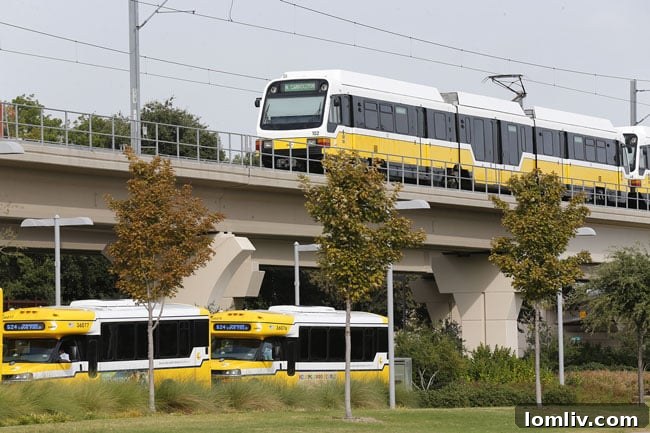
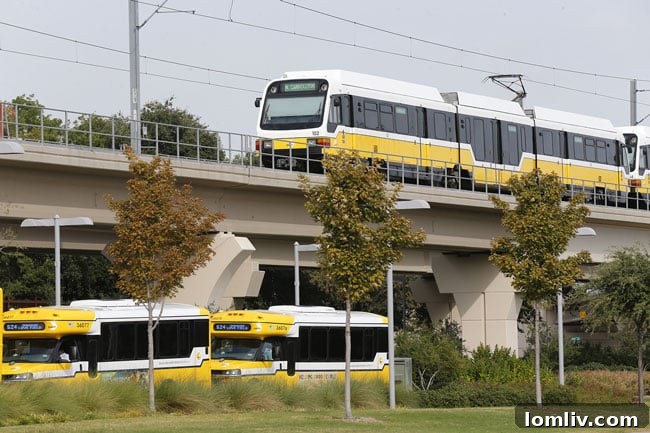
The sheer scale of DART’s operations is genuinely impressive and frequently understated. Far from being a modest local transit provider, DART proudly holds the title of the largest light rail operator in the United States. With an expansive network encompassing four distinct rail lines and a remarkable 93 miles of track, its reach across the Dallas metropolitan area is unparalleled. When factoring in the contributions of the Fort Worth Transportation Agency’s (Trinity Metro) heavy-rail Trinity Railway Express (TRE) and the Denton County Transportation Authority’s (DCTA) A-Train, the Dallas-Fort Worth region boasts an interconnected commuter rail system exceeding 140 miles. This extensive infrastructure serves a vast and rapidly expanding populace, facilitating travel across multiple counties.
Beyond its impressive track mileage, DART also demonstrates significant public adoption. The agency logs over 30 million yearly riders, a testament to its operational efficiency and necessity in the region. This ridership volume positions DART as the sixth-largest light rail agency in terms of passenger volume, further solidifying its status as a major player in national public transportation. The ability to move millions of people annually speaks volumes about its role in reducing traffic congestion, connecting communities, and supporting the economic vibrancy of the entire North Texas area.
Rapid Expansion: DART’s Unprecedented Growth Trajectory
What makes DART’s achievement particularly noteworthy is the speed and enthusiasm with which the Dallas-Fort Worth area has embraced commuter rail. Unlike many older systems that evolved over a century, DART’s light rail service commenced relatively recently in 1996. At its inception, it featured just two lines – the Red and Blue Lines. Yet, in a mere two decades, this burgeoning system mushroomed to include four separate lines, expanding its geographical coverage and connectivity exponentially. No other agency that initiated light rail service within the last 25 years has managed to establish a system that even comes close to DART’s extensive mileage and diverse route offerings.
This rapid establishment and expansion of such a significant system within a relatively short timeframe is a remarkable feat, especially considering the broader regional context. Historically, Texas, with its vast distances and deeply ingrained car culture, has shown a general reluctance to fully embrace public transportation. This makes DART’s success story even more compelling. A brief comparison with other major Texan cities illustrates this point clearly:
- Houston’s METRORail: The second-largest light rail system in the state, METRORail operates a modest 22 miles of tracks. Its two lines began operations in 2004, but only after a protracted and often contentious political and legal struggle.
- Austin’s Capital MetroRail: The state capital is served by a single 32-mile commuter rail route, which only arrived in 2010. This system has frequently been mired in controversies regarding spending, ridership figures, and scheduling efficiency since its launch.
- El Paso and Oklahoma City: Both cities are cautiously entering the public transit arena with the construction of streetcar lines, representing tentative steps rather than comprehensive systems.
- San Antonio: Despite being the second-largest city in Texas by population and third by geographic area, San Antonio currently possesses no light rail system whatsoever.
These comparisons highlight DART’s exceptional trajectory, positioning it as a pioneering model for public transportation development in car-centric metropolitan regions.
Forward Thinking: DART’s Strategic Vision and Planning
The robust and intelligently designed commuter rail system in the Dallas-Fort Worth area owes its existence to the visionary foresight of its early planners. To fully appreciate their contributions, one must delve into a brief history of American railroads. Prior to the 1970s, the U.S. rail landscape was dotted with dozens of individual railroad companies. This industry faced significant financial turmoil during that decade, eventually prompting the federal government to allow extensive mergers into larger entities, preventing widespread bankruptcies. By the late 1990s, successive rounds of these mergers dramatically reduced the number of long-distance railroads operating in the United States to a mere handful, including two based in Canada.
The consolidation of numerous smaller companies meant that the newly formed, larger railroad corporations often found themselves with redundant routes between the same cities. To streamline operations and cut costs, many of these surplus routes were subsequently abandoned. It was at this crucial juncture, way back in 1989, that DART officials demonstrated incredible foresight. They moved strategically to establish operating rights along these very routes that were no longer deemed necessary for freight movement. This proactive approach has been a cornerstone of DART’s success.
For example, both DART’s Green Line and the DCTA A-Train now operate on tracks that once formed the primary route of the Missouri, Kansas & Texas Railroad to Dallas, before that company was absorbed into the Union Pacific system. This pre-existing access to unbroken rail corridors eliminated one of the most significant and costly stumbling blocks typically encountered by light rail projects: the arduous and expensive process of negotiating land purchases from numerous property owners, often necessitating eminent domain proceedings when agreements cannot be reached. By securing these rights-of-way early, DART not only saved immense amounts of time and money but also ensured contiguous routes for future expansion. This strategic advantage continues to benefit DART, with most current system expansions being planned with future population growth and development in mind, building upon this foundation of pre-secured pathways.
Tailoring Transit: DART’s Innovative Approach for Local Needs
Traditional models of public transportation often assume high volumes of daily ridership, a paradigm that works exceptionally well in densely populated Eastern cities where urban design encourages walking and a significant portion of the population does not own a car. However, this model often clashes with the firmly entrenched driving culture prevalent in North Texas, where car ownership is high and suburban sprawl is common. DART’s brilliance lies in its adaptive approach, which keenly takes this local context into account.
The agency’s numerous park-and-ride stations are a prime example of this tailored strategy. These facilities allow commuters to seamlessly integrate trains and buses into their daily routines without being forced to abandon their personal vehicles entirely. Riders can drive to a conveniently located station, park their car, and then transfer to rail or bus services to complete their journey, particularly for destinations with limited parking or heavy traffic. This hybrid model successfully caters to the North Texas lifestyle, making public transit a complementary option rather than a rigid replacement for personal transportation.
Furthermore, DART excels in tailoring its schedule and services for infrequent riders, especially during major regional events where parking is scarce and expensive. All three transportation agencies serving the DFW metroplex – DART, Trinity Metro, and DCTA – consistently report their highest ridership figures during the annual State Fair of Texas in October. This surge is particularly pronounced during the historic football game between the University of Texas and the University of Oklahoma held at the iconic Cotton Bowl Stadium. DART’s ability to efficiently handle these massive spikes in demand demonstrates its flexibility and crucial role in making large-scale events accessible and enjoyable for thousands, thereby reducing traffic gridlock and parking woes.
This commitment to integrating public transit into the existing fabric of the region, rather than attempting to overhaul it entirely, has been a key factor in DART’s widespread acceptance and success. It provides an essential alternative, reducing the burden on roadways and offering sustainable mobility options that resonate with the preferences of North Texans.
Beyond Transportation: DART’s Broader Impact on North Texas
DART’s influence extends far beyond merely moving people from one point to another; it plays a critical role in the economic development, environmental sustainability, and social equity of the Dallas-Fort Worth metroplex. Economically, DART stimulates significant transit-oriented development (TOD) around its stations. These developments often include mixed-use projects with residential, commercial, and retail spaces, increasing property values, attracting businesses, and creating jobs. The presence of reliable public transit enhances an area’s appeal, drawing in new residents and investments, thereby fostering sustainable urban growth.
Environmentally, DART contributes substantially to cleaner air and reduced carbon emissions. By offering an alternative to single-occupancy vehicle travel, DART helps alleviate traffic congestion, which is a major source of air pollution. Every passenger who chooses DART over driving contributes to lower fuel consumption and a smaller carbon footprint, aligning with global efforts towards sustainability and climate action. This focus on green transportation is vital for a rapidly growing region facing increasing environmental pressures.
From a social equity perspective, DART provides essential access for diverse communities. It connects residents to employment centers, educational institutions, healthcare facilities, and cultural attractions, particularly for those who may not own a personal vehicle or prefer not to drive. This access is crucial for enhancing quality of life, reducing transportation-related financial burdens, and fostering greater social inclusion across the sprawling metroplex.
The Future is Now: Ongoing and Upcoming DART Expansions
Despite its current extensive network, DART’s planners continue to look forward, with numerous projects underway and planned to further enhance public transportation in North Texas. These expansions are critical for accommodating the region’s booming population and ensuring that DART remains a cutting-edge transit provider.
One of the most significant upcoming projects is the recently approved D2 subway expansion. DART cites the additional leeway to add more trains during peak hours as a primary motivation behind this crucial development. This new downtown Dallas route, projected to open in the early 2020s, will provide much-needed additional capacity and redundancy, allowing the system to operate more efficiently and serve more riders during the busiest times. It will also alleviate pressure on the existing downtown surface lines, improving overall system reliability.
Another highly anticipated development is the Cotton Belt Route expansion, now officially known as the DART Silver Line. This long-awaited system expansion, recently approved in DART’s operating budget, will be transformative. It will link northern Dallas suburbs, including Plano, Richardson, Addison, and Coppell, into the comprehensive light rail system. Crucially, the Silver Line will also provide direct rail service to Dallas/Fort Worth International Airport (DFW), a major international hub, significantly enhancing connectivity for both residents and visitors. From the west, Trinity Metro’s TEXRail train, which broke ground some years ago, already connects downtown Fort Worth directly to DFW Airport, creating a powerful multimodal transportation network around the airport.
Perhaps the most ambitious and potentially game-changing project slated for the next decade is the high-speed Texas Central Railway. This groundbreaking initiative aims to connect Dallas and Houston with travel times of approximately 90 minutes between the two major Texas cities. Utilizing state-of-the-art Japanese bullet train technology, this railway is poised to become the first truly high-speed train anywhere in the continental United States. Its completion will not only revolutionize intercity travel in Texas but also serve as a national model for future high-speed rail development, fundamentally altering perceptions of long-distance ground transportation.
DART’s Enduring Legacy and Future Outlook
DART stands as a remarkable example of what can be achieved with visionary planning, strategic land acquisition, and a tailored approach to public transportation in a growing, car-centric region. Its rapid expansion, extensive network, and commitment to future growth underscore its vital role in the Dallas-Fort Worth metroplex. As North Texas continues its rapid demographic and economic expansion, DART’s proactive strategies for accommodating new residents, reducing traffic, fostering sustainable development, and providing equitable access will ensure its enduring legacy as a cornerstone of regional prosperity and quality of life. The investments in its future, from the D2 subway to the Silver Line and the groundbreaking Texas Central Railway, signal a sustained commitment to innovative mobility solutions that will serve generations to come.
 Hayley Enoch is a D-FW resident who specializes in writing about railroads and public transportation. She is the owner and editor of Friends of the Flange, and is a frequent contributor to Trains Magazine.