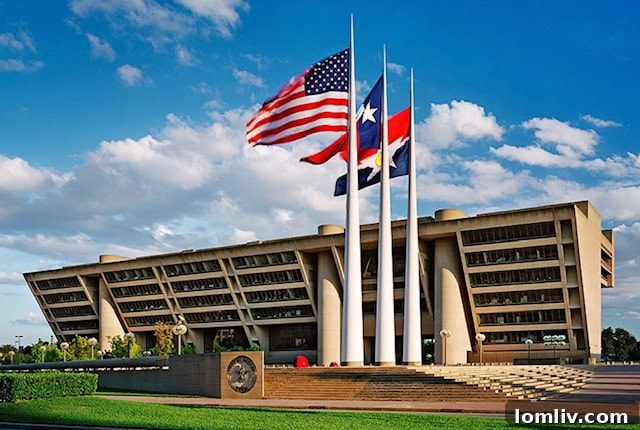
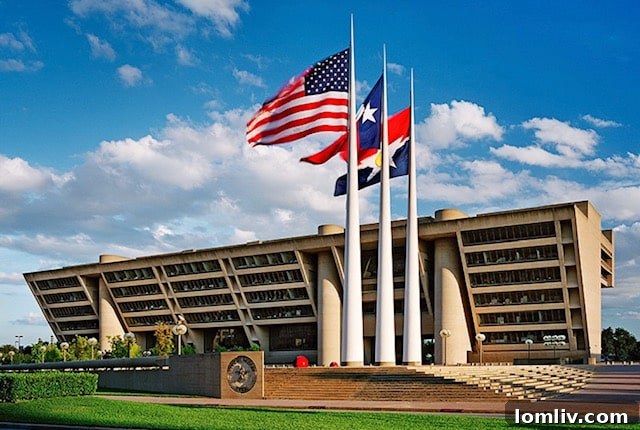
The highly anticipated budget season is officially underway at Dallas City Hall, a critical period that shapes the financial future and operational strategies of one of America’s largest and most dynamic cities. Dallas City Manager T.C. Broadnax recently unveiled his comprehensive draft budget, offering local reporters an exclusive early look at the city’s financial blueprint for the upcoming fiscal year. This detailed proposal outlines ambitious plans and strategic investments aimed at enhancing public services, fostering economic growth, and improving the quality of life for all Dallas residents.
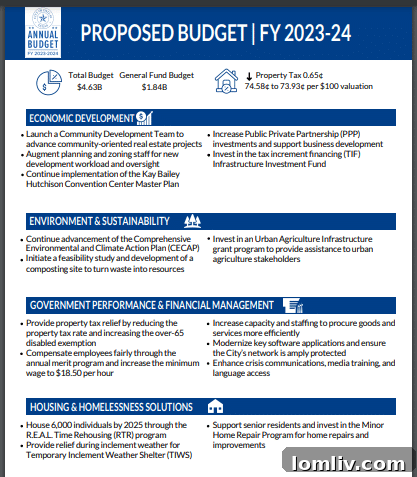
Broadnax’s recommended budget for Fiscal Year 2024 stands at an impressive $4.63 billion, marking a significant $138 million, or 8.1 percent, increase compared to the current year’s $4.51 billion budget. This substantial rise reflects Dallas’s continuous growth, escalating operational costs, and the city’s commitment to addressing pressing urban challenges with robust financial backing. The budget is not merely a collection of numbers; it’s a strategic document that outlines the city’s priorities, ranging from public safety and infrastructure to housing and community development.
A key highlight of the proposed budget, and a point of particular interest for property owners, is Broadnax’s recommendation for a 0.65-cent property tax decrease. This reduction would establish a new property tax rate of 73.93 cents per $100 assessed valuation, a notable change from the current City of Dallas property tax rate of 74.58 cents per $100 assessed valuation. This move underscores the city’s dedication to providing financial relief to taxpayers while maintaining essential services and investing in future growth. Such a decrease, if approved, would mark a significant trend in the city’s fiscal management.

Representatives from daltxrealestate.com were among a select group of local reporters invited to a high-level briefing and Q&A session with the City Manager. This exclusive opportunity provided invaluable insights into the intricacies of the budget proposal and allowed for direct engagement on key issues affecting Dallas communities. The discussions covered a wide array of critical topics, offering a comprehensive understanding of the city’s strategic direction and financial commitments.
During the briefing, Broadnax addressed crucial questions concerning Dallas’s ongoing initiatives related to housing affordability and strategies for combating homelessness. He also delved into plans for employee compensation, including proposed pay increases for city staff, ensuring that Dallas remains competitive in attracting and retaining top talent. The City Manager further elaborated on funding allocations for the dedicated short-term rental enforcement team, a crucial measure to address neighborhood concerns and ensure compliance with city regulations. Furthermore, he highlighted increased investments in cybersecurity measures, a vital step to protect city data and infrastructure against evolving digital threats, especially in light of recent challenges.
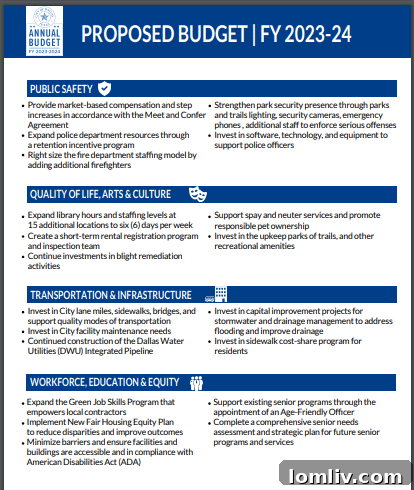
Public safety remains a cornerstone of Dallas’s budget priorities. Broadnax detailed the city’s strategic plan to significantly bolster the police force with the hiring of 290 new police officers. This initiative aims to enhance community presence, improve response times, and address the growing demands of a vibrant urban center. Beyond new hires, the budget also proposes an incentive retention plan specifically designed for officers nearing retirement, recognizing the invaluable experience and expertise they bring to the force. To support current operations and ensure adequate staffing during critical periods, a $14.3 million increase is recommended for police officer overtime pay, allowing for greater flexibility and comprehensive coverage across the city.
The Dallas Fire-Rescue Department is also slated for significant enhancements under Broadnax’s recommended budget. The proposal includes funding for 100 new positions within the fire department, ensuring that the city’s emergency response capabilities keep pace with its expanding population and urban footprint. Furthermore, an increased overtime pay allocation of $22 million is recommended, providing essential support for firefighters and paramedics who are often on the front lines, responding to emergencies and protecting lives and property around the clock. These investments underscore Dallas’s unwavering commitment to public safety and emergency preparedness.
Beyond public safety, the budget addresses broader employee compensation across various city departments. A 5 percent pay increase is recommended for sworn civil service positions, acknowledging their dedication and critical roles in maintaining public order and safety. Other city employees are expected to see 3 percent merit increases, a performance-based approach designed to reward excellence and motivate staff across the municipal workforce. These compensation adjustments are vital for attracting and retaining skilled professionals, ensuring that Dallas City Hall operates efficiently and effectively to serve its residents.
For those seeking a deeper dive into the specifics of these proposals, Broadnax’s comprehensive recommended budget and all associated financial documents are readily available online through the City of Dallas’s official transparency portals. These resources offer an unparalleled level of detail, allowing citizens, stakeholders, and interested parties to meticulously review the proposed allocations and understand the rationale behind each budgetary decision. The city emphasizes transparency and accessibility, empowering the public to engage meaningfully with the budget process.
Public engagement is a cornerstone of the Dallas budget process. Residents are strongly encouraged to actively participate and provide their valuable input on how their tax dollars should be utilized. To facilitate this crucial dialogue, a series of budget town hall meetings are strategically scheduled across every City Council district from August 10th to August 24th. These meetings provide an invaluable forum for citizens to voice concerns, offer suggestions, and directly influence the final budget adopted by the City Council. The Dallas City Council itself will commence its first budget workshop of the season at 9 a.m. on Tuesday, August 8th, marking the official start of rigorous deliberation and review.
“We wanted to give you a preview or a high-level understanding of what you will hear from us, not just Tuesday but in many of the discussions that will go on for the next month and a half as we walk through, with the council, the city manager’s recommended budget,” Broadnax explained to reporters. This statement emphasizes the iterative and collaborative nature of the budget approval process, highlighting the extensive discussions and adjustments that will take place before the final budget is adopted.
Dallas City Manager’s Plan For Property Taxes and Broader Financial Strategy
While the City Manager’s recommended budget and proposed tax rate will undoubtedly undergo thorough scrutiny and potential modifications during upcoming public hearings and council workshops, certain foundational elements are clear. Dallas Mayor Eric Johnson has consistently articulated his unwavering commitment to lowering the city’s property tax rate, with an ambitious goal of achieving the lowest rate in North Texas. This vision reflects a broader strategy to enhance Dallas’s economic competitiveness and reduce the financial burden on residents, making the city a more attractive place to live and invest.
Despite the city’s efforts to lower the tax rate, it is also important to acknowledge external factors that impact property owners. For instance, property appraisals—figures over which the City Council has no direct control—have seen a significant increase of 10.5 percent this year. This rise in appraised values can, in some cases, offset the impact of a reduced tax rate, leading to varied outcomes for individual property owners. Understanding the interplay between tax rates and appraisals is crucial for comprehensive financial planning for residents.
Council Member Cara Mendelsohn highlighted the impact of increasing appraisals on property taxes, underscoring the complexity of the issue for homeowners. While the city works to lower the rate, the underlying value increases present a continuous challenge. Broadnax confirmed that a substantial portion of the city’s financial foundation relies on these property values, stating that 57.2 percent of the general fund budget is derived directly from property taxes. This reliance emphasizes the importance of a stable and growing tax base for funding city services.
Broadnax further elaborated on the city’s robust financial health, noting that “Our property tax base did increase year-over-year last year up to $198.3 billion over the prior year.” This substantial growth in the tax base provides the city with a solid foundation to manage its finances and invest in key priorities. The proposed 0.65-cent decrease that Broadnax is recommending, if officially adopted by the City Council, would mark the eighth consecutive year that the City of Dallas has successfully lowered its property taxes. This consistent trend demonstrates a long-term commitment to fiscal responsibility and providing relief to its property owners.
Further potential savings for Dallas property owners could be on the horizon, thanks to recent legislative actions at the state level. Texas Governor Greg Abbott recently signed into law an impressive $18 billion tax cut package for Texas property owners. After months of intense debate and negotiation between the House and Senate, Governor Abbott affixed his signature on July 22nd to Senate Bill 2, the landmark property tax cuts measure, and Senate Bill 3, a significant franchise tax relief bill. Additionally, a third crucial measure, House Joint Resolution 2, will be presented to Texas voters for approval in November. These state-level initiatives, combined with the city’s own efforts, could lead to considerable overall tax relief for Dallas residents.
Housing And Infrastructure Budget Priorities: Building a Stronger Dallas
During his comprehensive 30-minute press conference, Broadnax extensively addressed critical questions regarding housing and neighborhood revitalization, underscoring these areas as core priorities for the City of Dallas. The proposed budget reflects a multifaceted approach to address housing challenges and enhance the city’s infrastructure, ensuring sustainable growth and equitable development for all communities.
“One of the things we’ve done is add to our senior home repair program,” Broadnax stated, highlighting the city’s commitment to supporting its elderly population. This vital program helps seniors maintain their homes, ensuring they can age in place with dignity and safety. Furthermore, he noted, “Our federal dollars have been approved and will be submitted to [the U.S. Department of Housing and Urban Development], which will relatively be the same offerings as prior years.” These consistent federal allocations provide a stable foundation for ongoing housing assistance and community development initiatives.
A significant new development is the allocation of “an additional $6 million available associated with our new infrastructure investment fund based on expiring [Tax Increment Financing Districts].” This innovative approach leverages resources from TIF Districts as they sunset, redirecting funds into crucial infrastructure projects. Broadnax explained, “Resources that go into this fund can be utilized to support infrastructure particularly associated with housing in our equity priority areas.” This strategy aims to stimulate development and improve living conditions in historically underserved neighborhoods, promoting greater equity across the city.
The proposed budget also includes a strategic allocation of $500,000 for economic development deals. These funds are earmarked to stimulate growth and investment, with a particular focus on facilitating multi-family housing projects and mixed-use developments. By supporting these types of projects, Dallas aims to increase housing options, create vibrant urban centers, and foster sustainable economic activity within its diverse communities. These investments are crucial for meeting the demands of a growing population and evolving urban landscape.
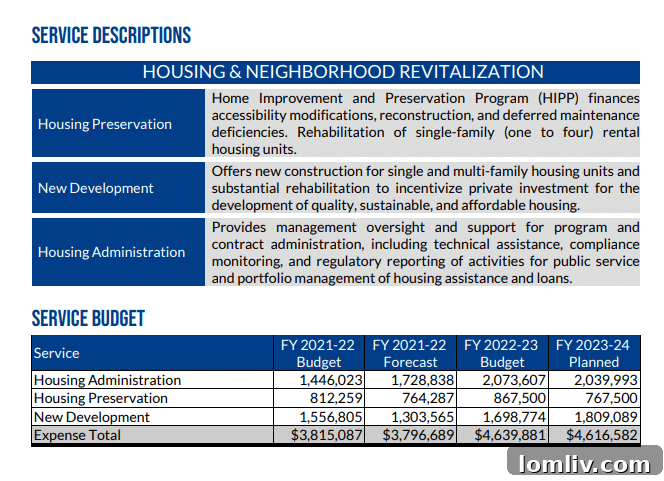
Broadnax further detailed another key initiative aimed at optimizing urban spaces: “We’re also going to spend half a million dollars investing in an adaptive reuse and infill housing study to better help us understand how we can activate and implement our own lots or work with private sector-owned lots to figure out how we can improve neighborhoods on an infill basis or from an adaptive reuse perspective.” This study is crucial for identifying opportunities to repurpose existing structures and develop vacant or underutilized parcels, promoting efficient land use and sustainable urban development.
The City Manager’s recommended budget also outlines significant infrastructure upgrades essential for maintaining and improving Dallas’s urban fabric. These investments are designed to enhance mobility, ensure public safety, and support the city’s long-term growth. Key infrastructure improvements include:
- $138 million dedicated to paving an impressive 787 street lane miles, addressing critical road maintenance needs and improving overall transportation networks.
- $2 million allocated for crucial alley improvements, enhancing accessibility and aesthetics in residential and commercial areas.
- $4.4 million directed towards bridge repairs, ensuring the structural integrity and safety of vital transportation arteries across the city.
- $5.3 million invested in sidewalk improvements, promoting pedestrian safety, accessibility, and connectivity within neighborhoods and commercial districts.
In a move to streamline operations and enhance efficiency, the Office of Historic Preservation will be consolidated into the Planning and Urban Design department. This integration aims to foster a more cohesive approach to urban development that respects Dallas’s rich heritage while embracing future growth. Furthermore, funding has been explicitly allocated for updates to the city’s building and development codes, ensuring that regulations remain modern, safe, and conducive to responsible urban planning. Addressing the challenge of homelessness, approximately $1.5 million is recommended for contractual services specifically for the decommissioning of homeless encampments, coupled with efforts to connect individuals with vital support services and housing solutions.
To effectively manage the burgeoning landscape of short-term rentals, the city is budgeting $1.4 million for a dedicated enforcement team. Broadnax confirmed that this team will “work with our short-term rentals that are allowed in our city,” emphasizing compliance and responsible operation. This specialized code compliance team will be expanded to ensure robust oversight and address community concerns related to short-term rental properties, striking a balance between economic opportunity and neighborhood quality of life.
Looking ahead, the City of Dallas is also actively preparing for a significant 2024 bond election. This upcoming election will play a crucial role in securing substantial funding for various city projects, with a strong emphasis on addressing long-term housing needs and further infrastructure development. The bond program is anticipated to provide a substantial boost to the city’s capacity to undertake large-scale projects that will shape Dallas for decades to come, reflecting a forward-thinking approach to urban planning and investment.
As the Dallas budget process unfolds, its impact on real estate, local economy, and community development cannot be overstated. From property tax adjustments to significant investments in public safety and infrastructure, these decisions will shape the daily lives of residents and the trajectory of the city. Stay tuned to daltxrealestate.com for continuous updates and in-depth analyses of the Dallas budget, ensuring you remain informed on the critical financial developments affecting your city.