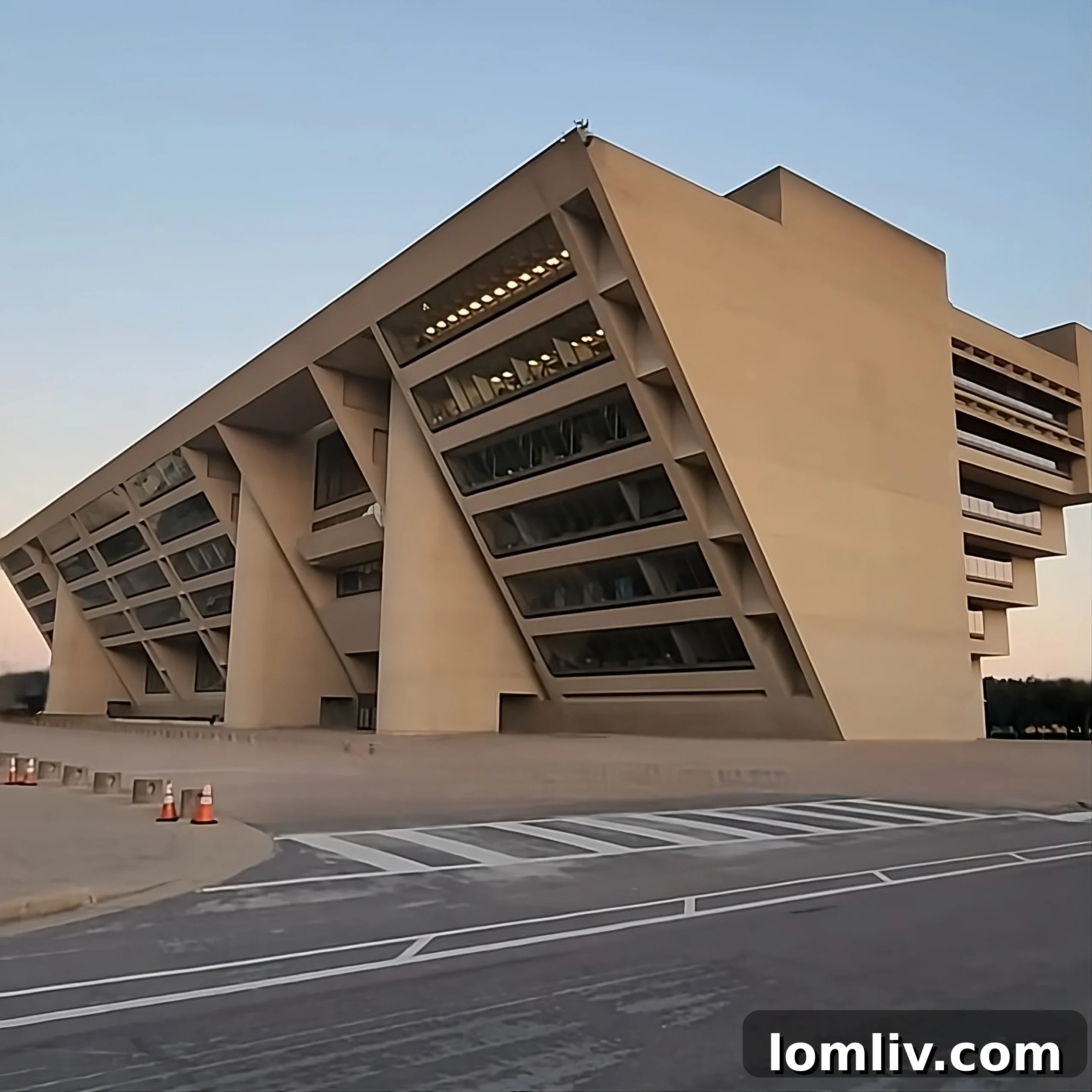
Dallas’s Crumbling Foundations: A Deep Dive into City Hall’s Infrastructure Crisis
DALLAS, TX — Recent incidents at Dallas City Hall have brought into sharp focus a critical and escalating issue: the city’s severely aging public infrastructure and the persistent underfunding driving its decline. A faulty restroom valve leading to a major flood, and a malfunctioning elevator trapping a councilmember, are not isolated mishaps but potent symptoms of a systemic problem. These events highlight the urgent need to address the structural integrity and operational reliability of Dallas’s vital municipal buildings, which are essential for civic operations, public safety, and the delivery of city services.
For a vibrant and growing metropolis like Dallas, robust and well-maintained public infrastructure is the bedrock of its functionality. It underpins everything from administrative tasks to emergency responses and community engagement. When this foundation begins to erode, the entire urban system experiences the strain. The recent failures at the very heart of Dallas governance serve as a stark reminder that neglecting these fundamental public assets carries significant operational, financial, and reputational costs for the city and its residents.
The Looming Crisis: Dallas’s Aging Public Assets Portfolio
The City of Dallas is entrusted with the oversight of an extensive portfolio comprising over 500 municipal buildings. This vast collection of public assets, which includes libraries, recreation centers, police and fire stations, administrative offices, and the iconic City Hall itself, is collectively valued at an estimated $1.5 billion. The sheer scale of this responsibility is immense, yet the data reveals a deeply concerning trend: the average age of these critical properties stands at a venerable 47 years.
This advanced age inherently demands a higher level of consistent, proactive maintenance. Unfortunately, the city’s current financial allocation for their upkeep is critically insufficient. Dallas currently earmarks only $14 million annually for the comprehensive maintenance of these hundreds of public buildings. This figure falls drastically short of established industry benchmarks, which typically recommend a minimum of $29 million for basic, routine maintenance to prevent premature deterioration and extend the operational lifespans of such extensive assets. This represents a staggering annual funding gap of $15 million, a deficit that has accumulated over many years, creating an ever-growing backlog of essential repairs and leaving an increasingly fragile set of public assets vulnerable to sudden and costly failures.
The consequences of this prolonged underinvestment in Dallas infrastructure are multifaceted. Beyond the immediate inconvenience and disruption caused by breakdowns, there are significant long-term economic repercussions. Deferred maintenance doesn’t eliminate costs; it merely postpones them while allowing problems to compound, ultimately leading to more extensive and exponentially more expensive repairs down the line. What might have been a minor plumbing fix, if addressed promptly, can escalate into widespread water damage, requiring extensive structural, electrical, and cosmetic remediation. Similarly, neglecting elevator maintenance can result in critical system failures, not only trapping individuals but also necessitating costly overhauls or even full replacements, impacting public safety and operational efficiency.
The Financial Underpinnings of Neglect: Budgetary Battles and Tough Choices
The persistent funding gap for public building maintenance has, understandably, become a central point of contention in recent city budget discussions. The proposed 2025–2026 budget, unfortunately, maintains the existing $14 million allocation for facility upkeep, thereby perpetuating the $15 million annual shortfall. City officials have voiced serious concerns, warning that continued deferrals of essential maintenance will inevitably lead to greater structural failures across the municipal portfolio and significantly higher long-term costs that the city will eventually have to bear. Several council members have strongly urged that addressing this critical issue be prioritized in the upcoming budget cycle, proposing potential solutions such as strategic asset sales or securing bond funding to close the chronic deficit and invest adequately in Dallas facilities.
However, the challenge of revitalizing Dallas’s core infrastructure extends beyond simply increasing a single budget line item. The issue is compounded by a fundamental lack of comprehensive data regarding the current condition of these assets. Dallas has not conducted a full, city-wide facility condition assessment since 2017. Even then, only 220 of the more than 500 municipal buildings were thoroughly evaluated. This incomplete and outdated data forces the city into a fundamentally reactive maintenance model. Instead of proactively planning for necessary repairs and upgrades based on thorough, real-time assessments, the city is left to fix issues only after they break. This “wait-until-it-fails” approach has repeatedly proven to be not only more expensive in the long run but also considerably less safe for both city employees and the public who utilize these vital public assets.
Proactive vs. Reactive: The Economic Imperative for Dallas Public Buildings
The distinction between proactive and reactive maintenance is critical, especially when managing an aging urban infrastructure. Proactive maintenance involves regular inspections, preventative repairs, and systematic upgrades designed to extend the lifespan of assets and prevent unexpected breakdowns. This strategic approach, while requiring upfront investment in areas like facility condition assessments and ongoing scheduled maintenance, typically results in lower overall costs, improved operational efficiency, and significantly enhanced safety for the community. In contrast, reactive maintenance, by its very nature, responds to failures after they occur, often leading to emergency repairs that are inherently more costly, disruptive, and can entail significant downtime for critical city services and operations.
For Dallas, transitioning to a truly proactive model would require not only increased funding but also a substantial investment in a comprehensive, modern facility management system. Such a system would enable the city to effectively track the condition of all its public assets, accurately forecast maintenance needs, strategically prioritize repairs based on risk and criticality, and allocate resources more efficiently. Without accurate, up-to-date data on the condition of all its buildings, the city is essentially operating blind, making informed long-term urban planning and sustainable infrastructure funding incredibly challenging, putting the future of Dallas infrastructure at risk.
Immediate Impacts: Operational Disruptions and Direct Consequences at City Hall
The repercussions of this systemic neglect of Dallas infrastructure are becoming increasingly visible and impactful, directly affecting city operations and public perception. In one particularly disruptive recent incident, a seemingly minor faulty flush valve in a sixth-floor restroom at Dallas City Hall caused a significant water leak that ultimately flooded several floors below, including the sensitive and high-traffic Council Chambers. This unforeseen event necessitated extensive repairs that are currently ongoing, leading to the relocation of several critical city meetings and administrative functions. The disruption highlights how even a small component failure in an aging public building can cascade into major operational challenges, impacting the very core of city governance and the continuity of essential services.
Another alarming incident occurred in August 2024 when Councilmember Gay Donnell Willis was unexpectedly trapped inside a City Hall elevator for nearly an hour. The incident required firefighters to be called to pry open the doors and rescue her. Following this harrowing experience, Councilmember Willis rightly called for a formal and thorough review of the building’s elevator maintenance protocols and overall condition. These incidents, while distinct, collectively underscore the very real and present dangers posed by decaying infrastructure, affecting not just city operations but the safety and well-being of elected officials, city employees, and the thousands of citizens who visit Dallas City Hall annually, ultimately eroding public trust.
“These are not isolated incidents; they are profoundly clear symptoms of years, even decades, of deferred maintenance across our municipal infrastructure,” stated Councilwoman Cara Mendelsohn, whose strong remarks underscored the growing frustration among city leaders. She emphatically described the city’s current investment in its crucial public facilities as “absolutely disgraceful,” reflecting a sentiment shared by many who recognize the critical importance of these assets to the city’s functionality and its reputation as a modern urban center. Her statements resonate with the broader concerns about the long-term sustainability of Dallas’s public assets and the city’s ability to maintain high standards for its facilities.
Broader Financial Pressures and Competing Priorities in Dallas’s Budget
The city’s struggle with its aging infrastructure is set against a backdrop of broader and significant financial challenges. Dallas is currently projecting a projected $6.5 million budget shortfall for the upcoming fiscal year. This deficit is largely driven by a combination of factors, including declining property tax revenue—a consequence of successful property appraisal contests by residents—and other economic pressures. This projected shortfall places further substantial strain on an already limited pool of discretionary spending, making it even more challenging for city officials to allocate the necessary funds for long-neglected building maintenance and other critical infrastructure funding needs.
In the complex landscape of urban governance, city leaders constantly face the difficult task of balancing competing priorities. Despite the visible issues with municipal buildings, Dallas is simultaneously moving forward with other significant and crucial infrastructure investments. For instance, the City Council has approved a substantial $129.5 million specifically for streets, sidewalks, and alley improvements for the 2024–2025 fiscal year, targeting an impressive 710 lane miles for upgrades. This represents a clear commitment to improving the city’s transportation network, which is vital for connectivity, economic vitality, and the daily lives of residents.
Furthermore, the broader $5 billion city budget includes the largest public safety investment in over a decade, with a significant $78 million increase. This substantial funding injection is earmarked to recruit and train 250 new police officers and 63 additional firefighters, bolstering the city’s first responder capabilities and enhancing community safety. The budget also delivers a modest property tax cut for residents, a politically popular move, and crucially retains funding for essential community services such as libraries, homelessness initiatives, and critical park maintenance. While these investments are undeniably important for the city’s overall well-being and public appeal, they also highlight the difficult choices involved when resources are finite and the need for infrastructure funding is vast and varied.
A Path Forward: Prioritizing Dallas’s Core Foundations and Long-Term Sustainability
While Dallas residents may soon benefit from smoother roads and enhanced public safety, the precarious condition of the buildings that house city governance and deliver essential public services remains critically in limbo. The widening gap between the city’s infrastructure investment priorities and the stark reality of decaying municipal assets, particularly at City Hall, has become far more than a mere inconvenience. It has transformed into a potent symbol of the city’s budgeting blind spots and a clear call to action for a fundamental reevaluation of long-term strategic planning for Dallas’s urban planning and public assets.
Addressing this complex challenge requires a multi-pronged approach that goes beyond simply patching immediate problems. It demands a renewed commitment to a comprehensive facility condition assessment across all 500+ municipal buildings, creating an accurate and up-to-date baseline for future planning and investment. This data-driven approach is absolutely essential for effectively prioritizing repairs, implementing a robust preventive maintenance schedule, and ultimately allocating precious resources more efficiently and strategically to ensure the longevity of Dallas facilities.
Exploring diverse and sustainable infrastructure funding mechanisms is also crucial. While bond funding offers a significant one-time capital injection, city leaders should also investigate dedicated infrastructure funds, innovative public-private partnerships, and even creative financing models that could provide more consistent and sustainable solutions. The long-term economic benefits of proactive maintenance—which include preventing larger, more catastrophic failures, significantly reducing emergency repair costs, and extending the operational lifespans of critical public assets—far outweigh the initial investment. Without a significant and immediate shift in its long-term strategy and a renewed commitment to its core physical assets, Dallas risks paying a much higher price down the road, not just in escalating repair costs, but also in diminished operational efficiency, compromised public safety, and a substantial erosion of public trust and credibility. Ensuring that Dallas’s foundations are as strong and reliable as its aspirations is not merely a logistical challenge; it is an imperative for the city’s future prosperity and its reputation as a leading urban center.