The Bishop Arts Gateway: Navigating Development, Affordability, and Civic Debate in North Oak Cliff
The vibrant and rapidly evolving North Oak Cliff area of Dallas is a hotbed of cultural activity and real estate innovation. At the nexus of this dynamic growth stands the proposed Bishop Arts Gateway project, an ambitious development by Alamo Manhattan situated at the prominent intersection of Davis and Zang. This significant undertaking has not only garnered attention for its potential to reshape the local landscape but has also ignited a spirited debate within the Dallas City Council concerning the allocation of public funds and the future trajectory of urban development.
Recently, the Dallas City Economic Development Committee cast a pivotal vote, approving Alamo Manhattan’s request for over $11 million in funds from the Oak Cliff Gateway Tax Increment Finance (TIF) district. This substantial investment, earmarked for a $57 million mixed-use project, is designed to bring a new layer of residential, retail, and public amenity spaces to one of Dallas’s most sought-after neighborhoods. However, such a significant public subsidy invariably comes with conditions and sparks conversations about equity, opportunity, and accountability in urban planning.
Understanding the Bishop Arts Gateway Project’s Vision
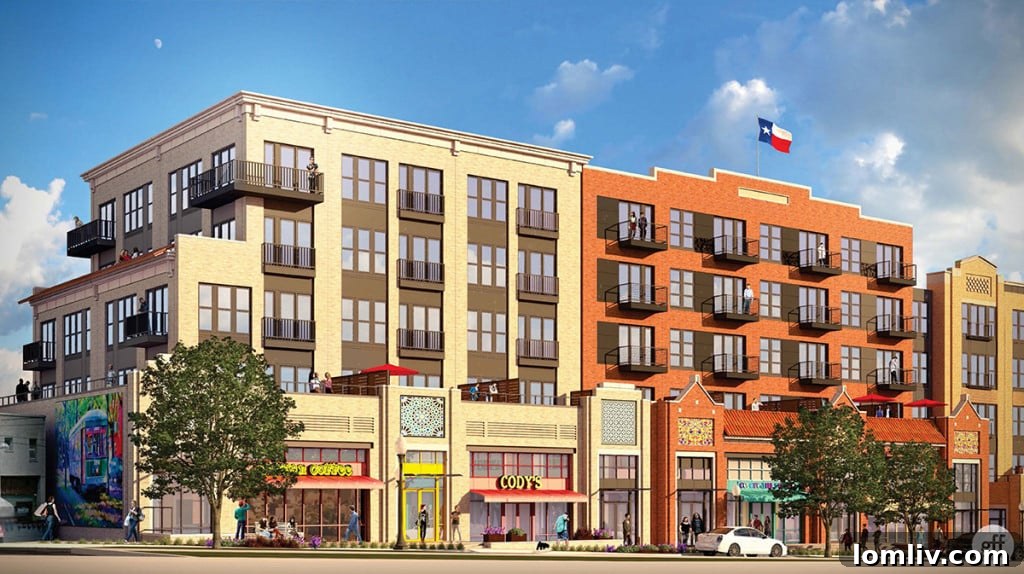
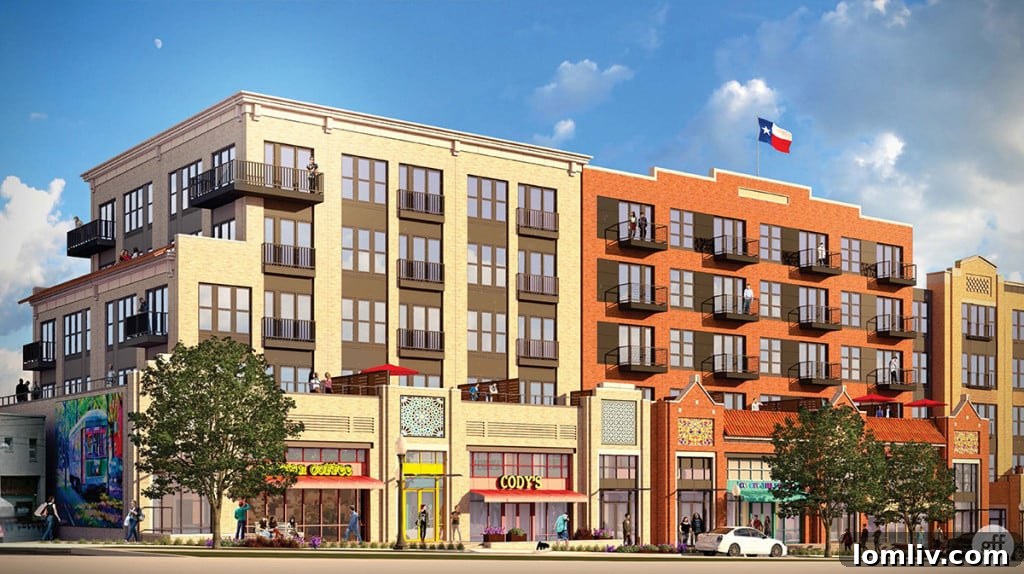
The Bishop Arts Gateway is envisioned as a multifaceted development that promises to enhance the pedestrian experience and offer a diverse array of living and commercial options. At its core, the project includes 209 modern apartments, a crucial component designed to address the growing demand for housing in the area. A standout feature of this residential offering is its commitment to affordability: at least 20 percent of these units—approximately 42 apartments—are designated as “affordable housing.” These units will be available exclusively to individuals and families whose income does not exceed 80 percent of the area’s median income, which is approximately $45,000 for a family of four. This measure is a direct response to concerns about gentrification and the need to maintain diverse socioeconomic demographics within thriving urban cores.
Beyond residential spaces, the development plans incorporate a comprehensive suite of public and commercial amenities. A key highlight is the creation of a dedicated streetcar plaza, strategically integrated to serve the popular Oak Cliff streetcar line. This plaza is expected to boost public transportation ridership and offer a convenient, inviting hub for residents and visitors alike. Furthermore, the project allocates a substantial 25,200 square feet for retail and restaurant spaces, promising to introduce new businesses and dining experiences that will complement the existing eclectic charm of Bishop Arts. To address urban parking challenges, an underground parking facility is also part of the design, ensuring convenient access for tenants and customers without cluttering surface-level aesthetics.

The Impact of Tax Increment Finance (TIF) Funding on Urban Development
The decision to grant over $11 million in TIF funds to Alamo Manhattan lies at the heart of the civic debate. To fully appreciate the controversy, it’s essential to understand what TIF districts are and why they are utilized in urban development. A TIF district is a designated area where future property tax revenues generated by new development are reinvested back into that area to finance public improvements or subsidize projects. The idea is that the new development creates an “increment” in property value and thus property tax revenue, which then pays for the infrastructure and public amenities needed to support the growth.
In the case of the Bishop Arts Gateway, the $11.25 million in TIF funds is allocated to specific components that benefit the public infrastructure and address social needs. City staff reports indicate that roughly half of this money will be directed towards crucial groundwork: clearing and remediating existing buildings along Zang and Davis, widening sidewalks to improve pedestrian flow, planting new trees to enhance urban greenery, creating the aforementioned open plaza, and resolving various utility issues. These improvements are vital for public safety, accessibility, and the overall aesthetic appeal of the neighborhood, directly contributing to the public realm.
The other significant portion of the TIF allocation—approximately $5,846,400—is designated as an affordable housing grant. This funding directly underpins the project’s commitment to providing accessible housing options for lower-income residents. This dual approach of investing in both public infrastructure and social housing initiatives through TIF funds highlights a complex strategy by the city to foster development that is not only economically vibrant but also socially inclusive.
The Council Chambers: A Clash of Ideologies Over Oak Cliff TIF Funding
The approval of TIF funding for the Bishop Arts Gateway project triggered a heated exchange between Dallas City Council members Lee Kleinman and Scott Griggs, vividly illustrating the differing philosophies on urban development and public subsidies. Councilman Kleinman, representing far north Dallas, voiced strong reservations about providing TIF funding to a developer in Oak Cliff, a district he controversially dubbed “the North Dallas of South Dallas.” His core argument revolved around the idea of self-sufficiency. “When is Oak Cliff going to stand on its own?” he questioned during the joint meeting of the Council’s economic development and housing committees, implying that Oak Cliff’s burgeoning real estate market should no longer require public assistance to attract development.
Councilman Scott Griggs, a staunch advocate for Oak Cliff, was quick to counter Kleinman’s perspective, firmly stating, “Oak Cliff does stand on its own, and so does Southern Dallas.” Griggs’s response underlined a broader point about the equitable distribution of resources and the historical context of development in different parts of the city. He then directly challenged Kleinman, pointing out that Kleinman himself had personally benefited from TIF funding as an investor in Sylvan Thirty, another prominent development within the same neighborhood. This sharp retort, akin to a “mic drop” moment, highlighted the perceived hypocrisy and underscored the political complexities inherent in such funding decisions.
The debate encapsulates a common tension in urban planning: should public funds be used to incentivize development in areas that are already showing strong market signals, or should they be reserved for truly underserved areas? Proponents argue that TIFs accelerate growth, create jobs, and fund vital public improvements that might not otherwise materialize. Critics, like Kleinman, often contend that such subsidies distort the market and offer developers “corporate welfare” when projects would likely proceed anyway due to inherent market demand.
Evolution of Design and Community Acceptance in Bishop Arts
Beyond the financial intricacies, the Bishop Arts Gateway project also faced considerable scrutiny regarding its architectural design. When initial drawings were first made public, they were met with significant backlash from nearby residents and community groups. Concerns centered on the building’s perceived lack of character, with many arguing that its modern aesthetic was “too out of character for the neighborhood” and did not align with the historic charm and pedestrian-friendly ethos of the Bishop Arts District. Furthermore, some criticized the preliminary designs for not being sufficiently pedestrian-friendly, a critical aspect in a district celebrated for its walkability and vibrant street life.
However, Alamo Manhattan demonstrated a commendable commitment to community engagement and responsiveness. After taking these criticisms to heart, the developer went “back to the drawing board.” The revised development plans, which were subsequently unveiled, received widespread acclaim. The new design incorporated elements that better harmonized with the existing architectural fabric of Bishop Arts, focusing on materials, scale, and street-level activation that resonated more positively with residents. This willingness to adapt and integrate community feedback ultimately paved the way for broader acceptance and endorsement of the project, turning a potential stumbling block into an example of successful collaborative development.
Broader Impact and Future Outlook for North Oak Cliff Real Estate
The Bishop Arts Gateway project represents more than just a new building; it symbolizes a significant phase in the ongoing evolution of North Oak Cliff. Its strategic location at Davis and Zang, combined with its mixed-use nature, positions it as a catalyst for further growth and revitalization. The integration of a streetcar plaza will undoubtedly increase connectivity and encourage sustainable transportation, making the district even more accessible to a wider demographic.
The injection of new retail and restaurant spaces is expected to diversify the local economy, create jobs, and enhance the overall visitor experience, solidifying Bishop Arts’ reputation as a premier destination for dining, shopping, and entertainment. Crucially, the affordable housing component addresses a critical need in a rapidly gentrifying area, ensuring that the benefits of growth are shared more broadly and that the district remains home to a diverse community. By incorporating both market-rate and affordable units, the project aims to foster a more inclusive urban environment.
Ultimately, while the journey to approval for the Bishop Arts Gateway has been marked by spirited debate and design revisions, its eventual completion promises to bring a transformative impact to North Oak Cliff. It stands as a testament to the complexities of urban development, balancing economic ambition with community needs, and public investment with private enterprise. As Bishop Arts continues to flourish, projects like the Gateway will play a pivotal role in shaping its future, maintaining its unique character while embracing progress and inclusivity.