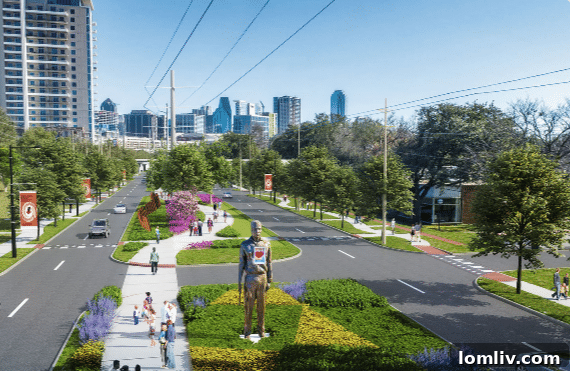
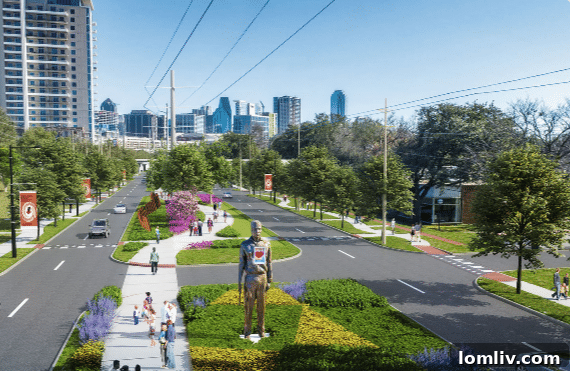
The development of the Hi Line Connector trail project, a vital component of Dallas’s ambitious urban connectivity goals, has recently faced significant financial and logistical hurdles. The Dallas City Council, in a critical move, affirmed the decision of its appointed Park and Recreation Board, which had earlier refused to approve a requested amendment to the project’s change order. This stand-off underscores the complexities and fiscal pressures inherent in large-scale public infrastructure initiatives, particularly those prone to delays and unforeseen cost escalations.
Originally, the Hi Line Connector project encountered an eight-month delay due to protracted litigation involving the initial low bidder. This legal battle ultimately led to the contract being awarded to a different entity, the Fain Group. However, as construction costs began to surge, a common challenge in the current economic climate, the Fain Group sought an additional $2 million, on top of the existing $11.5 million contract, to mitigate these rising expenses. This request initiated a tense period of negotiation and debate among city officials and stakeholders, highlighting the delicate balance between project viability and taxpayer protection.
In response to the Fain Group’s request, members of the Dallas Park and Recreation Board entered into discussions to find a middle ground. Their negotiations focused on identifying elements within the project scope that could be removed or altered to offset the requested cost increase. These features included critical components such as trail lighting and the burial of utility lines. While these amenities are crucial for the overall user experience and safety of the trail, they were deemed expendable in the face of budget constraints. Consequently, the responsibility for funding these now-omitted features fell to The Loop Dallas, a private organization committed to enhancing Dallas’s trail network, which would need to raise private funds to reincorporate them into the project. This adjustment led to a net decrease in the overall project cost, despite the Fain Group’s original request for an increase.
After extensive deliberation, the Park Board cast a pivotal vote, deciding 8-7 to reduce the contract value by $366,844. However, this figure diverged from the amount that the Fain Group had reportedly negotiated and agreed upon, which was a decrease of $168,844. City council members, during a subsequent meeting on June 28, pointed out a significant discrepancy: despite the reduced scope of the project, the Fain Group was still poised to receive an approximate 17 percent increase over its initial bid. This revelation sparked further concern and fueled arguments about the fairness and transparency of the procurement process.
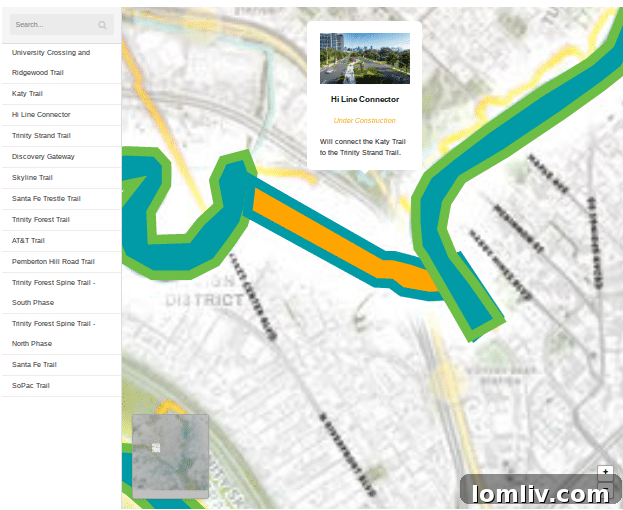
The Dallas City Council ultimately supported the Park Board’s decision in a decisive 9-5 vote, affirming their commitment to fiscal responsibility and a rigorous oversight of public funds. Councilwoman Cara Mendelsohn emerged as a vocal proponent of this stance, commending the Park Board members for their fortitude. “I think it’s remarkable that we had courageous Park Board members that are going to say, ‘We’re tired of accepting all these change orders,’” Mendelsohn stated, her words resonating with a broader sentiment of frustration over escalating project costs. She further emphasized the importance of safeguarding taxpayer interests, asserting, “They stood up for the taxpayers. I think they’re actually the heroes in this. As much as we all want this to happen, I think we’re actually being taken advantage of by the Fain Group because they know that we have to do this.” Her strong words reflected a growing concern that the city was being leveraged by contractors who understood the imperative to complete critical infrastructure projects, regardless of the financial implications.
The Hi Line Connector: A Cornerstone of Dallas’s Connectivity Vision
The Hi Line Connector is more than just a trail; it represents a crucial segment of a much larger vision for Dallas’s urban landscape. This connector forms part of an expansive 50-mile circuit trail network designed to enhance walkability, cycling, and overall community access throughout the city. Situated along Victory Avenue and Hi Line Drive, in close proximity to the vibrant Victory Park district, the project is strategically positioned to link key areas and provide residents with unparalleled recreational and transportation opportunities. Philip Hiatt Haigh, the executive director of The Loop Dallas, confirmed that construction for this significant project commenced in January, with anticipation building for its eventual completion and integration into the broader trail system.

The debate surrounding the Hi Line Connector intensified during last month’s council meeting, with discussions frequently becoming heated. Council members echoed earlier accusations from the Park Board meeting, suggesting that the Fain Group’s actions constituted a “hostage situation.” This perception arose from the contractor’s insistence on additional funding despite a reduced scope, leading to concerns that the project’s future was being held captive by financial demands. A powerful Dallas Morning News editorial, published just ahead of the City Council vote, captured the gravity of the situation, referring to the negotiations as a “risky game of chicken.” The editorial warned that if the Fain Group did not accept the city’s counteroffer, the project would face a complete rebid, effectively restarting the entire process and incurring further delays and costs.
Amidst this escalating tension, Philip Hiatt Haigh passionately appealed to the council to amend the change order. He advocated for a reduction in the contract by $168,844, the figure previously agreed upon by the Fain Group. Hiatt Haigh underscored the project’s advanced stage, stating, “It’s about halfway done.” He emphasized the urgency of maintaining momentum to meet the projected early 2024 completion date, highlighting that the proposed change order was crucial to keeping the project on track. “What we are asking the council [to do] is amend the item that you have before you and move back to the original agreement that the Park Department and the contractor agreed to, which is $168,844 back to The Loop Dallas,” he urged. While acknowledging the Park Department’s efforts, Hiatt Haigh expressed a pragmatic concern: “We really appreciate what the Park Department did in sending you this award that has a higher number, however we do not believe that the additional $198,000 back to our organization is worth the risk of [losing] the contractor.” His plea underscored the very real fear that a hardline stance could jeopardize the entire project, forcing a costly and time-consuming rebid.
Council members Gay Donnell Willis and Jaime Resendez voiced their support for amending the change order, prioritizing the continuity and timely completion of the Hi Line Connector. They argued that maintaining the project’s schedule outweighed the potential financial savings from a further reduction. However, their motion failed in an 8-6 vote, indicating the strong conviction within the council to adhere to the Park Board’s more stringent financial decision. Councilwoman Willis, drawing from her extensive experience as a former nonprofit CEO, offered a nuanced perspective: “Our Park Board is usually fairly harmonious and they have lots of thoughtful debate. When news of this item reached me before it even hit our agenda, it made me take a deeper look at this.” She empathized with the challenges of securing private funding to supplement public dollars for community advancement, suggesting a broader understanding of the financial ecosystem underpinning such projects. Her insight illuminated the delicate balance between public and private sector collaboration in delivering essential urban infrastructure.
Navigating Special Circumstances and Procurement Challenges
The contentious nature of the Hi Line Connector project was further complicated by a lack of direct communication post-vote. Christina Turner-Noteware, Assistant Director of the Park and Recreation Department, revealed that staff had not been in contact with the Fain Group since the Park Board’s decision, leaving them uncertain about the contractor’s willingness to proceed under the revised terms. She disclosed that attempts to reach Fain Group representatives on three separate occasions had been unsuccessful, painting a picture of a communication breakdown that only exacerbated the existing anxieties. Despite this, Turner-Noteware maintained her belief in the good faith of both parties during initial negotiations: “I do believe the Fain Group and Dallas Park and Recreation negotiated in good faith. I do believe the Fain Group has given us everything they can give us out of their project without basically having no profit margin at all.” This statement suggested that the contractor had reached its limit for cost concessions, leading to the impasse.



The issue of rising costs was not unforeseen. Turner-Noteware recalled that when Fain Group representatives were initially contacted in December to proceed with the project, they immediately indicated impending cost increases, specifically citing concrete prices as a primary concern. This foresight, however, did little to cushion the impact of the actual demands. Adding another layer of complexity, Councilman Jesse Moreno, a former Park and Recreation Board member himself, brought up the Fain Group’s past performance with the city. He highlighted instances where the contractor had reportedly delayed previous water park projects and exceeded budgets on other municipal ventures, raising questions about their reliability and cost management.
A significant undercurrent throughout the discussions was the concern that any failure to move forward with the Hi Line Connector could have broader ramifications for Dallas’s entire trail network. Councilman Moreno articulated this apprehension, stating, “The chatter I keep hearing is that if we don’t move forward with this project, it will kill trails to our southern sector.” This sentiment underscores the interconnectedness of urban development projects and the potential for one stalled initiative to negatively impact others, particularly in underserved areas.
Councilman Chad West probed deeper into the contractual obligations, questioning whether the original contract language included provisions for cost escalation. Turner-Noteware explained that staff had indeed considered the price increase due to the “special circumstances” created by the lawsuit-induced delays. These delays, she implied, put the city in a difficult position, making it more susceptible to contractor demands. While many council members expressed support for the Park Board’s non-unanimous vote, they continued to raise questions about the methodology behind the specific numbers presented in the change order, reflecting a desire for greater transparency and accountability in the financial computations. The intricacies of these figures were indeed substantial, with a multitude of numbers, percentages, contract values, and change orders being deliberated during both the June 15 Park and Recreation Board meeting and the June 28 City Council meeting.
Councilwoman Mendelsohn concluded the discussion with a powerful critique of the overarching procurement process, identifying it as a fundamental source of ongoing challenges. “There’s something really wrong about this process,” she asserted. She elaborated that procurement laws, originally designed to protect taxpayers by ensuring bids go to the lowest qualified bidder, were paradoxically being exploited. “All the procurement laws that we have were meant to protect the taxpayer so we’re going with the lowest [bid] and not with a friend or campaign treasurer. Instead it’s actually being weaponized against us. This is crazy,” Mendelsohn exclaimed, expressing her exasperation. She highlighted the extensive time it takes to navigate the procurement system and the detrimental impact of regulatory frameworks that, instead of facilitating progress, often obstruct effective problem-solving. “The entire idea that we can’t effectively address a challenge because of all the different laws that are working against us is absolutely crazy,” she concluded, calling for a reevaluation of the very systems intended to safeguard public interests but which, in practice, create significant obstacles for vital urban development projects like the Hi Line Connector.
The saga of the Hi Line Connector serves as a compelling case study in the complexities of modern urban development. It highlights the critical interplay between city councils, park boards, private contractors, and community organizations. The decisions made regarding this project reflect broader challenges in public procurement, contract management, and the ongoing struggle to balance fiscal prudence with the timely delivery of essential public infrastructure. As Dallas continues its ambitious journey towards enhanced walkability and connectivity, the lessons learned from the Hi Line Connector debate will undoubtedly shape future strategies for navigating similar financial and logistical impasses, ensuring that vital projects move forward efficiently and responsibly for the benefit of all residents.