

From Serenity to Shock: The Dallas Shooting and Its Profound Echoes
Last Thursday morning dawned bright and clear in Dallas, a day promising warmth and the excitement of departure. I left the city under a beautiful, hot, sunny sky, bound for Reno, Nevada. My destination was a long weekend of much-needed rest and relaxation with my family, including my son who resides in Silicon Valley, a mere four-hour drive from the breathtaking expanse of Lake Tahoe. Little did I know, the tranquility I sought would soon be shattered by events unfolding back home.
We arrived at our peaceful retreat before noon, ready to embrace the calm. The western side of the family, however, was delayed until approximately 5 PM due due to an unexpected shutdown on Interstate 80. Once everyone was settled, phones were put away, the baby tucked into bed, and we began to unwind, anticipating a leisurely dinner. It was then that my son, whose vigilance with his phone rivals my own, broke the news. “There has been a police shooting in Dallas,” he stated, his voice tinged with a gravity that instantly erased our peace.
And so, the unsettling vigil began.
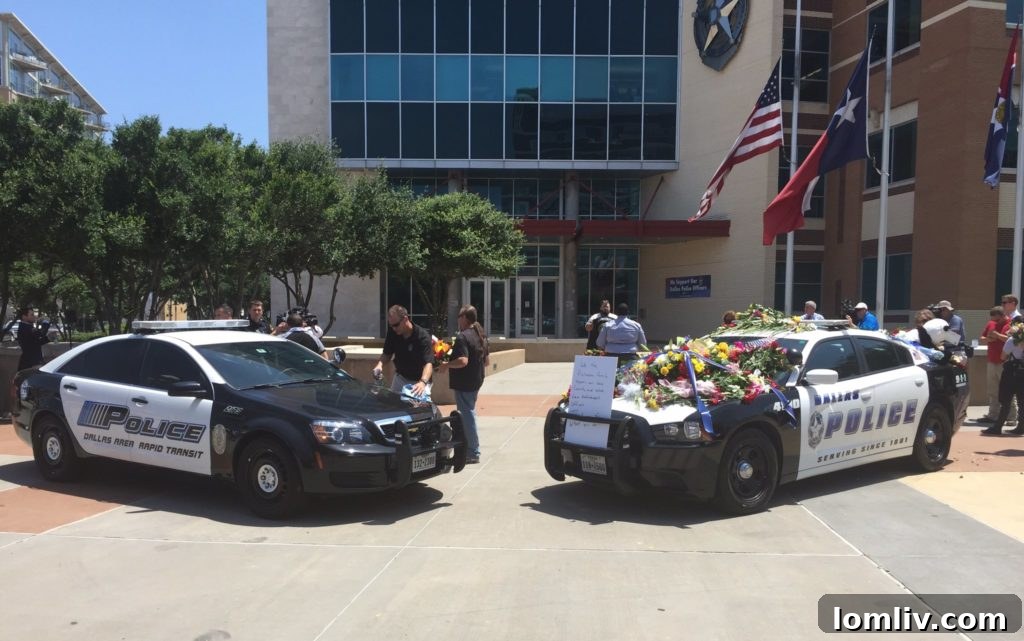
A Night of Turmoil Amidst Tahoe’s Peace
That night, sleep eluded us. Like many across the nation, our initial thoughts spiraled, fearing multiple assailants. The terrifying notion that Dallas was being deliberately targeted for street executions was agonizing. Though we lacked a television, our Wi-Fi connection proved invaluable. It allowed me to stay connected, check on loved ones, and keep abreast of the rapidly evolving situation. Facebook’s “I’m Safe” feature became a beacon of relief, allowing friends and family to confirm their well-being. By midnight, the relief that there was likely only one disturbed individual began to set in. By 2 AM, news broke that the lone gunman had been neutralized.
The irony of our situation was profound. We were ensconced in one of the world’s most peaceful geographies – the pristine aqua waters of Lake Tahoe, embraced by the majestic, snow-capped Sierra Nevada mountains. The only sounds were the whisper of the wind through colossal pines and the melodic hoot of an owl I was attempting to record for my granddaughter. This was, by all measures, vacation home nirvana, a place designed to lower blood pressure and reward a lifetime of diligent work. Yet, despite the idyllic surroundings, relaxation was a distant dream.
The violence and racial tensions that had flared in Dallas had, in a sense, infiltrated our tranquil haven. This wasn’t merely a distant headline about Ferguson or Baltimore; it was a crisis in our very own city. A lockdown was in effect just seven miles from our residence. We were physically in “paradise” as planned, but when your home city is in turmoil, true rest remains elusive.
The Dallas Real Estate Market and Lingering Questions
My initial wave of worry was deeply personal: the tragic loss of two, then four, and ultimately five exceptional young men. This was a sorrowful experience I knew too well. But then, my professional instincts, honed by years in real estate, kicked in. Would this horrific shooting bring our vibrant market to a screeching halt? Would it deter people from Dallas, curbing the powerful momentum that had drawn more and more young families to embrace urban living downtown? Mostly, I was just heartbroken, continually asking, as one does in the face of tragedy, “Why us? Why Dallas?”
Dallas has long prided itself on having one of the most progressive police departments in the country, especially regarding the curbing of excessive force. Under Chief David Brown’s leadership, officers were encouraged to de-escalate, to “slow down” rather than rushing into situations that could escalate into controversial, Ferguson-like incidents. While some officers viewed this as a mere public relations strategy, Chief Brown proudly cited an 80 percent reduction in complaints alleging excessive force.
“Your adrenaline wants you to chase right in and get it done. … Officers think they’re superman, superwoman,” Brown explained in interviews. He added that officers also deeply desired to avoid becoming the focus of a viral negative news story.
The question persisted: why would anyone target and kill five white officers in a city known for its progressive stance on police force? Why would Black Lives Matter even converge here? It was a critical point that the entire demonstration leading up to the ambush had been entirely peaceful until 8:58 p.m., underscoring the senselessness of the subsequent violence.
Challenges Within the Dallas Police Department
Beyond the immediate tragedy, there were underlying tensions within the Dallas Police Department. We had already observed a concerning crime spike during Chief Brown’s tenure, with a 22.7% increase in violent crime in the first quarter of 2016 compared to the previous year. While Chief Brown attributed this to an unusually warm winter, I, along with many others, saw it as a symptom of a rapidly growing city grappling with new challenges.
Dallas police morale was reportedly very low. Many officers were known to leave the force for suburban departments or for cities like Austin and Fort Worth, where starting pay at a lower rank was $10,000 to $15,000 higher, coupled with more generous health benefits. On an average annual salary of about $40,000, many officers struggled to afford to live within Dallas itself, a predicament that often drew public scorn. Such a salary might barely qualify an officer for a modest $160,000 home.
The department faced a significant staffing shortage, with at least 200 officer vacancies out of 3,500 sworn personnel. These internal struggles contributed to a challenging environment for law enforcement.
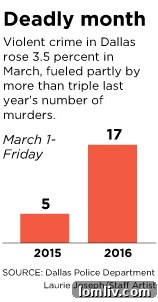
In March, even the Black Police Association had called for Chief Brown’s resignation, citing a “poisonous atmosphere” within the department. The Dallas Police Association, too, criticized Brown’s staffing proposals, describing the department as being in “a state of chaos” and lacking a clear direction for addressing the rising crime rates. Critics like Pinkston highlighted what they perceived as “excuses” for the crime surge, attributing it to “bad police management.” These associations, along with other officer representative groups, held a rare joint meeting to discuss new shift structures, further illustrating the internal strife.
Chief Brown, in turn, offered several reasons for the uptick in violent crime, including a reduction in officers (50 had reportedly left the department since the beginning of the year) and the unusually warm winter which he argued led to a larger “victim pool.” Dallas City Council members also expressed their displeasure. Phillip Kingston called for a better plan, while Tiffinni Young and Adam Medrano raised concerns about DPD neglecting certain neighborhoods in their districts. Adam McGough sought a more long-term solution to crime reduction.
All these factors hold immense importance for our real estate market. Location remains the paramount consideration for homebuyers, and “location” encompasses not just topography but also neighborhood quality, local schools, a sense of community, and, critically, safety.
Out-of-Towner Perspectives: Guns, Race, and Mental Health
The perception of Dallas from our out-of-town companions in Lake Tahoe was telling. To many, Dallas, being in Texas, was perceived as part of a “Wild West show” when it came to gun culture. The conversations around the shooting quickly diversified into the complex issues gripping the nation.
“The shooter was a vet, that’s very disturbing,” remarked one woman from Silicon Valley, adding, “But I think we have been targeting black youth for too long.” Another local echoed this sentiment, suggesting that such tragedies were the consequence of failing to resolve the targeting problem. Yet another voice attributed the incident to mental illness, a common narrative in discussions of mass violence.
A former military serviceman in our group voiced his expectation that the media and the President would inevitably use the Dallas ambush as an excuse to push for stricter gun control. “My wife is Irish,” he recounted, “and taking away the guns certainly didn’t stop the IRA from obtaining them to shoot up people.” Others expressed concern about insufficient screening for gun owners or keeping firearms out of the hands of the mentally unstable, often citing HPPA laws. Some even predicted an uptick in gated communities, sales of vacation homes in remote, secure areas, and a surge in demand for self-defense courses and concealed handgun licenses (CHLs).
The overarching sentiment was a disheartening chorus of “this country’s going to hell,” now amplified by the lament, “and now it’s even hit Dallas!”
Chief Brown: A Hero Rises
Despite the initial despair, out-of-towners, and indeed myself, were captivated by our police chief’s response. To many, Chief David Brown emerged as a true hero. By Sunday, we were all singing the praises of this South Oak Cliff native, who protected his officers and his city by ending Micah Johnson’s twisted rampage with an explosive device attached to a robot. Thankfully, few in Lake Tahoe questioned that difficult, yet decisive, call. Chief Brown not only demonstrated steely resolve when his city became a war zone but also communicated with remarkable transparency, gave powerful national interviews, and spoke some plain truths that no one, not even the President, had dared to articulate until then. These were truths that I earnestly hoped would fundamentally alter how we perceive our police force moving forward.
In his interview with CNN, Chief Brown articulated a poignant truth: police officers are not only under-appreciated but are often burdened by the communities they serve. He argued that we demand too much of them—when schools fail, we turn to the police; when there’s a loose dog, we call a cop.
“We’re asking cops to do too much in this country,” Chief Brown asserted. “Every societal failure, we put it off on the cops to solve.” He listed a litany of issues including mental health crises, drug addiction, stray animal problems, and failing schools, all of which the public expects law enforcement to resolve. Brown further highlighted, “Seventy percent of the African American community is being raised by single women; let’s give it to the cops to solve that as well. That’s too much to ask. Policing was never meant to solve all those problems.”
“I just ask for other parts of our democracy along with the free press to help us, to help us and not put that burden ALL on law enforcement to resolve.”
The sentiment resonates beyond policing. One could argue the same for teachers, nurses, and physicians: they are expected to educate children whose parents struggle to parent, heal children whose families cannot care for them, and cure people of diseases stemming from undisciplined lifestyles—all while being asked to do so with minimal resources. Yet, it is arguably cops who bear the heaviest brunt. They are often underpaid and disproportionately criticized, frequently blamed for the transgressions of a select few within their ranks. It is no wonder that enrollment in police academies nationwide mirrors the plummeting morale within the force.
President Obama’s Powerful Address and a Path Forward
At the beautiful and profoundly moving memorial service held at the Morton H. Meyerson Symphony Center, a beacon of hope emerged. President Barack Obama, Chief Brown, Mayor Rawlings, former President George W. Bush, and other dignitaries offered our city, and perhaps our entire country, a renewed sense of purpose and hope for the future. President Obama, accompanied by First Lady Michelle, and Vice President Joe Biden with his wife, Jill, traveled to Dallas to comfort the grieving city. I believe President Obama delivered one of his most powerful and impactful speeches ever.
While he did touch upon the issue of guns—noting the disheartening reality that it is often easier for a young person to acquire a Glock than a computer—and societal shortcomings, such as insufficient investment in education, mental healthcare, and parental support, he also, for the first time, robustly defended law enforcement, almost echoing Chief Brown’s sentiments:
As a society, we choose to under-invest in decent schools. We allow poverty to fester so that entire neighborhoods offer no prospect for gainful employment. We refuse to fund drug treatment and mental health programs.
The truth is, we all inherently understand that these systemic failures are ultimately to blame for the tragic deaths of these five heroes. Our differences lie primarily in identifying the most effective solutions.
President Obama spoke with refreshing candor about the pervasive issue of race in America:
And so when African-Americans from all walks of life, from different communities across the country, voice a growing despair over what they perceive to be unequal treatment, when study after study shows that whites and people of color experience the criminal justice system differently. So that if you’re black, you’re more likely to be pulled over or searched or arrested; more likely to get longer sentences; more likely to get the death penalty for the same crime. When mothers and fathers raised their kids right, and have the talk about how to respond if stopped by a police officer — yes, sir; no, sir — but still fear that something terrible may happen when their child walks out the door; still fear that kids being stupid and not quite doing things right might end in tragedy.
When all this takes place, more than 50 years after the passage of the Civil Rights Act, we cannot simply turn away and dismiss those in peaceful protest as troublemakers or paranoid.
He meticulously defended the police force while also directly addressing protesters:
And then we tell the police, “You’re a social worker; you’re the parent; you’re the teacher; you’re the drug counselor.” We tell them to keep those neighborhoods in check at all costs and do so without causing any political blowback or inconvenience; don’t make a mistake that might disturb our own peace of mind. And then we feign surprise when periodically the tensions boil over.
We know those things to be true. They’ve been true for a long time. We know it. Police, you know it. Protesters, you know it. You know how dangerous some of the communities where these police officers serve are. And you pretend as if there’s no context. These things we know to be true. And if we cannot even talk about these things, if we cannot talk honestly and openly, not just in the comfort of our own circles, but with those who look different than us or bring a different perspective, then we will never break this dangerous cycle.
With an open heart, as the President urged, we can shift our focus from debating which side has been wronged to uniting our efforts to do what is right. Amen.
Or, perhaps even more powerfully articulated in Chief Brown’s direct and pragmatic words: “Become a part of the solution, serve your community. Don’t be a part of the problem…we’re hiring. Get off that protest line and put an application in. We’ll put you in your neighborhood – we will help you resolve some of the problems you are protesting about.” His call to action was a profound challenge, inviting those who seek change to actively embody it, offering a tangible pathway to bridge divides and foster genuine community improvement.