The future of architecture shines brightly, as recently demonstrated at a prestigious event hosted by the Dallas chapter of the American Institute of Architects (AIA). This gathering not only celebrated innovative unbuilt projects but also spotlighted the exceptional talent emerging from academic institutions. Among the most recognized were three student teams, all hailing from the renowned UT Austin School of Architecture, whose visionary designs offer compelling solutions to contemporary urban and environmental challenges. These awards underscore the critical role that emerging architects play in shaping sustainable, community-oriented, and aesthetically rich environments for generations to come. From reimagining residential communities to addressing pressing needs for affordable urban housing and creating serene artistic retreats, these students presented groundbreaking concepts that promise to redefine modern living.
“A Home is Not a House”: Reimagining Community in Austin
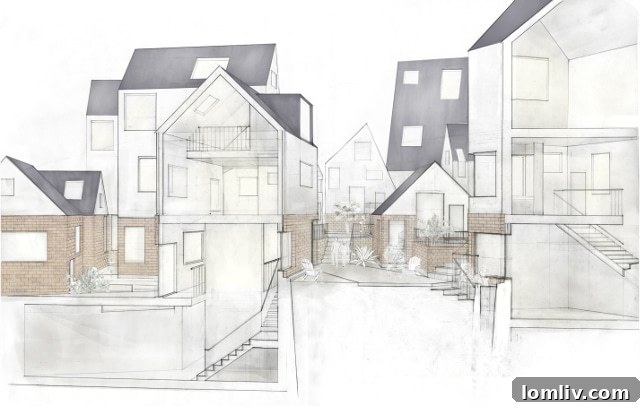
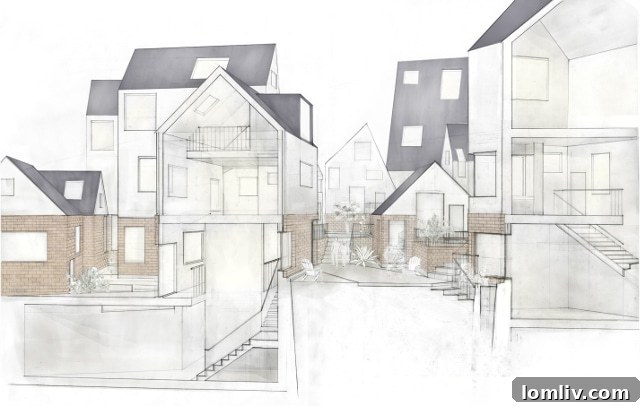
One of the standout projects, aptly titled “A Home is Not a House,” was presented by the talented duo Krishnan Mistry and Alison Walvoord. Their design offers a refreshing departure from the conventional suburban tract development, where uniform houses often lack character and community cohesion. Instead of predictable layouts named after European cities, Mistry and Walvoord drew inspiration from centuries-old Italian villages – a concept that immediately evokes images of ancient hillside settlements where homes clustered intimately, fostering a strong sense of community and shared life. This inspiration is clearly visible in their Austin-based project.
The team skillfully adapted this timeless village typology to a small, sloping tract of land near Austin. While Austin’s topography may not boast the dramatic crags of the Italian Alps, the designers expertly leveraged the land’s natural contours to recreate the dense, organically evolved feel of these ancient communities. Their proposal is a masterclass in urban planning, challenging the prevailing notion that suburban sprawl is the only pathway to homeownership. By embracing a design philosophy rooted in historical precedents, Mistry and Walvoord have envisioned a residential paradigm that prioritizes human connection and sustainable land use over isolated, expansive properties. It’s a powerful statement on how thoughtful design can transform a mere collection of dwellings into a vibrant, interconnected neighborhood.
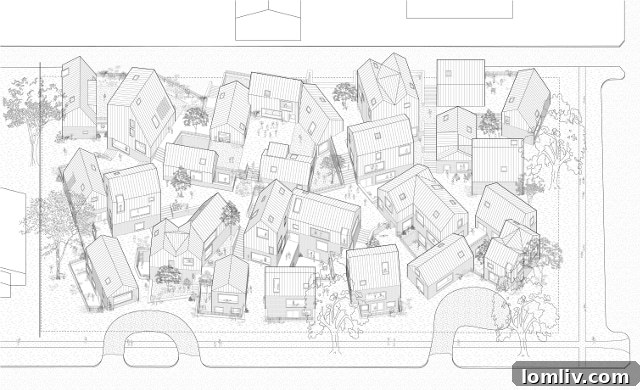
The residential clusters within “A Home is Not a House” appear as if playfully scattered, reminiscent of Monopoly houses, yet each placement is meticulously calculated. This seemingly whimsical arrangement is, in fact, a deeply studied approach to balancing community interaction with individual privacy. Homes are subtly rotated and angled to prevent direct views into neighbors’ windows, a common pitfall in high-density developments. Simultaneously, this intelligent positioning allows for modest, usable yard spaces, even for homes that are interconnected rather than entirely stand-alone. This thoughtful design ensures that residents can enjoy their personal outdoor areas while still feeling integrated into the larger communal fabric. The design cultivates a sense of belonging without sacrificing the essential need for personal sanctuary, striking a harmonious balance that is often elusive in contemporary housing projects.
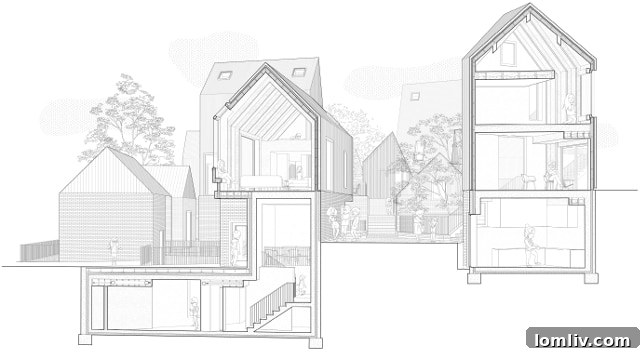
One of the most innovative aspects of this project, particularly relevant for the Texan climate, is its ingenious use of the land’s contours to create practical and energy-efficient living spaces. By integrating homes into the natural slope, the design allows for basement spaces – a rarity and a luxury in Texas construction – which serve a vital function. These underground dwellings harness the earth’s natural cooling properties, providing a welcome respite from the intense Texas heat, significantly reducing reliance on air conditioning and lowering energy consumption. Furthermore, by varying the depth of the homes in relation to their specific contour, the designers avoid a monotonous, uniform skyline. This deliberate differentiation in building heights adds significant visual interest and architectural dynamism to the entire project, creating a captivating streetscape that evolves with the landscape. It’s a powerful demonstration of how sustainable design can also be aesthetically rich and enhance the living experience.
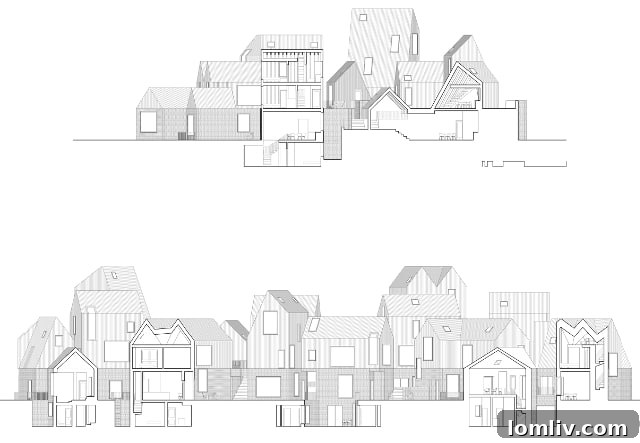
From an elevated perspective, the “medieval village” aesthetic truly comes to life, illustrating the core vision of Mistry and Walvoord. This perspective underscores the designers’ profound understanding that modern semi-urban environments, often characterized by monotonous blocks of single-family homes, frequently fail to foster genuine community. Such conventional layouts lead to isolation rather than interaction, a problem exacerbated by the ever-increasing cost of proximity to city centers. This project offers a compelling alternative: a dense yet open community that encourages interaction and shared public spaces, providing a sense of belonging often absent in contemporary developments. It asks crucial questions about how we house our growing populations in urbanizing areas without succumbing to blandness or unsustainability. Can such a village-like approach better serve the needs of young, modern professionals who seek both urban convenience and a strong sense of community? In an era where urban areas strive to retain young talent, offering housing solutions that balance density with desirability is paramount. Projects like “A Home is Not a House” present a viable, attractive option for infill developments, providing the much-needed density for semi-urban environments without resorting to repetitive, uninspiring suburban rehashes. It suggests that the desire for family life, traditionally associated with the suburbs, can be met within a vibrant, urban-sensitive community structure.
TUM – Garching Student Housing: A Sustainable Urban Blueprint in Munich
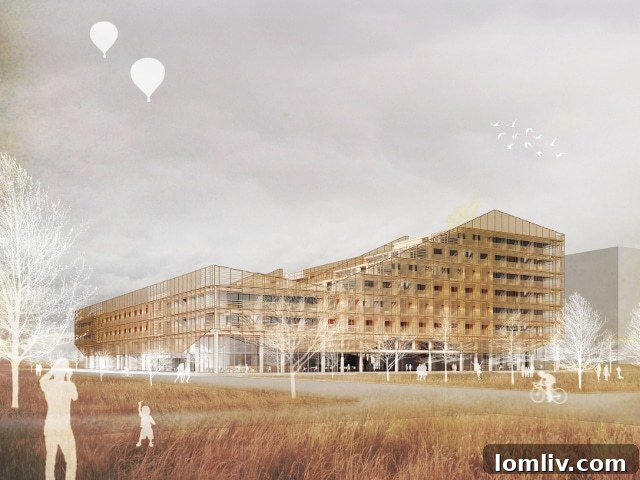
Another impressive winning entry came from Francisco Resendiz Carrillo and Diego Zubizarreta Otero, who tackled the critical challenge of providing revitalized student and resident housing near a major university in Munich, Germany. It’s no secret that Munich, like countless urban centers globally, grapples with a severe shortage of affordable housing, impacting not only its burgeoning student population but also long-term local residents. The project brief was ambitious: to develop a masterplan for a 40-acre site adjacent to the existing campus, capable of housing a staggering 5,000 students and an equal number of local residents. This scale demanded not just architectural creativity but also innovative thinking in urban planning, material science, and social integration.
Resendiz Carrillo and Zubizarreta Otero rose to the challenge, conceptualizing an exemplary building design that is both affordable to construct and highly repeatable, a key factor for projects of this magnitude. Their solution ingeniously leverages the growing popularity of sustainable wood as a primary construction material for larger and taller buildings. The design specifies that the timber would be sourced from forests within a 250 km (155-mile) radius, significantly reducing the project’s carbon footprint and supporting local economies. This commitment to local, sustainable resources aligns perfectly with contemporary ecological imperatives, making the project a model for environmentally responsible urban development. The choice of wood also contributes to the aesthetic and experiential quality of the buildings, offering a warm and inviting atmosphere that contrasts with the often cold and sterile feel of typical high-density housing.
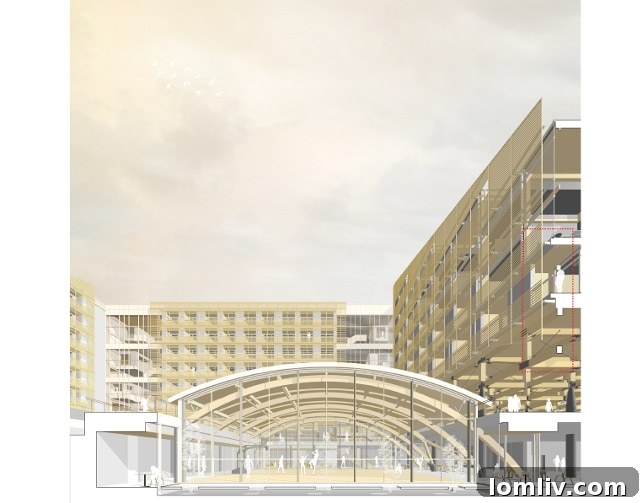
Wood, universally recognized as a “warm” material, plays a pivotal role in this project, infusing a natural and organic element into a development the size of a small town. The resulting buildings are characterized by an abundance of natural light, flooding the interiors and creating uplifting living and learning environments. Beyond individual units, the design emphasizes the creation of social interconnecting spaces, crucial for fostering a sense of community among such a diverse and large population. These communal areas are thoughtfully integrated, designed to encourage spontaneous interactions and structured gatherings, thereby knitting the community together. One particular challenge addressed by the designers was the often-grim necessity for emergency response shelters. Traditionally, such structures are conceived as dark, heavy, and isolated spaces. Resendiz Carrillo and Zubizarreta Otero ingeniously incorporated these shelters directly into the communal spaces, where they serve a dual purpose. In everyday use, they function as integral social hubs, providing flexible space for various activities. In an emergency, these versatile spaces seamlessly transform into secure shelters, becoming even more critical social nodes during times of crisis. This innovative approach not only optimizes space but also reframes the perception of emergency infrastructure, making it an enhancing feature rather than a purely functional one.
Artist Residency, Santa Fe, NM: A Subterranean Sanctuary for Creativity
The concept of “in-fill housing” gains a profound new meaning with the captivating winning entry from students Prarthan Shah and Nicole Vice. Their project, an “Artist Residency” nestled within a natural depression in Santa Fe, New Mexico, is a remarkable study in contextual architecture. It is as unobtrusive and seamlessly integrated into the landscape as it is dramatically impactful in its design and purpose. One might even imagine it as a chic, secluded hotel, a dream retreat for anyone seeking tranquility and inspiration, regardless of their artistic inclination.
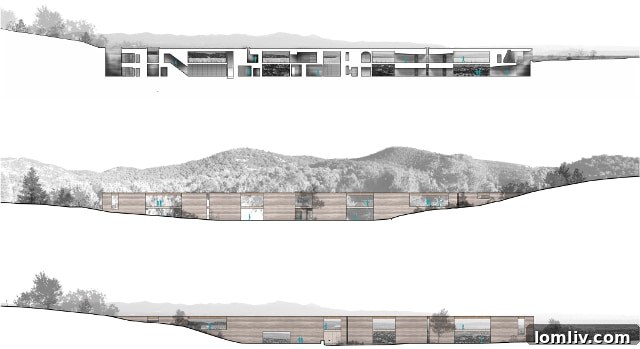
The design team’s primary intent was evidently to disturb the pristine Santa Fe landscape as little as possible, rejecting the notion of a man-made structure marring the natural beauty. For a place intended to foster creativity, the guiding principle had to be nature itself. Consequently, the building’s essential services – the more functional, less aesthetically prominent elements – are discreetly pushed to the periphery and partly submerged beneath the earth. This strategic placement allows the central mass of the structure to emerge as a series of interconnected spaces, characterized by varying amounts of glass. These expansive glass elements are not merely windows; they are portals, designed to “drink in” the breathtaking views of the majestic Santa Fe National Forest, blurring the lines between indoor sanctuary and outdoor wilderness. This approach creates a dialogue between the built environment and its natural surroundings, cultivating an atmosphere conducive to artistic contemplation and production. The project demonstrates an exceptional sensitivity to site, proving that architecture can coexist harmoniously with nature, enhancing rather than detracting from it.
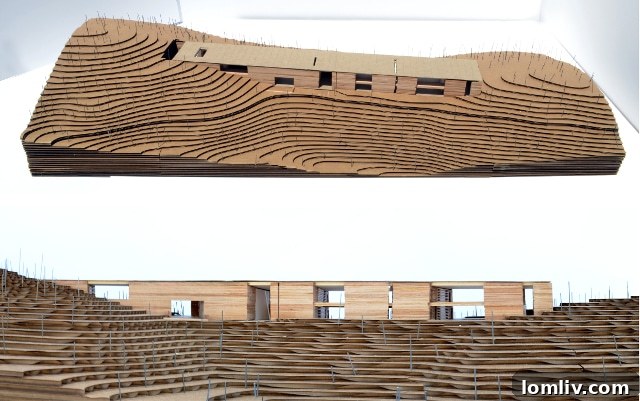
The physical model of the Artist Residency is invaluable for truly grasping the innovative design. Because the project excels so remarkably at camouflaging itself within its natural setting, initial two-dimensional renderings might struggle to convey its full impact. The model, however, offers a three-dimensional clarity that reveals the thoughtful integration of form and landscape. It highlights how the structure’s varying levels and glass facades are meticulously crafted to both blend in and stand out, creating a dynamic interplay of light, shadow, and reflection. As previously suggested, the allure of such a thoughtfully designed space is universal; it’s a place where anyone would aspire to reside, even if only for a short, inspiring period. This project is not just housing; it’s an experience, a sanctuary that celebrates both art and nature in equal measure, proving that architectural innovation can provide profound, immersive environments that transcend mere functionality.
These award-winning entries are far more than “just” student projects; they are visionary blueprints for the future of architecture and urban living. Each design tackles pressing real-world issues – from fostering community and increasing urban density to providing affordable, sustainable housing and creating inspiring, nature-integrated spaces. It would be a privilege and a joy to see each of these imaginative concepts brought to life, transforming theoretical brilliance into tangible, impactful environments. They serve as a powerful reminder that the next generation of architects is not only capable but already leading the way in addressing complex challenges with creativity, intelligence, and a deep sense of responsibility. We invite you to explore more pictures and details of these remarkable designs and other award winners here, and witness firsthand the innovative spirit shaping tomorrow’s built world.

A Final Note from the Author: My focus consistently revolves around high-rises, homeowners’ associations (HOAs), and the intricate world of property renovation. However, my appreciation for architectural excellence extends broadly, encompassing both modern innovation and historical preservation, always viewed through the lens of the YIMBY movement’s advocacy for sensible urban development. My commitment to insightful real estate commentary has been recognized by the National Association of Real Estate Editors, who honored my writing with three Bronze awards in 2016, 2017, and 2018 (2016, 2017, 2018) and two Silver awards in 2016 and 2017. If you have a compelling story to share, a perspective to offer, or even a marriage proposal to make (why not!), please don’t hesitate to reach out via email at [email protected]. You’re also welcome to search for me on Facebook and Twitter, though I playfully confess you likely won’t find me there – but the invitation to look stands!