Dallas’s Persistent Housing Crisis: A Deep Dive into Affordability Challenges and Sustainable Solutions
Dallas, a vibrant and rapidly growing metropolis, is grappling with a severe affordable housing crisis—a reality well-known to its residents and a constant challenge for urban planners. The task of addressing the underlying causes of this affordability gap and constructing durable solutions remains a complex enigma for local authorities, business leaders, and community stakeholders. This multifaceted issue demands more than superficial remedies; it requires a comprehensive understanding and a concerted effort from all sectors.
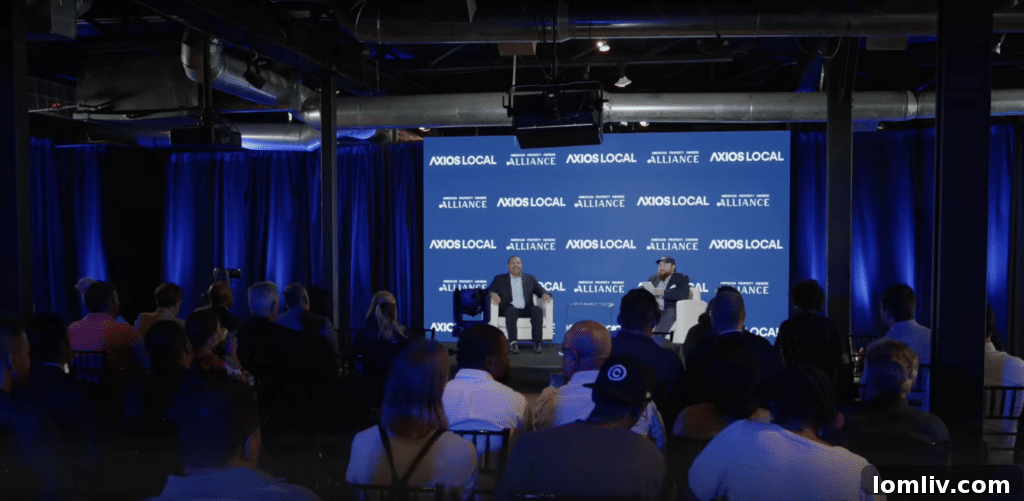
During a critical discussion titled “Advancing Housing Affordability in Dallas,” hosted by Axios Dallas, David Noguera, the City of Dallas Housing and Neighborhood Revitalization Director, offered an initial, simplified explanation for the city’s predicament. “Right now it really comes down to supply and demand,” Noguera informed the audience. “We can’t build housing fast enough to meet the demand.” While this economic principle forms the foundation of the problem, the subsequent insights from the panel revealed a much more intricate landscape.
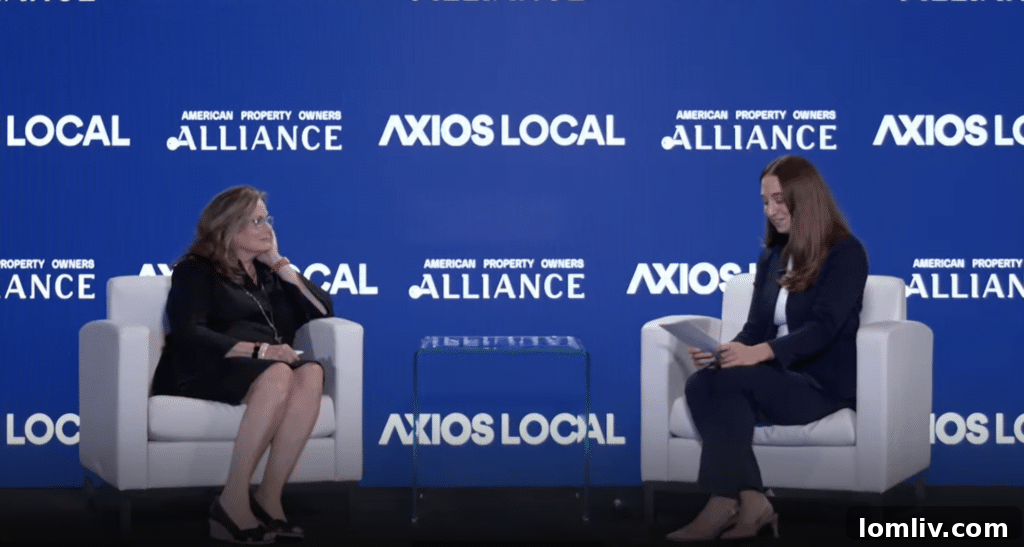
As the conversation progressed with Noguera, Linda McMahon, President and CEO of The Real Estate Council, and Texas State Representative John Bryant (D-114), it became increasingly clear that Dallas’s affordable housing crisis is too deeply entrenched and interconnected to be solved with a single, isolated approach. Instead, it necessitates a strategic blend of economic, policy, and social interventions.
The Human Impact: Navigating a Competitive Housing Market
For a significant segment of Dallas residents, particularly those who do not fall into the highest income brackets, securing housing has become a desperate scramble. Noguera characterized the situation as a “race to the bottom to swoop up whatever units are available,” illustrating the intense competition and limited options faced by individuals and families seeking attainable housing. This relentless pursuit often leads to untenable living conditions and difficult decisions.
Those who are unable to find suitable affordable housing often face severe consequences. They “end up either in overcrowded situations living with family members, or moving to the outer rings of the outer suburbs where they can find affordability,” Noguera explained. The ramifications of such displacement are profound, impacting access to jobs, education, healthcare, and overall quality of life. In some unfortunate cases, individuals are forced to “give up altogether and leave the region because it’s just not there for them,” signifying a loss of valuable human capital and community diversity for Dallas.
To combat these challenges, the City of Dallas has formulated and implemented Housing Policy 2033. This policy serves as a critical framework guiding Noguera’s department in maximizing its resources. It focuses on strategically targeting specific areas for revitalization and fostering robust collaboration across various entities. Noguera emphasized that this is a “team effort,” involving close coordination with other city departments, the Dallas Housing Authority, local school districts, Dallas Area Rapid Transit (DART), and numerous other community organizations. By aligning their investments and operational strategies, these diverse partners are working to create more stable, vibrant, and affordable communities throughout the city.
Deep-Seated Headwinds: Beyond the Simple Supply-Demand Equation
Dallas, an expansive city of 380 square miles and a major economic hub ranking fourth nationally for Fortune 500 headquarters, must act decisively and strategically to make any meaningful impact on its housing crisis. However, as Linda McMahon of The Real Estate Council clarified, merely increasing the number of housing units is not a panacea; the underlying obstacles are far more complex and pervasive.
Economic Realities and Escalating Construction Costs
“Obviously the economic markets are impacting what people can afford, construction costs are really high,” McMahon stated. The continuous rise in the cost of building materials, coupled with persistent labor shortages, increased land acquisition costs, and complex regulatory frameworks, makes new construction, particularly for affordable housing, an increasingly expensive undertaking. These economic headwinds significantly deter private sector developers from building units accessible to lower and middle-income households, widening the affordability gap.
Critical Gaps in Infrastructure Investment
A significant, yet frequently underestimated, impediment to housing development in Dallas—especially in its southern sector—is the glaring “lack of investment in infrastructure.” The financial burden of constructing and maintaining essential public services such as sidewalks, streets, streetlights, and crucial water and wastewater systems is immense. McMahon highlighted this crucial point: “So if you’re talking about creating affordable housing, you really have to be talking about the total cost of that and that includes a major investment that needs to be made in infrastructure, particularly in Southern Dallas where there is either lacking infrastructure or it’s so old and crumbling that it’s not capable of being able to handle a modern home or apartment complex.” Without adequate, modern infrastructure, the development of new, high-quality affordable housing remains unfeasible, perpetuating disparities.
The Political Landscape and Local Autonomy
Beyond economic and infrastructural challenges, political will—or the lack thereof—presents another significant hurdle. McMahon expressed disappointment that despite considerable advocacy, the 88th Texas Legislature concluded its regular session without enacting meaningful legislation to address North Texas’s housing crisis. She attributed this inaction partly to a legislative focus on non-urban areas of Texas, even though the vast majority of the state’s population resides in its major metropolitan centers.
Furthermore, McMahon noted that some legislative efforts actively sought to curtail cities’ abilities to regulate housing and affordability, a stance she deemed “anathema” to The Real Estate Council’s objectives. “Each city should be able to define its own future in terms of what kinds of regulations and policies there are,” she argued. This push for state preemption undermines Dallas’s capacity to implement localized solutions, such as policies aimed at increasing density, which are vital for a healthy, growing urban environment.
Revitalizing the “Missing Middle” Housing
McMahon recalled a period in the early 1990s when developers readily constructed what is now commonly referred to as “missing middle” housing. This category encompasses housing types that bridge the gap between single-family homes and large apartment complexes, such as duplexes, triplexes, townhouses, and small-scale multi-family buildings. “We haven’t seen that type of development — that small-scale development, and having multifamily, not 300 units or high-rises, but multifamily within a residential context is really important, and increasing density is really essential to the health of urban Texas,” McMahon stressed. The scarcity of “missing middle” options restricts housing diversity, limits affordability for various income levels, and hinders efforts to create more compact, walkable, and sustainable neighborhoods within Dallas.
Fostering Acceptance: From NIMBY to YIMBY
A critical area of agreement between Noguera and McMahon centered on the urgent need to reframe the public conversation surrounding affordable housing. The prevailing skepticism and resistance, often termed NIMBYism (“Not In My BackYard”), represent a formidable social and political barrier to progress.
“The biggest challenge we face, particularly from an affordable housing perspective is NIMBYism — those who are not interested in the word ‘affordable housing’ or anything that looks like it,” Noguera asserted. He advocated for a substantial investment in cultivating YIMBYism (“Yes In My BackYard”). This transformative cultural shift involves proactive community education, helping residents understand “who are these people that we’re serving, what are the professions that they come from, how will that impact my property values, and why should I be interested in supporting those efforts.” Overcoming misconceptions and highlighting the tangible benefits of diverse, inclusive communities is paramount to gaining public support for housing initiatives.
McMahon strongly endorsed this perspective, suggesting a targeted marketing campaign to reshape public perception about affordable housing and emphasize its benefits for all residents. “Our organization has always been a big proponent of mixed-income housing,” she stated. “A neighborhood is healthier if it has a variety of income levels within that neighborhood.” Mixed-income communities are proven to enhance social cohesion, reduce economic segregation, stimulate local economies, and create more resilient, equitable urban environments.
The Undeniable Link: Wage Growth and Housing Affordability
For State Representative John Bryant (D-114), whose district encompasses downtown Dallas, parts of North and Southern Dallas, and most of East Dallas, the discussion about affordable housing is incomplete without confronting a fundamental, often overlooked, truth: people’s capacity to afford housing is intrinsically linked to their income. “I think you can’t talk about affordable housing without talking about people’s ability to afford houses,” Bryant declared, pinpointing the crux of the issue. “You have to start talking about people’s income.”
Statistics vividly illustrate the stark disconnect between wages and housing costs in Dallas. Data from the Child Poverty Action Lab indicates that a staggering 40 percent of Dallas’s workforce earns $40,000 or less annually. This figure stands in stark contrast to the average cost of a home in Dallas, which now exceeds $500,000. As McMahon aptly summarized, “I don’t know a lot of people who can afford a half-million dollars for a home.” This income-housing disparity extends beyond Dallas, impacting surrounding areas like Frisco, which experiences a shortage of workers because affordable housing options are simply not available near job centers. Bryant firmly asserts that while building more affordable housing is essential, a concurrent focus on fair wages is indispensable to any long-term solution.
“We’re in a situation now in which we’ve grossly underpaid entire segments of the population that do great work all day long every day and have to go and work second jobs just to get by,” Bryant stated with profound conviction. He argued that it is both “a practical matter and as a moral issue” that society cannot legitimately discuss affordability without simultaneously examining whether individuals are being compensated adequately. A truly thriving city requires a workforce that can realistically afford to live within its boundaries, and without equitable wages, housing interventions alone will provide only temporary and insufficient relief.

Charting the Path Forward: Innovative Solutions and Collective Will
The panel discussion concluded with a series of insightful “hot takes,” offering concrete strategies and emphasizing the critical urgency of addressing Dallas’s housing crisis. These perspectives from key leaders illuminate a multi-pronged approach to navigating the challenges ahead.
“From a regional perspective, it’s a universal issue in providing affordable housing and we’re going to work on that in every way that we can by trying to bring innovative solutions like the Dallas Housing Opportunity Fund. The other initiative we’re working on is community land trusts, which are very important, and that’s a shared equity model that Dallas has not really implemented yet. And then really figuring out what kind of property tax interventions we can have because we actually mapped the City of Dallas and areas that have the highest increase in property valuation were majority low-income communities. Gentrification is something that’s a part of a growing economy and is something that we are trying to manage in a smart way to maintain opportunities for people to live in their communities and provide that stable neighborhood that they want in addition to having more people move into those communities, but again, infrastructure investment is going to be critical to that, zoning is going to be critical to that, all kinds of reforms that need to happen from a local perspective are all important.
Linda McMahon, President and CEO, The Real Estate Council
Linda McMahon’s comprehensive outlook outlines several innovative pathways. The Dallas Housing Opportunity Fund stands as a crucial financial instrument designed to catalyze the development and preservation of affordable housing units. Furthermore, the exploration of community land trusts (CLTs) represents a promising shared equity model. CLTs are non-profit organizations that acquire and hold land in perpetuity, leasing it to residents at an affordable rate. This mechanism ensures that homeownership remains permanently affordable for low- and moderate-income households, effectively countering market speculation and displacement. McMahon also emphasized the strategic importance of property tax interventions to mitigate the negative impacts of gentrification, particularly in historically low-income communities experiencing rapid increases in property values. By intelligently managing urban growth, Dallas aims to preserve the existing character and affordability of neighborhoods while still welcoming new residents and development, with infrastructure investment and progressive zoning reforms serving as foundational elements.
So many folks talk about ‘We need affordability in high-opportunity areas.’ The reality is, in Dallas, we don’t have enough high-opportunity areas. And those that we do have are built out, and the land that is available is at the higher end of the spectrum. So we’ve got to figure out how do we build new high-opportunity areas, improving the quality of life for those residents that already live there, bringing services and housing stock for market-rate residents who are not currently interested in living in those areas, and figuring out from a long-term perspective if we’re successful at doing all of these things, how do we preserve affordability either through deed restrictions or through tools like community land trusts, or any other innovative products that may come on line so that we can sustain mixed-income communities.
David A. Noguera, Director, City of Dallas Department of Housing & Neighborhood Revitalization
David Noguera expanded on the concept of high-opportunity areas, acknowledging that existing ones in Dallas are often saturated or prohibitively expensive, with land at the higher end of the spectrum. His strategic vision encompasses a dual approach: enhancing the quality of life, services, and amenities in *existing* lower-opportunity areas to transform them into desirable, integrated mixed-income communities. Simultaneously, he stressed the importance of ensuring the long-term preservation of affordability through robust mechanisms such as deed restrictions and community land trusts. This forward-thinking strategy aims to proactively prevent the cycle of displacement that often accompanies revitalization, ensuring that current residents benefit from neighborhood improvements without being priced out, thereby sustaining truly mixed-income communities.
We as a society need to decide what kind of government we want — is the government is active in this area and trying to create a situation in which we have affordable housing and people who can pay the rent, or do we want to stay completely out of it and just let the situation take care of itself? Texas is 49th in the nation in regard to affordable housing. Only Nebraska is beneath us. Nebraska has fewer people than we have in Dallas County. So we have to make a decision about that and we make that decision at election time … Right now we have a state government that is not interested in being involved in this area.
State Rep. John Bryant, D-114
State Representative John Bryant delivered a powerful call to action, framing the housing crisis not merely as an economic problem but as a fundamental societal choice regarding the role of government. He starkly highlighted Texas’s alarming national ranking – 49th in affordable housing, with only Nebraska trailing, despite Nebraska having a smaller population than Dallas County alone. Bryant’s message underscores that the current housing deficit is not an inevitable outcome, but rather a direct consequence of policy decisions and legislative priorities. He emphasized that citizens possess the power, particularly during election cycles, to demand a state government that actively engages in solving this critical issue, rather than adopting a detached, hands-off approach. The future trajectory of Dallas’s housing landscape, and indeed that of Texas as a whole, hinges on this collective decision to prioritize equitable and sustainable housing opportunities for all its residents.