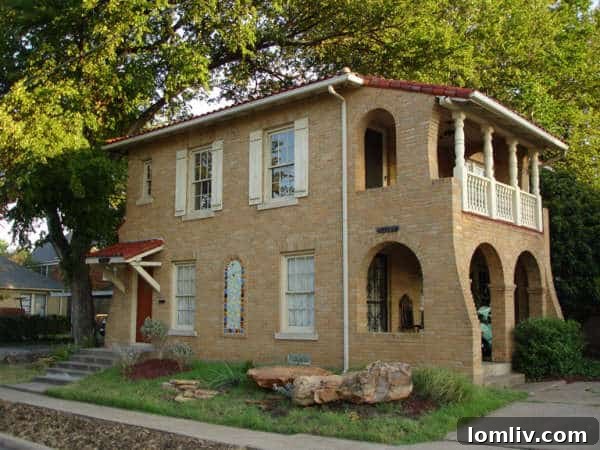
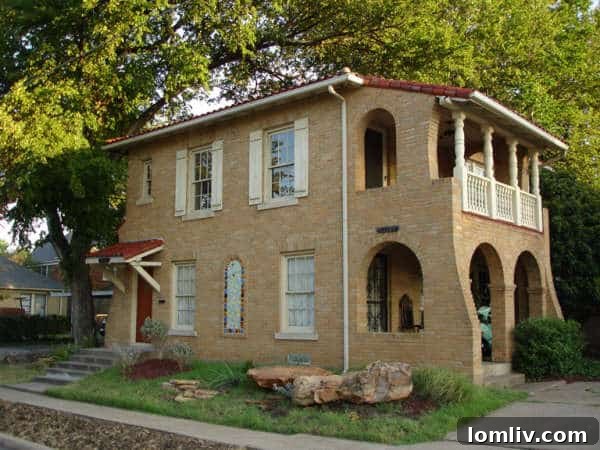
Dallas is at a critical juncture, navigating rapid population growth and an escalating housing affordability crisis. To proactively address these challenges and shape a sustainable future, city planners are diligently updating the comprehensive land use blueprint, ForwardDallas. A central pillar of this ambitious update is a concentrated focus on innovative, alternative housing options such as accessory dwelling units (ADUs), duplexes, and fourplexes, designed to effectively close the pervasive “missing middle” gap in the city’s housing landscape.
The urgency of this undertaking was underscored during a recent webinar hosted by Dallas Senior Planner Lindsay Jackson and Chief Planner Lawrence Agu III. The virtual event, attended by approximately 25 participants, delved deep into the critical concept of missing middle housing and its potential to revitalize Dallas’s approach to urban development and housing equity.
The existing ForwardDallas plan, last updated in 2006, is recognized by city officials as significantly outdated and in dire need of a comprehensive overhaul. “The city is projected to grow by an astounding 300,000 people in the next 20 years,” Agu emphasized during the discussion. “To put that into perspective, that’s equivalent to the entire current population of Plano. We have a monumental task ahead of us to find adequate housing and provide sufficient jobs for such a substantial increase in residents within the city of Dallas.” This demographic surge necessitates a visionary and adaptable land use strategy that can accommodate diverse needs and ensure continued prosperity.
As part of the ongoing public engagement and educational series surrounding the ForwardDallas initiative, the next ForwardDallas LunchNLearn session is scheduled to cover the vital topic of urban design. Hosted by Lawrence Agu III and Arturo del Castillo, this insightful event will take place from noon to 1 p.m. on April 18, offering residents and stakeholders another invaluable opportunity to learn about and contribute to the city’s future.
Unpacking the “Missing Middle Housing” Concept
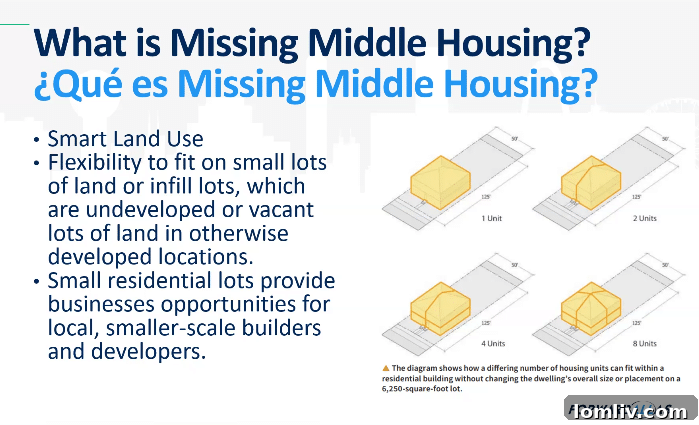
At the heart of Dallas’s housing dilemma are persistent concerns around housing availability, affordability, and the specter of displacement—issues that city planners like Lindsay Jackson confront daily. The concept of “missing middle housing” directly addresses these challenges by advocating for a diverse range of housing types that have historically been overlooked in modern zoning practices.
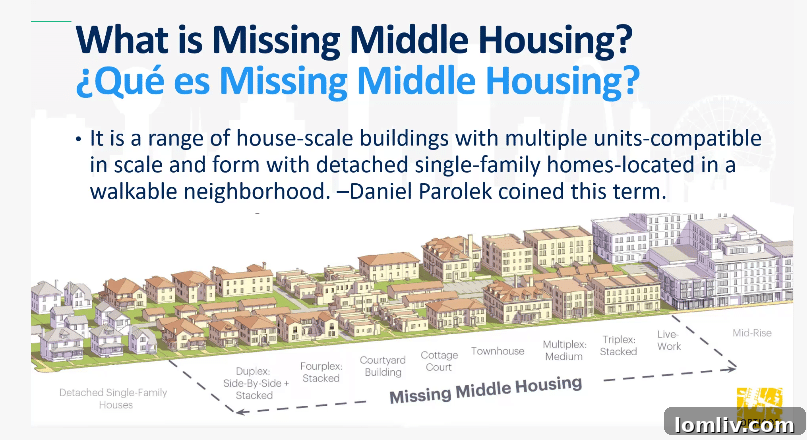
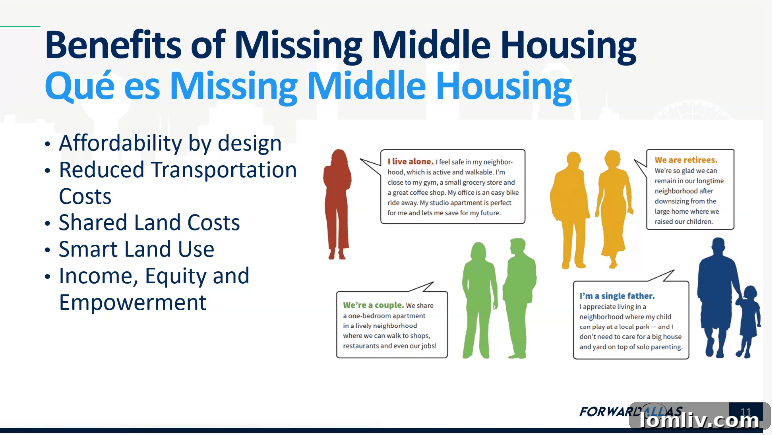
According to Daniel Parolek, an acclaimed architect and urbanist credited with coining the term, missing middle housing refers to “a range of house-scale buildings with multiple units compatible in scale and form with detached single-family homes located in a walkable neighborhood.” Essentially, it bridges the gap between single-family detached houses and larger, often less integrated, multi-family apartment complexes. These typologies include duplexes, triplexes, fourplexes, cottage courts, and townhouses—all designed to fit harmoniously into existing residential areas while providing more housing options.
Ultimately, as Jackson articulately explained, missing middle housing is about the fundamental diversification of housing types. “The overarching goal is for these diverse housing types to create more attainable and affordable options for a wider spectrum of Dallas residents,” she noted. “Through ForwardDallas and our land use efforts, we are committed to thoroughly exploring what new housing types could be thoughtfully introduced and effectively integrated into our city’s neighborhoods.” This exploration is crucial for fostering vibrant, inclusive communities that cater to various life stages and income levels.

During the insightful webinar, residents raised pertinent questions regarding various aspects of these alternative housing solutions, including accessory dwelling units (ADUs), “placetypes” (character-based zoning rather than purely use-based), parking minimums, and potential economic development incentives. These questions highlight the public’s keen interest in practical implementation and the broader implications of such policy shifts.
Leon Davis, Economic Development Manager for the City of Dallas, brought a crucial perspective to the discussion, noting that many middle-class individuals, despite their need for affordable homes, often struggle to qualify for assistance because their income levels are deemed “too high” for traditional affordable housing programs. This paradox underscores a significant gap in current housing support mechanisms.
Lawrence Agu III acknowledged this disparity, admitting that some existing affordable housing initiatives tend to focus on higher-risk individuals. However, he clarified the distinct role of his department: “We are not primarily overseeing direct housing programs; our focus is fundamentally on land and land use policy,” Agu stated. “What we can definitively do is develop forward-thinking policies and strategically plan to provide more opportunities for a diverse range of housing options on the land available within our city. If we continue to develop land solely through the current paradigms of single-family and large-scale multi-family housing, we are inevitably going to perpetuate and deepen existing inequities. We absolutely need to re-evaluate how we can introduce greater flexibility to cater to other income brackets, specifically targeting the vital middle-income segment of our population.” This strategic shift towards land use reform is pivotal for creating a truly equitable housing market.
Solving the Housing Affordability Crisis: A National Imperative
The pursuit of missing middle housing and comprehensive zoning reform is not merely a priority unique to Dallas; it represents a burgeoning national movement. Across the country, urban planners, policymakers, and community advocates are actively engaged in discussions and initiatives aimed at tackling the pervasive housing affordability crisis. This widespread dialogue highlights a shared understanding that current zoning codes and development patterns are often impediments to creating diverse, affordable, and sustainable communities.
Adding significant weight to this national conversation, the esteemed Congress for the New Urbanism (CNU) recently published a landmark study in its Public Square Journal. The article, titled “Top code reform priorities for the housing crisis,” offers actionable insights and a compelling framework for municipalities seeking to modernize their land use regulations and foster more inclusive housing markets.
Authored by seasoned builder and developer R. John Anderson, the study provides a robust list of key takeaways that resonate deeply with the objectives of Dallas’s ForwardDallas plan. These priorities serve as a powerful roadmap for cities committed to meaningful change:
- Eliminate Minimum Off-Street Parking Requirements: Excessive parking mandates inflate development costs, increase impervious surfaces, promote car dependency, and make projects less viable, especially for smaller-scale, affordable housing. Removing these often-outdated requirements can significantly lower housing prices and encourage more walkable, transit-friendly urban environments.
- Allow Accessory Dwelling Units (ADUs) as-of-right on all Residentially-Zoned Lots: Simplifying the process for homeowners to build ADUs by making them an “as-of-right” allowance (meaning no special permits or discretionary review are needed if basic criteria are met) is crucial. ADUs offer flexible housing for multi-generational families, provide rental income for homeowners, and gently increase density without altering neighborhood character, thereby contributing to housing diversity and affordability.
- Amend Local Building Codes to Allow Four Dwelling Units or Less in a Structure Covered by the International Residential Code (IRC): Currently, many jurisdictions require multi-unit structures to adhere to more complex and costly commercial building codes. Allowing small-scale multi-family housing (up to four units) to be covered by the simpler, less expensive International Residential Code streamlines construction, making projects more financially feasible for small developers and homeowners alike.
- Shed Orderly-But-Dumb Metrics that Interfere with Competent Small-Scale Infill: Outdated zoning metrics such as rigid minimum lot area and lot width per dwelling unit often stifle creative, context-sensitive infill development. By moving away from these prescriptive rules, cities can encourage more efficient use of urban land and allow for a greater variety of housing forms that blend seamlessly into existing neighborhoods.
- Exempt ADUs from Dwelling Unit Counts that Establish Maximum Density in Dwelling Units per Acre: To truly encourage ADU development, these units should not be counted towards overall density limits. This exemption allows homeowners to add an ADU without pushing their property over a density threshold that might trigger additional regulatory hurdles or prohibit the unit altogether.
- Limit the Size of ADUs to Be 1,000 Square Feet or Half of the Conditioned Floor Area of the Principal House, Whichever is Greater: While encouraging ADUs, it’s also important to ensure they remain subordinate to the primary residence and maintain neighborhood scale. Establishing clear size limits helps balance flexibility with maintaining residential character.
- Get Rid of Requirements for Covered Vehicle Parking: Beyond general parking minimums, requirements for covered parking (garages, carports) further add to construction costs and can dictate architectural design in ways that may not be optimal. Eliminating these specific mandates provides greater design freedom and cost savings.
- If You Want to Encourage a Wider Range of Housing Choices, Calculate Local Fees Based on the Building’s Square Footage, Not by Dwelling Unit Count: Impact fees and other development charges levied on a per-dwelling unit basis disproportionately penalize smaller, more affordable units. For example, a $20,000 impact fee per unit translates to $8 per square foot for a spacious 3,500-square-foot house, but an exorbitant $40 per square foot for a modest 500-square-foot one-bedroom apartment. Shifting to square-footage-based fees promotes equity and incentivizes the creation of smaller, more attainable housing options.
- Before You Go Down the Road of Figuring Out How to Fairly Apply Inclusionary Zoning, Take a Look at Your Current Zoning Map. Is 70 to 80 Percent of the Land Reserved for Detached Single-Unit Houses on Large Lots? That’s Exclusionary Zoning. Get Rid of the Gross Exclusion, Before You Experiment with Inclusion Under Duress: This powerful statement challenges cities to confront the fundamental issue of exclusionary zoning. Historically, zoning policies that primarily designate vast swathes of land for large, single-family homes have effectively excluded lower and middle-income residents, perpetuating socio-economic and racial segregation. The study argues that genuine inclusion starts with dismantling these inherent exclusionary practices rather than attempting to layer “inclusionary” mandates onto an already restrictive and inequitable system.
The lessons from Dallas’s internal discussions, coupled with these national best practices, underscore the transformative potential of thoughtful urban planning. Dallas residents hold a crucial role in this evolving narrative. To ensure the ForwardDallas plan truly reflects the aspirations and needs of its diverse communities, public participation is paramount. Residents are strongly encouraged to weigh in on the ForwardDallas initiative by submitting their invaluable feedback or by attending one of the upcoming public meetings. By actively engaging in this process, citizens can help shape a future Dallas that is more equitable, affordable, vibrant, and sustainable for generations to come.