In a pivotal decision shaping the future of urban living and property rights, the Dallas City Plan Commission (CPC) cast a split vote on Thursday, firmly defining short-term rentals (STRs) as a lodging use. This critical determination effectively limits their operation to commercial and mixed-use districts, thereby prohibiting them from traditional residential neighborhoods across the city. The ruling represents a significant step in a long-standing and often contentious debate, aiming to restore peace and predictability to Dallas’s diverse communities while acknowledging the complexities of the modern sharing economy.
The nine-hour marathon meeting served as a crucial forum for a wide array of perspectives, highlighting the intricate balance Dallas officials are striving to achieve. Discussions ranged from proposals for stringent enforcement against “bad actors” — those STR operators who frequently disregard local ordinances and create nuisances — to arguments for allowing STRs by right, granting property owners the inherent ability to operate them without special permits. Other options explored included allowing STRs only by specific use permit, a more regulated approach, or an outright ban in single-family residential zones. The commission diligently listened to dozens of impassioned residents, property owners, and business operators, each side presenting compelling arguments and personal experiences.
CPC Vice Chair Brent Rubin made an attempt to introduce an amendment to the motion, proposing to permit STRs within specific multi-family residential districts. However, this amendment ultimately failed to garner sufficient support, reinforcing the commission’s lean towards a broader restriction in residential areas.
Defining the Future: Dallas Restricts Short-Term Rentals in Residential Areas
The motion to approve what has become known as the “Keep it Simple Solution” was put forth by Plan Commissioner Joanna Hampton and seconded by Deborah Carpenter. This solution encapsulates the strategy of defining STRs as a lodging use and subsequently confining them to non-residential zones. The commissioners who cast dissenting votes against the motion included Brent Rubin, Brandy Treadway, Tony Shidid, and Tipton Housewright, signaling varied perspectives within the commission regarding the optimal approach to STR regulation.
Commissioner Hampton articulated the rationale behind the majority decision, stating, “We’ve had due deliberation. We’ve received hundreds of letters. We’ve heard testimony today with overwhelming support for defining short-term rental as a lodging use and removing them from our residential districts.” Her statement underscored the extensive public engagement and the strong community sentiment that ultimately influenced the commission’s decisive vote.
The core of this ruling centers on a fundamental reclassification of STRs. By defining them as a “lodging use,” similar to hotels or motels, the City Plan Commission has effectively signaled that these operations do not align with the intended character and purpose of traditional residential zoning. This distinction is crucial, as it provides a clear legal framework for regulating STRs and distinguishes them from long-term residential leases.
A Citywide Debate: Understanding the Dallas STR Controversy
The discourse surrounding short-term rentals is hardly new, having been a contentious subject for over three years in Dallas and numerous other major U.S. cities. This debate often pits property rights against neighborhood preservation, economic opportunity against quality of life. On one side are property owners and operators who view STRs as a legitimate means to generate income, utilize their assets efficiently, and contribute to the local tourism economy. Many of these operators are taxpaying citizens who meticulously manage their properties and maintain good neighbor relations, often emphasizing that their operations generate no complaints and support local businesses.
Arguments For Short-Term Rentals
Proponents of short-term rentals often highlight several key benefits. For property owners, STRs offer a flexible and often more lucrative alternative to traditional long-term rentals, providing supplementary income that can help cover mortgage payments, property taxes, and maintenance costs. This can be particularly beneficial for individuals facing financial challenges or those looking to maximize the return on their real estate investments. From a broader economic perspective, STRs are seen as a vital component of the tourism industry, attracting visitors who might prefer the unique experience and amenities of a residential setting over conventional hotels. These tourists, in turn, contribute to the local economy by spending money at restaurants, shops, and attractions, creating jobs and stimulating growth. Furthermore, STRs can offer travelers a wider range of accommodation options, catering to diverse preferences and budgets, and providing a “home away from home” experience that can enhance their visit.
Concerns from Residential Communities
Conversely, many long-term residents express deep-seated concerns regarding the proliferation of STRs in their neighborhoods. The primary issues revolve around the erosion of neighborhood character, increased noise levels, parking congestion, and a general decline in community cohesion. Residents frequently report disturbances such as loud parties, late-night gatherings, and excessive traffic, which disrupt the peace and quiet typically associated with residential living. Beyond mere nuisances, more serious apprehensions include safety and security. Some residents fear that unregulated STRs could potentially facilitate illicit activities, such as operating a brothel or a sex-trafficking den, citing extreme but genuine worries about the potential for transient guests to engage in unlawful behavior. These concerns are often amplified by the perception that STR guests, lacking a vested interest in the long-term well-being of the community, may be less inclined to adhere to neighborhood norms and rules. This sentiment often leads to a desire for clear regulations that prioritize the sanctity and safety of residential areas.
The Dallas City Plan Commission, while a recommending body, plays a crucial role in shaping the city’s policies. Its recommendations typically carry significant weight, and the Dallas City Council most often accepts the plan commission’s advice. This makes the CPC’s recent vote a strong indicator of the direction the city is likely to take on this issue.
Prior to Thursday’s definitive vote, plan commissioners conducted a lengthy public hearing on November 17, where they initially determined to carry the matter forward to a dedicated day-long workshop – the very meeting that transpired on Thursday. This methodical approach underscores the gravity with which the commission has treated the STR issue, ensuring ample opportunity for public input and thorough deliberation.
Navigating Existing Regulations and Enforcement Challenges
While the recent decision marks a significant policy shift, several measures have already been in place to monitor and regulate STRs in Dallas. These include requirements for STR operators to register with the city and to pay applicable hotel occupancy taxes, aiming to ensure that these businesses contribute their fair share to municipal revenues. Furthermore, platforms like Airbnb have their own internal policies, such as banning “party houses,” in an attempt to curb some of the more egregious nuisances. Assistant City Attorney Casey Burgess emphasized during the Thursday meeting that Dallas city code explicitly prohibits STR operators from renting homes to more than four unrelated adults in a single-family district, a measure designed to prevent overcrowding and maintain residential character. Violators of these existing city codes face significant penalties, including fines of up to $2,000 or prosecution in municipal court, as highlighted by Burgess.
However, despite these regulations, a consistent complaint from residents advocating for stricter controls is the perceived lack of timely enforcement. Many argue that the existing code, while comprehensive on paper, is not adequately or promptly enforced, leading to prolonged nuisances and a sense of frustration within affected communities. High response times to complaints and insufficient monitoring contribute to this feeling, often resulting in recurring issues that erode trust in the city’s ability to manage STRs effectively.
Data Discrepancies and the True Scope of Dallas STRs
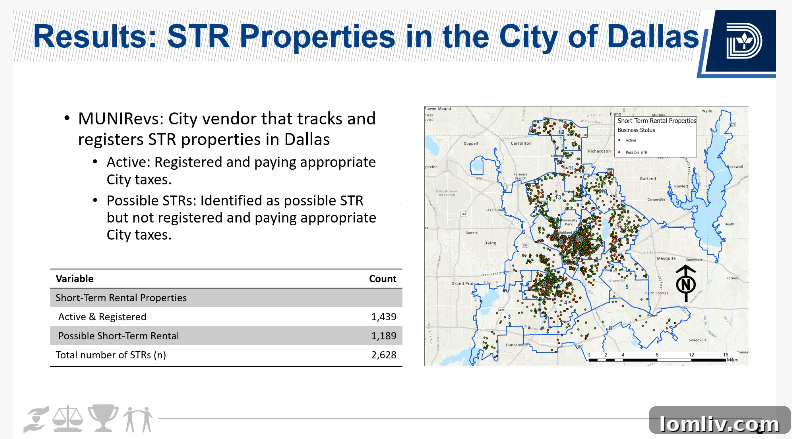
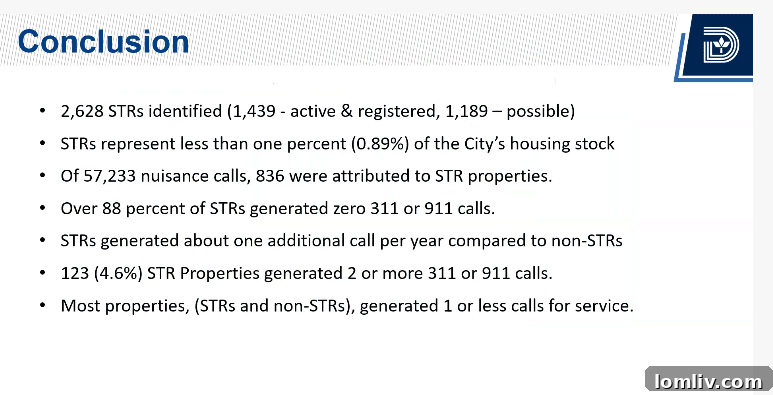
The complexity of the STR issue in Dallas is further compounded by discrepancies in data regarding their actual prevalence. According to data compiled by city staff at the behest of City Manager T.C. Broadnax, approximately 2,628 STRs are operating within Dallas city limits. This figure represents less than 1 percent of the city’s total housing stock, suggesting a relatively small proportion in the grand scheme of urban dwellings.
However, a contrasting dataset discussed by plan commissioners on Thursday suggests that the actual number of STRs in Dallas could be closer to 6,000. This significant disparity highlights a fundamental challenge in accurately tracking and regulating STRs, many of which may operate without official registration or outside the purview of current monitoring systems. City officials explained that their lower estimate was based on data procured from the MUNIRevs vendor, with whom the city already has an established contract. The discrepancy raises questions about the scope of unregistered STRs and the effectiveness of current data collection methods. Resources like Lodgify provide a thorough breakdown of STR use in Texas, including city-specific restrictions and related lawsuits, illustrating the complex legal and operational landscape.
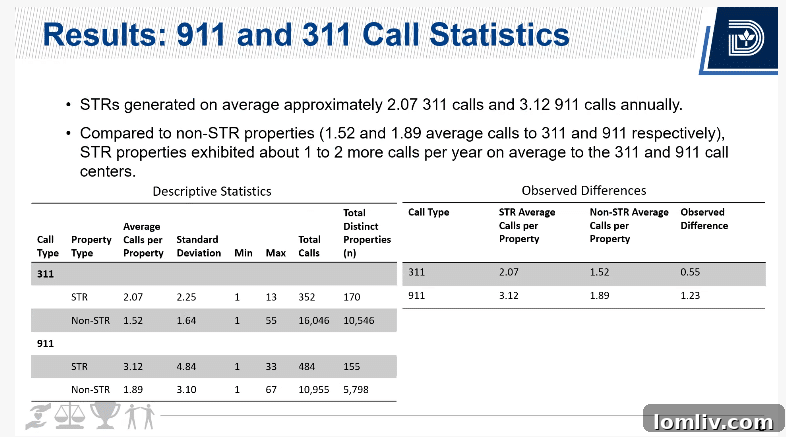
Further complicating the data narrative, city officials noted that over 88 percent of registered STRs generated no 311 (non-emergency) or 911 (emergency) calls during 2022. While this statistic might suggest a relatively low incidence of disturbances, plan commissioners were quick to point out a critical caveat: numerous nuisances, such as chronic on-street parking problems or persistent noise, often go unreported. This underreporting is frequently attributed to high response times from city services and a perceived lack of effective enforcement, leading residents to believe that reporting such issues is often futile. Thus, the absence of reported incidents does not necessarily equate to the absence of problems, providing a skewed picture of the actual impact of STRs on neighborhoods.
What’s Next for Dallas: City Council’s Role and Future Outlook
The Dallas City Plan Commission’s vote is a significant milestone, but it is not the final word. As a recommending body, the CPC’s decision will now be forwarded to the Dallas City Council for a definitive vote. Given the council’s historical tendency to adopt the recommendations of the plan commission, this recent ruling carries substantial weight and is widely anticipated to influence the ultimate policy outcome. The transition from commission recommendation to city council ordinance is a critical phase, where final deliberations and potential amendments could still occur, though a complete reversal is less common.
Commissioner Hampton, in her concluding remarks, encapsulated the strategic intent behind the “Keep it Simple Solution” and its broader implications for urban planning in Dallas. “We did look at other ordinances,” she stated, emphasizing the due diligence involved in researching regulatory frameworks from various cities and exploring alternative approaches. “We looked at other cities. We looked at other approaches. The proposed zonings as we’ve heard do not prohibit STRs. They simply define where they can operate and they give everyone certainty on how they will be utilized. They’re generally within our mixed-use commercial downtown districts. There will be [planned developments] where they will be allowed. There are multiple areas where they will be allowed. Most importantly, we honor the purpose of our residential zoning districts.”
Implications for STR Operators and Residents
This statement clarifies that the ruling is not an outright ban on STRs in Dallas but rather a strategic reallocation. Operators who wish to continue their STR businesses will likely need to relocate to areas explicitly zoned for lodging, mixed-use, commercial activities, or within specific planned developments. This shift aims to provide certainty for both operators, by defining clear permissible zones, and for residents, by safeguarding the intended quiet and stable character of their neighborhoods. For residents, this could mean a significant improvement in their quality of life, reducing nuisances and restoring the intended residential ambiance of their communities. For STR operators, it necessitates a recalibration of their business models, potentially involving investment in properties located in designated commercial or mixed-use areas.
Setting a Precedent for Urban Planning
The Dallas decision could also set a significant precedent for other cities grappling with similar challenges. It underscores a growing trend among municipalities to prioritize residential character and community well-being over the unfettered expansion of commercial lodging within residential zones. The emphasis on “honoring the purpose of our residential zoning districts” reflects a commitment to foundational urban planning principles that aim to delineate clear boundaries between living spaces and commercial enterprises. This comprehensive approach, balancing economic considerations with community concerns, positions Dallas at the forefront of a crucial conversation on the future of urban short-term rentals.