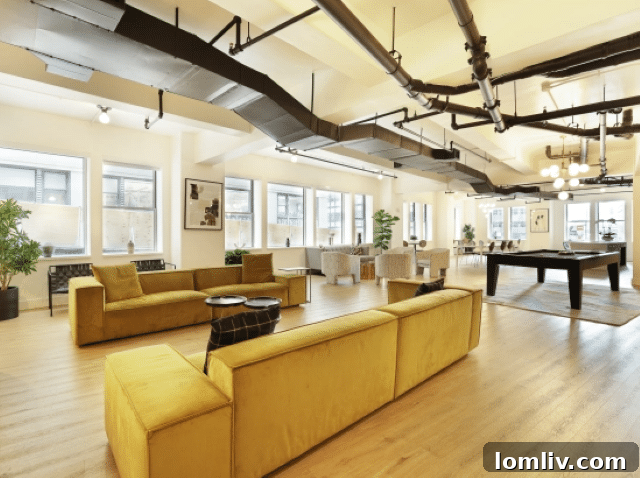
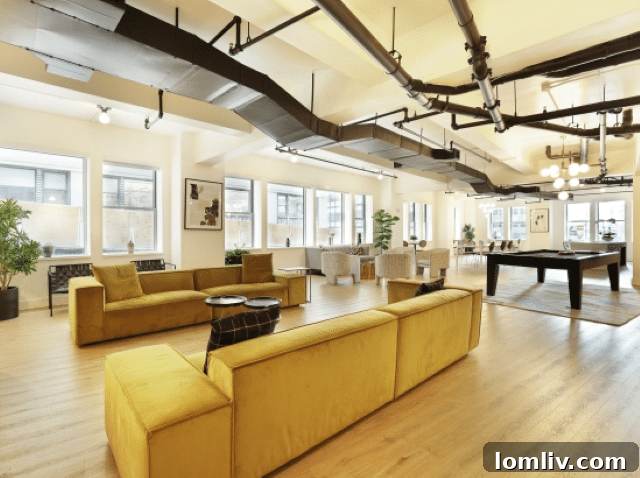
The Rise of Live-Work-Play Apartments: Reshaping Urban Living in a Post-Pandemic World
The concept of “home” has undergone a profound transformation, spurred significantly by evolving work dynamics and a growing desire for convenience and community. What was once solely a sanctuary for decompression is now a multifaceted hub, serving as an office, a fitness studio, a learning center, and a social space. This shift, profoundly influenced by the widespread adoption of work-from-home arrangements, is not merely a fleeting trend but a fundamental redefinition of residential design and urban planning.
As Tom Oliver, co-president of Oxland Advisors, aptly articulated in 2020, “Your home is not only your place to decompress. It’s your office. It’s your fitness place. It’s your school. It’s everything.” This sentiment, initially voiced in the context of single-family home design, resonates even more powerfully within the apartment market, particularly concerning the burgeoning popularity of Live-Work-Play (LWP) developments. These innovative mixed-use buildings are strategically designed to cater to a demographic that seeks an integrated lifestyle, offering seamless transitions between personal, professional, and recreational activities—all within a single, vibrant community.
Decoding the Live-Work-Play Phenomenon: A Holistic Approach to Modern Urban Living
Live-Work-Play developments represent a paradigm shift in urban residential design, moving beyond traditional residential complexes to create self-sustaining micro-communities. At its core, the LWP model aims to provide residents with unparalleled convenience by consolidating essential aspects of daily life into one cohesive environment. Imagine waking up, stepping out of your apartment, and having access to state-of-the-art co-working spaces, a fully equipped gym, diverse dining options, and engaging entertainment venues, all within a few minutes’ walk – or even elevator ride – from your front door. This integrated approach minimizes commute times, reduces reliance on personal vehicles, and fosters a stronger sense of community among residents.
The “Live” component ensures comfortable, modern residences designed for diverse needs. The “Work” aspect integrates professional spaces, from co-working lounges and private offices to high-speed internet infrastructure suitable for remote work. The “Play” element encompasses a wide array of amenities, including fitness centers, communal gathering spaces, retail shops, restaurants, and often green spaces or recreational facilities. This comprehensive ecosystem not only caters to the practical needs of residents but also enhances their quality of life by fostering social connections and promoting a balanced lifestyle.
The Pandemic’s Accelerating Impact and the Quest for Self-Contained Communities
While the concept of mixed-use development has existed for decades, the COVID-19 pandemic acted as a powerful catalyst, accelerating the demand for and development of LWP properties. As lockdowns forced many to adapt to remote work and restricted social activities, the limitations of traditional residential setups became glaringly apparent. People yearned for environments where they could manage their professional responsibilities, maintain their physical and mental well-being, and engage in leisure activities without venturing far from home. LWP buildings emerged as an ideal solution, offering a safe, convenient, and amenity-rich alternative to isolated living.
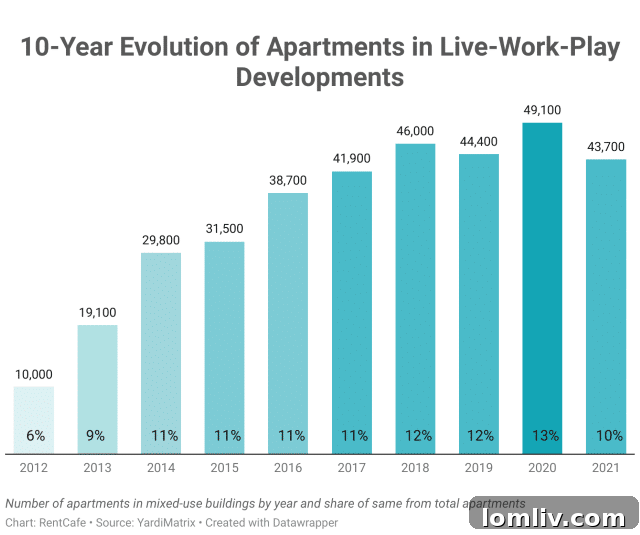
This unprecedented demand drove a significant surge in construction. During the peak of the pandemic in 2020, an impressive 49,100 Live-Work-Play apartments opened nationwide, as developers raced to meet the urgent need for residences that could accommodate this new, integrated lifestyle. The pandemic underscored the value of self-contained communities, highlighting their resilience and adaptability in times of crisis, and cementing their status as a preferred choice for many modern renters.
Data-Driven Growth: Insights from RentCafé Highlight Market Expansion
The remarkable ascent of Live-Work-Play apartments from a niche market to a mainstream trend is clearly evidenced by recent industry data. A comprehensive study by RentCafé revealed a staggering quadrupling in the number of LWP units compared to just ten years ago, underscoring their rapidly escalating popularity and widespread adoption across the nation. This dramatic increase signals a fundamental shift in rental market preferences, with both renters and developers recognizing the inherent value and future potential of these integrated living environments.
This growth isn’t uniform across all demographics, but it shows a clear lean towards younger generations. The RentCafé analysis also uncovered compelling, Census-based data concerning the demographic makeup of LWP residents, particularly in major urban centers. Millennials, who are increasingly shaping urban living trends, constitute a substantial 40 percent of renters residing in Live-Work-Play buildings in Dallas alone. This significant representation speaks volumes about the appeal of LWP developments to a generation that prioritizes convenience, community, environmental consciousness, and a lifestyle that seamlessly blends work and leisure. Younger generations, often burdened by student debt and seeking flexible living arrangements, find the cost-efficiency of shared amenities and the reduced need for car ownership particularly attractive within these mixed-use environments. Furthermore, the inherent sustainability of urban density and reduced commuting aligns perfectly with their environmental values.
Dallas Takes Center Stage in the LWP Movement, Leading Urban Innovation
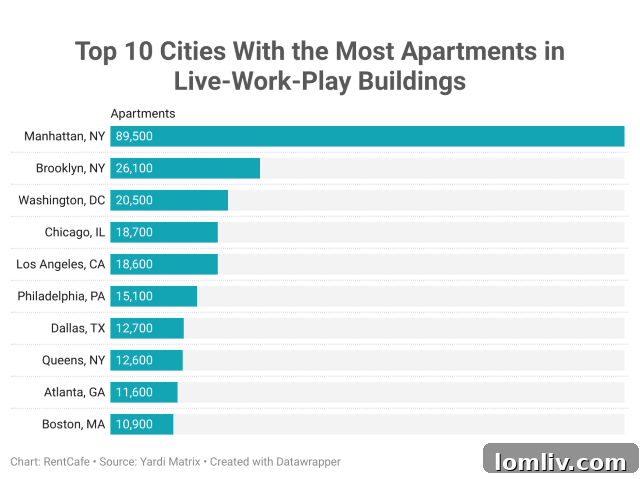
Amidst this national surge, Dallas has emerged as a formidable leader in the Live-Work-Play apartment movement, solidifying its position as a hub for modern urban living. The city proudly ranks seventh nationally in the number of apartments situated within mixed-use buildings, boasting an impressive 12,600 units that perfectly embody the LWP model. This high ranking is a testament to Dallas’s dynamic growth, its forward-thinking urban planning, and its responsiveness to the evolving needs of its diverse population. The robust business environment, influx of new residents, and commitment to innovative development have collectively positioned Dallas at the forefront of this transformative housing trend.
Growth Trajectory and Future Outlook for Dallas LWP Developments
The commitment to Live-Work-Play developments in Dallas is not a recent phenomenon but a sustained trajectory of growth. Over the past decade, specifically between 2012 and 2021, Dallas constructed a remarkable 8,800 new apartments within LWP developments. This figure represents a significant 18 percent of all rental units built in the city during that period, highlighting a deliberate and consistent investment in this integrated living model. And the expansion shows no signs of slowing down; RentCafé projections indicate that another 3,000 LWP apartments are slated to be added to Dallas’s inventory in 2022 and beyond, further solidifying its leadership position.
Within the state of Texas, Dallas’s performance is particularly noteworthy when compared to other major metropolitan areas. While Austin and Houston are also making strides in mixed-use development, Dallas maintains a significant lead. Austin ranked 12th nationally with 7,800 LWP units, and Houston followed at 17th with 6,200 units. Texas as a whole boasts an impressive 44,400 Live-Work-Play properties, showcasing the state’s overall embrace of this modern urban concept. This widespread adoption across major Texan cities underscores the model’s suitability for the state’s rapid population growth and expanding economies.
Understanding Dallas’s Unique LWP Ratio: Balancing Living and Shared Spaces
A fascinating aspect of Dallas’s Live-Work-Play landscape is the specific allocation of space within these developments. The ratio between dedicated living space and shared work-play areas in Dallas stands at 87 percent to 13 percent, respectively. This contrasts with the national average, which typically shows a 70-30 split. The Dallas ratio suggests a design philosophy that prioritizes spacious and comfortable residential units while still providing a robust suite of shared amenities. This could indicate a strategy to maximize residential density while carefully curating communal spaces for maximum utility and appeal without sacrificing the primary living experience. This balance offers residents the best of both worlds: a generous private dwelling combined with access to extensive shared facilities for work, fitness, and entertainment, reinforcing the idea that the entire building acts as an extension of one’s home.
The Amenity Advantage: Beyond Four Walls, Cultivating Community and Convenience
The true essence of Live-Work-Play developments lies not just in their structural integration but in the rich tapestry of amenities they offer, which are meticulously designed to enhance every facet of residents’ lives. These buildings go far beyond basic living spaces, acting as self-contained ecosystems where every need and desire can be met without ever needing to leave the premises. The “play” component, in particular, is a comprehensive ecosystem of facilities aimed at fostering well-being, social interaction, and convenience.
Curating the “Play” Component: A Spectrum of Lifestyle Enhancements
Residents of LWP apartments gain access to an impressive array of amenities that cater to diverse interests and lifestyles. Fitness enthusiasts can enjoy state-of-the-art fitness centers, often featuring yoga studios, spin classes, and personal training options. For relaxation and rejuvenation, many developments include luxurious spas, tranquil common areas, and even rooftop pools with breathtaking views. Social hubs like sophisticated clubhouses provide ideal settings for gatherings, events, or simply unwinding with neighbors. Some larger complexes even integrate outdoor recreational facilities such as tennis courts or landscaped courtyards for residents to enjoy.
Beyond leisure and wellness, the convenience factor is paramount. Many Live-Work-Play buildings house essential retail and service providers directly on-site or within easy walking distance. This can include gourmet grocery stores for daily necessities, chic restaurants and cafes for dining out or grabbing a quick bite, and even boutique shops or professional services. This seamless integration means residents can accomplish errands, enjoy a meal, or engage in recreational activities, all within their immediate environment, significantly reducing the time and stress associated with commuting or navigating urban sprawl.
Fostering Community and Convenience: The Social Fabric of LWP Living
These extensive amenities serve a dual purpose: they provide unparalleled convenience and also act as powerful catalysts for community building. Shared spaces like clubhouses, co-working lounges, and communal kitchens naturally encourage interaction among residents, fostering a stronger sense of belonging and camaraderie. Spontaneous encounters in hallways or at on-site cafes transform neighbors into friends, creating a vibrant social fabric that combats urban isolation. For individuals seeking a more connected lifestyle, particularly young professionals and empty nesters, the built-in community aspect of LWP developments is a major draw. The thoughtful design of these spaces promotes engagement, making it easier for residents to network, socialize, and build lasting relationships, further enriching their living experience.
National Landscape: Key Players in Live-Work-Play Development Across America
While Dallas shines as a regional leader, the Live-Work-Play movement is a national phenomenon, with several major urban centers pushing the boundaries of integrated living. At the pinnacle of this trend is Manhattan, New York, which unequivocally leads the nation with an astonishing 89,500 apartments in live-work-play buildings. This colossal figure represents approximately one-fifth of the nation’s total LWP units, underscoring Manhattan’s unparalleled density and its pioneering role in urban mixed-use development. Its established vertical living culture and robust infrastructure make it a natural fit for this model, showcasing how compact urban environments can thrive with integrated amenities.
Just across the East River, Brooklyn secures the second position nationally with 26,100 LWP apartments, demonstrating the expansive reach of this trend across New York City’s boroughs. Queens, another vibrant New York borough, also makes a strong showing, ranking eighth with 12,600 units, placing it directly alongside Dallas in terms of sheer volume. These New York cities, with their historical emphasis on dense, walkable urban environments, exemplify how mixed-use developments can be scaled to serve massive populations. Their success highlights a nationwide trend that, while having local nuances, consistently points towards a future where integrated living is not just a luxury, but an expectation.
A Nationwide Trend with Local Nuances: Adapting the LWP Model
The prevalence of LWP developments in these major cities illustrates a broader national trend towards urbanization and the creation of highly functional, self-contained communities. While the fundamental principles of live-work-play remain consistent, each city adapts the model to its unique urban fabric, demographic needs, and economic drivers. Whether it’s the high-rise luxury of Manhattan, the artistic communities of Brooklyn, or the rapidly growing tech hubs of Dallas and Austin, the core appeal remains the same: convenience, community, and an enhanced quality of life. This adaptability ensures that the LWP model is not a one-size-fits-all solution but a versatile framework that can be tailored to various urban contexts, promising continued innovation in residential design.
The Future of Urban Living: What’s Next for Live-Work-Play?
As we look to the horizon, the Live-Work-Play concept is poised for continued evolution and expansion. Future developments are likely to place an even greater emphasis on sustainability, incorporating green building practices, renewable energy sources, and extensive green spaces to promote environmental stewardship. Smart home technology and hyper-connectivity will become standard, offering residents unparalleled control over their living environments and seamless integration with building services. Furthermore, as remote and hybrid work models become increasingly entrenched, LWP buildings will continue to innovate their “work” components, offering more flexible office solutions, specialized equipment, and enhanced technological infrastructure to support diverse professional needs.
The demand for amenity-rich, convenient, and community-focused living is unlikely to wane. Instead, it will only intensify as urban populations grow and lifestyle priorities shift. The LWP model, with its inherent adaptability and capacity for innovation, is well-positioned to meet these evolving demands, ensuring that the future of urban living is not just about a place to sleep, but a dynamic environment where every aspect of life flourishes.
The transformative impact of Live-Work-Play apartments on modern urban life cannot be overstated. From responding to the immediate needs of a pandemic-stricken world to aligning with the long-term aspirations of a new generation of renters, these mixed-use developments are redefining how we live, work, and connect. Cities like Dallas, by embracing and actively developing these integrated communities, are not just building apartments; they are crafting the vibrant, resilient, and convenient urban centers of tomorrow. This enduring appeal and strategic growth confirm that Live-Work-Play is far more than a trend – it’s the blueprint for the future of urban living.