A Tale of Two Skylines: From Chicago’s Golden Age to Dallas’ 1980s High-Rise Revival
My recent journey to Chicago unfolded amidst the towering structures that once fueled my childhood dreams. The city, particularly between the 1880s and the devastating crash of 1929, experienced a veritable golden age of residential construction. This era saw the rise of magnificent high-rises and mid-rises, many of which were marketed as “mansions in the air.” These residences, some co-ops but predominantly apartments, were extraordinarily spacious, often exceeding 5,000 square feet, with many boasting multiple floors and breathtaking vistas of Lake Michigan. Their exteriors showcased a rich tapestry of architectural styles, from the intricate details of Tudor to the grandeur of Beaux Arts and the sleek lines of Art Deco.
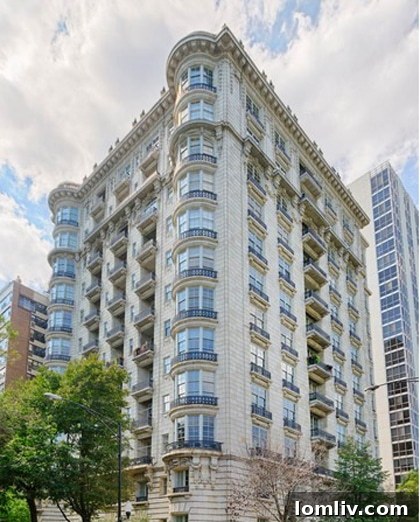
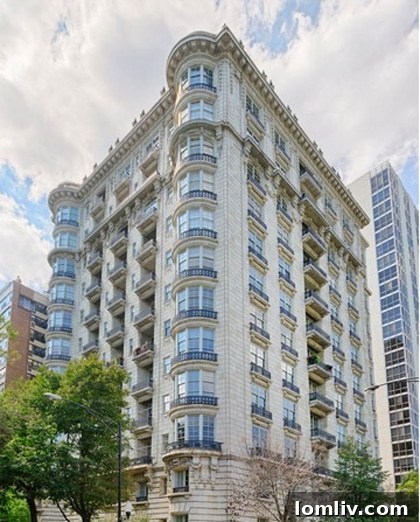
However, the internal layouts of these historic Chicago high-rises frequently present a conundrum for contemporary living. Features such as dedicated servants’ quarters, often cramped bathrooms, minimal closet space, and kitchens situated far from the primary living areas, starkly contrast with today’s preference for open-plan designs and modern conveniences. Reconfiguring these vast, yet functionally dated, spaces into something suitable for 21st-century lifestyles often proves to be an intricate and costly undertaking. A prime example that captures my imagination is the iconic 1550 N. State Parkway, completed in 1911. Each of its eleven floors housed a single, sprawling 8,000-square-foot apartment. The living area alone stretched an impressive 100 linear feet, punctuated by fireplaces at either end. This building truly embodied the pinnacle of luxury, commanding an astounding annual rent of $12,000 in the 1920s – a figure four times the average citizen’s yearly salary, underscoring its exclusivity.
Dallas’ Distinctive 1980s High-Rise Architecture
Shifting our focus a century forward, we arrive in Dallas of the 1980s—an era synonymous with distinctive architectural trends, notably characterized by rounded edges and an enthusiastic, sometimes excessive, use of mirrors. Interestingly, among the nine residential high-rises constructed during this decade, only one, Park Plaza, deviated from the popular naming convention starting with “The.” While some might recall La Tour, it’s worth noting that “La Tour” is simply French for “The Tower,” maintaining the thematic consistency, albeit with a linguistic twist.
The preceding decade and a half saw a curious lull in Dallas’s residential high-rise development. The reasons for this hiatus remain speculative, perhaps influenced by economic shifts or evolving urban planning philosophies. Nevertheless, when high-rise construction resumed, it did so with a noticeable degree of caution. Of the nine buildings erected, three featured fewer than 50 units, and only four contained more than 100 units, with just a single development surpassing 150 residences. This trend marked a departure from earlier, larger-scale projects.
Another significant shift in this era was the move away from the centralized utility systems prevalent in Dallas’ older high-rises. Newer buildings adopted a model where billing was based entirely on individual unit usage, and the responsibility for system maintenance often transferred from the building management to the individual unit owner. While this approach could lead to seemingly lower Homeowners Association (HOA) dues per square foot, the comprehensive cost, once individual utility expenses were factored in, frequently negated any perceived savings for residents. And for those with a nostalgic affection for period details, rest assured, acres of popcorn ceilings from this era proudly persist!
Categorizing 1980s Dallas High-Rise Designs
The architectural landscape of Dallas in the 1980s spawned several distinct design philosophies that are still evident today:
- Alien Friendly: Buildings such as The Beverly and The Claridge exemplify the quintessential 1980s aesthetic with their prominent rounded corners. This design feature, beyond its stylistic appeal, humorously suggests a practical purpose: preventing fictional giant alien space monsters from incurring injury during their hypothetical urban rampages.
- Bay Window Bump-outs: The Beverly, La Tour, and The Douglas prominently feature bay windows, which were likely intended to infuse a touch of single-family home elegance and charm into the high-rise living experience. However, from an interior design perspective, these protruding architectural elements can often present challenges when attempting to decorate and furnish the space harmoniously.
- Flat Pack: In contrast, developments like Bonaventure, Shelton, Centrum, and Warrington embrace a more rectilinear, squared-off, and boxy architectural form. This robust, block-like construction style, while perhaps less “alien-friendly,” offers a certain structural integrity. A notable characteristic of these buildings, particularly appealing to some, is the inherent difficulty, if not impossibility, of enclosing their balconies, thereby preserving the intended outdoor space.
- The Cannibal: Park Plaza stands as a unique entity within this classification, a topic that promises further intrigue in a forthcoming discussion.
Spotlight on Key Dallas High-Rises of the 1980s
The Beverly: 3621 Turtle Creek
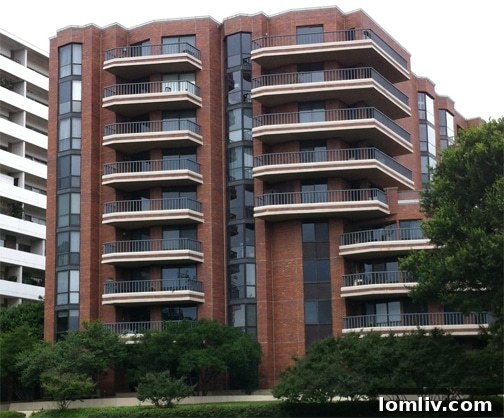
Embodying the adage “age before beauty,” The Beverly proudly holds the distinction of being the first building to reignite residential high-rise construction in Dallas in 1980. Nestled strategically between two of Dallas’s venerable original high-rises, Turtle Creek North and Goldcrest, The Beverly is a quintessential 80s creation. Its lobby, though meticulously maintained, exudes an ambiance more akin to an office building than a residential haven, evoking a nostalgic desire for voluminous hair and formidable Carrington-esque shoulder pads.
The Beverly is a distinguished, boutique-style building, housing 39 units that vary considerably in size and configuration. Architecturally, it blends the aforementioned “kid-friendly” rounded edges with prominent bay windows. While its penthouses undoubtedly offer luxurious living, a particular fascination lies with two units on the 5th floor that command stunning views of Gilbert and Turtle Creek. Their unique appeal stems from their expansive terraces, each exceeding 1,000 square feet. Unit 5K, which I had the pleasure of touring, features an impressive 1,600 square feet of terrace space, complementing its two bedrooms and two bathrooms. This particular unit had previously served as student housing—a lively party pad—courtesy of indulgent parents. Many units within The Beverly remain time capsules of the 1980s, replete with laminate cabinetry, iconic black and white checkerboard kitchen tiles, and generally outdated fixtures. A gut renovation of such a unit, particularly one with a mesmerizing terrace offering a fifty-foot-high backyard, presents an incredible opportunity for transformation.
Despite its enviable location and 35-year history, a surprising observation is the scarcity of fully gut-renovated units. One peculiar aspect of The Beverly’s HOA structure is that all units, irrespective of their size, contribute the same monthly fee. This unique arrangement strongly incentivizes prospective buyers to “go big” and opt for larger units, maximizing the value of their fixed HOA expense.
The Bonaventure: 5200 Keller Springs Rd.
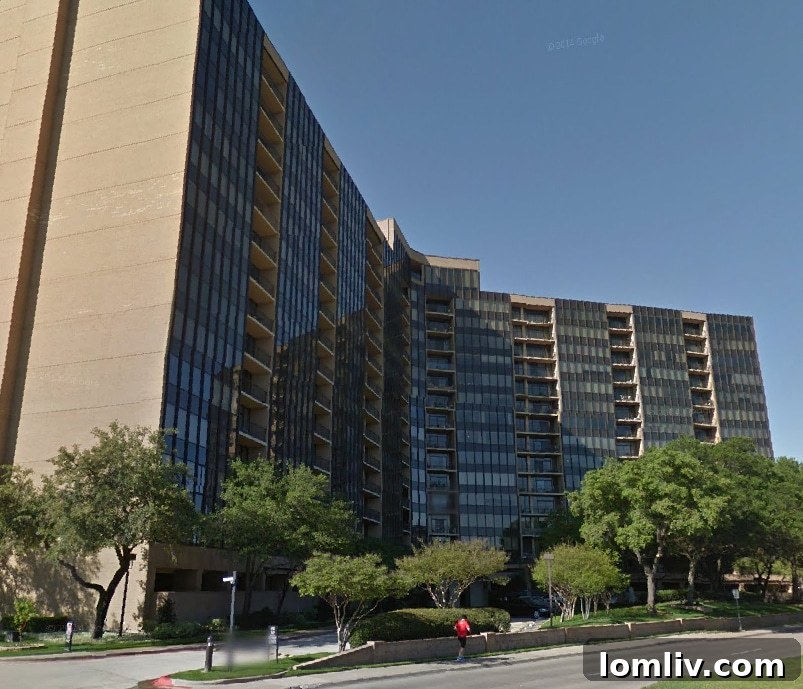
My recent “bon-adventure” took me north of LBJ to explore The Bonaventure, a distinctive Y-shaped building that holds the record as the largest high-rise constructed in the 1980s, boasting 336 units. The lobby of The Bonaventure is a curious amalgam of various attempts to modernize its 1980s aesthetic, largely unsuccessful in shedding its original character. Miles of (relatively recent) mini bronze glass mosaic tiles strive to offset an overwhelming expanse of mirrors that coat both walls and ceilings. The overall effect, unfortunately, conjures images of a State Fair funhouse or an otherworldly tanning salon, rather than a sophisticated residential entrance. The sheer quantity of reflective surfaces is legendary, with one anecdotal account humorously suggesting that a camera flash sent a friend to Baylor with third-degree burns.

The units within The Bonaventure appear generously sized, yet their layouts often suffer from inefficiency when viewed through a modern lens. Compared to the more adaptable designs found in Dallas’ original condo buildings, many 1980s constructions, including The Bonaventure, are not as easily reconfigured to align with contemporary living preferences. One unit I toured featured a master bedroom and bath directly accessible through the kitchen, reminiscent of Alice’s arrangement in the Brady Bunch house, with the second bedroom situated immediately in front of the kitchen. Another renovated unit presented a bizarre kitchen layout, incorporating a gigantic, bedroom-sized pantry alongside a relatively tiny cooking area awkwardly divided by structural columns, leaving a noticeable lack of continuous working space.
Prospective buyers considering The Bonaventure should thoroughly investigate any plans for a comprehensive lobby renovation, as such an undertaking would dramatically enhance the building’s appeal (and perhaps break centuries of bad luck if all those mirrors were to shatter!). The hallways, while neither particularly offensive nor enticing, maintain a neutral aesthetic. For renovators, The Bonaventure offers a blank canvas, but careful research with a knowledgeable real estate agent is crucial to determine the profitability of extensive renovations. For those relocating to Dallas with companies like Toyota and seeking a high-rise residence with a manageable commute, The Bonaventure presents a viable and strategically located option.
The Warrington: 3831 Turtle Creek
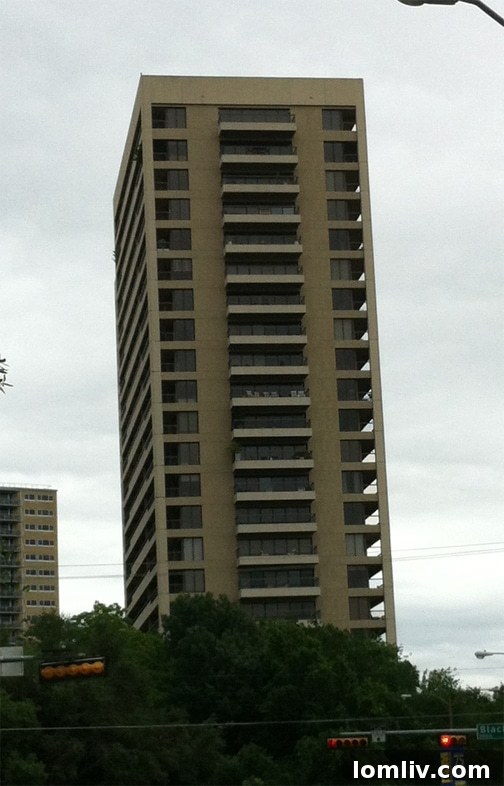
I must confess, The Warrington holds a particular appeal for me. If financial considerations were not an issue, it would undoubtedly feature prominently on my shortlist of desirable residences. Its 135 units are remarkably generous in proportion, even the one-bedroom units spanning 1,200 square feet. The views from The Warrington can be truly captivating, though those on the lower backside overlooking the tennis court might find their weekend tranquility punctuated by the rhythmic “bounce-thunk… bounce-thunk” of play.
Several years ago, The Warrington embarked on an ambitious lobby and hallway renovation that was executed with such sumptuous finesse that it has demonstrably added tens of thousands of dollars to property values. The units I’ve explored within this building boast impressively sized kitchens, often featuring a galley layout with three distinct lines of workspace and an inviting eat-in area, complete with convenient in-unit washer-dryer connections. While sometimes on the narrower side, the balconies provide a pleasant outdoor retreat for enjoying an evening glass of wine and the Dallas skyline.
A notable trend at The Warrington is the combination of multiple units to create expansive “super-units.” Furthermore, unlike The Bonaventure, a significant number of units here have undergone extensive renovations to an exceptionally high standard. The favorable economics within The Warrington market empower renovators to undertake comprehensive, “whole-hog” transformations. However, finding a reasonably priced, un-renovated unit can be a challenge, as even these can list for over $300 per square foot, a testament to the building’s enduring appeal and prime location.
La Tour: 3030 McKinney
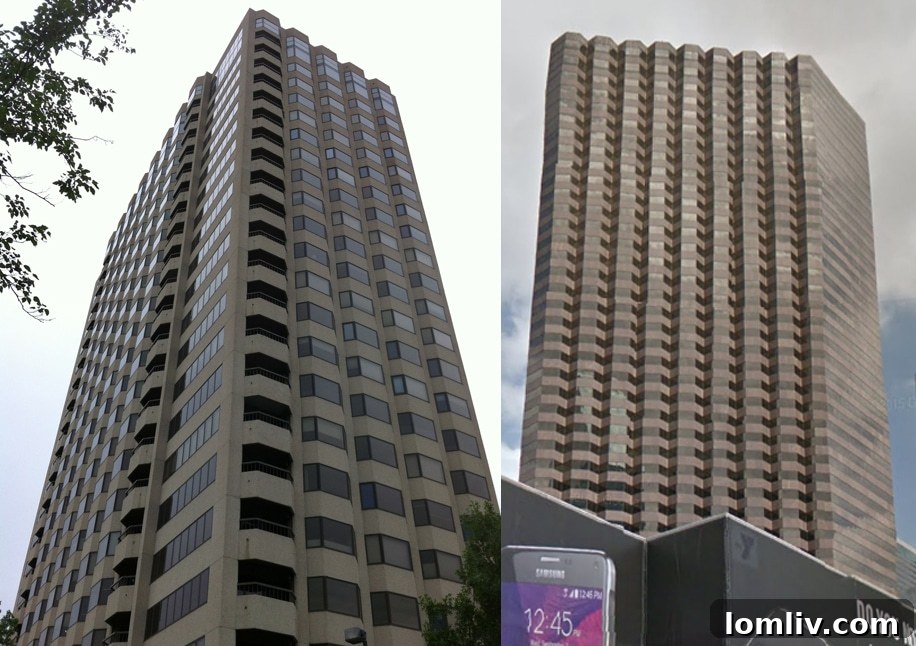
La Tour, aptly named “The Tower,” features 138 units and stands as another prime example of 1980s architecture characterized by oddly-shaped, bumped-out bay windows. While offering architectural interest, these design elements often complicate interior decorating, breaking up what would otherwise be continuous wall space. The building’s stone-cladding and somewhat “office-y” exterior aesthetic lead one to ponder if it might share a design lineage with Lincoln Plaza on Akard Street. As a proponent of clean lines, I personally favor straight walls and balconies that do not intrude upon interior space, preserving seamless room flow. A useful tip for prospective buyers: generally, the less flat a building’s exterior, the less continuous the interior walls will be, potentially impacting layout flexibility.
Despite these design quirks, La Tour’s unit layouts are inherently open-concept, or can be easily converted to modern open designs, catering to contemporary living preferences. Many bathrooms are generously appointed with separate tubs and showers, complemented by ample closet space. Currently, an extraordinary 9,209-square-foot penthouse (or “PENTHOUSE” as the listing agent, Rogers Healy, emphasizes) is available for $4.2 million. This magnificent residence occupies the two uppermost floors and boasts a private elevator. For those finding a 9,209-square-foot, $4.2 million property somewhat grand, this penthouse is actually comprised of three separate units: 3,043, 2,760, and 3,406 square feet. These are available either as a 2304/06 combination for $3.3 million, or the 2,760-square-foot, 3-bedroom, 3-bath Unit 2305 for $900,000. Unit 2305 largely retains its original condition and is ripe for renovation, which explains its price point of $185 per square foot less than the other two units that have undergone superb upgrades. (Note: The provided links direct to Ebby’s website, as the Rogers Healy listing’s webmaster appears to be on vacation.)
The public areas of La Tour are notably well-appointed, with the lobby featuring a sleek mix of warm wood walls and recessed ceilings, offering a refreshing departure from lobbies often overtly dominated by stone. The outdoor pool and spa area are also quite impressive, adding to the building’s luxurious amenities.
For individuals seeking a vibrant urban lifestyle, finding an original condition unit (such as penthouse 2305) with desirable views in La Tour could represent an excellent opportunity. Its prime location near the city center, nestled within the bustling West Village and McKinney Avenue, makes it an ideal spot for weekend escapades. However, for those sensitive to noise, careful consideration of floor and unit placement will be paramount to mitigate the accompanying sounds from McKinney Avenue’s lively weekend activities.
Explore Dallas High-Rise Living: Share Your Story
We are continuously exploring the dynamic landscape of Dallas high-rise living and are keen to hear your experiences. Do you have a captivating HOA story to share, or perhaps some unique insights into the rich history of high-rise developments in Dallas? Realtors, we invite you to feature a listing—whether it’s a property poised for a stunning renovation or one that has already been transformed with exemplary results. We’re also open to creative proposals, perhaps even hosting a discussion on local real estate trends. Please feel free to reach out to Jon via email at [email protected]. (And yes, once legal in Texas, marriage proposals are also accepted!) We look forward to connecting with you and enriching our collective understanding of Dallas’s remarkable vertical communities.