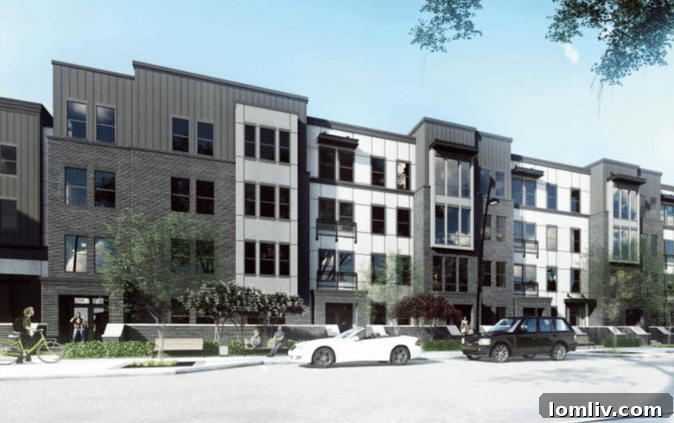
A contentious housing development, known as Cypress Creek at Forest Lane, recently cleared a significant hurdle with the Dallas Public Facility Corp. (PFC) Board of Directors, though not without considerable debate and a precisely worded motion. On Tuesday, the Dallas PFC Board cast an 8-3 vote to greenlight a non-binding memorandum of understanding (MOU) with Sycamore Strategies. This approval was explicitly contingent “subject to indemnification by the [Dallas] City Council and research from corporate counsel that we will not take on too much risk.” This decision sets the stage for a potential legal showdown, as the project directly challenges long-standing deed restrictions prohibiting residential construction on the proposed site.
The nearly three-hour discussion preceding the vote made it abundantly clear that many PFC Board members anticipate litigation. The core of the controversy lies in the site’s deed restrictions, which developers hope to bypass through the PFC’s involvement. Board members openly questioned whether the principle of “sovereign immunity” would extend to the PFC in this context, making this case a potential legal precedent for similar future projects across Dallas. The implications of this vote are far-reaching, touching upon property rights, the role of public corporations in private development, and the future of affordable housing initiatives in the city.
A central theme of Tuesday’s meeting was the profound debate among Board members regarding their responsibilities as appointees of the Dallas City Council. Concerns were vocally expressed about the PFC potentially taking on projects with insufficient due diligence and exposing the city to undue risk. At-large PFC Board member Mary Poss articulated these worries forcefully, stating, “The City Council didn’t put us here to pass to them a lot of loose ends and due diligence that has not been done. We’ve already admitted to ourselves that we don’t have all the facts that we need. Our city attorney refuses to opine on the issue directly, at least to us. There’s no contract on the property. We don’t know what the seller thinks about selling the property or removing the deed restrictions.” Her comments underscored a broader sentiment of apprehension regarding the project’s legal and ethical foundations.
“This is not what the PFC was designed to do as it relates to getting involved in removing deed restrictions and private property rights. You have a case here where this is coming to you not because of financial need but because of deed restrictions and trying to get around those.”
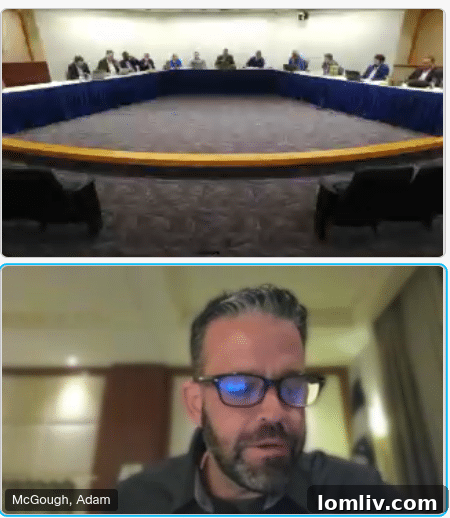
DISTRICT 10 Councilman Adam McGough
The dissenting votes against the non-binding MOU came from a coalition of board members, including Mary Poss, District 10 Board member Mark Holmes (who represents the immediate area of the proposed project), and District 12 Board member Kevin Winters. Their opposition highlighted significant concerns ranging from the lack of transparency to the potential for legal challenges. Conversely, the motion was spearheaded by District 11 Board member Alan Tallis, who has been a public advocate for the Cypress Creek at Forest Lane project, citing its potential public benefits. Board member Keith Pomykal abstained from the vote, citing a conflict of interest, further illustrating the complex ethical landscape surrounding this controversial development.
Following the meeting, Sycamore Strategies developer Zachary Krochtengel chose not to comment on the outcome or the ongoing discussions. This silence, amid mounting public and internal scrutiny, only added to the project’s controversial aura.
Cypress Creek at Forest Lane: A Deep Dive into a Contentious Dallas Housing Project
The Cypress Creek at Forest Lane project, envisioned for a 2.5-acre parcel located at 11520 North Central Expressway, first emerged two years ago. Initially, it received approval from the Dallas City Council, signifying a recognized need for such a development. However, its progress was abruptly halted by stringent deed restrictions that explicitly prohibit any form of home construction on the property. These restrictions, embedded in the land’s history, became the primary obstacle for the developers.
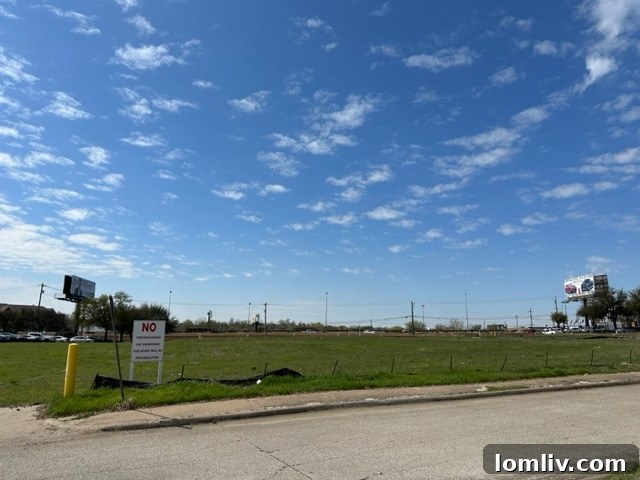
Faced with this roadblock, developers with Sycamore Strategies pivoted their approach, opting to pursue the project through the Dallas Public Facility Corp. This strategic move is significant because working with a PFC offers substantial financial advantages. It would allow Sycamore Strategies to pay an upfront development fee and, crucially, lease the land from the PFC on a tax-exempt basis. This arrangement is designed to facilitate affordable housing projects by reducing costs, but in this instance, it also serves as a mechanism to potentially circumvent the existing deed restrictions, which is the crux of the current controversy.
The project was initially brought before the PFC Board in late February, where it was met with enough resistance and unresolved questions to be deferred until the recent Tuesday meeting. In the interim, a critical community meeting was convened in District 10, the area directly impacted by the proposed development. Dozens of residents attended, expressing robust opposition to the project for a myriad of reasons, including profound concerns about public safety, increased traffic congestion, and the fundamental issue of preserving established property rights and neighborhood character.
Despite the strong community pushback, proponents of the project presented their arguments during Tuesday’s PFC meeting. They emphasized that the proposed site is not immediately surrounded by existing housing developments, suggesting that its impact on current neighbors would be minimal. Furthermore, they highlighted the site’s advantageous proximity to a Dallas Area Rapid Transit (DART) station, positioning it as an ideal location for workforce housing. This alignment with public transit infrastructure is often a key consideration for sustainable urban development and plays into the broader narrative of addressing Dallas’s escalating need for affordable housing options.
Addressing Dallas’s Affordable Housing Crisis: The Cypress Creek Proposal and Its Challenges
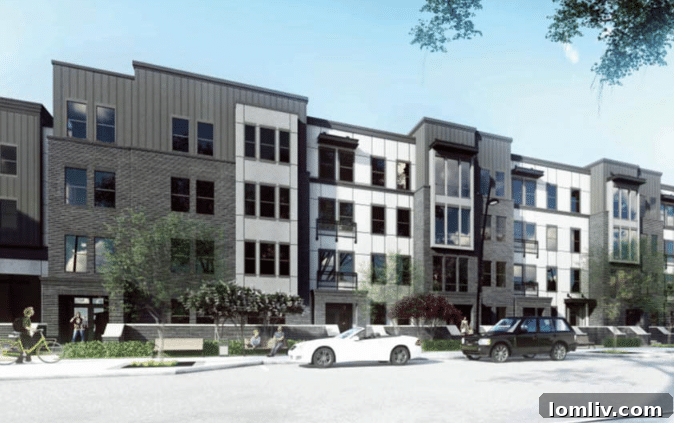
Zachary Krochtengel, the developer representing Sycamore Strategies, has outlined plans for a Class A apartment complex at Cypress Creek at Forest Lane, designed to address Dallas’s pressing need for affordable housing. The proposal details approximately 109 affordable units, constituting 55 percent of the total, alongside 86 market-rate units, making up the remaining 45 percent. This mixed-income model is a common strategy in urban development to ensure economic diversity within a community while providing much-needed housing for various income levels.
Krochtengel robustly defended the project’s necessity, particularly for District 10, during the March 18 community meeting. He underscored the critical shortage of new affordable housing in the area, noting that a new project of this nature has not been constructed in District 10 for three decades. He reiterated this urgent claim at Tuesday’s pivotal PFC board meeting, emphasizing the “extremely necessary” nature of Cypress Creek to meet the community’s housing demands and improve access to stable, quality residences for the workforce.
However, the project faces formidable opposition, most notably from William Roth, who owns a substantial 75,000-square-foot office building immediately adjacent to the proposed Cypress Creek site. At the March 18 meeting, Roth made his position unequivocally clear, stating his strong inclination to pursue legal action if the project proceeds. “The deed restriction does not allow apartments on that property,” Roth asserted during the public meeting. He further elaborated, “If the city is considering action to disregard that deed restriction… that’s what’s called a taking of our private property rights. This is not a referendum from our standpoint on affordable housing or Class A apartments or workforce housing. Our issue is we have the right to control what development is going on in this area. For the city to be able to take that right away from us for the enrichment of a private developer does not seem to be the right thing to do.” His argument centers on the inviolability of private property rights and the potential for “inverse condemnation” if the city facilitates the removal of deed restrictions for private gain.
Roth reiterated his firm opposition at Tuesday’s meeting, also voicing deep concerns about a perceived lack of transparency in the business dealings between Sycamore Strategies and the city. These concerns are not isolated; District 10 Councilman Adam McGough echoed the sentiments of many residents by speaking vehemently against the project. McGough highlighted suggestions that emerged after the March 18 community gathering, advocating for the creation of an area plan or a Public Improvement District around the site, rather than proceeding with the current controversial proposal.
Councilman McGough minced no words regarding the developer’s perceived approach: “One of the things the community has asked for is a good [development] partner, and that has not been the case. The developer thinks they can push this through without any conciliation or working with the community so they haven’t been willing to do so. I will tell you, this is not what the PFC was designed to do as it relates to getting involved in removing deed restrictions and private property rights. You have a case here where this is coming to you not because of financial need but because of deed restrictions and trying to get around those.” He further contextualized the issue by pointing out that District 10 is a historic Black neighborhood that already hosts a significant amount of affordable housing, suggesting the project’s location is inappropriate and unnecessary in that specific area.
The specter of litigation loomed large over the board’s discussions. “We know this deed restriction is going to go straight into litigation,” McGough warned, urging the board to consider this serious implication in their deliberations. Reinforcing this legal outlook, Attorney Jim Plummer of Bracewell LLP, who represents the PFC, provided a stark assessment to the Board on Tuesday. He clarified that “the city would be the party responsible for the inverse condemnation, but you can rest assured that you would be brought into any litigation by the current property owner as that litigation proceeds.” This statement underscored the direct legal and financial exposure the city and potentially the PFC board members themselves could face if a lawsuit is filed.
Plummer, however, also presented the city’s counter-argument, noting that the City Attorney’s Office has indicated that there will likely be no right to an inverse condemnation suit against the city. This position is predicated on the assertion that the city would possess sovereign immunity because it is acquiring the project for the express public purpose of providing low-income housing. This legal defense, if upheld, would protect the city from certain liabilities. Yet, the validity and breadth of sovereign immunity in this specific context—where a public entity is arguably facilitating the circumvention of private deed restrictions for a private developer—remain highly contentious and are central to the impending legal challenges. The Dallas PFC’s decision, therefore, not only impacts the Cypress Creek at Forest Lane project but also sets a precedent for how public entities navigate complex property rights and public benefit initiatives in Dallas moving forward.