The Crespi Estate: A Timeless Dallas Landmark and its Enduring Legacy
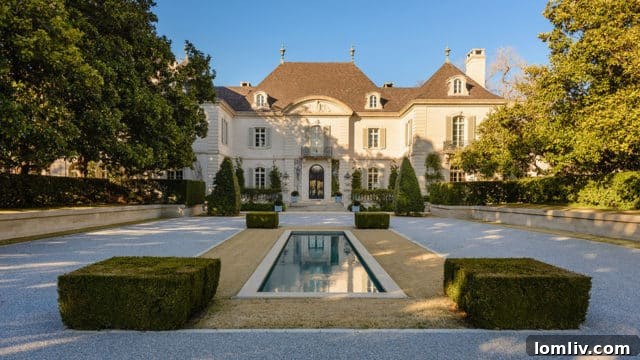
The Crespi Estate, an architectural marvel nestled on Dallas’s prestigious Walnut Hill Lane, stands as a testament to European grandeur and American ambition. Its recent sale to a prominent Dallas family has once again brought this iconic property into the spotlight, reminding us of its storied past and the significant figures who have called it home. Had the vital railroad lines for the Crespi family’s booming cotton trade extended through Waco instead of Dallas, the esteemed Italian count Pio Crespi and his elegant wife Florence might have commissioned renowned architect Maurice Fatio to build their magnificent estate elsewhere. However, fate placed this masterpiece in Dallas, solidifying its status as one of the city’s most significant private residences and a jewel in the crown of Dallas luxury real estate.
The news of the Crespi Estate’s latest transaction has captivated the Dallas community, particularly given its frequent changes of ownership over the past two decades. The sheer mystique surrounding such a high-value property is often amplified by the discretion typical of these elite dealings. Both the listing Realtor, Allie Beth Allman, and the most recent owner, Mehrdad Moayedi, adhered to strict non-disclosure agreements, keeping precise details, including the final sales price, under wraps. While the exact figure remains undisclosed, public records show the estate’s last known list price was a substantial $38.5 million, reflecting its immense value and desirability in the competitive Dallas luxury home market. This level of secrecy underscores the exclusive nature of transactions involving properties of such historical and monetary significance.
The New Stewards: The Edwin L. Cox Family
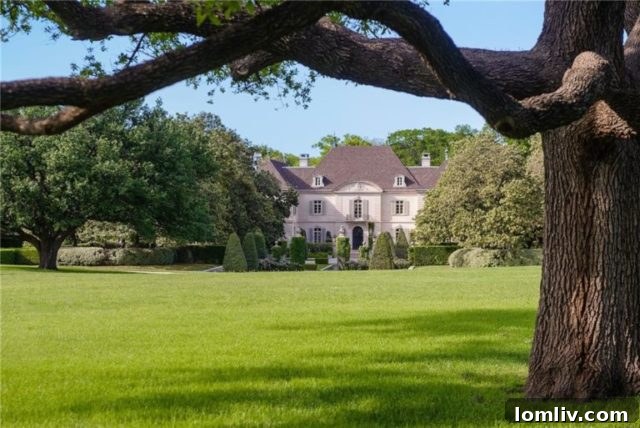
Through diligent investigation of public deeds, Steve Brown of the Dallas Morning News uncovered the identity of the Crespi Estate’s new custodians: a trust established by the distinguished Edwin L. Cox family. This acquisition adds another chapter to the estate’s illustrious history, placing it in the hands of one of Dallas’s most influential and philanthropic dynasties. The sprawling 14-acre property, featuring a magnificent 27,000-square-foot mansion boasting ten bedrooms, represents a pinnacle of luxury and space in North Dallas. The Cox family’s connection to Dallas runs deep, with patriarch Edwin L. Cox Sr. being a major benefactor to Southern Methodist University (SMU), famously endowing the Cox School of Business—a cornerstone institution in the region. Their ownership signifies a continued tradition of prominence associated with the Crespi Estate.
The name Cox resonates strongly within Dallas’s upper echelons. Edwin L. Cox Sr.’s legacy of philanthropy and business acumen is well-documented, making the family’s acquisition of the Crespi Estate particularly fitting. His son, a successful financier, already resides in an equally impressive $40 million estate on Beverly Drive, according to Dallas Central Appraisal District records. This demonstrates the family’s long-standing appreciation for grand properties and their deep roots in Dallas’s affluent communities. The financing behind this latest transaction further highlights its scale, with Steve Brown reporting that the Crespi Estate sale was facilitated by a substantial $29 million loan from UBS Bank USA, as indicated by official deed records. This substantial financial backing underscores the significant investment and confidence in one of Dallas’s most valuable residential assets.
A Succession of Visionary Owners
The Crespi Estate’s journey through various prominent hands reflects its enduring allure. Beyond the Crespi family and the recent acquisition by the Cox family, the property has been owned by several other notable figures, each contributing to its evolution. Among them are Tom Hicks, a celebrated private equity investor and former owner of the Texas Rangers and Dallas Stars, and Andy Beal, a banking magnate. More recently, Mehrdad Moayedi, a Dallas developer, acquired the estate. Moayedi’s vision involved not only appreciating the main mansion but also strategically parcelling off a portion of the original sprawling estate to develop a collection of luxury homes along Walnut Hill Lane. This dynamic history of ownership, from industrialists and sports moguls to financiers and developers, speaks volumes about the estate’s versatility and its position as a highly coveted asset in the Dallas real estate market.
The involvement of top-tier real estate professionals has been a consistent theme in the estate’s transactions. Real estate veterans Allie Beth Allman and Kyle Crews were instrumental in handling the hip-pocket listing for the Crespi Estate. The term “hip-pocket listing” or “off-market” refers to properties that are not publicly advertised, sold discreetly to a select group of qualified buyers – a common practice for ultra-luxury properties to maintain exclusivity and privacy. Notably, the estate once carried a staggering asking price of $135 million, a figure that cemented its legendary status as one of the most expensive homes ever listed in the United States at the time. This formidable valuation underscores the property’s unparalleled features, expansive grounds, and prime location, making it a true trophy asset for any discerning buyer.
The Original Vision and Grand Evolution
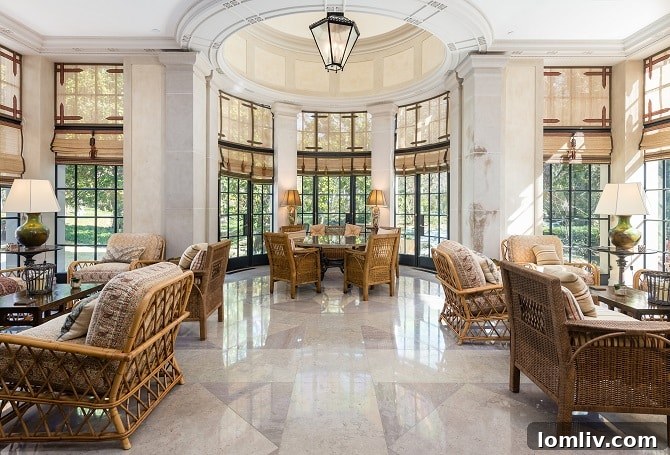
The Crespi Estate of today, with its impressive 27,000 square feet, is a significantly grander edifice than the more “modest” structure Pio Crespi originally commissioned in 1938. As local real estate expert Douglas Newby eloquently observed, “While his brothers all had 30,000 and 40,000 square foot homes, he thought a 12,000 square foot home would be less ostentatious for Dallas.” This remark offers a fascinating insight into the social dynamics and perceptions of wealth in Dallas during the early 20th century, where even a 12,000 square foot home was considered a statement of restraint by one of the city’s wealthiest industrialists. Pio Crespi, an Italian count, sought to blend European sophistication with a touch of understated luxury, a philosophy that guided the estate’s initial design and construction by the celebrated Maurice Fatio, known for his grand estates for industrialists and royalty.
Adding a personal touch to the estate’s early history, an intriguing detail emerged from a 1997 paper by an SMU student. The original plans for the Crespi Estate were even more ambitious in scale, but it was Florence Crespi, the countess herself, who ultimately influenced a reduction in its size. Connie Harkins, in her paper published on Newby’s site Significant Homes, revealed that “The Crespi Estate was modified from its original plans, cutting its size in half.” Harkins quoted Mrs. Crespi stating, “10,000 square feet was big enough,” a decision that speaks to her practical sensibility despite her noble background. This anecdote provides a charming glimpse into the decision-making process behind the creation of one of Dallas’s most iconic homes and underscores the elegant practicality of its original mistress.
Indeed, 10,000 to 12,000 square feet proved more than sufficient for the globe-trotting Italian noble couple, Pio and Florence Crespi, to host an array of illustrious guests. The home became a social epicenter, welcoming figures of international renown such as the legendary fashion icon Coco Chanel and even the Duke and Duchess of Windsor. The estate also served as a stately gathering place for Crespi’s own Italian noble family, reinforcing its role as a cultural bridge between European aristocracy and Dallas society. This rich history of entertaining distinguished personalities adds an invaluable layer of prestige and glamour to the Crespi Estate, cementing its place not just as a luxurious residence but as a historical landmark that has witnessed significant social events and hosted global tastemakers.
The Hicks Era and Moayedi’s Vision
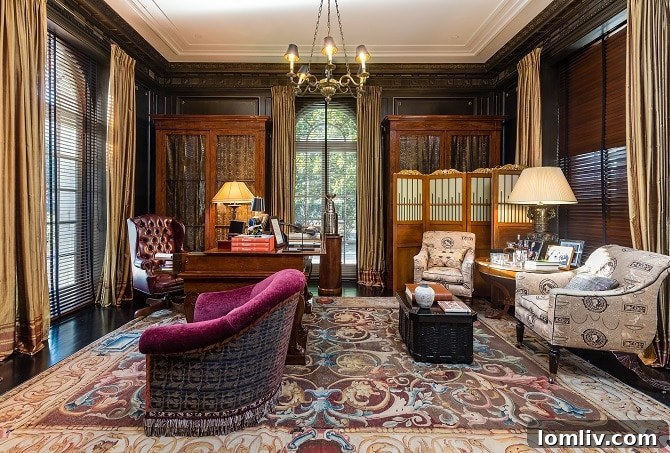
When developer Mehrdad Moayedi acquired the Crespi Estate in 2017, Candy’s details offered insightful context into the property’s state. It was under the ownership of Tom and Cinda Hicks, beginning in 2000, that the mansion underwent its most significant transformation. “The house was totally rebuilt and substantially and cautiously enlarged over a period of years by Tom and Cinda Hicks,” she reported. The Hicks family embarked on an ambitious renovation and expansion project, transforming the original 12,000 square foot residence into the sprawling 27,000-plus square foot masterpiece it is today. This extensive overhaul carefully preserved the estate’s historic architectural integrity while integrating modern luxuries and greatly expanding its footprint, solidifying its place among the largest and most luxurious homes in Dallas. During this period, sources indicated that plans were already being drawn and presented to potential bidders, showcasing how the expansive property could potentially be subdivided, hinting at its future development potential.
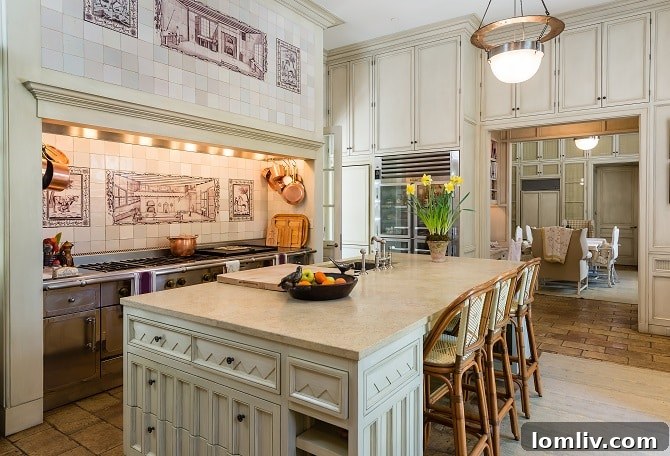
Mehrdad Moayedi’s acquisition in 2017 brought a new chapter focused on strategic development. He outlined plans to retain ten acres for the magnificent main Crespi Estate, ensuring its continued prominence. The remaining acreage along Walnut Hill Lane was earmarked for the development of five luxury estate homes, likely undertaken by Centurian Development, Moayedi’s company. This careful balance between preserving the historic core and leveraging the property’s development potential reflects the evolving landscape of high-end real estate. The area’s zoning for one-acre minimum lots allowed for this innovative approach, creating a new exclusive enclave while maintaining the grandeur of the original estate. It’s noteworthy that Tom Hicks himself had previously expanded his estate by purchasing and demolishing homes fronting Walnut Hill Lane, highlighting a pattern of expanding and consolidating land for ultimate privacy and luxury in this prime Dallas neighborhood.
Contemporary Luxury and Enduring Appeal
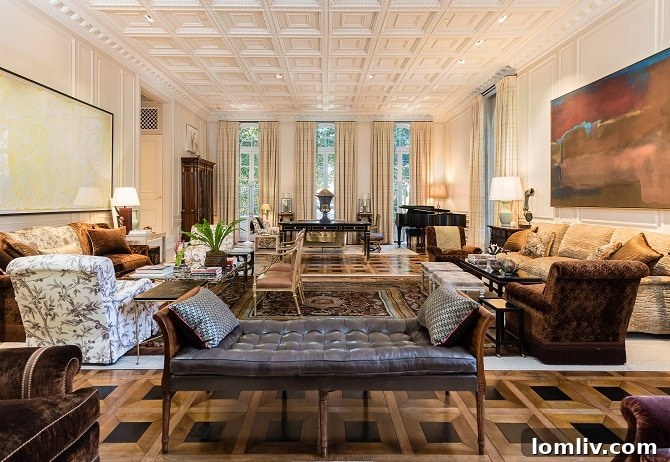
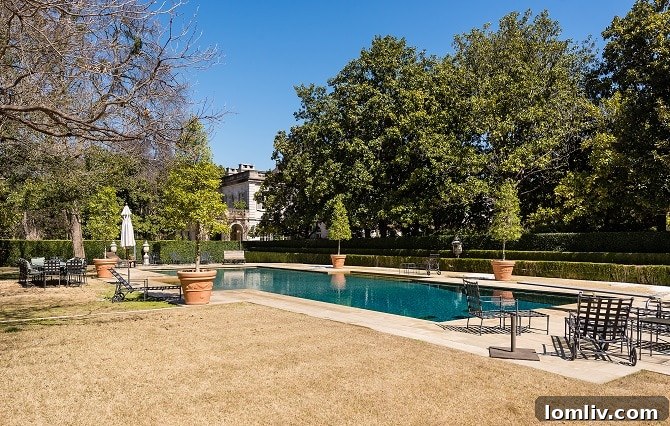
Candy documented her fascinating tour through the home when it was first listed in 2015, offering a rare public glimpse into its lavish interiors and extensive amenities. During the most recent listing, Dallas Business Journal’s Bill Hethcock reported that Mehrdad Moayedi further enhanced the estate by undertaking additional renovations to the main house and meticulously reworking the grounds. These improvements included installing a new entry, extensive landscaping, and a beautifully winding drive, further elevating the property’s curb appeal and luxurious feel. The mansion estate continues to offer unparalleled amenities, including a spacious 3,300-square-foot guest house—providing ample privacy for visitors—and an impressive 4,800-square-foot pool house, perfect for recreation and entertaining. Currently, the Dallas Central Appraisal District (DCAD) values this extraordinary estate at $27.9 million, a testament to its enduring status as one of Dallas’s most significant and valuable private residences. The Crespi Estate remains a beacon of luxury, history, and architectural excellence in the heart of North Dallas, continually evolving while retaining its timeless grandeur.