Understanding the Hottest Rental Markets in the US: A Deep Dive into Millennial Preferences and Economic Drivers
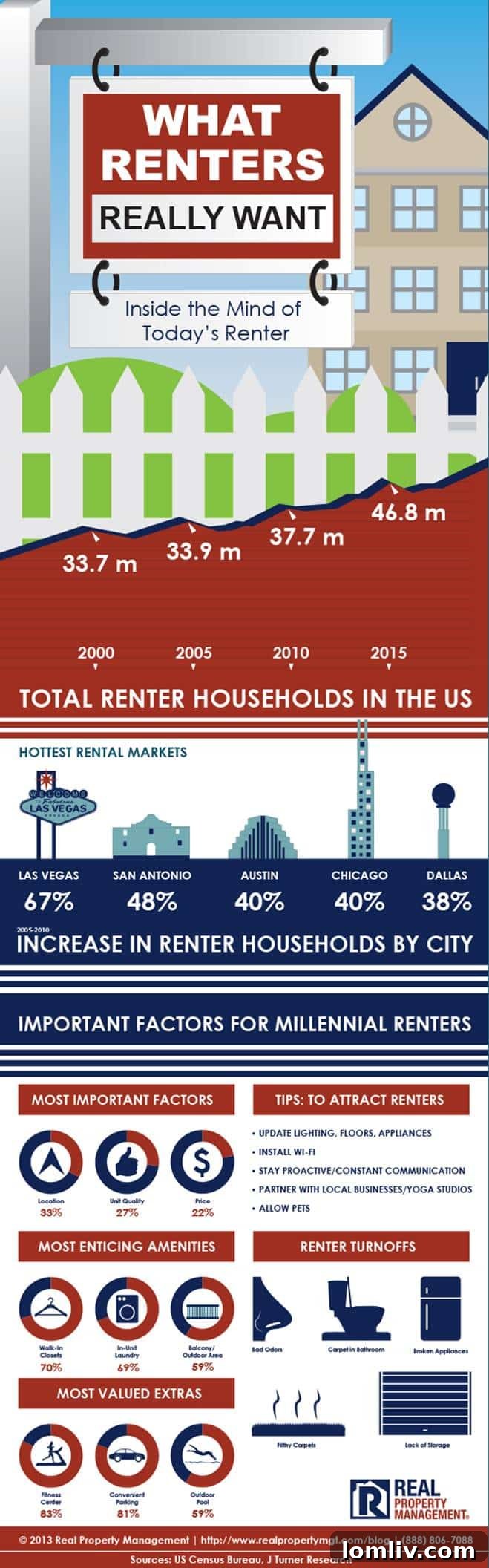
The landscape of housing in the United States is undergoing a profound transformation, with an ever-increasing segment of the population choosing rental properties over homeownership. This demographic shift is particularly evident among the Millennial generation, a group currently navigating a unique set of economic challenges. Factors such as substantial student loan debt, steadily rising interest rates on mortgages, and a job market that remains inconsistent in many parts of the country are collectively pushing rental rates upward. This confluence of economic pressures led to an astonishing 46.8 million American renters in 2015, a trend that continues to evolve and reshape urban and suburban areas alike. Industry insights, such as those provided by Real Property Management, offer a valuable glimpse into the preferences, financial realities, and decision-making processes of today’s Millennial renters.
The Economic Forces Fueling the Rental Boom in America
The decision to rent versus buy is often complex, but for Millennials, specific economic headwinds have made homeownership an increasingly challenging aspiration. A thorough understanding of these underlying drivers is crucial for anyone involved in the real estate sector, from individuals seeking housing to property investors and managers aiming to optimize their portfolios.
The Enduring Weight of Student Loan Debt
A defining financial characteristic of the Millennial generation is the unprecedented level of student loan debt many have accumulated. Unlike previous generations, graduating college frequently means entering the workforce burdened with tens, if not hundreds, of of thousands of dollars in educational debt. This significant financial obligation directly impacts their capacity to save for a down payment, qualify for competitive mortgages, or even consider the long-term financial commitment that homeownership entails. Consequently, renting offers a more flexible and less financially demanding alternative, allowing individuals to manage existing debt while still enjoying independent living and greater mobility.
Rising Interest Rates and the Challenge of Housing Affordability
Beyond the personal burden of student loans, the broader macroeconomic environment plays a critical role in housing decisions. When interest rates ascend, mortgage payments become more expensive, effectively increasing the overall cost of homeownership. This, coupled with already high housing prices in many desirable urban and suburban areas, pushes the dream of owning a home further out of reach for many young professionals. Renting, in this context, provides a predictable monthly expense without the immediate demand for a large down payment or the long-term commitment to a potentially fluctuating mortgage rate, offering a vital sense of financial stability in an uncertain market.
A Still-Evolving and Dynamic Job Market
While the job market has experienced periods of robust growth, many sectors and geographical regions still exhibit variability and a degree of unpredictability. A slow or uncertain job market can deter individuals from settling down and purchasing property, as career advancement or stability might necessitate frequent relocation. Renting provides the essential flexibility needed to move without the significant complexities, costs, and time commitment associated with selling a home. This adaptive approach to career paths aligns perfectly with the modern Millennial workforce, who often prioritize professional growth, diverse experiences, and work-life balance over immediate homeownership.
Unveiling America’s Top Rental Hotspots and What Makes Them Thrive
The confluence of these economic factors has led to certain metropolitan areas emerging as particularly attractive destinations for renters. Based on comprehensive industry insights, several key markets consistently stand out, illustrating diverse regional appeals and robust underlying economic strengths that draw significant renter populations.
The initial graphic highlights a compelling list of the top-5 rental markets in the U.S., showcasing a strategic blend of booming Sun Belt cities and established Midwestern metropolises. Leading the pack in terms of the proportion of renters is Las Vegas, a city renowned for its dynamic economy and world-class entertainment industry. Following closely are three prominent Texas cities: San Antonio, Austin, and Dallas, securing the second, third, and fifth spots, respectively. Chicago, a major Midwest hub and global city, impressively rounds out the top four, underscoring its enduring appeal as a vibrant urban center for those seeking rental accommodations.
Las Vegas, Nevada: The Oasis for Diverse Renters
Las Vegas, Nevada, proudly takes the leading position among cities with a high proportion of renters. This vibrant city offers unique opportunities and a relatively lower cost of living compared to major coastal urban centers, making it an attractive alternative. Its robust tourism and hospitality sectors historically provide ample job opportunities, drawing a dynamic and often transient population. Furthermore, Las Vegas’s evolving economy, with strategic diversification into technology, healthcare, and other industries, continues to broaden its appeal, transforming it into an increasingly desirable option for individuals and families seeking quality rental housing.
The Texas Triumvirate: San Antonio, Austin, and Dallas
Texas has firmly established itself as a national economic powerhouse, driven by job growth, business-friendly policies, and a diverse industrial base. Consequently, its major cities are attracting a significant influx of residents. San Antonio, Austin, and Dallas collectively represent a formidable force in the national rental market, each possessing distinct characteristics that appeal to a wide array of renter profiles.
- San Antonio: Known for its rich history, cultural attractions, and significant military presence, San Antonio offers a comparatively affordable cost of living when measured against other major Texas cities. Its burgeoning healthcare, manufacturing, and cybersecurity sectors contribute to a stable and growing job market, making it an appealing destination for renters prioritizing value, community, and career opportunities.
- Austin: Often affectionately dubbed “Silicon Hills,” Austin is a booming tech hub characterized by its innovative spirit and a vibrant arts and music scene. Its rapid job growth, particularly within technology, clean energy, and creative industries, attracts a young, educated, and dynamic workforce. While rental prices have seen a significant ascent, Austin’s energetic lifestyle, entrepreneurial ecosystem, and abundant opportunities continue to make it an irresistible magnet for Millennial renters seeking a progressive urban environment.
- Dallas: As a sprawling commercial, financial, and transportation hub, Dallas offers a vast array of job opportunities across incredibly diverse industries, including finance, healthcare, logistics, and corporate services. Its extensive metropolitan area provides a wide range of housing options, from sleek urban apartments in the city center to spacious suburban rental homes. The strong corporate presence, combined with a dynamic cultural scene and significant infrastructure investments, ensures a steady and robust demand for rental properties, consistently placing it among the nation’s top markets.
Chicago, Illinois: The Enduring Midwest Magnet for Renters
Chicago, Illinois, despite being a traditional and established powerhouse in the Midwest, maintains its position as a highly significant and competitive rental market. Its status as a global financial center, combined with a rich cultural tapestry, world-class universities, and a diverse job market spanning various sectors (finance, tech, healthcare, education, manufacturing), continues to attract a large and diverse renter population. The undeniable appeal of vibrant urban living, excellent public transportation networks, and a plethora of amenities, from dining to entertainment, make Chicago a perennial favorite for those seeking the energy and opportunities of a major city without necessarily committing to homeownership.
Navigating Competition: A Property Manager’s Imperative in a Dynamic Market
In a rental market characterized by sustained demand and increasing competition among available properties, the strategic role of a property manager becomes more critical than ever. As Rachel Wachenstein of Real Property Management astutely observes, “As more competition emerges in the rental market, it’s important as a property manager to keep properties as up-to-date and attractive to renters as possible to stay ahead and obtain competitive rental rates.” This insightful statement encapsulates the core challenge and, simultaneously, the significant opportunity for property professionals today.
Effective Strategies for Attracting and Retaining Modern Renters
To not only survive but thrive in such a competitive environment, property managers must adopt proactive, innovative, and unequivocally renter-centric strategies. Simply offering a basic living space is no longer sufficient to attract and retain the most desirable tenants. Modern renters, particularly Millennials, seek tangible value, seamless convenience, and an elevated quality of life from their living spaces, viewing them as integral to their overall lifestyle.
- Continuous Modernization and Thoughtful Upgrades: Keeping properties fresh, contemporary, and appealing is paramount. This includes strategic renovations of kitchens and bathrooms, installation of energy-efficient appliances, and the use of modern finishes and fixtures. Properties that appear dated or neglected will struggle to attract premium tenants and command competitive rental rates, leading to higher vacancy and lower profitability.
- Seamless Technology Integration: Smart home features (such as smart thermostats, intelligent lighting systems, and keyless entry), robust and reliable high-speed internet access, and user-friendly online portals for rent payments and maintenance requests are no longer considered luxuries but are rapidly becoming baseline expectations for many renters.
- Curated Amenities that Truly Matter: Beyond the individual rental unit, community amenities play an increasingly significant role in a renter’s decision-making process. State-of-the-art fitness centers, collaborative communal workspaces, pet-friendly policies (complete with pet washing stations or dog parks), secure package delivery systems, and well-maintained shared outdoor spaces can profoundly differentiate a property in a crowded market.
- Responsive Maintenance and Exemplary Management: Providing excellent customer service, which includes prompt and efficient responses to maintenance requests, clear and consistent communication, and a professional, approachable management team, significantly impacts renter satisfaction and directly contributes to higher retention rates. A well-managed property fosters a sense of community and trust.
- Strategic and Targeted Marketing: Utilizing high-quality professional photography, immersive virtual tours, and targeted online advertising campaigns helps effectively showcase properties to the most relevant audience. Highlighting unique property features, local neighborhood attractions, and community benefits is also crucial for drawing in ideal tenants.
- Dynamic and Competitive Pricing: While the goal is to maximize rental income, understanding the current market landscape and pricing properties competitively is absolutely crucial to minimize vacancy rates and ensure a steady income stream. Regular, data-driven market analysis is essential to adjust pricing in real-time, reflecting supply, demand, and competitor offerings.
The Future Outlook for the US Rental Market: Emerging and Enduring Trends
Looking ahead, the US rental market is poised for continued evolution, significantly influenced by broader societal shifts, technological advancements, and changing demographic preferences. Understanding these emerging trends can help both current renters and all property stakeholders — from investors to developers and managers — strategically prepare for what lies on the horizon.
The Transformative Impact of Remote Work Models
The widespread adoption and growth of remote and hybrid work models have profound implications for housing demand and location preferences. Renters are gaining unprecedented flexibility in choosing where to live, potentially shifting demand away from historically expensive urban cores to more affordable suburban, exurban, or even secondary cities. This significant trend could lead to a decentralization of rental demand and increased competition in previously overlooked or undervalued areas, spurring growth in new markets.
Evolving Demand for Specific Rental Property Types
While traditional apartments continue to be a staple of the rental market, there is a discernable and growing interest in single-family rental homes, particularly among young families, individuals seeking more space, or those desiring a suburban lifestyle without the commitment of homeownership. “Build-to-rent” communities are rapidly becoming a significant segment of the market, offering the amenities and professional management typically associated with apartment complexes, but within the spacious and private setting of a single-family home.
Sustainability and Smart Living as Core Expectations
Environmentally conscious renters are increasingly seeking properties that incorporate sustainable features and smart home technologies. This includes energy-efficient appliances, options for solar panels, advanced insulation, and smart thermostats that not only reduce utility costs but also minimize environmental impact. Properties that proactively integrate these modern, eco-friendly features will undoubtedly gain a substantial competitive edge, attracting a growing segment of renters who prioritize both cost savings and ecological responsibility.
Conclusion: A Dynamic Market Demanding Continuous Adaptation
The US rental market is a remarkably dynamic and intricate ecosystem, fundamentally shaped by powerful macroeconomic forces, distinct generational preferences, and localized economic conditions. The pervasive influence of student loan debt, the ongoing trajectory of interest rates, and the inherent fluidity of the modern job market have collectively steered a significant portion of the Millennial generation towards the rental lifestyle. Consequently, cities like Las Vegas, San Antonio, Austin, Dallas, and Chicago have not only emerged but continue to thrive as prime destinations, each offering a unique and compelling blend of economic opportunities, cultural vibrancy, and desirable lifestyle attractions.
For property managers, real estate investors, and developers, the imperative is undeniably clear: continuous adaptation, proactive innovation, and strategic foresight are the absolute keys to success. Staying competitive in this vibrant market requires ongoing investment in property aesthetics and functionality, seamless technological integration, and a deep, empathetic understanding of evolving renter needs and desires. As the market continues its inevitable shifts, those who can anticipate and effectively respond to these changes will be optimally positioned for sustained success in attracting, satisfying, and retaining the modern renter. The invaluable insights provided by reputable organizations like Real Property Management serve as a vital compass in navigating this ever-changing landscape, ensuring that properties remain desirable, profitable, and relevant in the years to come.