
In a world suddenly reshaped by global events, our meticulously planned trip to Barcelona—a dream destination, the backdrop for a dear friend’s wedding, and a joyful prelude to celebrating our own 40 years of marriage—transformed into a poignant reminder of unprecedented change. Instead of European streets, we found ourselves embracing the serene charm of Boot Ranch in Fredericksburg, Texas. The unexpected shift offered a profound sense of tranquility, largely because discussions of the global health crisis were notably absent. This pivot from an international metropolis to a peaceful domestic retreat wasn’t just a personal anecdote; it foreshadowed significant shifts in how people perceive their homes, their communities, and the very fabric of the real estate market.
The global pandemic, while initially met with a mix of alarm and skepticism, has undeniably accelerated a pre-existing trend: the migration of homeowners from bustling urban centers to more spacious, less crowded “hinterlands.” This isn’t merely a temporary flight; it represents a fundamental re-evaluation of lifestyle priorities. Factors like historically low gas prices, the rise of remote work, and a renewed desire for personal space have fueled this exodus. We’ve witnessed this phenomenon unfold in various Texas markets: from Austin, where adjacent communities are experiencing a surge in demand as buyers seek respite from urban density, to Frisco, where burgeoning towns like Prosper and Celina offer increasingly attractive alternatives. Even areas like Midlothian, just west of the Dallas-Fort Worth metroplex, are seeing a significant influx of new residents, drawn by the promise of more land and a slower pace of life.
Our decision to cancel our international travel wasn’t rooted in a fear of contracting the virus itself, but rather a practical concern about potential quarantines abroad. The prospect of a relaxing getaway being complicated by the necessity of packing masks, gloves, hand sanitizer, and a 21-day supply of medications, coupled with constant vigilance, stripped away the very essence of leisure. Initially, many struggled to comprehend the scale of the global reaction, likening the virus to a severe flu. While acknowledging its highly communicable nature and the absence of a vaccine, the panic seemed disproportionate to some, especially when recalling past health crises like the Ebola patient at Texas Healthcare Resources, which did not trigger a similar stock market upheaval. This raises a critical question: did the pandemic merely provide investors with a catalyst, an “excuse to sell everything,” rather than being the sole driver of the market downturn?
Decoding the Pandemic’s Influence on Real Estate Dynamics
The impact of global health events on real estate is complex and multifaceted, touching everything from international transactions to local market sentiments. Early reports, such as one from Inman News, highlighted the real-world complications, like a woman in the Bay Area stranded in Wuhan during the critical process of selling her home – a stark illustration of how quickly personal plans can be upended.
Interest Rates and Buyer Behavior: A New Landscape
In response to the economic uncertainties, central banks acted swiftly. The Federal Reserve, for instance, slashed interest rates to historically low levels, making mortgages incredibly affordable, almost “free” in relative terms. This move, intended to stimulate economic activity, created a fascinating dichotomy in the housing market: immense affordability potential against a backdrop of widespread uncertainty. While Chinese buyers pre-pandemic, they represented a smaller fraction—around 3 percent—of overall North Texas buyers, indicating that local market dynamics often diverge from national or international trends. The U.S. Federal Reserve’s open market committee encapsulated the prevailing sentiment, stating:
“The fundamentals of the U.S. economy remain strong. However, the coronavirus poses evolving risks to economic activity.”
Inman
This statement perfectly captures the tension between underlying economic strength and emergent global challenges. For many prospective homebuyers, these unprecedented low rates presented a compelling opportunity to enter the market or refinance existing loans, provided they felt secure in their employment and long-term financial outlook. This dynamic created a resilient demand for housing in many regions, even as other sectors faced severe headwinds.
Market Volatility: From Travel Stocks to Real Estate Giants
The immediate fallout was palpable across various industries. Travel and hospitality stocks plummeted to levels that were difficult to witness, reflecting widespread cancellations and travel restrictions. The ripple effect extended to professional gatherings, with major organizations like the National Association of Realtors (NAR) postponing or canceling conferences in key locations like San Diego and Los Angeles. Even industry events like NAREE’s journalism contest faced an uncertain future, leaving participants wondering about the fate of upcoming gatherings.
The broader real estate sector, despite its foundational strength, was not immune to the market tremors. Stocks of prominent real estate companies began to tank, illustrating the pervasive fear gripping investors. Even tech-forward giants like Zillow, typically seen as market leaders, experienced significant drops:
“Real estate stocks are among those that have suffered in day-after-day declines. Realogy’s stock price has fallen from more than $13 per share last week to $8.35 on Thursday. Zillow is down from more than $65 nearly two weeks ago to just under $52 per share Thursday. And RE/MAX is down from $40.57 on Feb. 20 to just above $30 per share Thursday.”
This widespread decline affected nearly all sectors, with a few notable exceptions: consumer staples companies like Clorox and Kimberly-Clark saw their stocks soar, reflecting a surge in demand for hygiene products and household essentials. This market behavior raised critical questions for the real estate industry: would this widespread concern about health translate into a reluctance to view homes? Would showings be canceled en masse, stifling market activity?
Technology to the Rescue: Adapting to New Realities
Fortunately, the real estate industry had been steadily integrating technology, which proved to be a critical lifeline during this period of uncertainty. Today, prospective buyers can practically tour a home without ever encountering another human being. Advanced platforms offer immersive 3D virtual tours, high-definition photo galleries, and even live video walk-throughs conducted by agents. From the comfort of their homes, individuals can scout listings, schedule virtual appointments, and even engage in remote closing processes. This digital transformation wasn’t just a convenience; it became an essential tool for maintaining market fluidity and ensuring that the real estate journey could continue, safely and efficiently.
The Underlying Driver: Uncertainty
At the core of much of this behavioral shift and market volatility lies a single, powerful factor: uncertainty. It was the driving force behind our decision to cancel our trip, and it is the same force that compels some buyers to delay contracts, causes others to stay home, and, yes, even leads to the hoarding of essential goods like toilet paper. The fear of the unknown—of potential lockdowns, economic instability, or unforeseen complications—creates a climate where caution often overrides ambition.
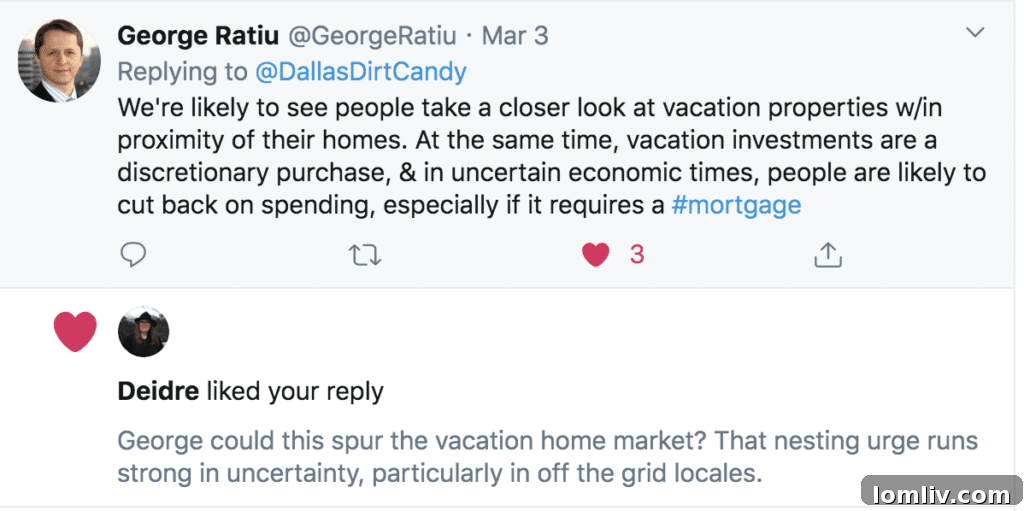
Reflecting on these dynamics, I once posed a question to my friend George Ratiu, a senior economist with realtor.com, known for his insights into consumer and Realtor trends. Could this “Corona-crazy” push people to seek refuge in smaller cities, or even lead them to purchase idyllic vacation homes that might eventually become permanent residences? This pattern isn’t without precedent. Following the 9/11 terrorist attacks and the subsequent Anthrax scares, a similar psychological shift occurred, prompting many to re-evaluate urban living and seek perceived safety and community in less densely populated areas. The lingering memory of those events still evokes a shiver:
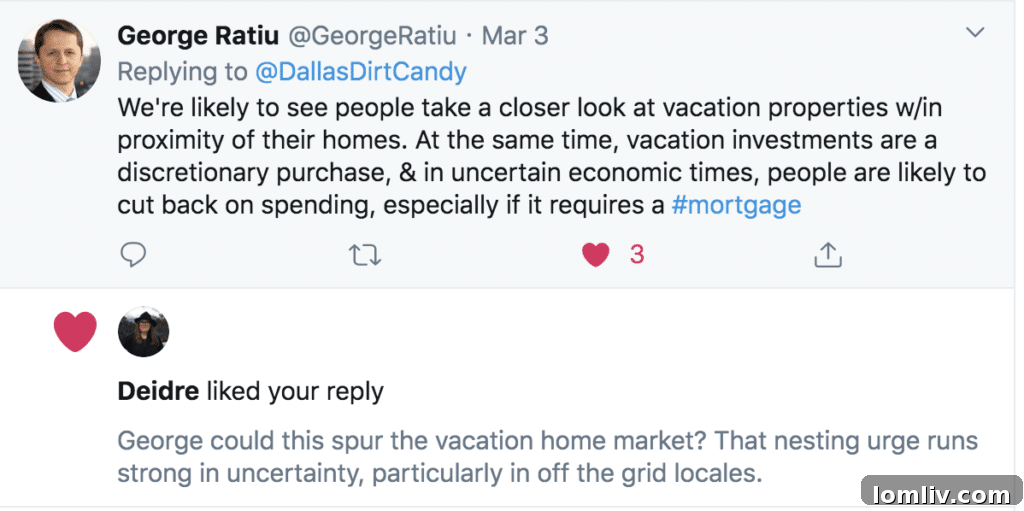
The fear of long-term commitment to an uncertain future loomed large. George predicted a flurry of refinancing activity, an understandable move to lock in lower rates, but he wisely cautioned that the benefits would only accrue if homeowners planned to stay in their properties long enough to recoup the associated expenses. This nuanced perspective highlights that while immediate actions are often driven by fear, long-term real estate decisions require careful, rational consideration.
Unique Local Challenges and Emerging Opportunities in North Texas
Beyond the global health crisis, North Dallas and Preston Hollow faced another unusual challenge: a significant dearth of housing inventory. This wasn’t solely due to new migration patterns but also a direct consequence of past natural disasters. Tornado victims, displaced from their homes, were actively purchasing new residences or temporary rentals while their damaged homesteads underwent rebuilding or demolition. Rather than engaging in protracted disputes with insurance companies, many chose to invest in new properties, some with the intention of converting them into rental units later. This convergence of circumstances further tightened an already constrained housing supply, creating a robust seller’s market in these specific areas.
Amidst these complex shifts, innovation continues to bubble to the surface. During my recent trip to Fredericksburg, I encountered another fascinating trend: a burgeoning “Tiny Home” movement specifically catering to workers. These aren’t just minimalist dwellings; they are designed to be upscale enough to be attractive to a diverse demographic, yet affordable enough to provide accessible housing solutions. This movement speaks to a larger cultural shift towards practicality, sustainability, and finding creative solutions to housing affordability challenges, particularly for a workforce increasingly seeking flexible living arrangements and reduced overheads. As remote work becomes more ingrained in our professional lives, the appeal of these compact, efficient living spaces in more desirable, yet affordable, locations is likely to grow exponentially.
The real estate landscape is undeniably dynamic, constantly adapting to global events, technological advancements, and evolving consumer preferences. From suburban migrations driven by the pursuit of space and tranquility to the ingenious solutions offered by the tiny home movement, the market continues to evolve. Staying informed and adaptable is key in these changing times. As we navigate this new era, remember the simple, yet profound, advice: stay tuned for emerging trends, and for now, continue to prioritize health and safety by washing your hands for at least 20 seconds.