Unearthing History: A 1928 Park Cities Tudor’s Remarkable Renovation and Time Capsule Discovery
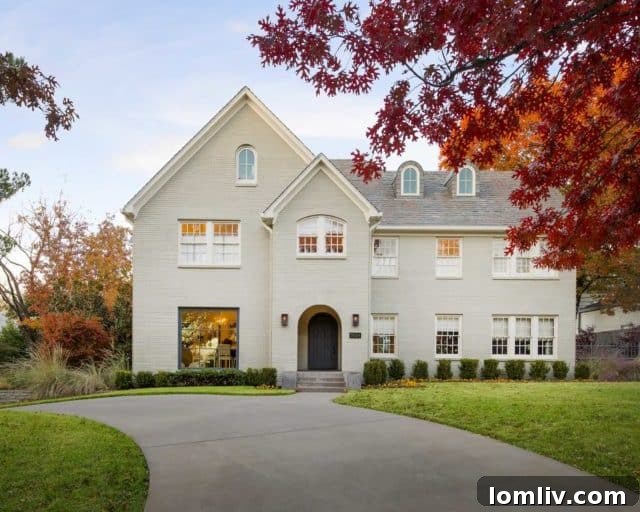
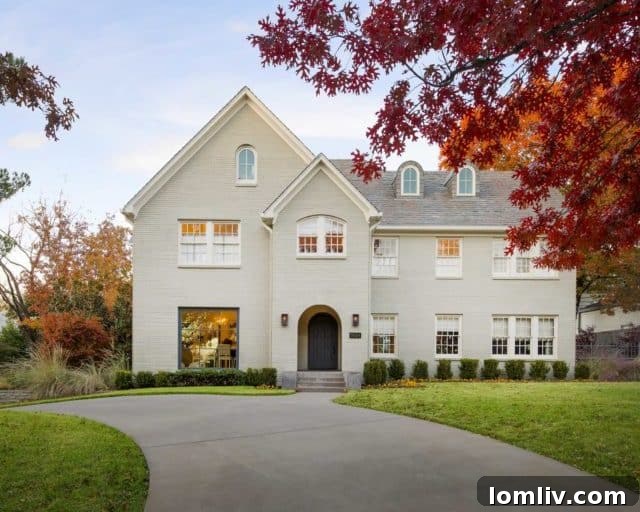
For Jack and Kate LaGere, the charm of a 1928 Park Cities Tudor was undeniable. Steeped in history, this architectural gem resonated deeply with Kate, an art history major, whose appreciation for the past extended far beyond textbooks into the very walls of their new potential home. It was a property that promised not just a residence, but a living narrative waiting to be explored.
Though they weren’t actively house hunting at the moment, the appearance of a “For Sale” sign on this particular Tudor ignited a long-held desire. The LaGeres had often discussed the prospect of owning a historic home, envisioning a place they could meticulously preserve and thoughtfully restore. Their ideal vision included a space that would gracefully accommodate their growing art collection while simultaneously adapting to the modern lifestyle of their three young children.
The home’s location was nothing short of perfect. Situated directly across the street from Kate’s former elementary school, it offered an immediate sense of familiarity and community. Coupled with its proximity to a local park, it ticked all the boxes for their family-oriented needs. Upon stepping inside and exploring its sprawling interior, their imaginations were captivated. The potential for preservation and restoration was palpable, solidifying their decision to embark on what would become an extraordinary journey of discovery and transformation.
A Vision Takes Shape: Balancing Preservation with Modern Living
The initial state of the 1928 Tudor presented both challenges and immense possibilities. Kate fondly recalled, “I loved the Tudor style, but [the interior] had never been remodeled, except for the kitchen in the 1970s, and [the house] didn’t have central air conditioning.” This meant stepping back in time, with original doors, windows, and plaster walls still largely intact. While this offered a tangible connection to the past, it also presented significant hurdles for contemporary living.
Despite the lack of modern amenities, Kate emphasized, “It had beautiful bones though, so [we] saw the potential.” This potential wasn’t merely cosmetic; it lay in the inherent quality of its original craftsmanship and timeless design. The LaGeres recognized that beneath the aged surfaces lay a robust structure and charming details worthy of meticulous restoration. Their vision was clear: to respectfully honor the home’s historic integrity while integrating the comforts and efficiencies required for a bustling family life in the 21st century.
Their renovation strategy was a thoughtful balance of preservation and modernization. The historic façade of the Tudor, with its distinctive half-timbering and gabled roofs, was carefully maintained to retain its original curb appeal and architectural authenticity. Inside, the original hardwood floors on the first level were lovingly restored, preserving a key element of the home’s initial character. However, for the remainder of the interior, a more comprehensive approach was necessary. To achieve their goal of a seamless blend of old and new, the couple made the decision to take the interior down to the studs, effectively creating a blank canvas upon which their modern vision could be built, while still respecting the underlying historical framework.

The Unexpected Discovery: A House That Spoke Volumes
As the layers of decades were systematically peeled away during the renovation, the LaGeres embarked on an unforeseen journey of discovery. What began as a standard construction project soon transformed into an archaeological excavation of sorts, unearthing more than just old plaster and wiring. On the very first day of construction, a casual walk-through with a friend turned into a momentous occasion that would forever change their connection to the house.
Unveiling a Hidden Time Capsule
While admiring the home’s original interior before its transformation, Kate’s friend noticed something peculiar. “My friend noticed items stuck to the wall on the second floor that had been hidden behind the wooden fireplace mantel, [which] was already removed,” Kate recounted. It was a discovery that instantly piqued their curiosity. Covered in dust and forgotten for decades, these initial findings — old letters and photographs — hinted at a deeper narrative. This initial glimpse spurred a more thorough investigation, leading them to search closer, revealing more treasures tucked away in the floorboards and behind other walls throughout the house. Each unearthed item was a whisper from the past, a tangible link to the lives once lived within those very walls.
The collection of artifacts grew increasingly diverse and intriguing. Beyond personal correspondence and family portraits, Kate stumbled upon a dozen prints titled 12 Moments in American History, a series printed by Humble Oil Company in the 1960s. These pieces, distinct from the more intimate family mementos, represented a broader historical context, adding another layer to the house’s unfolding story. The thrill of each new find was immense, transforming their renovation project into a fascinating historical detective mission.
Connecting the Dots: Tracing the Home’s Rich Lineage
With these tangible pieces of history in hand, Kate embarked on the next phase of her historical quest: identifying the specific individuals and families who had left these behind. Her art history background, with its emphasis on research and contextualization, proved invaluable. She delved into property records and local archives, meticulously piecing together the home’s past.
Her research revealed that the house was originally built in 1928 by Commander Hudson, a figure whose presence added an air of gravitas to the property’s origins. Even more fascinating was the discovery that, prior to the LaGeres, only two families had called this Tudor home. The Boyce family had resided there from approximately 1930 to 1958, establishing a significant early presence. Following them, the Carter family purchased the property, continuing its stewardship for many years. Through a combination of historical records, careful calculation of timelines, and eventually, locating descendants of both families, Kate was able to connect the dots. The 12 Moments in American History prints, with their 1960s origin, were traced back to the Carter family, while the more intimate letters, photos, and personal items were attributed to the Boyce family, providing a rich, personal narrative for each era.
The Art of History: Integrating the Past into Present-Day Living
The LaGeres’ passion for history was already evident in their personal art collection, which they had lovingly accumulated during their travels. Pieces like the four striking post-World War II lottery posters from Normandy, France, spoke to a global appreciation for historical artifacts and their unique stories. However, the most treasured additions to their collection came not from distant lands, but from within the very walls of their Park Cities Tudor.
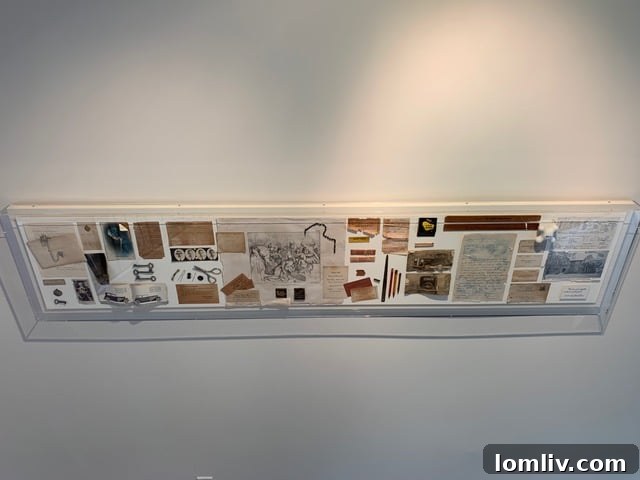
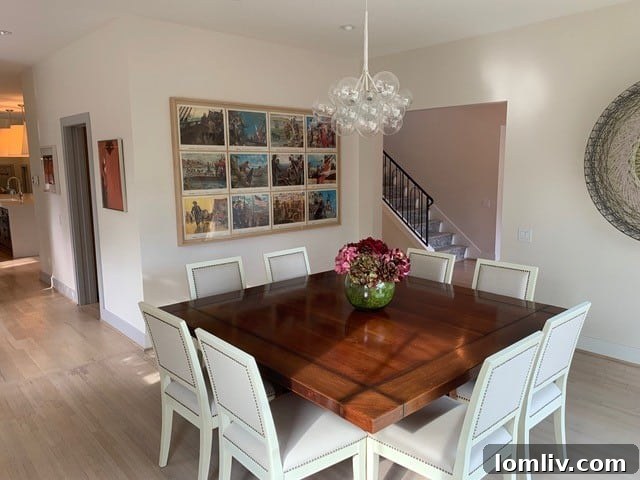
The newly discovered artifacts were not merely relegated to storage; they were thoughtfully integrated into the home’s contemporary design, creating a living museum of its own past. The now-framed 12 Moments in American History prints found a place of honor in the dining room, adding a distinct historical elegance to the space where the family gathered. But it was the more personal “time capsule” that truly became the centerpiece of their home, prominently displayed in the foyer. This vast, carefully curated display encapsulated the essence of daily life from previous generations, offering an intimate glimpse into the past.
The items within the time capsule were incredibly diverse, painting a vivid picture of the lives of the Boyce family. From seemingly mundane objects like old Juicy Fruit gum wrappers, No. 2 pencils, bullets, and scissors, to profoundly personal and spiritual artifacts such as a sealed letter addressed to the Virgin Mary, a poignant love letter to an unknown lady named Mildred, soil from the tomb of a Dominican saint, rosaries, and a collection of Boyce family photographs. Each item, regardless of its apparent significance, contributed to a rich tapestry of human experience, transforming the foyer into a captivating narrative of lives lived.
A Legacy Reconnected: The Human Element of Preservation
The true magic of the LaGeres’ discovery extended beyond the artifacts themselves; it blossomed into genuine human connections. Kate’s dedication to understanding the home’s past led her to forge a friendship with Mr. and Mrs. Carter’s daughter, who shared invaluable insights and memories of her family’s time in the house. This personal connection brought the history to life in a way no document could.
Even more moving was the visit from two members of the Boyce family, who traveled to Dallas from out of state specifically to see their former home, now lovingly restored by the LaGeres, and to witness the time capsule containing their family mementos. Kate recounted the profound impact of their visit: “Both [were] so moved when seeing it.” The experience was deeply emotional, offering a tangible link to their ancestry and a poignant reminder of their family’s legacy. “We sat and talked for an hour about family stories in the house,” Kate shared, describing a truly special interaction where generations converged, sharing anecdotes and memories within the very walls that had witnessed them unfold. This shared experience underscored the powerful, enduring connection between people, places, and the stories they hold.
Conclusion: A Home Reimagined, A History Reclaimed
The LaGeres’ journey with their 1928 Park Cities Tudor is a testament to the profound stories hidden within historic homes. What began as a renovation project transformed into an archaeological endeavor, revealing a rich tapestry of past lives and creating an enduring connection to history. Their thoughtful approach not only preserved the architectural integrity of a classic Tudor revival home but also embraced the personal narratives embedded within its very structure.
By blending meticulous preservation with modern comfort, and by honoring the unexpected treasures found along the way, Jack and Kate LaGere have created more than just a house; they’ve curated a living legacy. Their home stands as a vibrant illustration of how passion for history, combined with dedicated restoration, can not only breathe new life into an old structure but also serve as a bridge between generations, enriching both the present inhabitants and the cherished memories of those who came before. Every old house, they discovered, truly has a story waiting to be told, and the LaGeres’ Tudor now tells its remarkable tale louder and clearer than ever before.