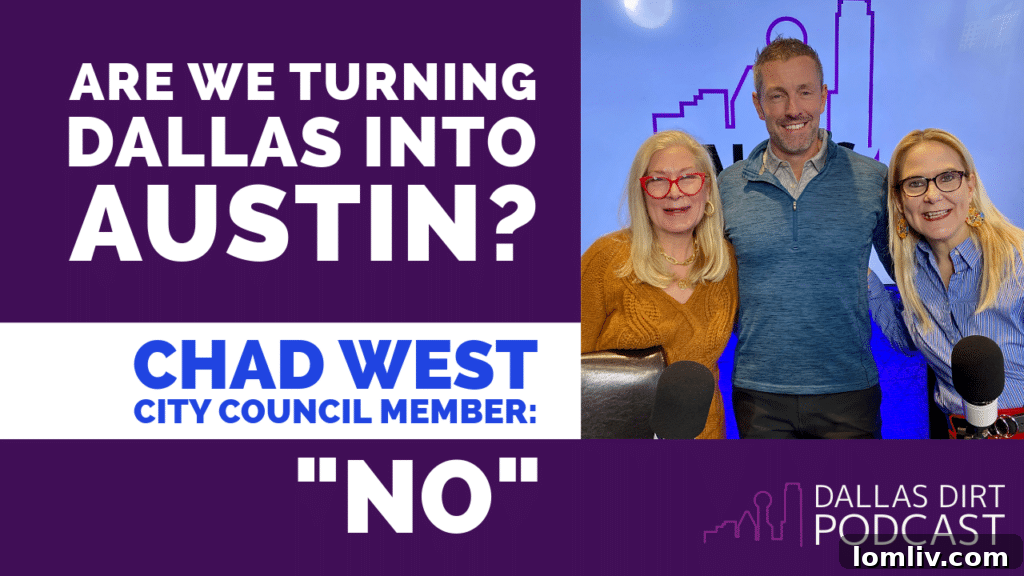
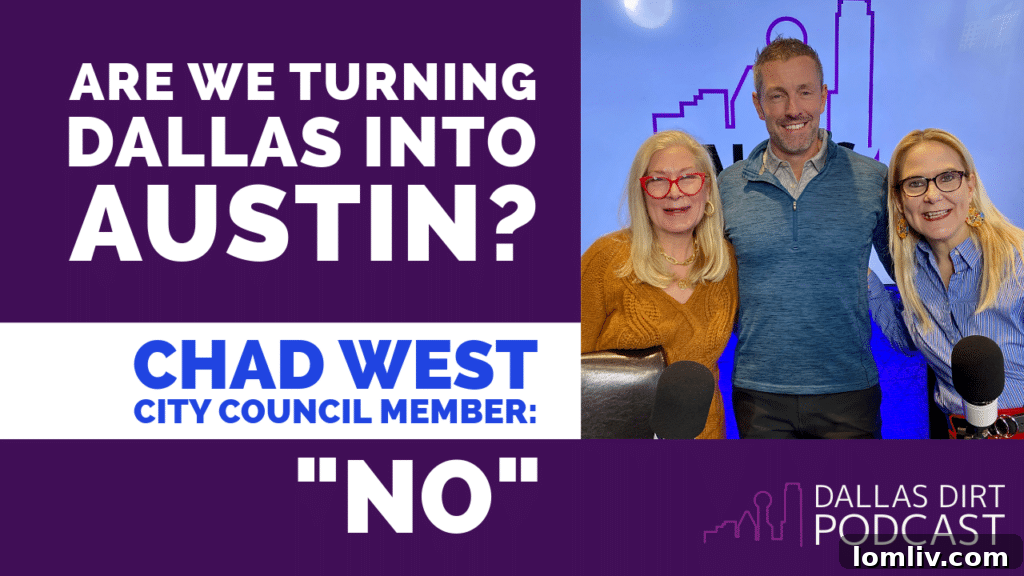
Dallas, a city known for its dynamic growth and vibrant communities, faces a pressing challenge: the escalating affordable housing crisis. While many homeowners understandably feel uneasy at the mention of “denser zoning,” envisioning towering apartment complexes overshadowing their single-family homes, Dallas City Council Member Chad West is spearheading a crucial conversation. He prompts residents to consider innovative solutions, drawing parallels to Austin’s contemporary approaches or even harkening back to Highland Park’s ingenious strategy for workforce housing a century ago. During the 1920s and 1930s, Highland Park strategically zoned and built duplexes, triplexes, and fourplexes on the perimeter blocks of its single-family streets, specifically to accommodate essential service staff. These multi-family units endure today, offering a historical precedent for how selective denser zoning can seamlessly integrate into existing neighborhoods. West suggests that similar approaches in modern Dallas could provide much-needed housing for diverse populations, including students, teachers, and senior citizens, ensuring that vital members of our community can afford to live within city limits.
The conversation around housing affordability is intensifying, and its implications for Dallas’s future are profound. On a recent episode of “Dallas Dirt,” a prominent podcast hosted by Candy Evans and guest-hosted by City Hall Editor April Towery, Council Member Chad West offered an candid assessment of the city’s housing predicament. West, currently serving his third term as the District 1 City Councilman and chairing the Government Performance and Financial Management Committee, provided an essential primer on the “minimum lot size” memorandum that has ignited considerable debate. He also shed light on what he described as a “shady” meeting designed to stifle critical discussion and outlined his priorities for an upcoming city bond – a pivotal topic currently undergoing intense scrutiny and debate among council members. West’s perspective is clear: “If we don’t address the lack of housing, workforce housing, housing for rent, and housing for sale in the city,” he warns, “if we don’t take it seriously, we will end up like Seattle, Portland, San Francisco, or New York City, where people are priced out.” This stark warning underscores the urgency with which Dallas must confront its housing challenges to prevent an exacerbation of social and economic disparities.
For those interested in a deeper dive into these critical discussions, the “Dallas Dirt” podcast offers invaluable insights. You can listen to the full conversation and explore other episodes addressing Dallas real estate and urban development:
https://feeds.transistor.fm/dallas-dirt-hosted-by-candace-evans
Watch Now: Dallas’s Housing Future and Chad West’s Vision
Unpacking Dallas’s Housing Dilemma: Minimum Lot Sizes and Gentle Density
Council Member Chad West is unequivocal about the necessity of exploring all available policies and best practices to address Dallas’s housing shortage. His recent “lot size memorandum” serves not as a directive for demolition or widespread apartment construction, but as a critical catalyst for discussion. The memo specifically calls for an examination of two key areas: potentially reducing the required minimum lot sizes within the city and allowing for “gentle density” in appropriate neighborhoods.
Currently, Dallas mandates a minimum lot size of 5,000 square feet, a standard that dates back to the 1950s and 1960s when Dallas was a considerably smaller, more suburban city. This 50×100 foot lot requirement, while prevalent in many established neighborhoods like North Oak Cliff’s Winnetka Heights, may no longer align with the evolving needs and preferences of modern residents. West points out that younger generations, particularly millennials, often prioritize different living arrangements. They may desire less outdoor space, valuing walkability and access to urban amenities over large yards. As Dallas continues its transformation into a major metropolitan hub, these outdated regulations warrant careful reconsideration to support diverse housing products that cater to a broader demographic.
The concept of “gentle density” is central to West’s proposals. This involves strategically permitting the construction of two-plexes, three-plexes, and four-plexes, primarily on vacant lots, in a manner that seamlessly integrates with existing neighborhood character. Winnetka Heights itself offers a compelling historical blueprint. This celebrated historic district, often lauded for preserving Dallas’s unique architectural fabric, is replete with a mix of housing types. Walking its streets, one can observe duplexes, triplexes, four-plexes, and even larger multi-family units subtly blended into the streetscape, often at corner locations, designed to appear as single-family homes. Similarly, Highland Park, a bastion of luxury housing, features historic duplexes and triplexes on its side streets, originally built to house the workforce that supported the area’s grand mansions. These examples demonstrate that diverse housing forms can coexist harmoniously within a neighborhood, providing homes for service workers, aging seniors, and college graduates starting their careers, preventing them from being priced out and pushed into distant suburbs.
Navigating Resistance: The “Shady Setup” and the Importance of Open Dialogue
The path to housing reform is fraught with challenges, as evidenced by a controversial Housing and Homelessness Solutions Committee meeting on December 19th. Council Member West, who was notably absent along with another co-signer of the memorandum, characterized this meeting as a “shady setup” designed to obstruct meaningful conversation. He highlighted how the meeting was scheduled during a period when key proponents of the memorandum were out of town, effectively creating a forum for opponents to dominate the discussion and set the stage for the proposal’s failure.
West expressed deep frustration over the “fear-mongering” tactics that often stifle these vital discussions. He noted that many opponents, often privileged and retired individuals, genuinely fear changes to their neighborhoods, sometimes fueled by misinformation. These “NIMBYs” (Not In My Backyard) often voice concerns about property values, traffic, and neighborhood character, but their vocal opposition can overshadow the critical needs of a much larger segment of the population. In contrast, those who desperately need affordable housing or accessible services like daycares in single-family neighborhoods often lack the time or resources to attend lengthy City Hall meetings, making their voices less heard.
Responding to criticisms that his proposals aim to “make Dallas like Austin,” West asserted that while Austin has taken more progressive steps in addressing its housing crisis, Dallas’s goal is not to emulate another city but to find its own solutions. He acknowledged Austin’s severe housing affordability issues, exacerbated by an influx of tech companies and rising demand, as a cautionary tale. Dallas’s own average home price now exceeds $500,000, a significant jump attributed to post-COVID migration from the West and East Coasts. West argues that Dallas’s historically favorable economy has been partly due to its relative housing affordability, a benefit that is rapidly eroding. To maintain its economic competitiveness and social equity, Dallas must proactively address these affordability challenges before they reach crisis levels seen in other major U.S. cities.
Dallas’s Future Investments: The Upcoming City Bond and Housing Advocacy
A critical component of Dallas’s future development and quality of life is the upcoming city bond election. The city manager has proposed a bond package of $1.1 billion, with capacity to potentially increase it to $1.25 billion, offering a significant opportunity for strategic investments across the city. Council Member West outlined several key priorities for this bond package, reflecting both city-wide needs and specific district-level requirements. While every council member aims to secure projects for their respective districts, broader city-wide initiatives are also paramount.
Among the top priorities are essential infrastructure upgrades. The Dallas Police Academy, for instance, is in a “sad shape,” desperately needing renovation to adequately train future law enforcement officers. Other significant projects include the Gateway Deck Park in Oak Cliff, a major city-wide amenity, and necessary golf course renovations. However, a cornerstone of West’s and many of his colleagues’ bond priorities is substantial funding for street repairs. He emphasized that returning to “basics,” as often advocated by the mayor, means ensuring core city services like well-maintained infrastructure. An estimated $450 to $500 million is required simply to maintain current street conditions, highlighting a significant backlog in maintenance. Without this investment, the city’s streets will continue to degrade, impacting daily commutes and overall quality of life for residents.
The bond process has also brought forth an inspiring development: the emergence of organized housing advocates. For the first time in recent memory, groups like the Dallas Housing Coalition are actively picketing, showing up in coordinated attire at meetings, and passionately advocating for policies that enable more people to afford living in Dallas. West lauded their dedication, noting individuals like Adam Lamont who take personal days from work to sit through long City Hall meetings, giving a voice to those who cannot attend. This grassroots advocacy is crucial in counteracting the influence of those who oppose housing reform, ensuring that the needs of the working class, young families, and vulnerable populations are represented in vital policy decisions. This growing movement signals a turning point in how Dallas approaches its housing future.
A Vision for an Inclusive Dallas: Welcoming All to the Table
Council Member Chad West’s message to Dallas residents is one of urgency and invitation: keep an open mind to new housing policies. He cautions that without careful consideration and proactive measures, Dallas risks becoming an exclusive city, mirroring the unaffordability of places like Highland Park. While acknowledging the beauty and desirability of Highland Park, West stresses that it is largely inaccessible to most Dallasites. His vision for Dallas is a city where his own children, and indeed all future generations, can return after college and find affordable housing options. This requires a willingness to engage in thoughtful, respectful discussions without immediate opposition or “pitchforks.” West extends an open invitation to everyone to participate in these critical conversations, even if disagreements persist, for the sake of fostering an inclusive and sustainable future for Dallas.
About Dallas Dirt Podcast: Engage with Local Real Estate and City Policy
About the podcast: Dallas Dirt is a weekly audio and video podcast hosted by the esteemed Candy Evans, bringing vital discussions about Dallas real estate and city policy to its audience. Listeners and viewers are encouraged to share their valuable comments and suggestions regarding the podcast content at [email protected]. Dallas Dirt actively seeks out compelling pitches for local Dallas and Texas-based podcast guests who can contribute to these crucial conversations. For PR requests and guest submissions, please reach out to [email protected]. Furthermore, various advertising and episode sponsorship opportunities are available for businesses and organizations looking to connect with a engaged audience interested in Dallas’s real estate landscape and urban development. To inquire about these opportunities, please contact [email protected].