As the “silly season” of political campaigning heats up, Dallas City Council members are actively engaging in robust debates concerning the future of urban development and affordable housing within the city. With local elections approaching, council members are using every opportunity to champion their causes and articulate their visions for Dallas. These discussions frequently take place in the council chambers, often described as “the horseshoe,” where policies with long-term implications for residents and the city’s economic health are decided. A significant point of contention revolves around the city’s approach to increasing affordable housing, particularly through mechanisms like Public Facility Corporations (PFCs) and Housing Finance Corporations (HFCs), which offer tax incentives to developers in exchange for community benefits.
Councilwoman Cara Mendelsohn, representing District 12, finds herself in a unique position, having secured her re-election unopposed. Yet, this hasn’t lessened her commitment to scrutinizing every agenda item, especially those pertaining to Public Facility Corporation (PFC) projects. Her primary concern centers on the practice of these projects removing housing developments from the city’s property tax rolls for extended periods, sometimes up to 75 years. Mendelsohn consistently raises questions about the long-term fiscal impact of such widespread tax abatements, arguing for greater transparency and accountability in these financial arrangements that significantly affect municipal revenue.
Despite Councilwoman Mendelsohn’s persistent protests and calls for more cautious consideration, the majority of her fellow council members have largely supported these PFC projects. Proponents argue that the substantial social value generated by the creation of new affordable housing units far outweighs any potential short-term loss in property tax revenue. They emphasize that in a rapidly growing city like Dallas, ensuring housing accessibility for all income levels is not just a social imperative but also an economic stabilizer. The focus shifts from immediate tax collection to the broader economic and social benefits that a diverse and adequately housed populace brings to the city.
One key argument in favor of PFCs, as articulated by Councilman Chad West, is their ability to lock in affordability in areas that might otherwise be vulnerable to gentrification and displacement in the future. As Dallas continues to grow and develop, many neighborhoods face rising property values and rents, pushing out long-time residents and contributing to economic inequality. PFCs, by mandating a certain percentage of affordable units for decades, can serve as a vital tool to preserve community diversity and prevent the erosion of established neighborhoods. Furthermore, Councilman West underscored a pragmatic point often overlooked in the debate: “And developers aren’t building it for free.” This highlights the necessity of providing incentives to private developers to undertake affordable housing projects, which often have thinner profit margins compared to market-rate developments.
Boosting West Technology Boulevard with The Park at Northpoint
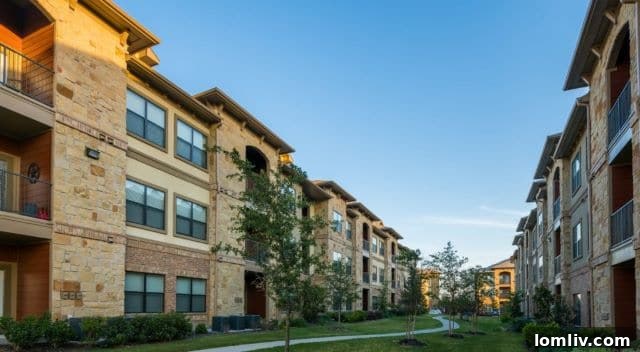
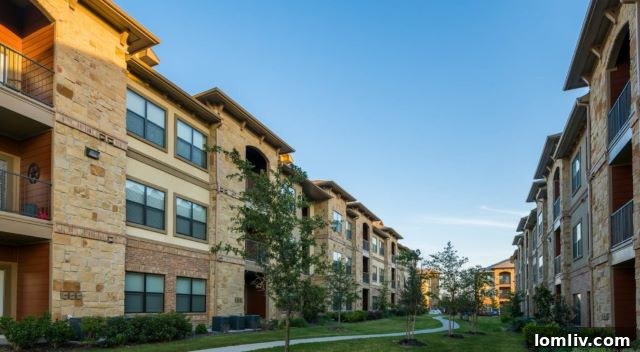
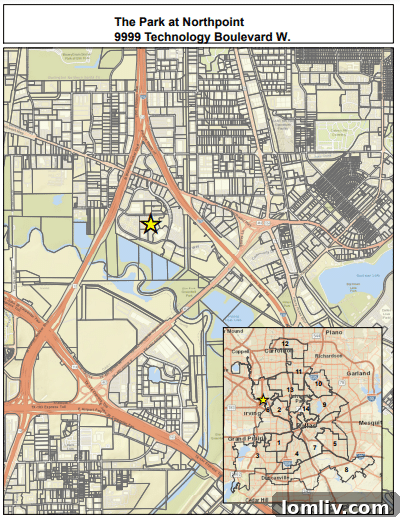
In a recent decisive vote, the Dallas City Council gave its approval to The Park at Northpoint, an ambitious two-phase mixed-income affordable multi-family complex. This project is poised to become a significant anchor in the revitalization efforts along West Technology Boulevard, an area identified for strategic development. The approval reflects the council’s ongoing commitment to expanding housing options across various income brackets, aiming to create more inclusive communities throughout Dallas. The project’s structure involves the Dallas Public Facility Corporation acquiring the property at 9999 West Technology Blvd. The acquisition will be financed with up to $10 million in Community Development Block Grant funds, a federal program designed to support community development activities. Following the acquisition, the PFC will enter into a comprehensive 75-year ground lease agreement with the chosen developer, setting the stage for long-term affordability and community integration.
Deputy Mayor Pro Tem Omar Narvaez, who is actively campaigning for re-election against opponents Tony Carrillo, Monica R. Alonzo, and Sidney Robles Martinez, expressed considerable enthusiasm for The Park at Northpoint development. He highlighted the strategic advantages of its location, emphasizing how the project would seamlessly integrate into and enhance the existing community fabric. Narvaez pointed out the project’s proximity to natural amenities and essential services, stating, “This is adjacent to a lake. There’s already a trail system. There are restaurants and a school close by. There are parks. There’s everything that you need.” He stressed that by “mixing in residential,” the project would serve as a critical catalyst for the broader redevelopment of the entire area, creating a vibrant, walkable, and amenity-rich environment for its residents. The presence of existing infrastructure and community assets significantly boosts the appeal and sustainability of such a mixed-income development, ensuring immediate quality of life for future residents.
To further illustrate the potential success and demand for such developments in the locale, Narvaez cited the immediate and full lease-up of a similar project in the vicinity, The Palladium. This precedent provides a strong indication of the pressing need for quality affordable housing options in the West Technology Boulevard corridor and the market’s readiness to absorb new residential units. The success of The Palladium serves as a compelling argument against skepticism regarding the viability of mixed-income developments in Dallas, reinforcing the notion that strategic investment in affordable housing can yield rapid occupancy rates and foster thriving communities.
During the council session, Councilwoman Mendelsohn, true to her fiscal conservative stance, pressed for details regarding the expected value of the developed property. Her inquiry aimed to quantify the potential property tax revenue that would be foregone over the 75-year lease period, seeking a clearer understanding of the financial trade-offs involved. Responding to her query, Kyle Hines, the outgoing Assistant Director of Housing and Neighborhood Revitalization for the City of Dallas, introduced his successor, Darwin Wade. Together, they made an on-the-spot attempt to provide an estimate. Wade indicated that the total development cost for The Park at Northpoint project is estimated to be approximately $200 million. He expressed strong optimism for the project’s impact, stating, “We are happy to have this project in our pipeline. I think it’s going to be great for our city,” underscoring the department’s belief in its transformative potential for Dallas.
The Critical Debate: Quantifying Revenue Foregone
A central tenet of Councilwoman Mendelsohn’s critique of PFC projects has consistently been the lack of transparent and comprehensive financial projections, specifically regarding “revenue foregone.” She noted that in previous approvals of PFC initiatives, the council was typically provided with an estimate of lost tax revenue over at least a 15-year period. However, for The Park at Northpoint project, this crucial financial figure was conspicuously absent from the documentation presented for approval. This omission became a significant point of contention for Mendelsohn, who argues that informed decision-making requires a clear understanding of the full financial implications of such long-term tax exemptions.
Expressing her deep concern, Councilwoman Mendelsohn articulated, “It seems inappropriate for us to be approving an item where we don’t even know what our revenue foregone would be.” She underscored the magnitude of these potential losses, explaining, “Generally we’re talking about hundreds of thousands of dollars a year, and over 75 years, millions and millions of dollars.” This highlights her argument that while affordable housing is a noble goal, the city must also prudently manage its financial resources and clearly understand the cost-benefit analysis of such extensive tax abatements. The long duration of the 75-year lease exacerbates these concerns, projecting substantial cumulative revenue losses that could otherwise fund essential city services and infrastructure improvements.
In response to these concerns, Jake Brown of LDG Development, the developer behind The Park at Northpoint, offered a crucial clarification. He stated that his company’s lease payment to the Dallas PFC would, in fact, exceed the current property tax bill for the undeveloped land. This suggests that while the property itself might be off the tax rolls, the city would still receive revenue from the developer, potentially mitigating some of the “foregone revenue” impact. This aspect of PFC agreements, where lease payments substitute for direct property taxes, is often a point of misunderstanding or debate, with some arguing it’s a net positive while others maintain it’s still a deviation from standard tax collection.
David Noguera, Director of Housing and Neighborhood Revitalization, defended the project’s approval, characterizing Mendelsohn’s request for a precise “revenue foregone” figure as a demand for a “hypothetical number” at that stage. He clarified the methodology for estimation, explaining, “We can do the math and assume what the property taxes would have been when this project is complete. It’s 2.6 percent of $200 million.” This calculation provides a rough estimate of the annual property tax that would be levied if the completed $200 million development were fully taxable under standard rates. Later in the discussion, Noguera provided a more concrete estimation, stating that the revenue foregone for The Park at Northpoint project would be approximately $4 million per year, offering a clearer scale of the financial trade-off for the council to consider.
PFC and HFC Projects: Diverse Approaches to Dallas Housing
The recent Dallas City Council meeting was not solely focused on The Park at Northpoint; it also addressed other critical housing initiatives, including additional PFC projects and one under the Housing Finance Corporation (HFC) structure. Councilwoman Jaynie Schultz, representing District 11 and facing a re-election challenge on May 6 from daltxrealestate.com publisher Candace Evans, echoed the sentiment of many proponents. She passionately argued that the approved PFC projects, particularly those targeting areas like West Technology Boulevard, could serve as powerful catalysts for comprehensive neighborhood revitalization. Schultz highlighted the synergistic effect of new, well-planned residential developments attracting further investment and improving the overall quality of life in underserved or underutilized urban corridors.
Councilman West, who is also running for re-election against Albert Mata and Mariana Griggs, further elaborated on the strategic benefits of these projects. He underscored the crucial concept of achieving “density without displacement,” which is a core tenet of responsible urban planning in rapidly growing cities. By repurposing existing, underutilized structures or vacant lots into new housing, the city can increase its housing supply and accommodate more residents without displacing current communities. West praised this innovative approach, stating, “Here you’ve taken a building that’s no longer functional and you’re converting it and using it. I think that’s creative.” This perspective champions adaptive reuse and infill development as sustainable methods for urban growth, contrasting them with greenfield development that consumes natural areas or redevelopments that displace existing residents and businesses.
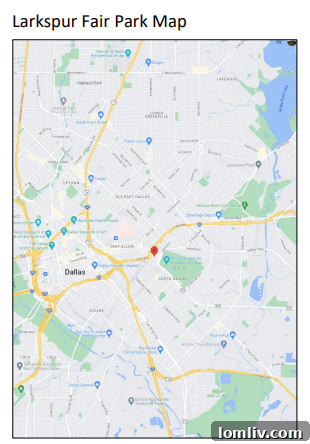
Another PFC project, Larkspur Fair Park, also gained council approval but encountered similar resistance from Councilwoman Mendelsohn. Her primary objection to this particular 290-unit development, located at 3525 Ash Lane, centered on the minimal rent differential between “affordable” studio apartments and their market-rate counterparts—a mere $6. Mendelsohn questioned whether such a negligible difference truly constituted “affordable housing” in the spirit of the PFC program, suggesting that the public benefit derived from the tax exemption was not commensurate with the affordability offered. For Larkspur Fair Park, the estimated revenue foregone over a 15-year period is projected to be approximately $361,000, adding to the cumulative fiscal impact of these widespread exemptions.
City Manager T.C. Broadnax offered a pragmatic defense of these development incentives. He pointed out that without such tools, many lots could remain vacant and unproductive for extended periods, sometimes up to 50 years. This not only represents a missed opportunity for development but also results in zero tax revenue for the city. “The tool we’re using, the PFC, is to accomplish the council’s stated goals,” Broadnax asserted, highlighting that PFCs are a strategic mechanism to stimulate development where market forces alone might not suffice, especially for affordable housing, which often requires a specific financial incentive to be viable for developers.
Beyond the PFC framework, the council also approved one project operating under the Housing Finance Corporation (HFC) structure. While both PFCs and HFCs aim to facilitate affordable housing, they operate with distinct legal and financial mechanisms, each tailored to different aspects of housing development and finance. Understanding these distinctions is crucial for grasping the full scope of Dallas’s housing strategy and the debates surrounding it.
Housing Finance Corporation (HFC) projects are vital instruments that provide crucial financial support for the acquisition, construction, or substantial rehabilitation of multi-family housing through the issuance of tax-exempt mortgage revenue bonds and other forms of assistance. This mechanism allows developers to secure financing at lower interest rates, which can then be passed on as savings to residents in the form of more affordable rents. HFCs are typically focused on leveraging private capital for public good, ensuring that quality housing can be developed or improved without placing direct financial burdens on the city’s general fund.
Public Facility Corporation (PFC) projects come with a distinctive 75-year lease agreement, a long-term arrangement during which the developer receives a 100 percent exemption on property taxes. In exchange for this significant tax incentive, the city secures a specific number of affordable housing units within the development. This model allows developers to achieve profitability while contributing to the city’s affordable housing goals. Critically, these lease agreements can be periodically renegotiated over time, providing the city with flexibility. Furthermore, the city generates income through annual lease payments made by the developer, which serves as a substitute for traditional property tax revenue. This provides a consistent, albeit different, revenue stream while ensuring affordability for decades.
Both corporations are integral to Dallas’s housing strategy and are overseen by council-appointed boards, ensuring a degree of public accountability and alignment with city-wide objectives for housing development and community revitalization. Their distinct structures allow the city to address various market failures and development challenges, from financing new construction to incentivizing long-term affordability.
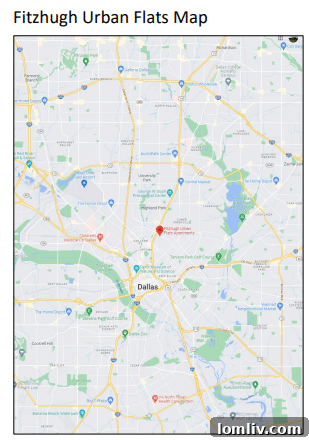
The HFC project approved, Fitzhugh Urban Flats at 2707 North Fitzhugh Ave., carries an estimated foregone revenue of approximately $11.76 million over a 15-year period. This substantial figure reignited Councilwoman Mendelsohn’s persistent critique regarding the type of HFC projects the city should prioritize. Her argument distinguishes sharply between HFCs that facilitate the creation of entirely new housing units and those that involve the acquisition of existing market-rate units, subsequently designating a portion as affordable. For Mendelsohn, the public benefit of tax exemptions is primarily realized when new housing supply is genuinely added to the market, addressing the fundamental shortage.
Mendelsohn explicitly stated her position: “The entire focus of the Dallas Housing Finance Corporation should be creating new units. The strategy of acquisition of existing units where we’re giving up so much revenue and we’re not actually creating anything is problematic to me.” She reiterated her general support for HFC projects that involve new construction, noting, “In general, I believe I have voted for almost every Dallas Housing Finance Corporation project, however, that’s when they’re creating new housing.” Her rationale is clear: “I think the public benefit of giving up that tax exemption is worthwhile in that situation.” However, she sharply diverges when projects merely reclassify existing units: “When we’re just shuffling the deck so we’re taking market rate and making it partially affordable, I don’t see the public benefit.” This nuanced stance highlights a critical policy debate within Dallas City Council: whether incentives should exclusively drive new construction or if they can also be justified for preserving affordability in existing housing stock, even if it means foregoing tax revenue on properties that were already contributing to the tax base. The ongoing discussions underscore the complexity of balancing immediate housing needs with long-term fiscal responsibility and the differing philosophies on how best to achieve a truly equitable and vibrant urban landscape in Dallas.