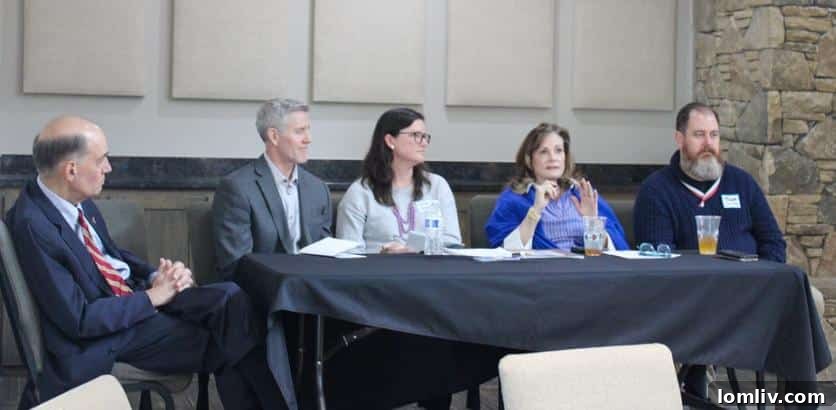
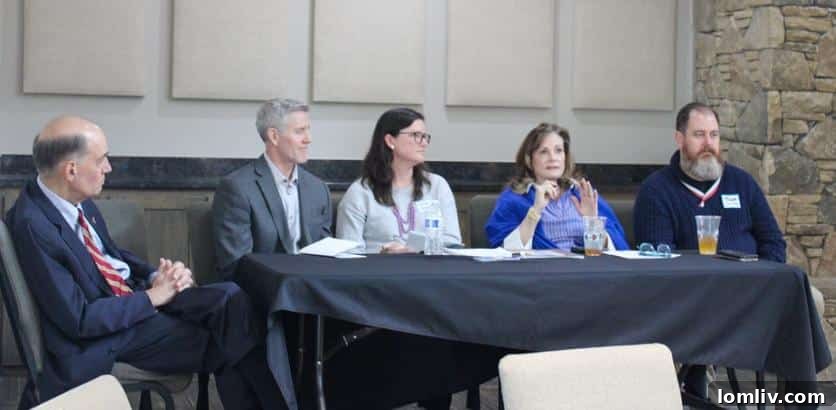
In a promising development for the North Texas region, hundreds of new affordable housing units are projected to become available in Dallas and Fort Worth over the next five years, leveraging the innovative Community Land Trust (CLT) model. This forward-thinking strategy was a key discussion point at the Dallas-Fort Worth Housing Consortium’s quarterly meeting held on February 29 at Trinity Habitat for Humanity, where expert panelists highlighted the growing momentum of CLTs in addressing the region’s housing challenges.
The Community Land Trust model traces its roots back to the civil rights movement, originally conceived by civil rights leaders and Black farmers. Its primary goal was to create permanently affordable homes, offering a pathway to stable homeownership for communities historically excluded from equitable housing opportunities. This model has since evolved into a powerful tool for fostering sustainable, intergenerational wealth and combating displacement in rapidly developing urban areas.
Understanding the Community Land Trust Model: A Foundation for Affordable Homeownership
At its core, a “classic CLT” is typically structured as a nonprofit organization operating within a clearly defined service area. It features a robust corporate membership and is governed by a tripartite board, ensuring broad representation. This board usually comprises community members, leaseholders (the homeowners themselves), and public stakeholders. This diverse representation guarantees that the CLT’s decisions align with the needs and interests of the community it serves. While traditionally nonprofit-led, the CLT framework is adaptable and can also be housed within a municipality or its housing department, offering flexibility in its implementation.
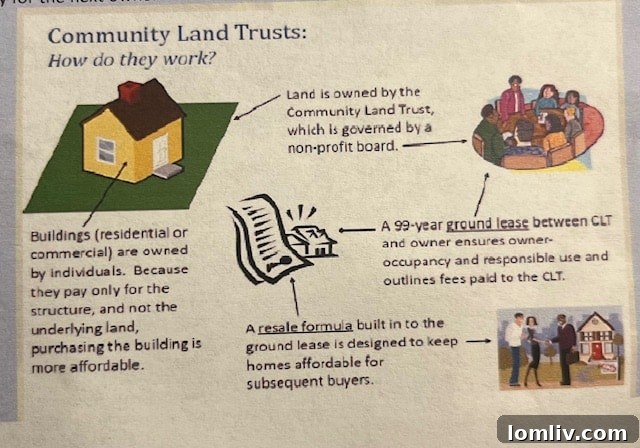
The brilliance of the CLT model lies in its straightforward yet revolutionary approach to land ownership. In essence, an individual homeowner purchases the home and all its improvements (the structure itself), while the Community Land Trust retains ownership of the underlying land. This separation of land and housing is formalized through a ground lease—a long-term agreement that legally binds the improvements to the land. This ground lease is critical; it ensures that the home’s initial purchase price is kept low, making it accessible to low- and moderate-income families. More importantly, it includes resale restrictions that cap the future sale price, guaranteeing that the home remains affordable for subsequent buyers for generations to come. This mechanism effectively removes the speculative value of the land from the housing cost, creating a sustainable cycle of affordability.
Donna VanNess, president and CEO of Housing Channel, a prominent community housing development organization, expertly moderated last week’s pivotal event. VanNess underscored the long-term vision inherent in this housing strategy, stating, “Not only do we want to create affordable housing, but we want it to be sustainable. These projects can help future generations.” Her comments highlight a fundamental benefit of CLTs: their capacity to build lasting community assets that provide intergenerational stability and opportunity, moving beyond temporary solutions to systemic change.
Fort Worth Leads the Way with a Robust Community Land Trust Program
Fort Worth has rapidly emerged as a leader in adopting the Community Land Trust model, demonstrating tangible progress. Fort Worth Assistant City Manager Fernando Costa announced that the City Council approved a comprehensive CLT strategy last fall, and excitingly, a project pipeline is already firmly established. This swift action reflects the city’s commitment to addressing its affordable housing needs with innovative and sustainable solutions.
The city’s inaugural CLT development, Carroll Park, is set to deliver an impressive 150 to 160 housing units over the next three years. This ambitious project became possible after the Fort Worth CLT successfully acquired 15.6 acres of land from the Southwestern Baptist Theological Seminary. The city initially authorized significant funding for this venture, allocating $4 million from its Housing Finance Corporation and an additional $7 million from its general fund, totaling an $11 million investment. However, a crucial partnership streamlined the process. Costa elaborated, “As it turned out, we didn’t need the $7 million because the Rainwater Charitable Foundation stepped in… and there was no delay in the acquisition.” This philanthropic support proved instrumental, allowing the seminary to finalize the transaction by the end of the last calendar year, underscoring the vital role of public-private partnerships in accelerating such initiatives.
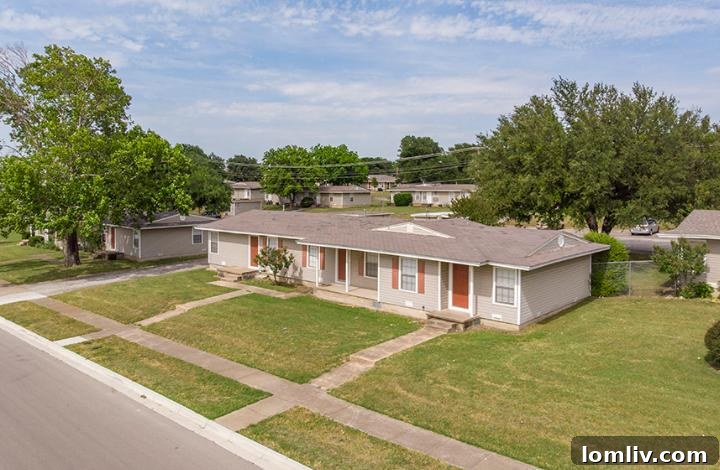
Following closely behind Carroll Park in the development pipeline is the 200-unit Renaissance Heights project. When combined, these two significant developments are expected to contribute nearly 400 new affordable housing units to Fort Worth’s inventory within the coming years. Sarah Geer, a program officer with the Rainwater Charitable Foundation, highlighted the scale and impact of these efforts, noting, “That positions [the Fort Worth Community Land Trust] in the top 20 percent in terms of scale with CLTs across the country.” This recognition underscores Fort Worth’s ambitious approach and its potential to serve as a national model for effective CLT implementation.
Developing affordable housing units within the CLT framework, while sustainable, still requires substantial investment. Costa explained the typical financial landscape: the average cost to develop a single CLT housing unit is approximately $250,000. However, a qualifying low-to-moderate-income household can realistically afford only about $180,000. This creates an affordability gap of roughly $70,000 per unit, which must be subsidized. These crucial funds can come from various sources, including federal grant programs, Housing Facility Corporation money, or philanthropic donations. Costa emphasized the critical nature of this support: “A key to the success of a Community Land Trust is funding to subsidize the difference between what it costs to build affordable housing and what a low-to-moderate-income family can afford.” This strategic gap funding is essential for CLTs to achieve their mission of providing truly affordable and accessible homeownership.
Dallas Embraces the Community Land Trust Program to Preserve Affordability
Dallas, too, is making significant strides toward establishing its own robust Community Land Trust program. Roughly a year ago, Daltxrealestate.com initiated discussions with key figures instrumental in Dallas’s housing landscape: Linda McMahon, president and CEO of The Real Estate Council (TREC), and Thor Erickson, assistant director for housing and neighborhood revitalization at the City of Dallas. The initial query aimed to understand why the CLT concept hadn’t gained significant traction locally and what potential it held for the city.
During those early conversations, both McMahon and Erickson affirmed that the implementation of CLTs in Dallas was not a matter of ‘if,’ but ‘when.’ They acknowledged that the fundamental mechanisms for such initiatives already existed within Dallas’s framework, though establishing them was a lengthy process. This endeavor, they noted, requires substantial buy-in from various community organizations, private philanthropic groups, and, critically, the residents themselves. The collaborative effort across multiple sectors is paramount for the successful integration of a housing model as comprehensive as CLTs.
During last week’s panel discussion, Erickson provided an update on Dallas’s strategy, highlighting the city’s recently adopted housing policy. This policy strategically identifies three target equity strategy areas, all concentrated within Southern Dallas. This targeted approach underscores a commitment to equitable development and revitalizing underserved communities. Erickson emphasized the necessity of foundational investments, stating, “We have to invest in infrastructure in the southern sector in order to build more housing units.” Such infrastructure improvements are crucial precursors to sustainable housing development. He further elaborated on the city’s vision for diverse housing options, adding, “There’s a desire to see more dense options—duplexes, triplexes, quadplexes, and single-family homeownership. There’s a variety of resources, and Community Land Trusts fit into that strategy nicely.” This holistic approach integrates CLTs as a versatile tool within a broader strategy to cater to varied housing needs.
Erickson also pointed to the growing issue of displacement pressure across Dallas, a common challenge in booming urban centers. He asserted that the Community Land Trust strategy is an excellent fit for addressing this, particularly when coupled with strong community partnerships. “The Community Land Trust strategy fits really nicely if we’re able to work with great community partners to have that long-term affordability in the CLT model,” he explained. Acknowledging the inevitability of change and increased investment in Southern Dallas, Erickson stressed the proactive role of CLTs in managing this transformation. “We know these neighborhoods are going to change. We know there’s investment coming to the southern sector. What we can do from a housing perspective is ensure we have a proper affordability mix so when that neighborhood does start to change, we ensure there will continue to be affordable homes.” This forward-looking perspective positions CLTs not just as a solution for immediate housing needs but as a safeguard for future community stability and diversity, ensuring that growth benefits all residents.
Forging Ahead: Collaborative Efforts in Advancing Community Land Trusts
Both Dallas and Fort Worth are demonstrating a synchronized and strategic approach to advancing their respective Community Land Trust initiatives. A pivotal step for both municipalities has been engaging Grounded Solutions Network, a nationally recognized expert organization specializing in community land trusts. Grounded Solutions is providing invaluable assistance in the planning and creation of a “backbone organization” for each city. These backbone organizations are crucial for providing the necessary infrastructure, guidance, and support to effectively manage and scale the housing model. Further solidifying their commitment, both municipalities plan to hire dedicated executive directors to oversee these respective organizations, ensuring professional leadership and focused implementation.
Linda McMahon shared insights into TREC’s initial efforts to assist Dallas in establishing a CLT. She recounted that when TREC first embarked on this journey, at least three specific neighborhoods expressed keen interest. However, after engaging more deeply with these communities, it became apparent that they lacked the internal capacity and resources required to independently facilitate and market a complex housing project like a CLT. Recognizing this challenge, TREC reconvened with city officials. This led to a strategic pivot: instead of fostering neighborhood-specific CLTs, the decision was made to create a citywide CLT. This broader framework allows each interested neighborhood to still be represented and benefit from the model, but with the centralized support and resources of a city-level organization, thereby overcoming capacity constraints.
McMahon also highlighted a significant asset available for these burgeoning CLTs: land contributions from existing nonprofit agencies. “Nonprofit agencies have been assembling land for a long time,” she noted, adding, “They have a lot of assets that they’re ready to donate into the Community Land Trust.” These land donations are critical for reducing development costs and accelerating the creation of affordable units. What these nonprofits need, McMahon clarified, is the established “organizational structure” that a citywide CLT can provide to effectively manage and utilize these valuable land assets for long-term community benefit.
The DFW region’s embrace of CLTs is part of a growing national movement. Across the United States, there are currently more than 225 Community Land Trusts in operation, a testament to their proven efficacy as a sustainable model for affordable homeownership. This robust national presence provides a wealth of best practices and successful case studies that Dallas and Fort Worth can draw upon.
Reflecting on the unique appeal of CLTs for potential homeowners, Thor Erickson shared insights from previous discussions with Daltxrealestate.com. He emphasized that the typical CLT property buyer is someone deeply committed to their community: “The research around the country shows that a person buying a CLT property is one who is buying an affordable unit in a community or neighborhood that they want to invest in for the long term.” This underscores the model’s ability to foster stable, engaged neighborhoods. Erickson further detailed the financial advantages for buyers: “The CLT model allows for some cost savings in the purchase, but the resale is restricted to ensure it’s always affordable.” This crucial resale restriction is the cornerstone of permanent affordability. It means that if a family decides to move, they can sell their home, but that home must be offered at an affordable price point to the next qualifying buyer, ensuring a continuous legacy of accessible homeownership within the community. Through these concerted efforts, Dallas and Fort Worth are not just building houses; they are building resilient, equitable communities for generations to come.