Collin Creek Mall’s $1 Billion Transformation: A New Urban Landmark for Plano, Texas
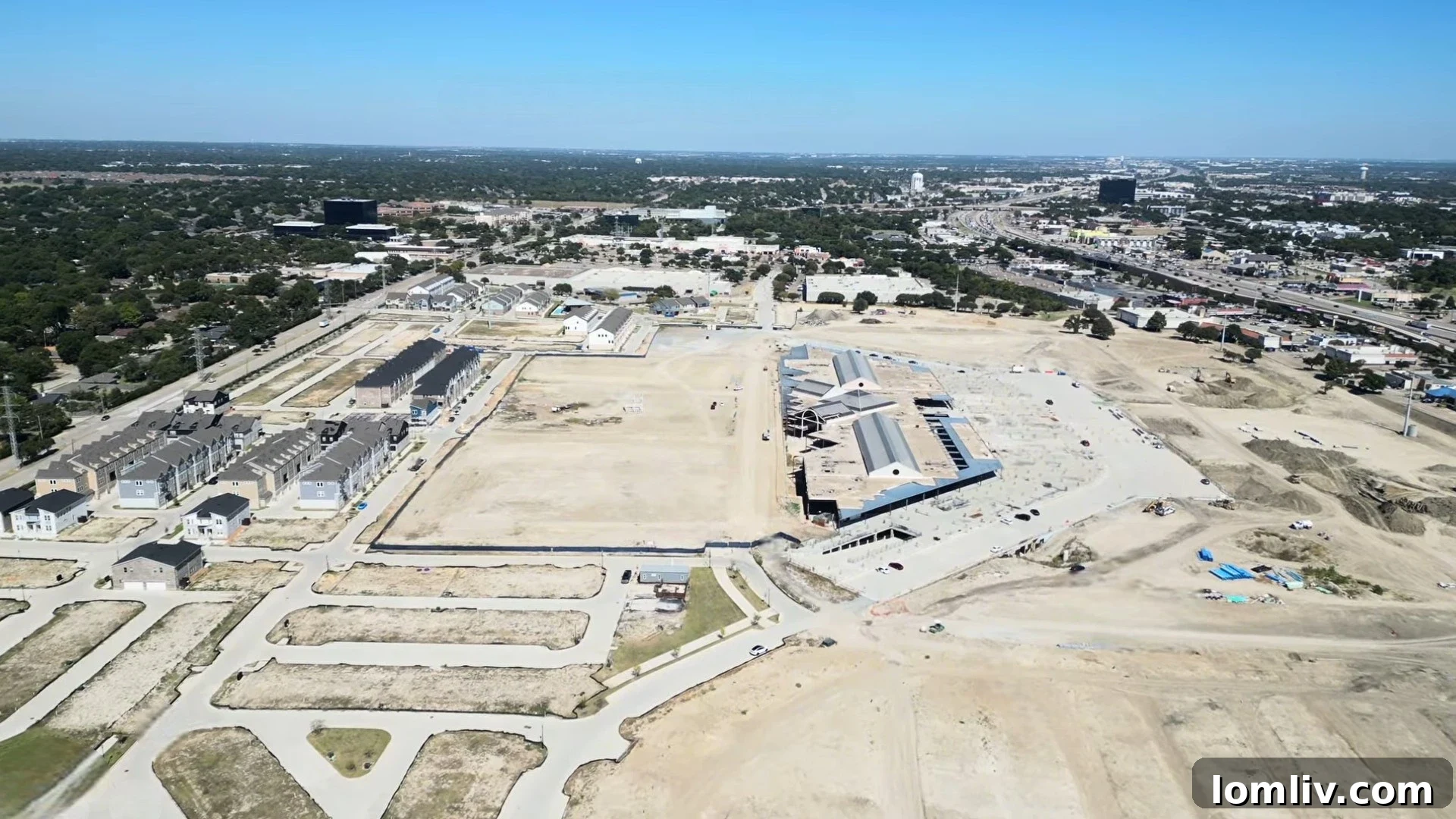
PLANO, Texas — The ambitious $1 billion redevelopment of the former Collin Creek Mall site is rapidly progressing, signaling a significant shift in suburban revitalization efforts. What was once a sprawling retail center is now being meticulously transformed into a dynamic, walkable mixed-use district designed to meet the evolving needs of the Plano community. This monumental project, spearheaded by developer Centurion American, has officially entered its most visible phase, with initial residential units already welcoming their first occupants.
According to an update released by Centurion American on February 4th, 130 homes on the expansive 100-acre site are now occupied, marking a pivotal milestone for the project. This initial wave of residents signifies the transition from conceptual plans to a living, breathing community. The developer also reported substantial progress in land preparation, with 402 lots successfully delivered to homebuilders, and an additional 98 lots anticipated for delivery by the close of the first quarter, underscoring the rapid pace of development in this burgeoning Plano neighborhood.
A Vision for Integrated Living: Unpacking the Collin Creek Master Plan
The vision for Collin Creek extends far beyond the current housing developments, promising a comprehensive and integrated urban experience. The master plan outlines the creation of a truly walkable mixed-use district, carefully designed to blend residential, commercial, and recreational spaces seamlessly. This forward-thinking approach aims to foster a vibrant, self-sufficient community where residents can live, work, shop, and relax without the constant reliance on vehicular transportation.
The proposed residential offerings are diverse, catering to various demographics and lifestyles. The plan includes approximately 500 attached single-family residences, offering contemporary living spaces for families and individuals. Complementing these are an impressive 2,300 multifamily units, designed to attract a wider range of residents seeking modern apartment living with unparalleled access to amenities. Additionally, 300 independent-living residences are planned, addressing the growing demand for senior housing options within a supportive and engaging community environment.
Beyond housing, the commercial aspect of Collin Creek is set to redefine retail and dining experiences in Plano. The project envisions 340,000 square feet of dedicated retail and restaurant space, promising a diverse array of shopping, dining, and entertainment options. This commercial hub is expected to attract both local residents and visitors, creating a lively atmosphere and significant economic activity. Further enhancing the district’s appeal, a 200-room hotel is planned, providing accommodations for business travelers, visitors, and those attending events within the new community.
Crucially, the master plan places a strong emphasis on public spaces and green infrastructure. Residents will benefit from 8.9 acres of meticulously designed parks, offering ample opportunities for outdoor recreation and relaxation. A network of 1.6 miles of trails will weave through the development, encouraging walking, jogging, and cycling. These green amenities, along with a shared amenity space featuring a pool, are integral to fostering a sense of community and enhancing the overall quality of life for Collin Creek residents.
Residential Momentum: The First Signs of a Thriving Community
While the full scope of the Collin Creek redevelopment is vast, the initial success in residential development serves as the clearest indicator of its momentum. The early occupancy numbers not only validate the demand for this type of integrated community living but also lay the groundwork for the subsequent phases of the project. The residential component is critical in establishing the initial community fabric and generating the necessary foot traffic and local economy to support the forthcoming retail and commercial elements.
Leading the charge in homebuilding are reputable national firms such as Ashton Woods, DRB Homes, and Mattamy Homes. These builders are known for their quality construction and innovative designs, ensuring that the residential offerings at Collin Creek meet high standards. Current market listings showcase modern two- and three-story townhomes, characterized by their open-concept layouts, contemporary finishes, and practical amenities like two-car garages. This architectural style is specifically chosen to appeal to today’s homebuyers who prioritize functionality, aesthetic appeal, and a low-maintenance lifestyle.
Pricing and specific floor plans are tailored by each builder, offering a range of choices for prospective residents. For instance, Ashton Woods is actively marketing three- and four-bedroom homes, with starting prices around $470,000. Meanwhile, DRB Homes presents options such as a quick move-in, two-bedroom home listed at an attractive $469,690. These competitive price points, coupled with the promise of a vibrant, amenity-rich environment, make Collin Creek an appealing option within the dynamic Plano real estate market.
Strategically, the project is situated within the esteemed Plano Independent School District (ISD), a significant draw for families. The development is designed to integrate seamlessly with future city-owned parks and the expansive trail network, further enhancing its family-friendly appeal. The inclusion of a shared amenity space with a pool underscores the commitment to providing residents with exceptional recreational facilities right at their doorstep, fostering an active and engaged community.
The Collaborative Engine: Plano City’s Indispensable Role
The transformation of Collin Creek is a testament to effective public-private partnerships, with the City of Plano playing an indispensable role in facilitating and supporting the redevelopment. The city’s proactive involvement has been crucial, particularly in laying the foundational infrastructure necessary for a project of this scale.
City records highlight Plano’s strategic land acquisition in 2021, purchasing 3.3 acres near the site. This acquisition was pivotal for two key reasons: to aid in the connection of the Chisholm Trail, thereby enhancing regional connectivity and recreational opportunities, and to expand access for critical culvert work. The latter, though seemingly minor, is fundamental to effective urban planning, ensuring proper drainage and preventing flood risks within the new development.
Plano’s financial commitment to the project dates back to its early stages, with significant public financing mechanisms tied to infrastructure development. A 2019 development agreement solidified the city’s pledge to help fund crucial public improvements and a major drainage-culvert renovation. This commitment underscored the city’s belief in the long-term benefits of the project for its residents and the broader regional economy.
Further demonstrating its robust support, the city approved an interlocal agreement in 2020, which included a substantial $15 million grant and a $15 million loan for the project. These funds were instrumental in de-risking the development for private investors and accelerating the pace of infrastructure build-out. Subsequent actions by the city relied on innovative financing tools such as tax-increment financing (TIF) and public-improvement-district (PID) financing. These mechanisms allow the city to fund infrastructure improvements by leveraging future tax revenues generated by the increased property values within the development, effectively self-funding the revitalization efforts and ensuring a sustainable growth model.
Beyond the Mall: A Paradigm Shift in Suburban Development
The Collin Creek redevelopment is more than just a local project; it reflects a significant and growing trend across built-out suburbs nationwide. As traditional enclosed malls face increasing challenges from e-commerce and changing consumer preferences, many are becoming obsolete or underutilized. Instead of allowing these vast sites to languish or contribute to further urban sprawl, cities like Plano are embracing a new paradigm: the strategic transformation of failing retail centers into vibrant, dense, and sustainable mixed-use communities.
This approach to urban revitalization offers numerous benefits. It curtails outward sprawl, preserving green spaces and reducing the environmental footprint of development. By utilizing existing infrastructure—such as roads, utilities, and public transport links—it offers a more efficient and sustainable model for growth. These redevelopments create walkable environments that foster community interaction, promote healthier lifestyles, and reduce reliance on private vehicles. Furthermore, they address pressing housing shortages in desirable areas, providing a diverse range of residential options. Ultimately, such projects breathe new life into neglected areas, generate new economic activity, and create dynamic destinations that serve as focal points for their respective communities.
The Road Ahead: Navigating Towards a Fully Realized Vision
While the early housing numbers at Collin Creek unequivocally demonstrate that the project has moved well beyond the planning stage and into tangible realization, the larger test still lies ahead. As of April 1, 2026, the success of the Collin Creek redevelopment will hinge on the timely and successful delivery of its full complement of components: the remaining apartments, the extensive retail and restaurant spaces, the new hotel, and the fully integrated public parks and trails. The coordinated development of these diverse elements is crucial for the district to fulfill its promise as a truly self-sustaining and vibrant mixed-use community.
Bringing a project of this magnitude to fruition involves navigating complex challenges, including market fluctuations, supply chain dynamics, labor availability, and meticulous coordination between multiple stakeholders. However, with the strong foundation of public-private partnership, the commitment of Centurion American, and the clear demand demonstrated by initial housing occupancies, Collin Creek is well-positioned to become a landmark development. Its journey offers a compelling blueprint for how vision, strategic planning, and collaborative effort can redefine suburban landscapes, turning obsolete retail hubs into thriving, modern urban centers that enrich the lives of their residents and contribute significantly to the economic and social fabric of cities like Plano.