Colleyville Synagogue Hostage Crisis: A Testament to Resilience and Rapid Response
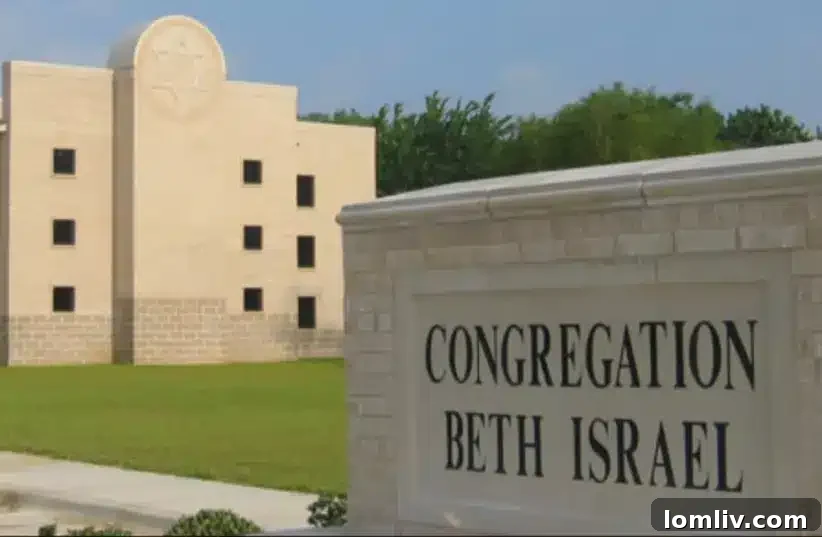
The harrowing 11-hour hostage crisis at Congregation Beth Israel Synagogue in Colleyville, Texas, reached a dramatic and safe conclusion on a Saturday night, bringing immense relief to a nation gripped by fear. Worshippers, including Rabbi Charlie Cytron-Walker, were safely rescued after an armed assailant violently interrupted their Sabbath services. The perpetrator, whose actions plunged the community into a day-long ordeal, was ultimately killed during the resolution of the standoff with law enforcement.
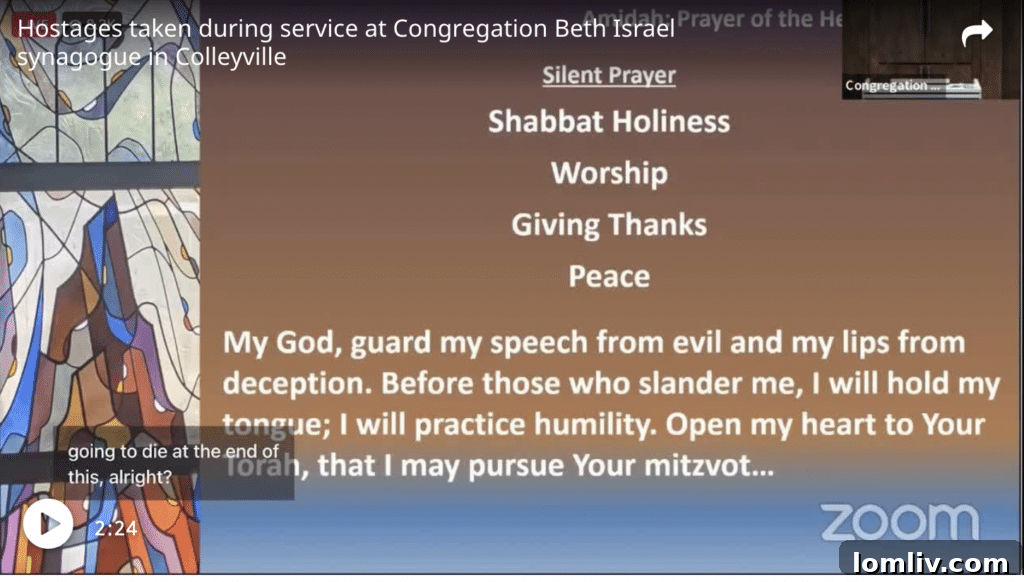
The incident began during what should have been a peaceful Saturday, a day of reflection and prayer. Congregation Beth Israel’s Sabbath services were being live-streamed, a common practice for many religious institutions, especially for those unable to attend in person due to health concerns like the lingering impact of Covid-19. It was through this live feed that the world first caught a chilling glimpse of the unfolding terror. A gunman, later identified as Malik Faisal Akram, entered the synagogue, his shouts and threats of a bomb shattering the tranquility. His angry voice was audible on the live-stream, a chilling sound that prompted immediate alarm and quick action from authorities who swiftly took the feed down around 2 p.m. local time, though it continued to be monitored by police as a crucial intelligence source.
The gravity of the situation prompted an immediate and extensive response. Police quickly established a perimeter, evacuating residents from their homes within approximately a one-mile radius around the synagogue, prioritizing public safety above all else. The incident sent shockwaves through the community and beyond, with initial reports and pleas for prayer spreading rapidly across social media platforms. Laura Bright Durant captured the collective anxiety on Twitter, writing, “Please pray for Rabbi Charlie and all the congregants at CBI in Colleyville right now. There is a gunman in the synagogue.” This sentiment echoed by countless others, highlighting the profound impact on Jewish communities and interfaith allies worldwide.
An Hour-by-Hour Ordeal: The Standoff and Strategic Response
As the hours ticked by, the situation remained tense and precarious. News reports throughout the late afternoon indicated that four adult hostages, including Rabbi Charlie Cytron-Walker, remained inside the synagogue. The initial relief came when one hostage was successfully released, a vital early sign of progress in the negotiations. The Dallas FBI swiftly assumed control of the negotiation process, a move later lauded by Colleyville Police Chief Michael Miller, who credited their expertise with ultimately saving lives. The methodical and patient approach of the FBI negotiators proved instrumental in de-escalating the crisis and establishing communication with the hostage-taker.
The unfolding events underscored the coordinated efforts required in such high-stakes situations. As evening approached, the FBI escalated its response further, flying in its elite Hostage Rescue Team (HRT) from Quantico, Virginia. This specialized unit, formed in the aftermath of the tragic 1972 Munich Olympic massacre, is renowned for its unparalleled capabilities in resolving critical hostage situations with precision and minimal casualties. Their deployment signaled the serious nature of the threat and the commitment of federal resources to ensure a safe outcome.
The community remained on tenterhooks, anxiously awaiting updates. Finally, around 9:30 p.m., a wave of relief washed over everyone when Governor Greg Abbott tweeted the pivotal news: the hostages were safe, and the hostage-taker was dead. This announcement followed reports from the scene of a loud bang and subsequent gunshots, indicating a decisive intervention. The successful resolution was a testament to the bravery and strategic planning of all law enforcement agencies involved, from local police to federal agents, who worked tirelessly to protect innocent lives.
Rabbi Cytron-Walker’s Unwavering Courage and Preparatory Actions
Central to the heroic outcome of the Colleyville synagogue hostage crisis was the remarkable courage and quick thinking of Rabbi Charlie Cytron-Walker. His actions during the terrifying ordeal were widely praised, demonstrating a profound commitment to his congregants’ safety. Rabbi Cytron-Walker recounted how he had undergone extensive security training, an unfortunate but necessary precaution for many religious leaders in an era of heightened threats. This training, provided by organizations like the Secure Community Network (SCN), equipped him with critical knowledge on how to react during an active threat situation. He credited this preparation with enabling him and the other hostages to escape.
During the protracted standoff, Rabbi Cytron-Walker used his understanding of the synagogue’s layout and the hostage-taker’s behavior to identify an opportune moment for escape. As the assailant became distracted, the Rabbi made the split-second decision to throw a chair at him, creating a diversion that allowed the remaining hostages to flee through an exit door. This act of bravery, coupled with his calm demeanor throughout the 11 hours, undoubtedly played a crucial role in preventing further tragedy. His leadership and selflessness under extreme duress transformed a potentially devastating event into a story of resilience and survival, inspiring people far beyond the walls of Congregation Beth Israel.
The Hostage-Taker’s Identity and Connection to Aafia Siddiqui
Following the resolution, law enforcement identified the suspect as Malik Faisal Akram, a 44-year-old British national. While authorities initially declined to elaborate on how he died, it was confirmed that he was killed during the HRT’s tactical intervention. Early, unconfirmed reports had erroneously claimed the gunman to be the brother of the incarcerated Aafia Siddiqui. This misinformation quickly spread, adding another layer of complexity and speculation to an already fraught situation. However, law enforcement swiftly clarified that they were in contact with Siddiqui’s actual brother, who confirmed he was not involved and not inside the synagogue.
The connection to Aafia Siddiqui, although erroneous in terms of direct family involvement in the Colleyville incident, revealed the hostage-taker’s true motive: demanding her release. Siddiqui herself is a notorious figure with a deeply troubling past, making her a symbol for various extremist groups. Known as “Lady al-Qaeda” by some, she is an MIT and Brandeis-educated neuroscientist who earned a Ph.D. from the University of Houston. Her trajectory took a dark turn, leading her to become a high-profile figure in international terrorism circles. She was linked to Khalid Sheikh Mohammed, the alleged mastermind of the 9/11 attacks, and at one point appeared on the FBI’s Most Wanted Terrorists list.
Siddiqui’s arrest in 2008 in Afghanistan brought to light the extent of her dangerous activities. At the time of her apprehension, she was found in possession of alarming materials, including sodium cyanide and documents detailing how to construct chemical weapons, “dirty bombs,” and even weaponize the Ebola virus. During her detention, she notoriously opened fire on U.S. military interrogators who were questioning her. She was subsequently convicted of attempted murder and assault, and is currently serving an 86-year sentence in a federal prison in Fort Worth, Texas. Her incarceration in a facility not far from Colleyville likely fueled Akram’s misguided belief that he could pressure authorities into releasing her, highlighting the complex and often irrational motivations behind acts of extremism.
Aftermath and Enduring Solidarity
In the wake of the Colleyville crisis, the investigation quickly became a global effort, reflecting the international implications of Akram’s actions. British authorities collaborated closely with U.S. federal agents to piece together Akram’s movements, his motivations, and any potential connections he might have had. This international cooperation underscored the interconnectedness of security challenges in the modern world and the necessity for coordinated intelligence sharing to combat terrorism.
The immediate aftermath of the synagogue attack saw an outpouring of support for Congregation Beth Israel and the wider Jewish community. Interfaith leaders, local residents, and politicians from across the spectrum condemned the act of antisemitism and expressed solidarity. Vigils were held, prayers were offered, and messages of comfort flooded in, reinforcing the community’s resolve against hatred. This incident served as a stark reminder of the persistent threats faced by religious institutions and emphasized the critical importance of robust security measures, community vigilance, and interfaith dialogue to foster understanding and resilience against extremism. The bravery exhibited by Rabbi Cytron-Walker and the swift, professional response by law enforcement will forever be remembered as defining moments in the Colleyville synagogue hostage crisis, a testament to hope prevailing over hate.