The Battle for Boy Scout Hill: Community Stands Against White Rock Lake Restaurant Development
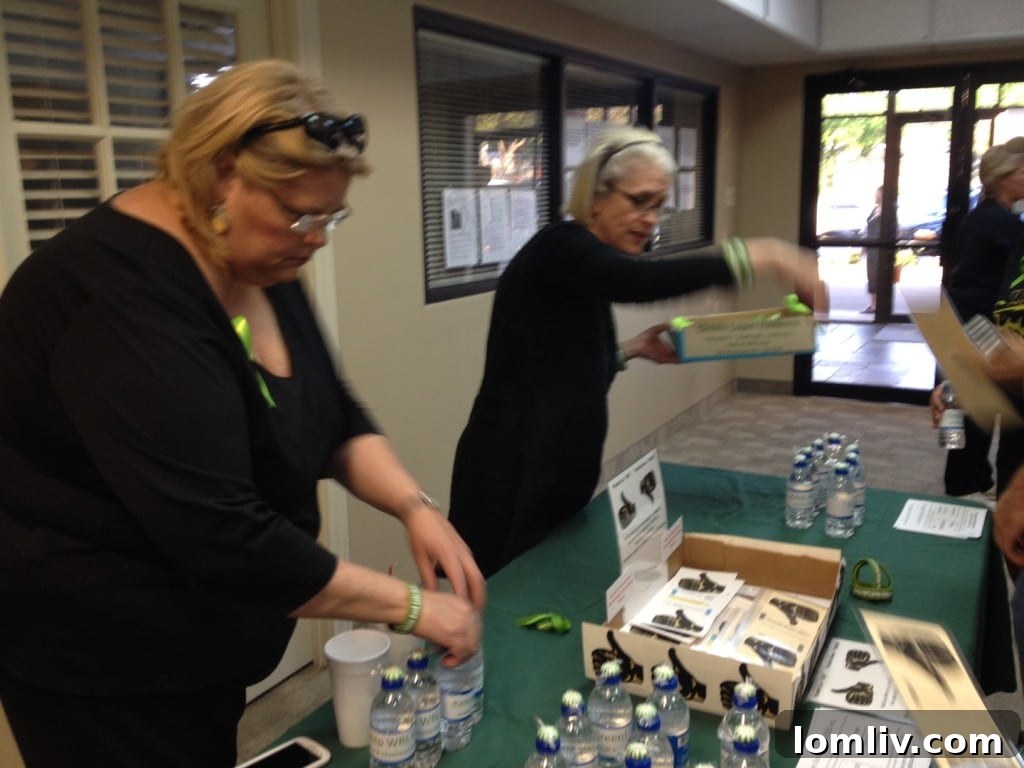
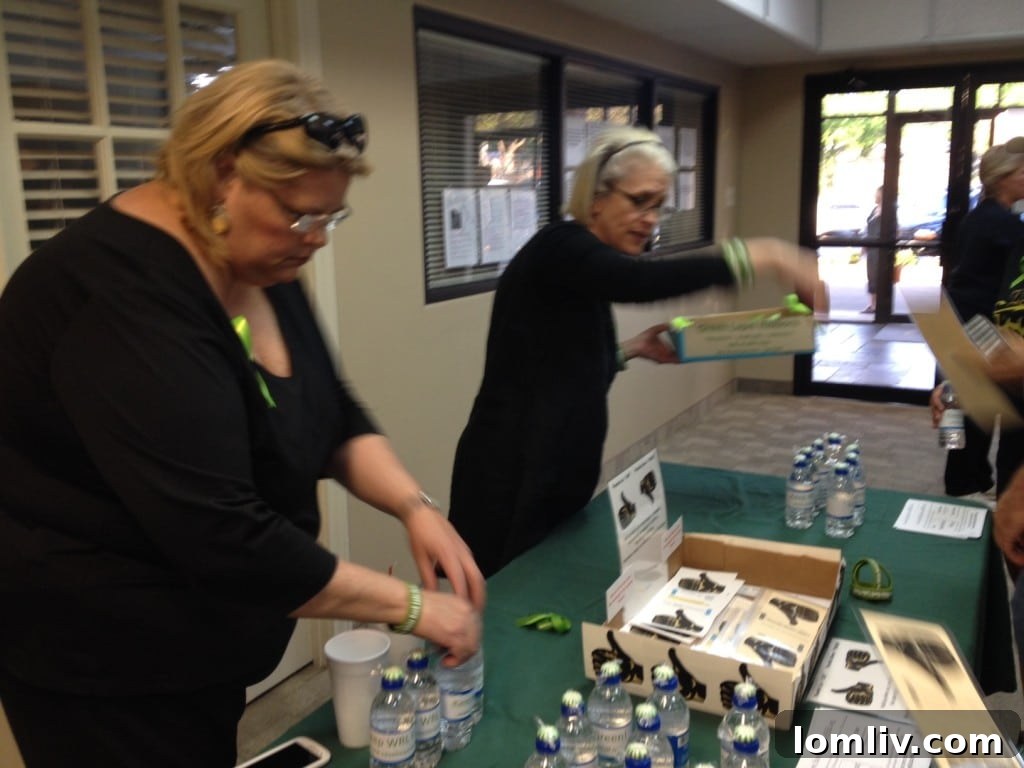
The air crackled with anticipation and a palpable sense of community resolve long before the Boy Scout Hill town hall meeting officially began. As attendees streamed into the venue, a distinctive line formed, not for refreshments, but for green lapel ribbons and two-sided signs indicating a thumbs-up or thumbs-down. According to Susan, a dedicated volunteer at the table, these ribbons symbolized a united front in support of an untouched Boy Scout Hill, a beacon of natural beauty within the beloved White Rock Lake area. The signs, conversely, were distributed for attendees to silently articulate their approval or disapproval of the presentations by developers Lyle Burgin and Richard Kopf. Having witnessed numerous town hall meetings devolve into chaos, this level of organized pre-meeting preparation instilled a rare sense of hope, suggesting a potentially civilized discourse on a highly contentious issue affecting our cherished Dallas parks.
A Raucous Assembly: The Heart of the Community Speaks Out for White Rock Lake
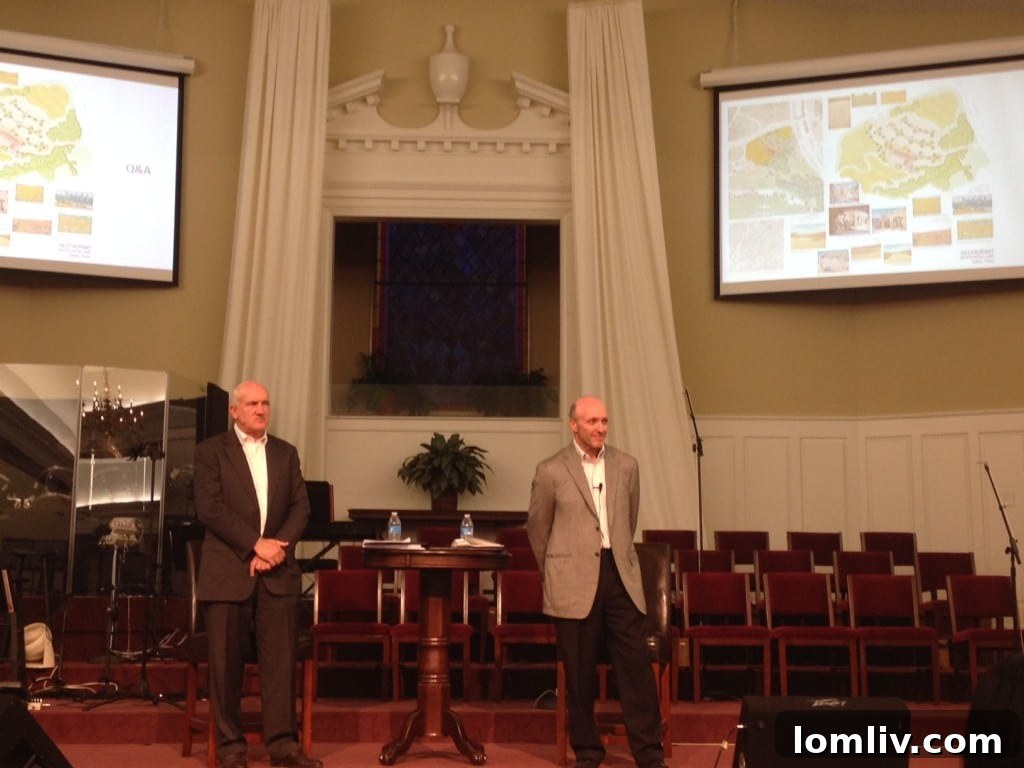
Despite the well-intentioned tools for quiet expression, the meeting quickly spiraled into a vibrant, if at times disrespectful, display of community passion. The green ribbons, a silent testament to the collective desire to preserve what many residents described as “the last unspoiled view of White Rock Lake,” were worn proudly amidst a crowd that proved anything but silent. For a solid hour, Lyle Burgin and Richard Kopf, the proponents of the ambitious restaurant project, found themselves shouted down, their twenty-minute presentation repeatedly interrupted by a vociferous audience. Charles Wicker, the President of the Old Lake Highlands Neighborhood Association (OLHNA), made repeated, earnest pleas for decorum and civility. Yet, his calls were often drowned out by residents determined to voice their profound objections. One particular individual remained notably outspoken, her continuous vocal disruptions unfazed by the angry stares and urgent hushes from those seated nearby. Immense credit is due to Mr. Wicker, who, throughout the evening, masterfully refereed what often felt like a burgeoning brawl, politely urging individuals to respect the proceedings – a task undoubtedly challenging when emotions run high on a matter as sensitive as local park development.
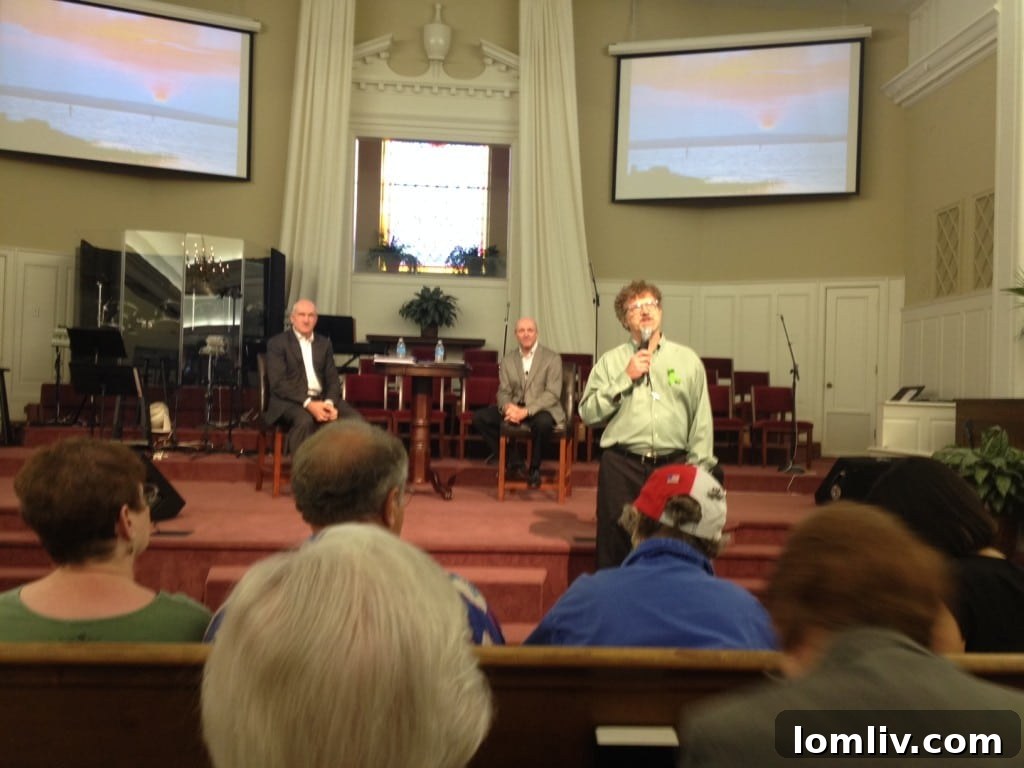
Prior to the formal presentation, I had the opportunity to speak with Ted Barker, another dedicated organizer with OLHNA. He was armed with a detailed 1987 outline of intended uses for White Rock Lake Park, alongside a carefully crafted list of nuanced and intelligent questions pertinent to the proposed development. It’s a profound regret that Mr. Barker’s insightful inquiries were never addressed during the session. Answering such questions would have significantly elevated the level of discourse, shifting the focus from emotional outbursts to substantive discussion on urban planning and park management. While the spectacle of speaker after speaker approaching the microphone to deliver angry, repetitive diatribes, coating the microphone with spittle for an hour, was undeniably entertaining for some, it was ultimately exhaustive and, frankly, quite embarrassing for all involved.
Developer Missteps and Missed Connections: The Presentation Under Fire
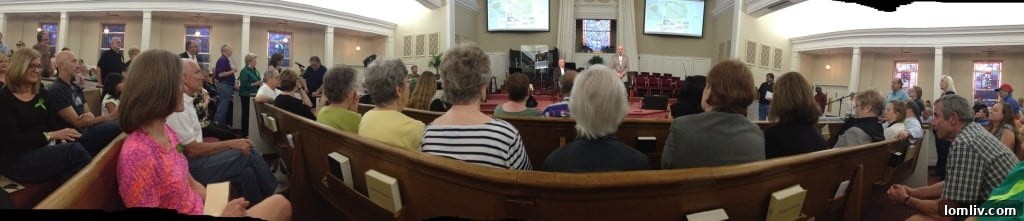
However, the developers, Burgin and Kopf, were not entirely blameless in the evening’s unraveling. Early in their introduction, Richard Kopf attempted to establish common ground by noting his own presidency of a neighborhood association, suggesting he deeply understood the crowd’s concerns. He then added, “I’m a lawyer — a real estate lawyer — that’s my day job. It seems like my night job is to come to meetings like this.” This offhand comment proved to be a significant faux pas. One does not inform an agitated assembly of approximately 500 passionate community members – many of whom embody the spirit of former hippies, REI members, and active retirees deeply invested in their local environment – that their crucial meeting is merely another obligation in a tiresome series of angry forums. Such a statement immediately alienates the audience, diminishing the gravity of their concerns about potential White Rock Lake development.
The missteps continued. During their actual presentation, Kopf displayed what many perceived as a condescending tone by explicitly pointing out Boy Scout Hill on a map. This gesture implied that the hundreds of local residents, deeply familiar with every nook and cranny of White Rock Lake, were somehow ignorant of its exact location and required his instruction. This patronizing approach only further inflamed an already hostile crowd, highlighting a crucial disconnect between the developers and the community they sought to engage.
The Vision: A High-End Restaurant for White Rock Lake
Following these initial blunders, the substantive aspects of Burgin and Kopf’s carefully planned proposal largely fell on deaf ears among the standing-room-only crowd gathered in Lake Highlands Baptist Church’s sanctuary. Given the limited reception that evening, it’s worth reiterating the key elements of their vision for a new amenity at White Rock Lake:
- Modeled on Success: The proposed Boy Scout Hill restaurant was designed to emulate successful, high-quality dining establishments situated within public parks across the nation. Examples cited included the renowned Loeb Boathouse in New York City, the elegant Presidio Cafe in San Francisco, Top of the Falls at Niagara Falls, Ralph’s on the Park in New Orleans, and even Savor in Dallas’s own Klyde Warren Park. This selection aimed to demonstrate that upscale dining could coexist harmoniously within a public park setting, offering a refined experience while contributing to park maintenance.
- Strategic Location: The developers asserted that Boy Scout Hill was the optimal, if not only, viable location due to its easy access to two major thoroughfares surrounding the lake: Mockingbird Lane and Buckner Boulevard. “Frankly, we think it’s the only location,” Kopf stated, which was met with immediate boos and hisses from the audience. He added, “We tried to look at other locations to see where we could do it.” Many restaurant patrons, he explained, would enter via East Lawther from Buckner Boulevard. While Winfrey Point was considered as an alternative, it was ultimately dismissed as “an accident waiting to happen,” likely due to traffic or logistical concerns.
- Scope and Design: Backed by investors, Burgin and Kopf envisioned a substantial $5 to $7 million restaurant spanning 2.5 acres near the summit of Boy Scout Hill. The structure itself would encompass 8,500 square feet under air conditioning, complemented by an expansive 5,000 square feet of outdoor dining patio space. A 160-spot terraced parking lot, constructed with decomposed granite, was planned for the hillside above the restaurant, designed to blend with the natural landscape. The proposal also included essential concessions and public facilities. The entire project would operate under a planned development district with stringent lease restrictions, and the building itself would adhere to at least LEED Gold certification standards, emphasizing environmental responsibility in its construction and operation.
- Community Reinvestment: Financially, the plan proposed executing a long-term lease with a restaurateur. A significant portion of the restaurant’s gross sales, estimated at approximately $250,000 annually, would be dedicated to a special trust fund. This fund would be specifically earmarked for reinvestment into White Rock Lake, providing a continuous stream of funding for maintenance and improvements. Richard Kopf underscored this point during the presentation, sharing an anecdote: “I was talking to someone today, and they said, ‘You go to Winfrey Point and the restrooms don’t even work.'” He highlighted that functional public restrooms were a basic necessity the trust fund could help address. Indeed, working public restrooms seemed to be the only aspect of Burgin and Kopf’s plan that didn’t elicit a boo or a hiss from the highly critical audience.
The Community’s Resolute Opposition: Preserving White Rock Lake’s Natural Beauty
While the developers presented their vision, the overwhelming sentiment from the community was one of resolute opposition. Beyond the often-quoted cliché of “paving over paradise,” residents articulated a broad spectrum of concerns that spoke to the very heart of White Rock Lake’s identity and its role in the Dallas community. The idea of a large, high-end restaurant on Boy Scout Hill raised alarm bells regarding increased traffic congestion on already busy thoroughfares like Mockingbird Lane and Buckner Boulevard, environmental impact on the lake’s delicate ecosystem, potential noise pollution disrupting the tranquility of the park, and a perceived loss of public access to green spaces. For many, Boy Scout Hill represents a vital natural landmark, a place for quiet reflection, recreation, and unadulterated enjoyment of nature. The prospect of commercial development, regardless of its design or proposed benefits, felt like a direct threat to the essence of what makes White Rock Lake special – a sanctuary amidst urban sprawl.
Sheffie Kadane’s Decisive Intervention: A Victory for Neighborhood Voices
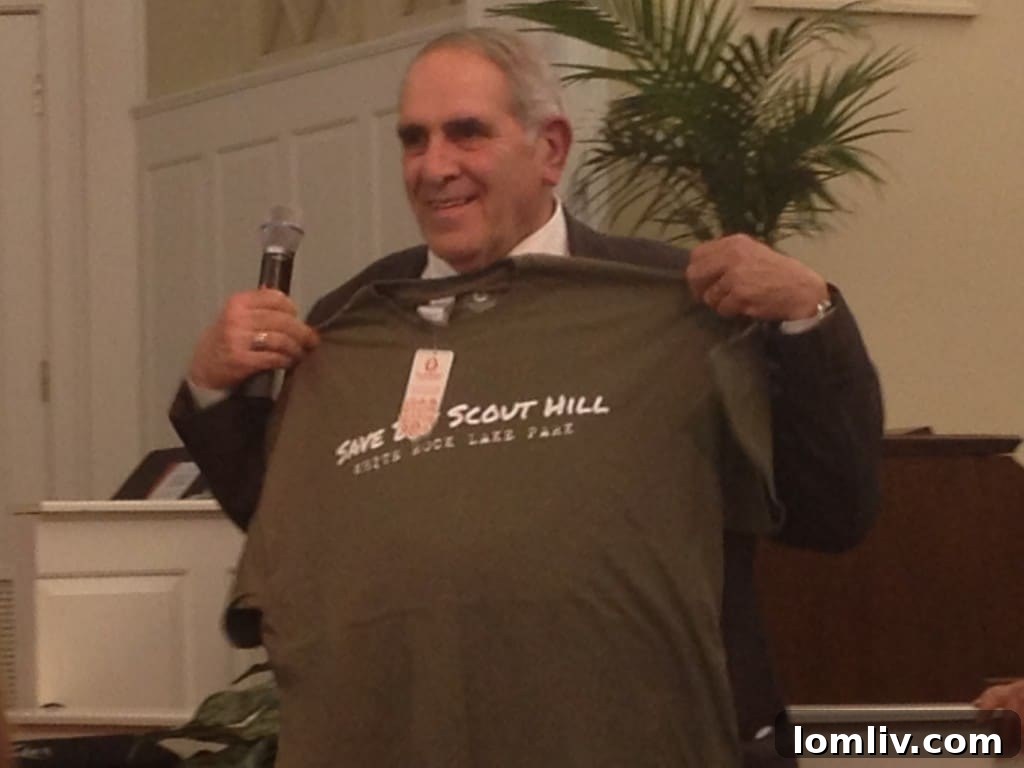
A surprising turn of events came when Richard Kopf claimed that Dallas City Council member Sheffie Kadane, whose district encompasses the neighborhoods surrounding Boy Scout Hill, had been unaware of the proposed restaurant until after their presentation. This assertion, however, was swiftly and publicly refuted. Towards the meeting’s conclusion, Councilman Kadane strode to the front, draped a “Save Boy Scout Hill” T-shirt across his shoulders – a powerful visual endorsement of the opposition’s cause. He clarified that he had indeed known about the restaurant concept but had explicitly informed the developers that he would not approve any such project without first securing widespread neighborhood approval. “I said, you get the neighborhoods’ approval and then you come to me,” Kadane recounted. “They haven’t come to anyone at City Hall.” His statement underscored a fundamental principle of responsible urban planning and the importance of community engagement in such significant development projects.
With those words, Kadane delivered the definitive statement the throngs of angry homeowners had patiently, and at times impatiently, waited to hear. “I will not be approving this restaurant,” he declared, to thunderous applause that reverberated through the sanctuary. “There’s no way I can approve a restaurant at White Rock Lake.” His unambiguous stance marked a decisive victory for the community and a significant setback for the developers, firmly prioritizing the will of the local residents and the preservation of the park’s character.
Nuances and Lingering Questions: Beyond the Public Outcry
While the proposal for a restaurant at Boy Scout Hill ultimately faced overwhelming opposition, it’s important to acknowledge that the idea wasn’t entirely without merit in some eyes. Personally, I found Burgin and Kopf’s design to be well-conceived, envisioning a facility that could thrive in an appropriate lakeside setting, albeit one that clearly wasn’t Boy Scout Hill. The sole voice of support that reached the microphone that evening belonged to Amanda Buckley, vice president of the Casa View Haven Neighborhood Association. She expressed her enthusiasm for the prospect of enjoying the picturesque view with friends and a margarita, believing that, if executed correctly, such a restaurant could indeed become a beautiful asset to both White Rock Lake and its surrounding areas. The developers themselves noted that at a prior neighborhood meeting, approximately 50 percent of attendees had reportedly supported their plan, suggesting a degree of divided opinion that wasn’t reflected in the later, more contentious public forum.
However, concerns extended beyond the immediate aesthetic and environmental impact. A neighbor, serving on the board of For The Love of The Lake, raised critical questions about the proposed trust fund. While the developers pitched it as a significant reinvestment into White Rock Lake, this insider revealed that the estimated $250,000 annual contribution, while seemingly substantial, would be distributed among more than two dozen nonprofits already focused on the lake’s betterment. In this context, it was perceived as little more than “a drop in the bucket” compared to ongoing fundraising efforts and the actual needs for beautification and maintenance. Furthermore, it represented a far smaller portion of the substantial profits a restaurant serving liquor in such a prime location could generate. The developers have yet to present their detailed plan to all neighborhood groups, some of whom might theoretically offer support. However, given the emphatic rejection at this pivotal meeting and Councilman Kadane’s definitive stance, it seems highly unlikely that any future presentations would significantly alter the outcome.
The Future of Boy Scout Hill and White Rock Lake
As the meeting drew to a close, Richard Kopf offered a final, understated comment, acknowledging the community’s strong sentiment. “I want to thank Sheffie for coming,” he said. “We think [the restaurant] would be a great thing, but obviously there are a lot of people who don’t.” This remark, ever so characteristic of Richard Kopf’s pragmatic style, served as a quiet testament to the developers’ realization of the uphill battle they faced. The definitive rejection of the Boy Scout Hill restaurant proposal stands as a powerful demonstration of community activism and the residents’ deep-seated commitment to preserving the natural integrity of White Rock Lake. This outcome reinforces the importance of transparent urban planning, genuine community engagement, and the unwavering dedication required to protect our invaluable public parks for generations to come.