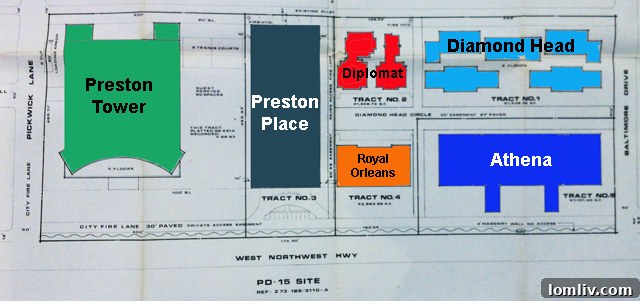
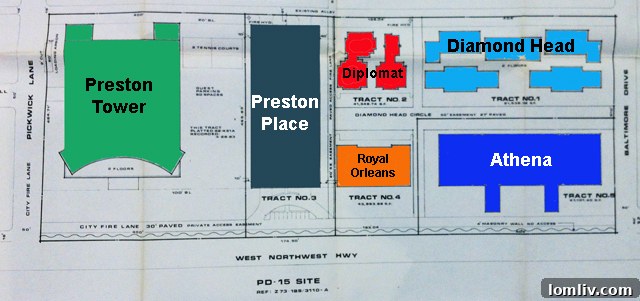
The period leading up to the tenth PD-15 meeting was fraught with tension and characterized by renewed attempts from specific factions to obstruct established city planning processes. For many Dallas residents keenly interested in the future development of their community, the escalating and often self-serving tactics employed by representatives of the “towers” – primarily referring to the Athena and Preston Tower apartment complexes – became a significant source of frustration. This ongoing saga in Dallas’s urban landscape encapsulates the inherent complexities of development, where diverse interests frequently collide within the intricate framework of zoning regulations, community aspirations, and political maneuvering.
Just days before the pivotal meeting, ICI Real Estate, the management company overseeing the Athena, issued an “URGENT!!!” call to action. This urgent message implored Athena residents to attend the upcoming gathering, a tactic mirrored by a similar appeal from Preston Tower. The coordinated communication detailed a specific strategy: Bob Bowling, representing Preston Tower, was slated to propose a motion aimed at dissolving the authorized hearing committee. This move sought to bypass the established review process, effectively sending developers directly to the City Plan Commission. Following this, Margaret Darden, an Athena representative, was scheduled to second the motion, with a clear expectation that audience members would then rise and applaud in a pre-arranged demonstration of support. This orchestrated display, designed more for theatrical impact than substantive engagement, struck many observers as remarkably unsophisticated, akin to a staged performance rather than a serious contribution to complex urban planning dialogue. The lack of genuine engagement with the process underscored the prevailing frustration among those committed to constructive development.
The arguments consistently put forth by the opposition echoed familiar themes, largely consisting of tired, repeatedly disproven tropes. These included dire predictions of “four high-rises” overwhelming the area, “unprecedented traffic” gridlock, and the specter of “10 years of non-stop construction.” Such assertions, frequently voiced without robust empirical backing, are common refrains in development disputes. However, they often fail to account for thorough traffic impact studies, modern construction sequencing to minimize disruption, and the long-term economic and community benefits of thoughtfully planned urban revitalization. For those seeking a deeper understanding of the counterarguments and previous debunking of these claims, valuable context can be found in past analyses, such as this article on anti-development propaganda or this account detailing selective community engagement.
Ethical Considerations in Community Communication: A critical point to address concerns the ethical boundaries crossed by ICI Real Estate. Disseminating a highly biased and politically charged email to residents under the official guise of a property management account represents a significant overreach. Management companies, as service providers, are generally expected to maintain neutrality in community political discourse or, at a minimum, clearly differentiate personal advocacy from official corporate communications. Individuals like Margaret Darden and Barbara Dewberry, if they wished to mobilize support or convey their opinions and strategies, should have done so through their personal accounts. This distinction is vital for maintaining transparency and respecting professional conduct. For full disclosure, I regularly send email summaries and relevant links concerning PD-15 developments to residents within my building, but I always do so from my personal account, steadfastly avoiding any implication of corporate endorsement or involvement from the management company. This adheres to a clear separation of personal and professional roles in community advocacy.
The renewed push to dissolve the committee also brought to mind an observation from earlier in the year. In July, I reported on an email from John Pritchett, President of the Preston Hollow South Neighborhood Association (PHSNA), where he frankly admitted that the committee members were “not the A-Team in terms of zoning matters.” It’s ironic that representatives for the “towers” – including Bob Bowling, Tatiana Frierson, Margaret Darden, and Barbara Dewberry – appear to concur with this assessment, given their fervent desire to dismantle the very committee tasked with navigating these complex zoning challenges. Their eagerness to bypass established city processes becomes even more perplexing when considering their past alliances. For instance, the Laurel apartments, located on Preston Road and Northwest Highway, are widely recognized as an unpopular development. Yet, these very representatives found common ground with Pritchett, who, by his own account, single-handedly led negotiations for his neighborhood with developer Transwestern concerning that project. This inconsistency suggests a selective approach to community advocacy, where convenience and immediate self-interest often take precedence over consistent principles or collaborative problem-solving.
A Call for Constructive Engagement: It is worth reiterating a fundamental principle of civic responsibility: if any member of any appointed committee genuinely feels unqualified or incapable of performing their designated duties effectively, the most honorable and productive course of action is to resign. Continuing to serve while actively attempting to undermine or sabotage a process that other dedicated individuals are working diligently to complete in good faith is not only counterproductive but also fundamentally erodes the integrity of community governance and urban planning efforts. Effective and equitable urban development demands commitment, informed participation, and a sincere willingness to engage constructively, rather than simply to obstruct or create unnecessary friction.
Behind the Scenes: Pressure Tactics and Strategic Maneuvers
These public displays of opposition were merely the visible tip of the iceberg, preceded by a series of high-level, behind-the-scenes machinations. Just the Thursday prior, a critical meeting convened between Council Member Gates, Plan Commissioner Margot Murphy, and a city attorney. This gathering was met by a formidable opposition contingent, comprising familiar figures deeply entrenched in Dallas politics and community activism. Among those present were former Mayor Laura Miller and her husband Steve Wolens, John Pritchett, Athena representatives Margaret Darden and Barbara Dewberry, Preston Tower representatives Tatiana Frierson and Bob Bowling, and Roger Albright, who serves as legal counsel for the “towers.” The request for parking passes for this meeting also unveiled a list of other prominent individuals, a veritable “Who Was” of Dallas political figures extending beyond Miller and Wolens, unequivocally signaling the significant political influence brought to bear in an attempt to sway the outcome.
Based on email exchanges meticulously obtained through an open records request, the primary, underlying objective of this strategic meeting was to exert intense pressure on Council Member Gates and Commissioner Murphy. The clear intent was to harangue them into disbanding the authorized hearing committee, thereby clearing a direct and less scrutinized path for developers to present their proposals directly to the City Plan Commission. The detailed analysis of these revealing documents, promising to expose further layers of these intricate political machinations, will be presented in a forthcoming column, aptly titled the PD-Papers. It remains a genuine regret that Council Member Gates’ office is not routinely equipped with recording capabilities. The establishment of a transparent and auditable record of such pivotal discussions would undoubtedly serve the public interest, fostering greater accountability and informed participation in critical city planning decisions.
The contrast between these localized pressure tactics and the broader principles of exemplary urban planning is striking. I was particularly struck this morning by a report in the Chicago Tribune detailing Chicago’s ambitious O’Hare airport improvement project. From an initial pool of twelve submissions, the city had meticulously narrowed the field to five, with plans to develop detailed models of these remaining proposals. These models would then be circulated throughout the city for extensive public comment and feedback. This comprehensive approach exemplifies a proactive, inclusive, and transparent methodology for major infrastructure development. On a smaller, more localized scale, this is precisely the kind of deliberative, publicly engaged process that the authorized hearing committee for PD-15 was meticulously designed to facilitate. However, the persistent pettiness, self-interest, and obstructionist tendencies displayed by the “towers” have regrettably prevented the realization of such an ideal, collaborative, and forward-thinking planning environment in Dallas.
It was against this complex backdrop of strategic lobbying, community mobilization, and procedural friction that I entered PD-15’s tenth official meeting, fully anticipating yet another contentious and drawn-out session.
… and to my surprise, I loved it. The clarity and decisiveness were profoundly refreshing.
Council Member Gates presided over the meeting with remarkable composure, authority, and an impressive command of the facts, backed by key city government staff who provided essential technical expertise. The brief, almost ceremonial, appearance of a police officer — presumably a cautionary measure against potential disruptions (the humorous thought of “waving canes” causing more harm than actual physical altercations springs to mind) — ultimately proved entirely unnecessary. No police intervention was required, nor was extensive backup from city hall staff needed beyond occasional, brief clarifications offered during the Q&A session.
With an impressive fluidity that clearly bespoke meticulous preparation and a deep, authoritative understanding of the issues, Gates effectively “closed the doors to Crazytown.” She accomplished this not through finger-pointing, overt frustration, or the kind of combative rhetoric I might personally have found irresistible in such circumstances, but through a calm, authoritative, and unambiguous reiteration of established facts and legal parameters. She meticulously outlined and reinforced what had been consistently communicated and reported over the past year. Her message was unequivocal, boiling down to four critical points that collectively define the fundamental framework for any future development within the PD-15 zone:
- Strict Limitations on Rebuilding: Developers interested in rebuilding on existing sites within PD-15 can file for a building permit only if their proposed plans replicate exactly what currently exists or what previously stood on the property. This strict limitation underscores the rigid nature of the current zoning, offering virtually no flexibility for modern, larger-scale redevelopment unless a formal zoning change is successfully pursued through the proper channels. This means innovative or expanded projects require a different, more involved process.
- Unbuilt Surplus Units: A Futile Endeavor: While developers possess the theoretical option to file a zoning case for the approximate 65 surplus residential units that remain unbuilt within the broader PD-15 area, Council Member Gates explicitly stated that such a case would inevitably be deemed “DOA” (Dead On Arrival) at both the City Plan Commission and City Council levels. The reasoning is transparent and rooted in principles of fairness: unilaterally assigning these valuable surplus units to a single property owner would unjustly enrich that owner at the direct expense of all other property owners within the PD-15 zone. This approach violates established principles of equitable development and community-wide benefit, making its approval highly improbable, if not impossible.
- The Failure of Unanimous Agreement: The path of unanimous agreement, which permits representatives from the six distinct properties within PD-15 to collectively agree upon proposed changes to the Planned Development (PD) and then present these revisions to the Plan Commission and City Council, has already been explored. This particular avenue for progress demonstrably failed approximately a year ago, primarily due to the intractable opposition and lack of consensus exhibited by Preston Tower and the Athena. Their inability or unwillingness to find common ground with other stakeholders effectively stalled what could have been a collaborative, expedited, and mutually beneficial process.
- The Authorized Hearing: The Sole Viable Way Forward: Given the severe limitations of rebuilding existing structures, the futility of seeking surplus unit allocations, and the demonstrated failure of unanimous agreement, the current Authorized Hearing process stands as the sole legitimate and effective mechanism for increasing the existing development limitations within the PD and for facilitating any substantive progress. This process ensures a structured, transparent, legally sound, and publicly accountable pathway for amending the zoning, necessitating the involvement of all relevant parties and strict adherence to established city guidelines. Any attempt to circumvent this process is ultimately unproductive.
In the wake of Council Member Gates’ definitive pronouncements, Bob Bowling’s previously announced plan to call for a dissolution of the Authorized Hearing – with the express aim of forcing developers to file zoning cases directly with the Plan Commission – was resoundingly exposed as an utterly “fool’s errand.” It was genuinely ironic, almost comical, to witness the “towers'” representatives expressing genuine surprise as they were (yet again) patiently educated on the immutable truths of this process. Athena representative Barbara Dewberry even vocalized her astonishment, asserting that their attorney, Roger Albright, had conveyed different information. Gates, without hesitation, calmly referred back to her second point: yes, developers theoretically *could* file such cases, but they would unequivocally be “DOA.” Despite this crystal-clear and repeatedly delivered clarification, and even considering what transpired later in the meeting, Bob Bowling remarkably revisited his earlier intention. He concluded his remarks by asserting that if the January meeting did not yield what he considered “favorable” results, he would once again bring forward his motion to dissolve the Authorized Hearing, pushing for developers to file their own zoning cases – a strategy that, as definitively established, simply cannot succeed. The collective, unspoken eye-roll from informed attendees was almost a palpable presence in the room.
Gates further elaborated on several crucial technical details, many of which had already been thoroughly discussed and clarified in prior meetings. She firmly reiterated the city’s unwavering stance: a building permit would not be issued for any project that would demonstrably exceed the capacity of existing sanitary sewer infrastructure. Regarding concerns about stormwater management and potential flooding, she provided further clarification. New development was deemed unlikely to significantly worsen stormwater runoff issues, largely because the affected lots are already extensively covered in impervious concrete. This existing concrete surface is the primary driver of runoff, as it prevents natural water infiltration into the ground. Chief Planner David Cossum had articulated these precise points months prior, but it appeared that, much like the concrete-covered land itself, some ears remained similarly impervious to these established technical facts and expert opinions.
In a gesture of constructive problem-solving, Gates suggested that a comprehensive traffic optimization study should be completed for the area. She proposed a practical funding mechanism: a combination of resources from a small office budget she controls, supplemented by contributions from the developers involved with Preston Place and Diplomat. The inherent irony in this proposition is almost palpable: the relatively modest few thousand dollars required for such a beneficial and fact-finding study could have been easily covered, perhaps multiple times over, by the exorbitant fees paid to the “towers'” attorney. This attorney, reportedly costing $400 per hour, was primarily engaged in an ongoing effort to obstruct the very collaborative process designed to resolve these complex urban planning issues.

A Time Out for Dialogue: City Staff to Craft Recommendations for PD-15
The immediate and significant consequence of this persistent impasse, marked by the inability of disparate factions to reach common ground or engage constructively, is the suspension of all public committee meetings until January. The stark realization that the “children were unable to share their toys” – a metaphor aptly capturing the warring parties’ refusal to negotiate collaboratively – has compelled Council Member Gates to directly engage city staff. These experienced professionals will now undertake the crucial and objective task of crafting their own independent recommendations for the PD-15 development. This necessary intervention underscores the city’s unwavering commitment to moving forward with progress, even in the face of protracted internal opposition and community gridlock.
This staff-led plan, once formulated, will be formally presented to the committee in January for comprehensive discussion and review. The ultimate hope guiding this mediated approach is that through expert guidance and structured dialogue, sufficient consensus can finally be achieved. This consensus would then allow the recommendations to proceed to a full-scale public outreach meeting, ensuring broader community input and transparency, before ultimately heading for final approval by the City Plan Commission and, subsequently, the City Council. This shift in strategy represents a direct, unavoidable consequence of the “towers'” prolonged and often unreasonable obstructionist tactics.
It is profoundly unfortunate, and indeed “hugely sad,” to reflect on the fact that these individuals – predominantly those representing the “towers” – have, in their relentless and often misguided attempts to impede progress, frequently based on erroneous or selectively presented information from various sources, demonstrably squandered a truly once-in-a-lifetime opportunity to genuinely shape and positively influence their neighborhood’s future. To truly grasp the gravity of this missed chance, one might consider a simple, universally relatable scenario:
Imagine a young child accompanying a parent on a grocery shopping trip. The parent, aiming for a healthy meal, suggests purchasing broccoli for dinner. The child immediately throws a dramatic tantrum, wailing loudly that they will “never, ever, ever” eat broccoli. As observant adults, we understand that regardless of the tantrum’s intensity, that child is almost certainly going to end up eating broccoli. However, what if, instead of an outright, unyielding refusal, the child had calmly and constructively requested an alternative, perhaps peas? In that scenario, the child would most likely be enjoying peas that very evening, representing a clear win-win outcome where a preference was expressed, heard, and accommodated. The “towers,” ironically housing a significant demographic of grandparents who could undoubtedly impart such valuable life lessons, have metaphorically spent over a year vociferously complaining about “broccoli” rather than engaging in thoughtful, constructive negotiation for “peas.” This analogy perfectly encapsulates the substantial opportunity cost of their unyielding opposition and refusal to compromise.
Recognizing the absolute necessity of fostering collaboration to forge any path forward, Council Member Gates proactively encouraged all committee members to continue meeting privately. The primary objective of these informal, off-the-record sessions is to explore whether their deep-seated impasse and disagreements could finally be breached through more candid and less formal dialogue. Similarly, the developers for Preston Place (Provident) and Diplomat (A.G. Spanos) were earnestly urged to work collaboratively on formulating a unified solution that addresses mutual concerns and facilitates progress. Furthermore, all parties involved were strongly encouraged to maintain open lines of communication with city staff, sharing insights, raising questions, and seeking clarifications as needed during the interim period leading up to the critical January meeting.
However, one particular suggestion from committee member Jim Panipinto raised considerable concern: he proposed that the developers should work directly with city staff to craft the final recommendations. This idea was met with immediate and justifiable reservations, and rightly so. It is a fundamental principle of good governance and ethical planning that individuals or entities who stand to be directly and financially enriched by a particular development process should not, in principle, be the primary authors or shapers of the parameters that govern that very process. Such an arrangement would inevitably create a significant and undeniable conflict of interest, effectively placing an undue “finger-on-the-scale” that would unfairly influence outcomes and severely undermine both public trust and the principles of equitable fairness. The integrity and perceived impartiality of the planning process demand an arms-length approach when it comes to the crucial task of formulating regulations and official recommendations.
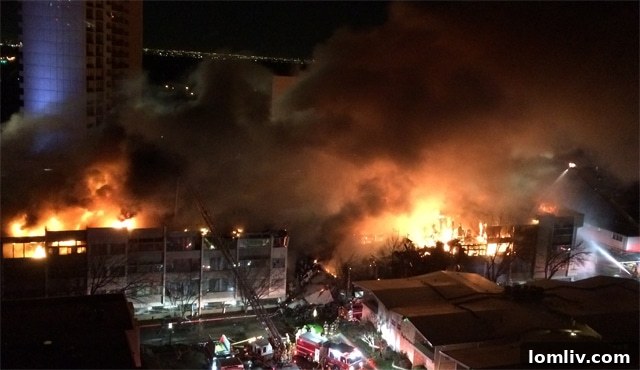
Given this new and extended timeline, there’s a unique, almost “sick satisfaction” in the possibility that this protracted and often contentious development saga could finally reach a substantial resolution by March. This timing would coincidentally mark the somber second anniversary of the devastating Preston Place fire, an event that, amidst the endless petty bickering and power plays, seems to have regrettably receded from the collective memory of many. The fire served as a stark and tragic reminder of the urgent need for decisive action, thoughtful redevelopment, and collaborative community planning – a profound lesson that, unfortunately, appears to have been overshadowed by the ongoing procedural battles and self-serving interests.

About the Author: My professional focus and enduring passion lie squarely at the intersection of high-rise developments, the complexities of homeowner associations (HOAs), and evolving property renovation trends within the dynamic Dallas real estate market. Beyond these core areas, I cultivate a profound appreciation for both cutting-edge modern architectural innovation and the crucial preservation of historical structures. My perspective consistently seeks to balance dynamic urban growth with essential community needs, aligning closely with the forward-thinking principles of the YIMBY (Yes In My Backyard) movement. My commitment to delivering insightful and impactful real estate commentary has been consistently recognized by the prestigious National Association of Real Estate Editors, which has honored my writing in 2016, 2017, and 2018 with three Bronze awards (2016 for exploring architectural leaps, 2017 for incisive property tax analysis, and 2018 for comprehensive coverage of the Preston Place fire). Additionally, I received two Silver awards (2016 for international property insights and 2017 for global second home trends). If you have a compelling story to share, an important perspective on local development, or perhaps even a unique marriage proposal to make, please do not hesitate to reach out via email at [email protected]. While you are welcome to search for me on Facebook and Twitter, you will find my digital footprint deliberately minimal, allowing my detailed writing and analysis to speak for itself.