The recent decision by the Dallas City Council to postpone the approval of the Reverchon Park ballfield renovation deal might have appeared perplexing to some, especially given the historical significance and community value of the park. However, a closer examination reveals that this delay was not only warranted but crucial for ensuring transparent governance and sustainable urban development in Dallas.
Dallas has long struggled with a reputation for grand public infrastructure projects that often fall short on long-term maintenance and community integration. A recurring pattern seems to be an unspoken policy of “build lavishly and then neglect,” leading to facilities that quickly deteriorate or fail to serve their intended public purpose effectively. Compounding this issue is the city’s track record of poorly managed park deals, with infamous examples such as Fair Park and the ill-fated Frank Lloyd Wright-designed Kalita Humphreys Theater lingering in public memory as cautionary tales of oversight and public trust erosion.
Against this backdrop, the council’s hesitation regarding the $10 million proposal to redevelop Reverchon Park with Donnie Nelson’s Reverchon Park Sports and Entertainment LLC takes on new meaning. While the process itself exhibited certain irregularities that have become uncomfortably familiar in Dallas’s public contracting, the outcome—a delay in approval—was, in fact, a responsible and necessary step. This article will delve into the critical reasons why the Dallas City Council was right to put the brakes on this ambitious project, highlighting concerns around public engagement, scope creep, environmental impact, and contractual integrity.
A Critical Absence of Public Engagement: The Single Meeting Flaw
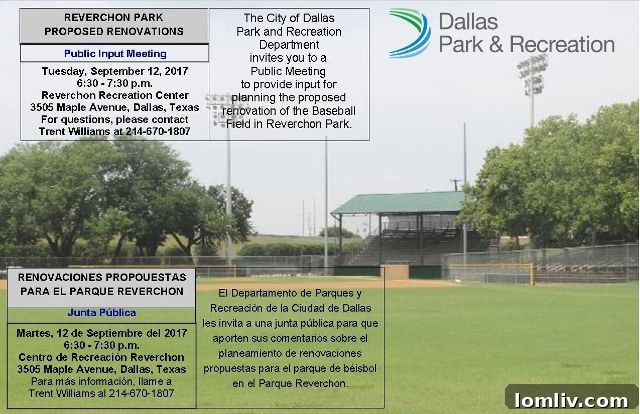
Perhaps the most significant and glaring issue surrounding the Reverchon Park renovation proposal was the profound lack of genuine public engagement. For a project poised to transform a cherished public space and introduce a dramatically expanded operational scope, the community consultation process was shockingly inadequate. The official record points to a solitary public meeting held way back in 2017 – a staggering 28 months before the council’s recent vote. This meeting, by all accounts, was sparsely attended, a detail not surprising given the vague nature of its announcement.
The meeting notice, circulated months before the initial Request for Proposal (RFP) was even issued in 2018, and nearly two years before the second, more expansive RFP in 2019, described its purpose as merely providing “input for planning the proposed renovation of the Baseball Field in Reverchon Park.” Presented with such language and accompanying imagery, a reasonable resident would envision improvements to a baseball diamond, perhaps minor upgrades to spectator amenities. What they certainly would not anticipate, nor could they infer, was a massive expansion converting the field into a 3,500-seat outdoor concert venue capable of hosting large-scale events, complete with alcohol sales and a significantly altered operational footprint.
There was absolutely no indication that a substantial public-private partnership was in the works, designed not just to refurbish, but to vastly expand the park’s operational capacity and programming. The broader, ambitious goal of “maximizing overall usage of the facility” through an extensive calendar of events, including “baseball, soccer, rugby, and lacrosse teams/leagues as well as providers of concerts, races, festivals, celebrations, camps and clinics,” was completely obscured. Had residents been informed of these true intentions, it is beyond doubt that the 2017 meeting would have seen a significantly higher turnout, reflecting widespread community interest and concern.
Moreover, both iterations of the RFP explicitly stipulated the necessity for multiple public meetings to gather community input. This contractual obligation remained unfulfilled. The developers reportedly met with “Friends of the Katy Trail” and “Friends of Reverchon Park,” organizations that seemingly approved the current deal. While these groups play a valuable role, they do not comprehensively represent the diverse interests and concerns of the residents living in the immediate vicinity. Crucially, active resident groups like Uptown Dallas, the Turtle Creek Association (TUNA), and the Oak Lawn Committee – direct stakeholders who would bear the brunt of increased traffic, noise, and crowds – were conspicuously absent from this consultation process. The city council’s decision to delay approval until proper, contractually mandated community outreach is demonstrated is, therefore, entirely justified and a critical step towards re-establishing public trust.
The Shifting Sands of Scope: From Ballfield to Multi-Use Entertainment Hub
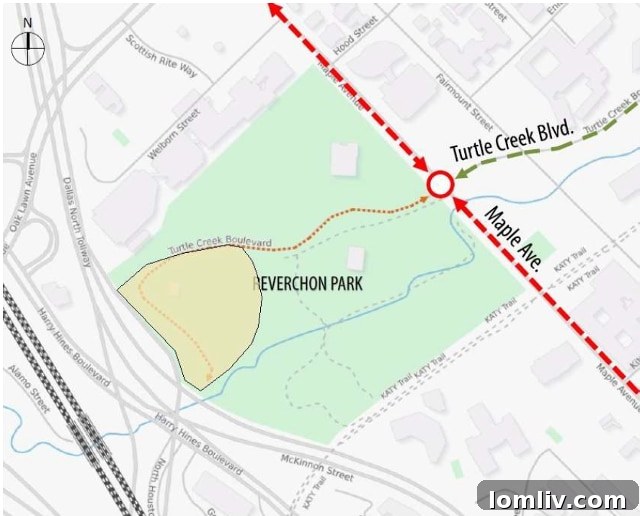
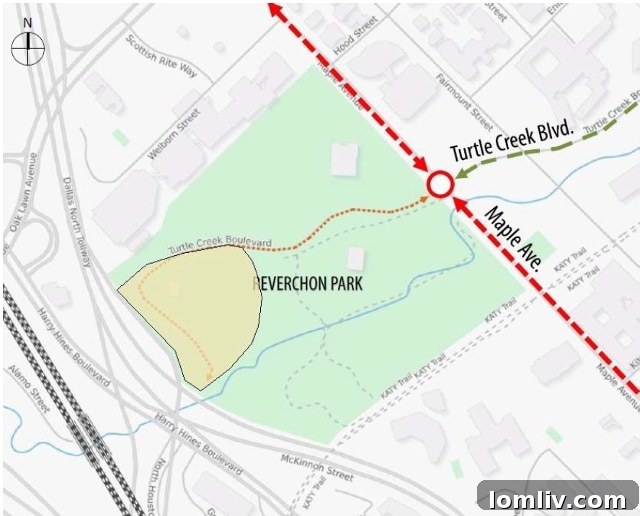
To fully understand the current predicament, it’s essential to trace the project’s evolution through the city’s procurement process. Dallas initially issued a Request for Proposal (RFP) in 2018, seeking a partner to rebuild 4.25 acres within the sprawling 39-acre Reverchon Park. This specific area, bounded by the Dallas North Tollway, the Katy Trail, and Maple Avenue just south of Scottish Rite, was primarily envisioned for the baseball field’s rehabilitation. However, the outcome of the 2018 RFP was disappointing; despite overwhelming initial council approval, the selected vendor withdrew from the project.
This setback led to the RFP being “tinkered with” – a phrase that hints at significant revisions – and reissued in June 2019. It is in these revisions that the core of the problem lies. The initial 2018 RFP explicitly centered on the rehabilitation of the baseball field. It even referenced Dallas Baptist University’s Horner Ball Park as a loose model, a facility known almost exclusively for hosting baseball. The language was clear, focused, and aligned with community expectations for a ballfield upgrade.
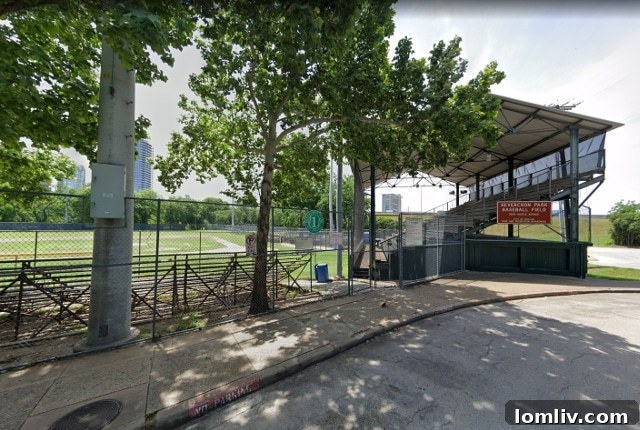
However, the 2019 RFP witnessed a subtle yet profound semantic shift. The term “Reverchon Ball Park” was recast as “Reverchon Athletic Field,” a seemingly innocuous change that, in reality, signaled an ambition to broaden the facility’s appeal far beyond its traditional baseball roots. While both RFPs included the option to host various activities like “baseball, soccer, rugby and lacrosse teams/leagues as well as providers of concerts, races, festivals, celebrations, camps and clinics,” the change in nomenclature and subsequent capacity increases clearly indicated an intent to amplify the non-baseball uses. These subtle linguistic adjustments, combined with other substantive changes, suggest an intentional strategy to dramatically increase the park’s programmed events calendar, potentially transforming it into an entertainment venue rather than primarily a community sports facility.
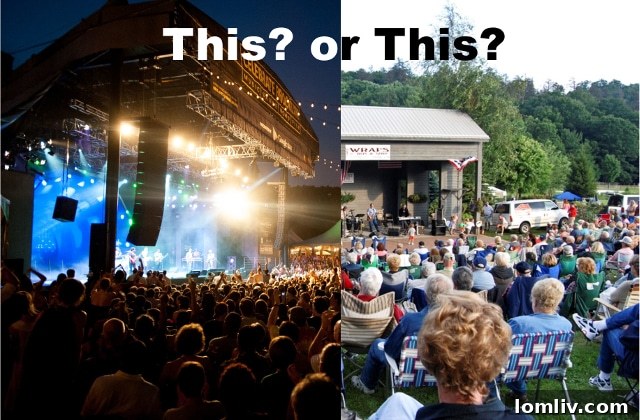
The Impact of Escalating Capacity: More Seats, More Events, More Problems
One of the most concerning aspects of the revised 2019 RFP was the substantial increase in seating capacity. The original 2018 proposal called for 1,400 permanent and 1,000 temporary seats, totaling 2,400. The 2019 version, however, significantly upped this to 2,000 permanent and 1,500 temporary seats, resulting in a formidable 3,500-seat venue. This represents a staggering 46 percent increase in capacity, a detail that cannot be understated when considering the potential impact on the surrounding urban fabric.
While some commentators, such as Robert Wilonsky of The Dallas Morning News, acknowledged this increase, they often framed it in terms of revenue, suggesting the city would gain “far less revenue” under the smaller 2018 proposal. This perspective, however, risks oversimplifying the issue and neglecting broader community concerns. To argue that an additional $12,000 in annual income to the city (equating to roughly $10.90 per additional seat annually) constitutes “far less” in the context of Dallas’s monumental $3.4 billion annual budget is a highly debatable point. Such a negligible financial gain pales in comparison to the potential negative externalities imposed on residents.
The increased seat count is not merely about marginal revenue gains; it directly dictates the scale, frequency, and type of events the venue can support. A larger capacity invariably attracts more promoters and enables not only grander but also significantly more frequent events. This is clearly demonstrated in the economic projections presented by the developers. The “winner” of the 2018 RFP estimated their annual median net revenue at a modest $21,555. In stark contrast, the proposal dismissed by the council in December projected annual net revenues of $69,788 – an astonishing 233 percent increase. Over a 15-year period, the current proposal estimates net revenues surging to $249,000. It is unrealistic to assume that ticket prices alone would increase by 256 percent in that timeframe; a substantial portion of this projected revenue growth must, by necessity, come from a dramatically increased number of events.
This economic imperative inevitably means that what was once a relatively “sleepy” Reverchon Park would be “awakened” in ways the surrounding community might find entirely unpalatable. The quiet charm of the park, bordered by residential areas and the popular Katy Trail, would be irrevocably altered by a constant stream of large-scale concerts, festivals, and other events, leading to substantial shifts in neighborhood character.
Impending Gridlock: Addressing Parking and Traffic Nightmares
The implications of a significantly expanded Reverchon Park extend directly to the critical urban challenges of parking and traffic congestion. Both the 2018 and 2019 RFPs candidly acknowledged that while the park possesses some existing parking, it is wholly insufficient for a 3,500-seat venue. The proposals clearly stated the need to contract with local commercial properties to secure additional event parking – a requirement that translates to an estimated 1,100 additional parking spaces for each large-scale event. This influx of vehicles poses a severe logistical and environmental challenge.
Picture 3,500 people, many arriving and departing in their own vehicles, converging on and dispersing from the park at roughly the same times. Even accounting for those who might walk or cycle, the sheer volume of vehicular traffic would overwhelm the existing infrastructure. Maple and Oak Lawn Avenues, already busy urban thoroughfares, would inevitably become gridlocked, creating bottlenecks extending all the way to the Dallas North Tollway and Interstate 35E. This would not only be a nightmare for event-goers but also a daily disruption for residents, commuters, and local businesses.
In any typical urban planning scenario, particularly one involving a significant increase in public gathering capacity, a comprehensive traffic impact study would be a mandatory prerequisite for any council vote. Such studies are crucial for assessing the current infrastructure’s ability to handle increased load, identifying potential mitigation strategies, and ensuring community safety and accessibility. Alarmingly, in the case of Reverchon Park, a traffic study was promised *after* council passage, rather than before. This procedural oversight is a fundamental flaw, akin to approving a building permit without reviewing architectural plans. It bypasses due diligence and pushes critical impact assessments to a point where council’s “backs are against the wall” to make the numbers work, rather than making an informed decision based on comprehensive data.
Who Controls the Future? The Critical Issue of Scheduling Authority
Another problematic clause embedded within the RFP pertained to scheduling authority: “The Proposer shall have authority on scheduling the facility use, with input from the Owner.” In this context, the “proposer” is the private management company, while the “owner” is the City of Dallas. This seemingly innocuous phrasing grants significant, almost unfettered, control over the park’s operational schedule to a private entity, with the city relegated to merely providing “input.”
While the city certainly shouldn’t be micromanaging every single event – we wouldn’t want them juggling a Lacrosse match simultaneously with an ABBA tribute band – they absolutely must retain ultimate control over the broad parameters of the park’s usage. This means setting clear, enforceable limits based predominantly on the surrounding community’s desires and welfare. Such limits should include, but not be limited to, a maximum number of major events per year, specific hours of operation (especially for loud events), permissible decibel levels, detailed transportation and parking plans, and comprehensive security protocols. These are the fundamental questions that should be answered for any public venue, particularly one licensed to serve alcohol, as they directly impact not only the venue’s financial viability but, more importantly, the quality of life for neighboring residents.
The fact that these critical aspects were slated to be “worked out *after* passage through council” reinforces the perception of a rushed deal lacking essential details. This approach places the city in a reactive rather than a proactive position, potentially forcing compromises that might not align with public interest once the contract is signed. This lack of upfront clarity and control is especially concerning given the RFP’s own requirement, reiterated multiple times: “Conduct public meetings (minimum of two) with the surrounding community and User groups to receive input on the design and scheduling of the facility.” The very mechanism designed to ensure community input on scheduling was demonstrably ignored, further eroding the project’s legitimacy.
A Glimmer of Progress: Positive Strides in Wage Policy
Amidst the numerous concerns surrounding the Reverchon Park proposal, one positive development stood out: the improved wage provisions. A comparison between the 2018 and 2019 RFPs reveals a significant and commendable shift regarding worker compensation. The 2018 proposal guaranteed only the federal minimum wage for workers, which currently stands at $7.25 per hour. In contrast, the 2019 bid included a much more progressive clause: “Proposer agrees to pay both its full-time and part-time employees an hourly wage equal to or in excess of the living wage for a single adult, as calculated by the Massachusetts Institute of Technology Living Wage Calculator for Dallas County, Texas.”
At the current calculation, this translates to a living wage of $11.71 per hour for Dallas County. This represents a substantial increase from the minimum wage, effectively boosting an employee’s annual earnings from $15,080 to $24,357 (assuming a full-time, 40-hour work week). This commitment to paying a living wage is a significant step towards economic fairness and social responsibility, ensuring that those who work at the facility can afford a basic standard of living in the community.
While this commitment to fair wages is an undeniably positive aspect of the proposal, it unfortunately does not outweigh the fundamental flaws in public engagement, transparency, and the dramatic, unconsulted expansion of the park’s scope. It serves as a testament that positive elements can exist within a problematic framework, underscoring the council’s complex task of balancing various considerations. However, the integrity of the process and the long-term impact on the community must take precedence.
In conclusion, the Dallas City Council’s decision to withhold support for the Reverchon Park renovation deal was a prudent and necessary action. While the city certainly desires to see its public facilities revitalized, such endeavors must be rooted in transparency, genuine community engagement, and strict adherence to established protocols. The drastic expansion of the project’s scope, the concerning lack of meaningful public consultation, the potential for overwhelming traffic and noise impacts, and the problematic delegation of scheduling authority all represent significant deviations from responsible urban development practices.
The city’s historical struggles with public projects necessitate a higher degree of scrutiny and accountability. For a deal of this magnitude and community impact, more than one sparsely attended meeting from years past is required. The contractual obligations for multiple public forums, allowing residents to voice concerns about design and scheduling, must be met. If this deal is truly as beneficial as presented by its proponents, then greater public airing and more robust community input should be welcomed, not avoided. The council’s delay provides a critical opportunity to re-evaluate the proposal, ensure genuine community buy-in, and forge a path forward that truly serves the long-term interests of Dallas residents and preserves the integrity of Reverchon Park as a cherished public asset.

About the Author: The author specializes in urban development, high-rises, HOAs, and renovation, appreciating modern and historical architecture balanced against the YIMBY movement. Recognized by the National Association of Real Estate Editors, their writing received three Bronze (2016, 2017, 2018) and two Silver (2016, 2017) awards in various years. For story ideas or inquiries, please contact [email protected]. Find the author on Facebook and Twitter (though the search may be fruitless, the welcome is extended).