Unpacking Urban Myths: Why Suburbs Still Dominate American Demographics
The narrative of an America flocking en masse to bustling city centers, embracing vertical living and vibrant downtowns, has been a prevailing theme in real estate discussions for years. Media reports often highlight the revitalization of urban cores, portraying them as the ultimate destination for modern living. However, a deeper dive into demographic data, guided by insights from one of the most respected voices in real estate analytics, reveals a more nuanced and surprising reality.
Jed Kolko, an economist and data expert whose career includes influential roles as Chief Economist and VP of Analytics at Trulia (before its merger with Zillow), possesses an unparalleled understanding of real estate trends. His expertise isn’t just theoretical; it’s grounded in rigorous data analysis that often challenges conventional wisdom. Kolko’s insights consistently offer a clearer picture of where Americans are truly choosing to live, and his recent findings contradict much of what we’ve been led to believe about the so-called “urban revival.”
Challenging the Urban Nirvana Narrative
For years, the popular belief has been that urban neighborhoods are the quintessential “go-to nirvana,” with cities and high-rise living expanding at an unprecedented rate, outpacing suburban growth. We frequently hear compelling stories about downtowns booming, attracting new residents and investment. Consider Dallas, for instance, where the City Council unanimously voted on a resolution dictating that Dallas Area Rapid Transit (DART) build a second downtown rail alignment (D2) as a subway, not a light rail. The rationale? To minimize disruption to the evolving downtown landscape, underscoring the city’s commitment to urban development. Efforts to create a thriving Arts District near downtown further exemplify this anticipation of a surge in art-loving, urban residents, driving developers to construct numerous luxury apartments and condos, envisioning a steady pilgrimage to the city center.
Yet, Jed Kolko argues that this perception, while rooted in some truth, isn’t the full picture for most Americans.
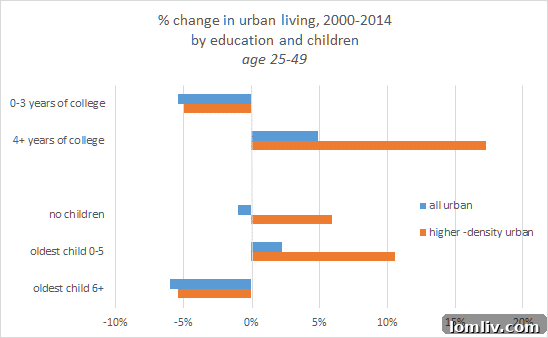
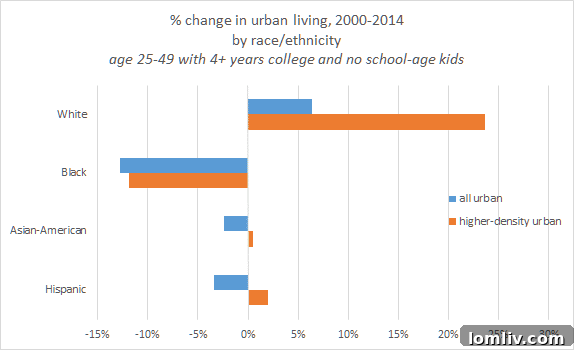
In recent years, numerous studies and media reports have documented that college-educated young adults have been drawn to urban centers. At times some have claimed a broader demographic reversal in which cities grow faster than suburbs, and even the end of the suburbs.
The Enduring Power of the Suburbs
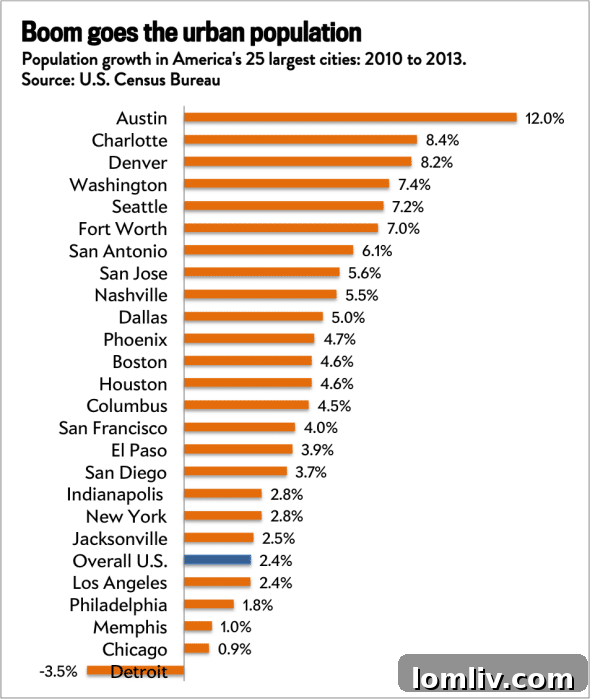
Contrary to the widespread “urban boom” narrative, Kolko’s data emphatically shows that suburbs continue to be the primary drivers of growth in America. While headlines might highlight specific city neighborhoods experiencing a revitalization, these instances represent localized trends rather than a national demographic shift. For the vast majority of Americans, the suburban dream remains alive and well, exemplified by the rapid expansion of communities like Frisco.
The share of Americans living in urban neighborhoods dropped by 7%, from 21.7% in 2000 to 20.1% in 2014. Even looking at only the densest urban neighborhoods where about one-third of the urban population lives, the share of Americans living in these neighborhoods fell by 5%, from 7.4% in 2000 to 7.0% in 2014. (See note at end of post for details on data, methodology, and definitions.) Headlines about educated young adults flocking to Brooklyn and San Francisco aren’t wrong – but they are far from the whole story and are unrepresentative of broader trends. Other demographic groups are suburbanizing faster than the young and rich are piling in to cities.
Who is Truly Urbanizing? The Role of Income and Demographics
So, if not most Americans, then who *is* moving into cities? Kolko’s analysis pinpoints specific demographics. Generally, these are young, affluent, college-educated individuals without school-age children. Often, they are supported by substantial family wealth or trust funds, enabling them to afford the significantly higher cost of living that comes with urban residency. This demographic tends to prioritize amenities, cultural experiences, and walkability over larger living spaces or school district quality, aligning with the lifestyle afforded by their financial standing.
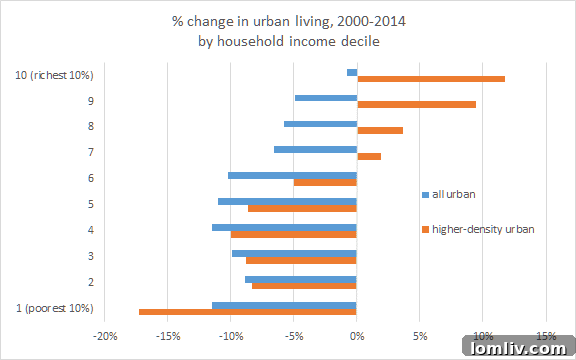
This leads to Kolko’s crucial observation: people are not urbanizing; money is. The influx into urban centers is not a broad demographic movement but rather a shift driven by economic stratification.
Urban neighborhoods – especially higher-density urban neighborhoods – grew richer between 2000 and 2014. But only higher-income households became more urban over these years. The poorest tenth of households was 12% less likely to live in urban neighborhoods in 2014 compared with 2000, and 17% less likely to live in higher-density urban neighborhoods. In contrast, the richest tenth of households was 12% more likely to live in higher-density urban neighborhoods, and only 1% less urban overall in 2014 than in 2000. The top four income deciles were all more likely to live in higher-density neighborhoods in 2014 than 2000, while none of the bottom six were.
This data illustrates a clear pattern: urban cores are increasingly becoming enclaves for the wealthy, while lower and middle-income households are being pushed out, primarily towards more affordable suburban areas. This economic segregation has profound implications for city planning, social equity, and the very character of urban environments.
Seniors: A Declining Urban Presence
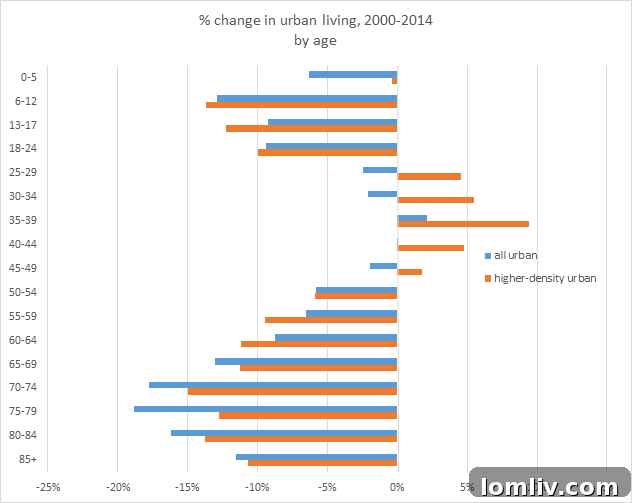
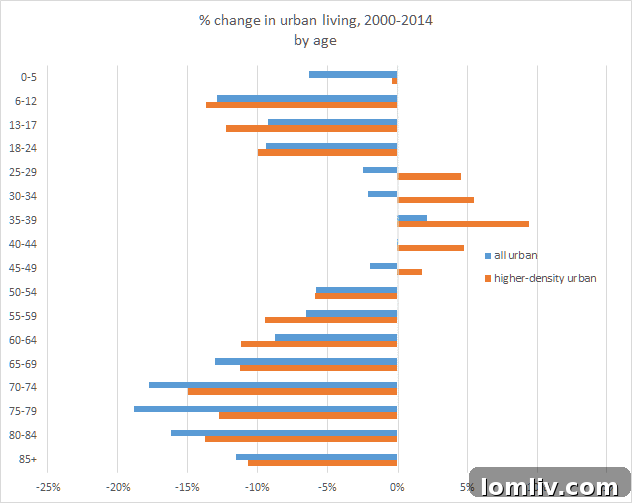
Another significant demographic trend that challenges popular assumptions concerns older adults. While some might envision seniors downsizing into vibrant city apartments to enjoy cultural offerings, Kolko’s research indicates the opposite. Seniors are, in fact, becoming significantly less urban.
All age groups 65 and older were at least 10% less likely to live in urban neighborhoods in 2014 than in 2000; that’s true for the high-density urban neighborhoods, too. Unlike young adults, the decline in urban living among older adults is similar for those with and without college degrees. And, unlike for young adults, the decline in urban living among older adults is generally steeper for those with higher incomes.
Why Seniors Are Opting for Suburbs: Economic Realities and Lifestyle Preferences
Several factors likely contribute to this trend. Taxes, for one, play a crucial role. Urban areas often come with higher property taxes and a greater overall cost of living, which can significantly strain a fixed income. Consider the average Baby Boomer, who, despite desiring an income of approximately $45,500 in retirement (requiring substantial savings), often possesses far less. A recent BlackRock survey indicated that the average pre-retirement Baby Boomer (55-65 years old) has only $136,200 saved for retirement. This translates to a meager annual income that would be stretched incredibly thin, if not entirely insufficient, to comfortably live in a high-tax, higher-cost urban area, where millions in investments might be needed to sustain a desirable lifestyle.
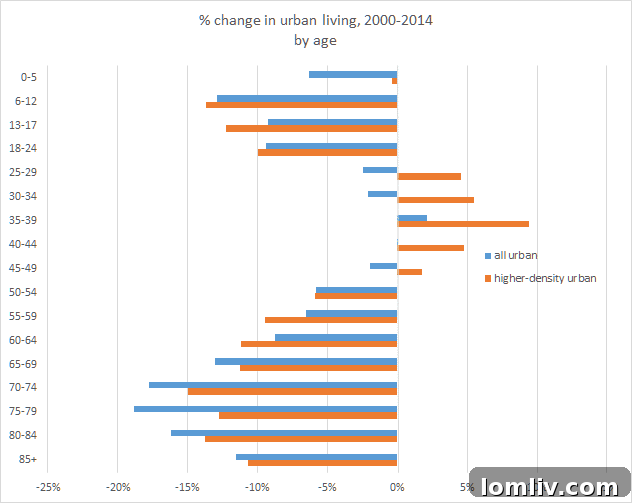
Therefore, many Baby Boomers are migrating to the suburbs to make their retirement dollars go further. Beyond financial considerations, lifestyle preferences also play a part. Suburbs often offer quieter environments, more space, and a sense of community that can be particularly appealing to retirees. Furthermore, being closer to grandchildren and family, who are often themselves settled in suburban areas, can be a major draw. As Kolko notes, “prior to the trends of the 2000s, older adults were already less likely than younger adults to live in urban areas. Therefore, the least urban age groups have become yet less urban. Even those who have recently moved and those who are in the position to afford expensive urban housing are increasingly living outside of urban neighborhoods.”
Implications for Real Estate Investment and Development
Understanding these genuine demographic shifts, as illuminated by Jed Kolko’s data, is paramount for anyone involved in real estate, particularly investors and developers. The widely propagated image of a booming urban exodus may lead to misinformed investment decisions. Instead of blindly pouring capital into urban luxury housing, a more strategic approach would involve:
- Re-evaluating Urban Development: Developers should assess whether the demand for high-end urban dwellings genuinely matches the supply or if it caters to an increasingly narrow, affluent demographic. Investing in diverse housing options that cater to different income brackets might be more sustainable in the long run.
- Focusing on Suburban Growth: Acknowledging the continued, robust growth of suburbs suggests strong investment potential in these areas. This could include developing mixed-use communities, senior living facilities, or family-friendly housing that aligns with the preferences of suburbanizing populations.
- Understanding Local Nuances: While national trends provide a broad overview, successful real estate strategies require granular, local market analysis. What drives growth in Frisco might differ from trends in other suburban areas.
- Considering Affordability: With money urbanizing, the demand for affordable housing in both urban fringes and accessible suburbs will likely remain high. Investment in well-located, value-oriented properties could yield significant returns.
- Adapting to Senior Demographics: The suburbanization of seniors presents opportunities for age-in-place housing, accessible community development, and services catering to an older population seeking comfort and affordability outside dense city centers.
In conclusion, while the allure of vibrant city life remains a powerful cultural ideal, the statistical reality painted by experts like Jed Kolko offers a crucial counter-narrative. The true story of American demography reveals that suburbs are not only far from dead but are thriving, attracting a broad spectrum of residents, including critical demographics like seniors. Urban centers, meanwhile, are increasingly becoming exclusive domains for the affluent. For savvy real estate investors, recognizing these underlying currents is not just insightful but essential for making sound, future-proof decisions that align with the actual movement of people and capital across the American landscape.