Embarking on a journey through France’s rich tapestry of art and architecture offers an unparalleled experience, especially when one arrives at the venerable gates of Chartres Cathedral. This magnificent structure, a beacon of Gothic genius, stands as a testament to human ingenuity, artistic evolution, and enduring resilience. Nestled in the heart of Chartres, this UNESCO World Heritage site is more than just a church; it is a living chronicle, a sanctuary of medieval artistry, and a symbol that has miraculously survived centuries of upheaval, from revolutionary fervor to the ravages of war and fire. Its story is one of near-misses and triumphant preservation, continually captivating visitors and scholars alike with its profound beauty and intricate narratives etched in stone and glass.
The Indomitable Spirit of Chartres: Surviving the French Revolution
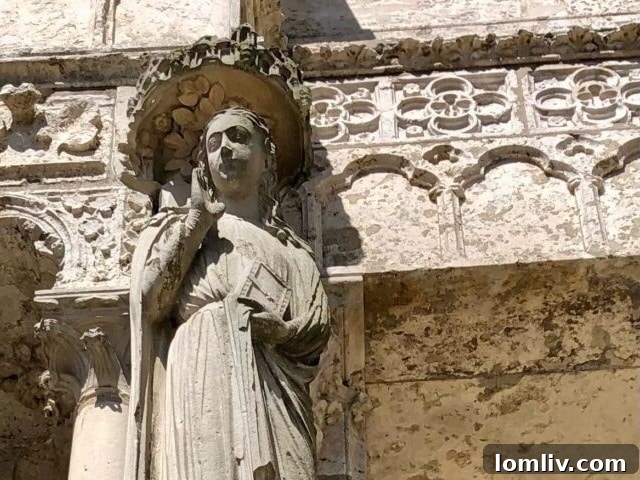
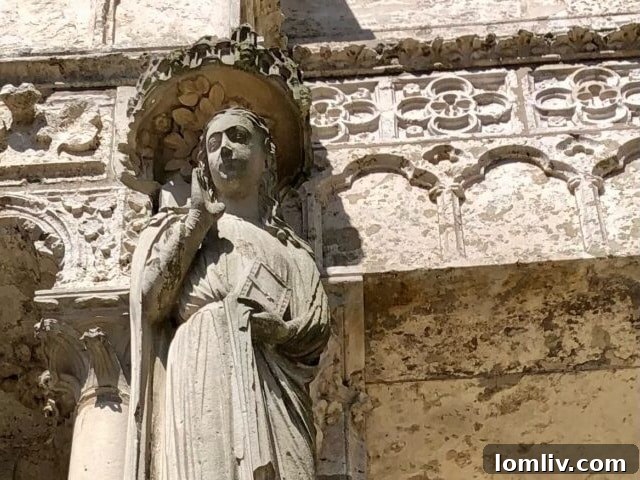
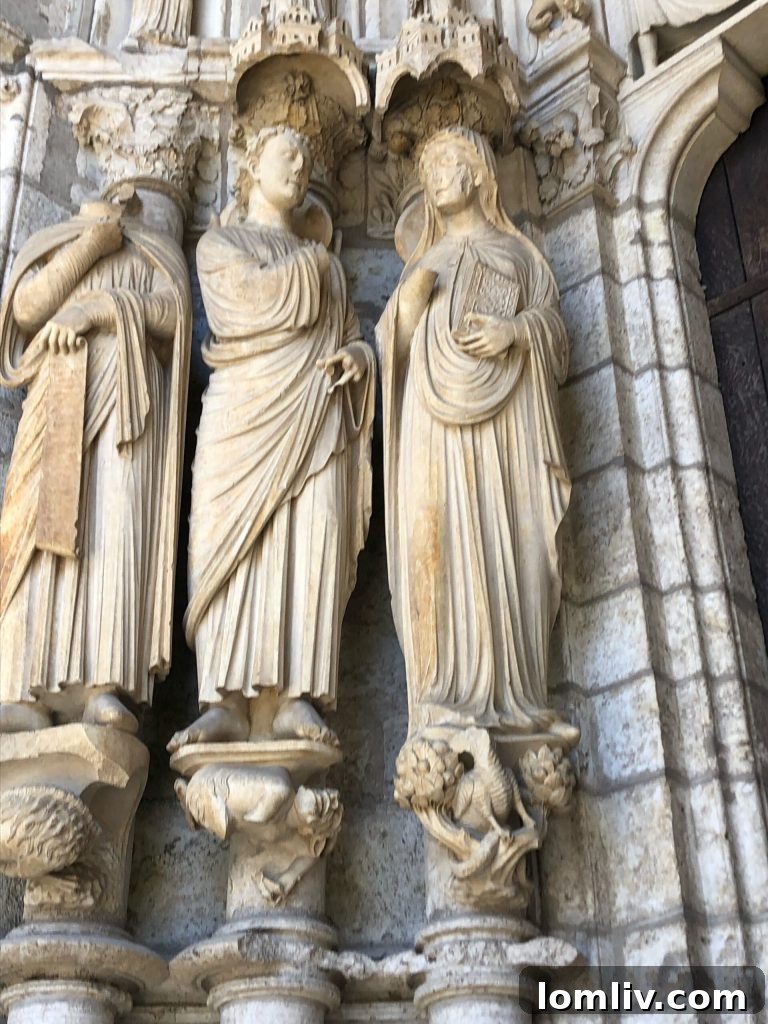
The history of Chartres Cathedral is punctuated by dramatic moments where its very existence hung in the balance. One of the most harrowing tales dates back to the French Revolution, a period that saw widespread destruction of religious symbols and institutions across the nation. During this tumultuous era, a fervent mob descended upon Chartres Cathedral, intent on dismantling its sacred art. Their destructive focus quickly turned to the exquisite sculptures adorning the north porch, symbols of a bygone era they sought to erase.
However, the tide of destruction was remarkably stemmed not by royal decree or armed guard, but by the collective will of a larger contingent of townspeople. These local residents, recognizing the cathedral’s immense cultural and historical value, bravely intervened, forming a human barrier against the vandals. Their spontaneous act of preservation highlights the deep connection the community held for their cathedral, a sentiment that transcended political zeal.
Even more perilous was the subsequent decision by the local Revolutionary Committee to completely demolish the cathedral. They commissioned a local architect to identify the most effective points for setting explosives, anticipating the structure’s complete obliteration. Yet, in a stroke of genius and civic courage, the architect devised a brilliant stratagem that ultimately saved the building. He argued convincingly that the sheer volume of rubble generated by demolishing such a colossal edifice would utterly clog the streets of Chartres, rendering them impassable for years. This clever ruse, born of quick wit and profound respect for the monument, deterred the committee, sparing Chartres Cathedral from an irreversible fate.
One shudders to contemplate the irretrievable loss had the revolutionaries succeeded entirely, as they did in other revered sites across France. Imagine a Chartres stripped bare, its sculptural masterpieces reduced to dust, much like the extensive 19th-century reconstructions seen in places such as the lower part of Sainte-Chapelle. The headless figures of Chartres, though still powerful, would have been mere fragments, perhaps celebrated only as academic studies in the revival of antique drapery, likened to Gothic echoes of the Winged Victory of Samothrace. What would have been lost, truly, was a pivotal moment in art history—a sudden, dramatic leap forward, akin to the revelatory impact of Giotto’s Arena Chapel in Padua. For all the breathtaking beauty of its stained-glass curtained interior, it is the exterior sculpture of Chartres where the true artistic revolution unfolds.
A Renaissance in Stone: The Sculptural Evolution of Chartres
The sculptural programs of Chartres Cathedral offer a profound narrative of artistic progression and theological insight. A comparative study of its various portals, particularly the East (Royal) Portal and the North Portal, reveals a striking evolution in carving technique, emotional depth, and theological representation. The East Portal, while undoubtedly impressive and a masterpiece of early Gothic art, features figures that are somewhat stylized, embodying archetypal representations rather than individual character. Although the drapery studies show an advancement, these figures remain largely within the familiar conventions seen in earlier Gothic cathedrals like Reims.
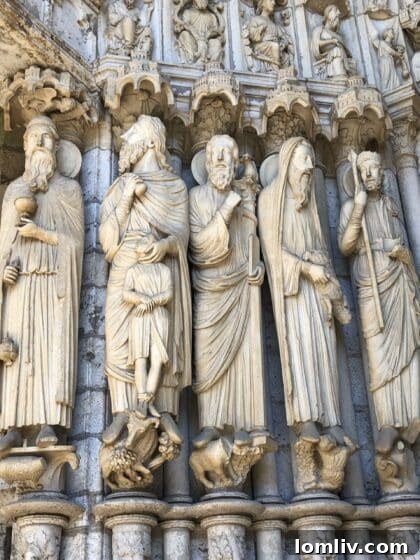
However, moving to the North Portal, we encounter a dramatic departure. Here, the 13th-century sculptors achieved an unprecedented level of naturalism and psychological penetration. Consider the captivating female figures, for instance. Beyond their gender, they convey a palpable sense of interior life, intelligence, and dignity that elevates the status of women within sacred art. This artistic shift beautifully mirrors the burgeoning esteem and reverence associated with the cult of the Virgin Mary during the Gothic era, reflecting a broader cultural and spiritual development.
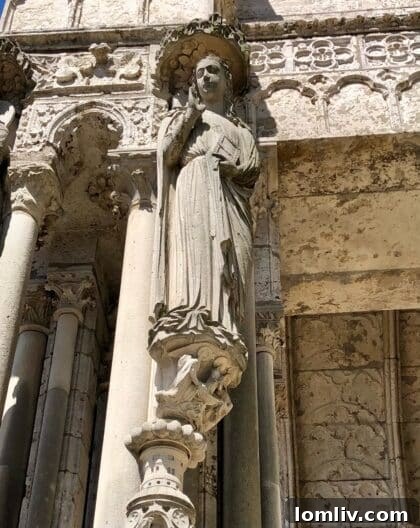
These figures appear to almost dance with elegant twists and turns, often employing a subtle contrapposto – a dynamic pose where the body’s weight is shifted to one leg, creating a sense of natural movement and vitality. While contrapposto would later become a more common trope, here it possesses a captivating freshness and innovation, breathing life into the stone. The delicate and voluminous drapery, meticulously carved to reveal the forms beneath, strongly suggests that the sculptors of Chartres possessed a keen awareness of classical Roman sculpture. Their close observation and adaptation of antique techniques infused their Gothic creations with a renewed sense of realism and grace, marking a significant milestone in the history of European art. This profound understanding of human anatomy and classical aesthetics, combined with the spiritual fervor of the Gothic age, created a sculptural program that transcended its predecessors and profoundly influenced subsequent artistic developments across Europe.
Chartres Ablaze: The Great Fire of 1836 and Its Legacy
The resilience of Chartres Cathedral was tested once again on Saturday, June 4, 1836, when tragedy struck. Sparks from a plumber’s stove, used for welding in the cathedral’s attics, ignited a catastrophic blaze. The fire quickly consumed the magnificent oak roof frame, a centuries-old “forest” of timber that had crowned the structure, along with the lead tiles of the roof. The inferno raged, ravaging the interior of the two bell towers and melting the massive bells before firefighters and courageous residents could bring it under control.
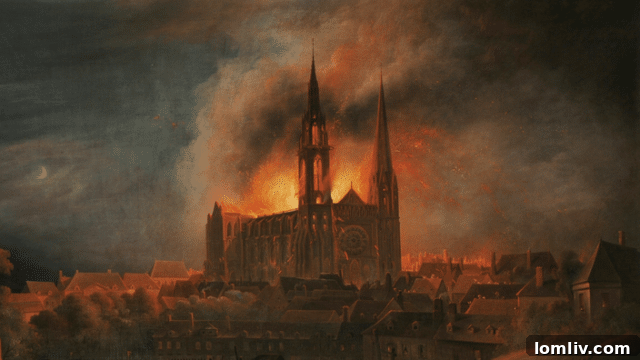
By the morning of June 5, the smoldering ruins of the Gothic cathedral presented a daunting challenge, reminiscent of the complex dilemmas faced during the recent restoration of Notre Dame. The principal question facing the restorers was whether to rebuild the roof with traditional timber framing, mirroring the original construction, or to embrace modern advancements in iron construction. The latter promised to speed up the process and, crucially, offer a more fire-resistant skeleton for the future.
By this period, the ownership of many churches, including Chartres, had transitioned from the Catholic Church to the state. Ludovic Vitet, a former inspector general of historical monuments and then a deputy and rapporteur of the commission, was entrusted with the monumental task of overseeing Chartres’ reconstruction. The decision was swiftly made to employ modern iron framing, primarily to reduce combustibility and enhance the building’s long-term safety. Work commenced in 1837 and was remarkably completed just four years later, in 1841. This rapid and innovative approach echoes contemporary ambitions for the restoration of Notre Dame, though interestingly, Notre Dame’s roof is being framed as originally executed: in a vast “forest” of timber, now being meticulously milled and transported by an extensive network throughout France, showcasing a different philosophical approach to historical accuracy.
Just as modern restorations often face scrutiny, the choice of metal framing for Chartres’ roof in the 19th century was not without its critics. Victor Hugo, the celebrated author and advocate for historical preservation, famously lamented: “We will make an iron roof, sad expedient, which, fortunately at least, will not be seen from the outside.” His words captured a sentiment that prioritized aesthetic purity and historical authenticity over purely functional or modern solutions, a debate that continues to resonate in conservation efforts today.
Chartres Imperiled by War: A World War II Miracle
The 20th century brought another existential threat to Chartres Cathedral during World War II. As American forces advanced towards the city at the close of the war, intelligence suggested that the Germans were utilizing the cathedral, particularly its towering steeples, for sniper and artillery fire. Plans were therefore drawn up to raze the magnificent structure to neutralize the perceived threat. Thankfully, the cathedral had already been stripped of its precious stained glass prior to the occupation, safely stored away to protect it from wartime damage.
In a pivotal moment that saved the cathedral for a third time, Colonel Welborn Griffith was ordered to enter the building and confirm the presence of enemy forces. Exhibiting extraordinary bravery, Colonel Griffith navigated the war-torn city and meticulously searched the vast cathedral. He discovered it to be unoccupied by German troops. His accurate report prevented the planned destruction, allowing Chartres Cathedral to stand tall and proud, a silent witness to history, rather than becoming another casualty of war.
Chartres is Again The Subject of Controversy: The Ongoing Restoration
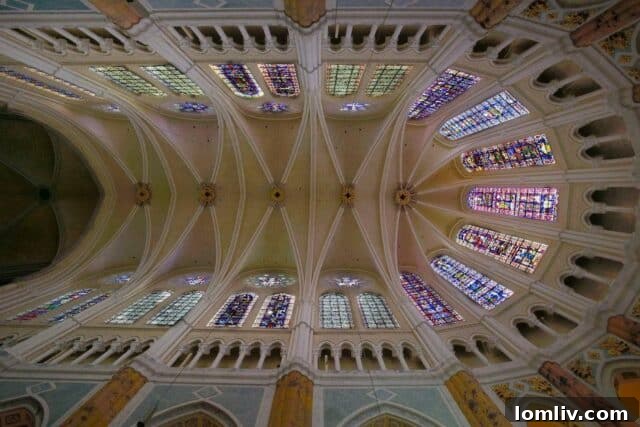
Today, Chartres Cathedral finds itself once more at the center of a lively debate surrounding its ongoing restoration. The ambitious cleaning and repainting of the interior have sparked considerable controversy, with many critics arguing that the new aspect appears “garish and gaudy,” believing something essential has been lost in the process. This sentiment often arises from a long-held perception of Gothic churches as having a solemn, aged patina, a consequence of centuries of accumulated grime, soot from candles and heating, and plaster repairs.
However, the restorers present a compelling counter-argument, rooted in meticulous historical research. It has been known for centuries that Gothic churches, including their intricate statues and architectural elements, were originally vibrant with color. Modern conservation techniques, including extensive analysis of pigment traces, have allowed restorers to confidently assert that they are merely bringing to the surface approximately 80 percent of the original colors by carefully removing later accretions of grime, soot, and plaster. Their work is an effort to restore the cathedral to its intended medieval splendor, when it would have gleamed with polychrome glory.
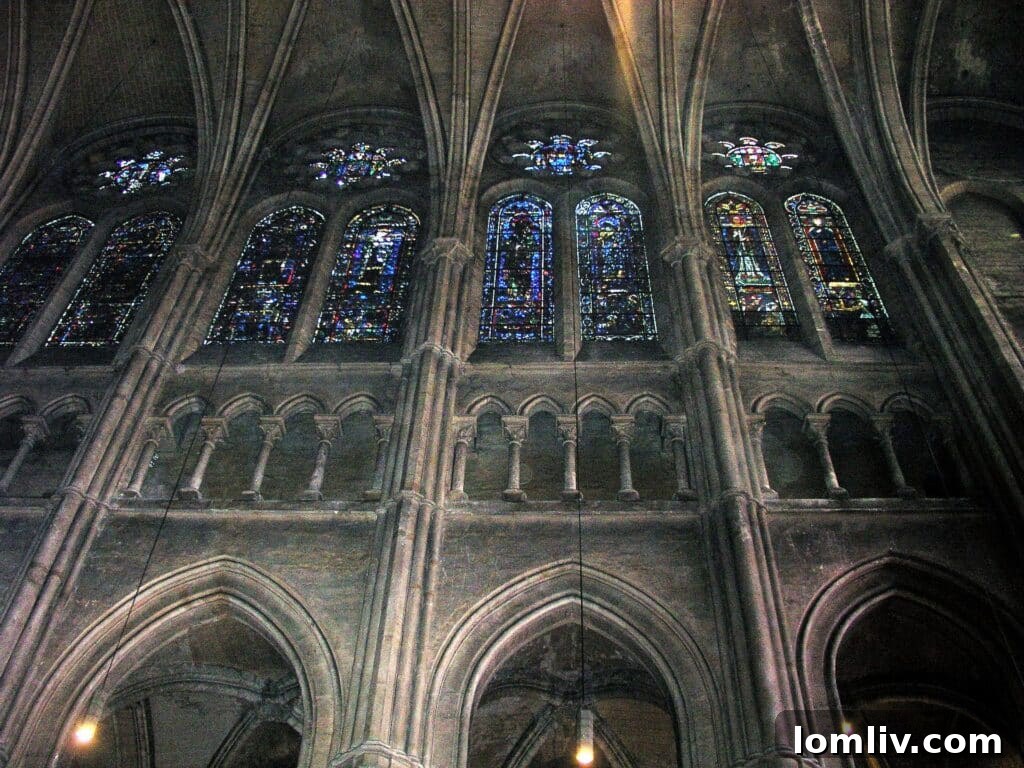
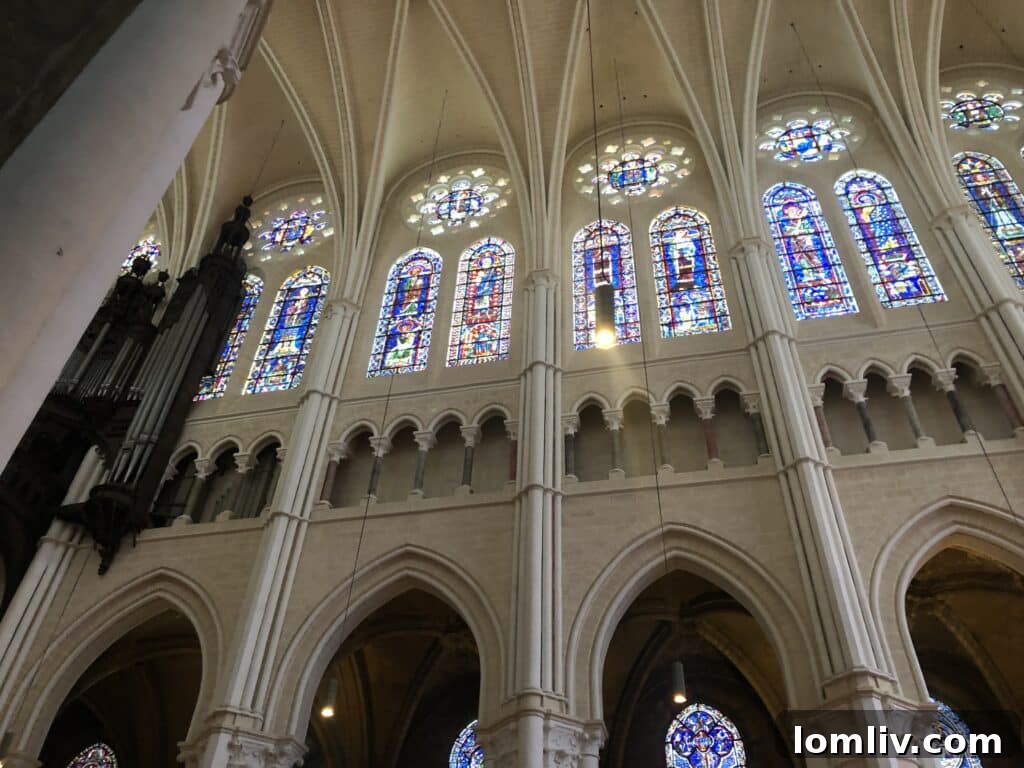
Similar conclusions and conforming restorations are being undertaken in Gothic shrines across France and Germany, reflecting a broader movement in European conservation to reveal original artistic intentions. It was partly to inspect this very restoration in progress, and to form a firsthand opinion, that I embarked on a pilgrimage to this sacred site after many years. My personal observation revealed a more subtle transformation than often portrayed in media. The scrubbing away of centuries-old grime from the interior has indeed resulted in a rather delicate shift, reintroducing a pervasive feeling of light and jubilation that must have been present in the medieval period.
When seen in person, the reintroduction of color is far from garish; rather, it manifests as a soft biscuit hue on the walls, a stark contrast to the deeper, almost mustard impression sometimes conveyed by certain photographs. And contrary to some reports, the work is very much ongoing – far from finished, with perhaps only half of the immense task completed at this stage. Chartres Cathedral continues its journey through time, ever evolving, yet forever rooted in its profound past, inviting all who visit to witness its enduring majesty and the dynamic dialogue between history, art, and modern preservation.