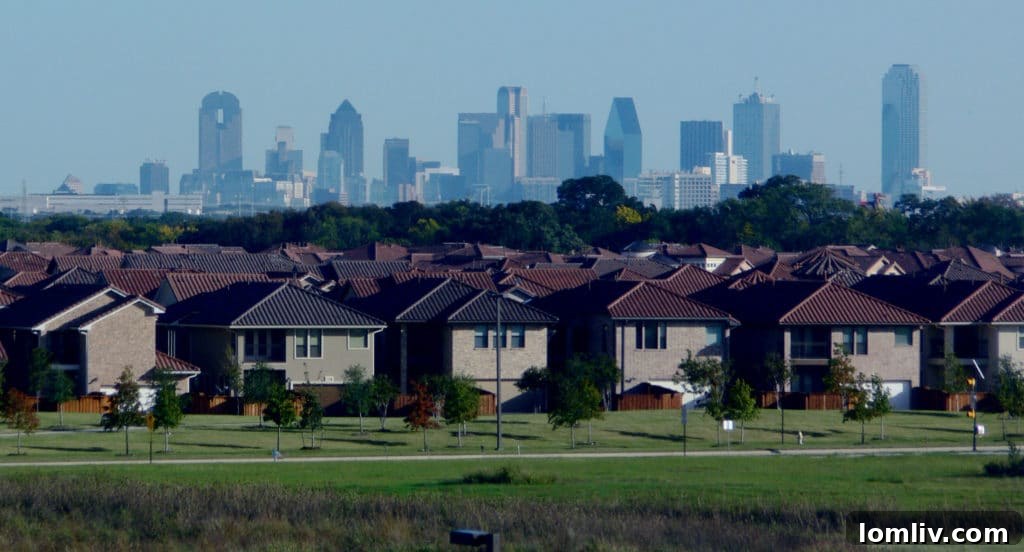
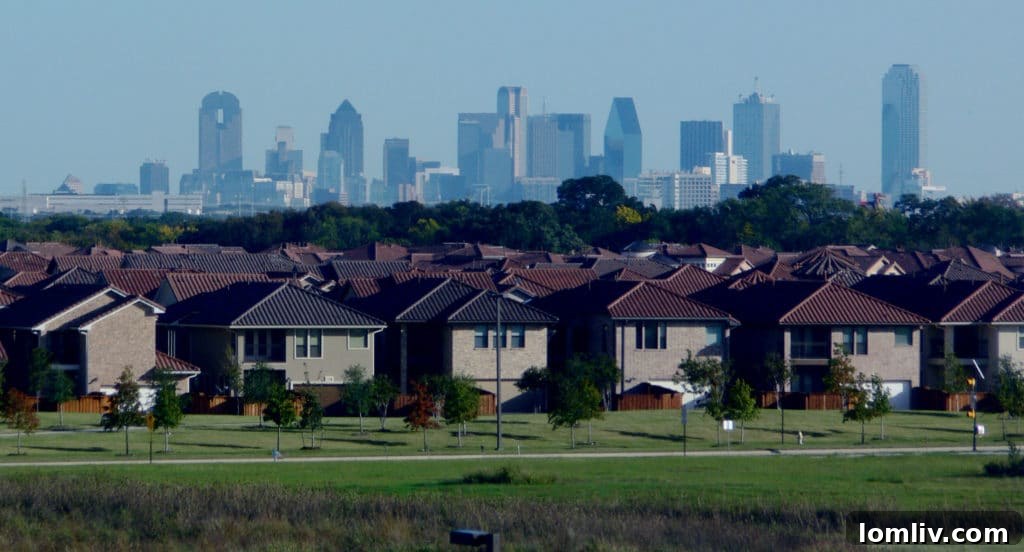
Texas, a state renowned for its vast landscapes and vibrant economy, is undergoing a profound transformation. Its major metropolitan areas are no longer merely expanding outwards; they are coalescing, merging into colossal urban tapestries that redefine regional demographics and infrastructure. From Dallas stretching aggressively towards the Red River to Fort Worth looping around Denton with a similar northern trajectory, and the contiguous growth of the Austin-San Antonio-Waco and Houston-The Woodlands-Katy corridors, the signs are unmistakable. These once-distinct urban centers are evolving into what experts are now terming “megaregions.”
This dramatic urban evolution is not just an anecdotal observation; it’s a subject of serious academic inquiry. James Tate, an Assistant Professor specializing in landscape architecture and urban planning at Texas A&M University, offers insightful perspectives on this phenomenon. Tate’s observations, initially gathered by STORAGECafé in response to their analysis of increasingly large lot sizes in Texas, shed light on the deeper trends propelling these metros into unprecedented scales. His commentary highlights several critical aspects of Texas’s burgeoning urban landscape, revealing the intricate interplay of housing, planning, and societal shifts that are shaping the state’s future. His detailed insights, edited here for conciseness and clarity, paint a vivid picture of this significant architectural and urban shift.
The Rise of Texas Megaregions: A New Urban Landscape
The concept of megaregions is becoming increasingly relevant in Texas, particularly concerning what is known as the “Texas Triangle.” This expansive area, encompassing Dallas-Fort Worth, Houston, and Austin-San Antonio, is experiencing growth at a pace that housing supply and production struggle to match, even as the state leads the nation in new unit construction. Historically disconnected cities within this triangle are now merging, largely due to the pervasive proliferation of single-family detached subdivisions. This development pattern, while meeting immediate housing demands, contributes significantly to the expansive urban sprawl.
While vast open agricultural spaces along major arteries like I-10 and I-45, and some interior rural zones, will likely persist, the reality is that major corridors are rapidly urbanizing. The I-35 corridor, stretching from Dallas all the way to San Antonio, is a prime example of continuous urbanization, transforming into a dense ribbon of development. Similarly, the region extending from Houston Northwest to Bryan-College Station, and further north from Houston to Huntsville, demonstrates this relentless outward push. Even areas west of Houston, such as Katy, are now considerably urbanized, blending seamlessly into the broader Houston metropolitan footprint. This relentless expansion is a defining characteristic of Texas’s journey towards becoming a series of interconnected megaregions, posing unique challenges and opportunities for urban planners and residents alike.

Central Cores vs. Sprawling Suburbs: The Texas Housing Dilemma
A significant challenge facing Texas urban development, particularly outside the vibrant central core neighborhoods of its major cities, is the overwhelming reliance on conventional single-family subdivision lot development and large-scale apartment complexes. This development model often leads to a monoculture of housing types, limiting choices and exacerbating issues related to housing affordability, the balance between renters and owners, and the very definitions of property in a rapidly growing state. Professor Tate notes that these economic and social complexities are increasingly central to his work on Texas’s evolving urban fabric.
In contrast to the broader suburban landscape, the central cores of major cities within the Texas Triangle are beginning to embrace more innovative housing solutions, such as the encouragement of Accessory Dwelling Units (ADUs). These secondary housing units, often built on existing residential lots, offer a promising avenue for increasing housing density and diversity without extensive new land development. However, this progressive approach faces considerable resistance in medium-sized Texas cities. Here, a persistent “suburban mindset” often translates into prohibitions against ADUs, despite the potential benefits they offer. For instance, Bryan-College Station features numerous one-third-acre lots—a density of less than four units per acre—yet opportunities to construct ADUs and introduce additional housing units are severely restricted. This contrast highlights a fundamental tension between traditional suburban ideals and the pressing need for more adaptable and diverse urban housing strategies in Texas.
Reimagining Property Boundaries and Land Ownership
The historical context of land ownership in Texas significantly shapes contemporary discussions around property boundaries and housing development. Professor Tate observes a marked difference in the discourse surrounding commoning or cooperative land ownership compared to his previous experiences in California. This disparity, he posits, might stem from Texas’s historical legacy of inexpensive land. For decades, even a decade or two ago, acquiring an acre or even a five-acre lot in the rapidly expanding suburban rings of Texas metros was remarkably affordable. This ease of access to land fostered a culture of individual property ownership and large lot sizes.
However, this historical affordability is rapidly eroding. The surging demand driven by unprecedented population growth and the relentless expansion of megaregions have dramatically altered land values. Today, securing even a modest lot within or near major metropolitan areas comes with a significantly higher price tag. This shift compels a re-evaluation of traditional property norms. As land becomes scarcer and more expensive, the feasibility and desirability of cooperative land ownership or alternative development models might become more pertinent. The changing economic landscape of Texas real estate challenges ingrained perceptions about individual property boundaries and opens the door for new discussions about shared resources and community-centric development models, though these conversations are still in their nascent stages.
Zoning Reforms and the Promise of Diverse Urban Living
A critical need in Texas’s rapidly evolving urban landscape is for a more diverse mixture of housing options, strategically distributed to avoid reinforcing monocultural and self-similar residential units. This issue, Professor Tate emphasizes, is central to sustainable urban development in the state. While significant change is largely driven by grassroots efforts within specific neighborhoods of major cities, the overall systemic shift in housing strategy remains slow. Nevertheless, the sheer speed of Texas’s growth instills a sense of optimism that broader changes in zoning laws and development practices are inevitable and imperative.
Tate advocates for a paradigm shift in how residential neighborhoods are conceived and constructed. He suggests that developers in Texas should not be permitted to create communities without intentionally integrating a diverse mix of residential housing units. This extends beyond mere housing types to encompass proximity to essential resources and services, which should be viewed as an intrinsic component of the housing package. Future developments, ideally, would include varied housing sizes, affordability levels, and access to public transportation, green spaces, schools, and commercial amenities. Such an integrated approach would not only create more vibrant and equitable communities but also reduce reliance on single-occupancy vehicles, mitigate traffic congestion, and promote a higher quality of urban living. The goal is to move beyond mere housing production to holistic community building, ensuring that growth serves all residents and enhances urban resilience.
Mixed-Use Developments: Blending Life and Commerce
Across the metropolitan areas within the Texas Triangle, numerous mixed-use developments have emerged, attempting to integrate residential, commercial, and often recreational spaces into cohesive communities. These projects vary significantly in their underlying design philosophies. Some are explicitly designed with New Urbanist principles, prioritizing walkability, compact neighborhood design, and a diverse range of housing and retail options. These New Urbanism-informed developments, while not always perfect, tend to offer a broader spectrum of housing choices and amenities, fostering a sense of community and reducing reliance on automobiles.
However, many other mixed-use developments in Texas, while seemingly offering a blend of uses, often fall short of these inclusive ideals. A common critique is their tendency towards economic segregation. These developments frequently target higher-earning individuals and households, creating exclusive “enclaves” with clearly defined boundaries. Residents within these developments often enjoy a high quality of life and access to amenities, but the design deliberately differentiates “inside” from “outside,” reinforcing social and economic divides rather than bridging them. This approach contrasts sharply with the broader goal of creating truly integrated and equitable urban environments. While mixed-use projects represent a step away from purely residential or commercial zoning, their success in fostering genuine community and inclusivity varies widely depending on their adherence to principles that prioritize social diversity over mere economic distinction.
Remote Work and Evolving Housing Preferences
The widespread adoption of remote work, accelerated by recent global events, has profoundly influenced housing preferences and, consequently, home construction trends in Texas. Professor Tate observes that a significant portion of the population expresses a desire to live within the urban core of a city. This preference is largely driven by the yearning for convenient and easy access to cultural attractions, entertainment venues, dining options, and social activities that enrich life outside of work. The ability to live, work, and play within a walkable or easily accessible urban environment has become a powerful motivator for many homebuyers and renters.
It’s crucial to contextualize these contemporary preferences against historical drivers of suburban development. The post-World War II era saw a massive exodus to the suburbs, fueled by factors such as affordable land, the rise of the automobile, the desire for larger family homes, and specific government policies. However, the forces driving residential decisions today are vastly different. Modern priorities include sustainability, community engagement, reduced commute times, and access to a diverse array of experiences. Remote work, by decoupling the workplace from the home, allows individuals greater flexibility in choosing their living environment based on lifestyle preferences rather than solely on proximity to an office. This shift underscores a dynamic evolution in what constitutes an ideal living situation, pushing for more integrated, amenity-rich, and often denser urban environments.
The Future of Texas Housing: Sustainability and Mindset Shifts
Looking ahead, Professor Tate expresses a hopeful outlook for the future of housing in Texas, particularly as new generations, armed with greater awareness of social and climate challenges, begin to shape consumer demand. He anticipates a growing recognition that the unchecked proliferation of large, single-family detached houses places immense strain on resources, consumes vast tracts of land, exerts significant pressure on existing infrastructure, and carries substantial social and cultural implications. This awareness is expected to catalyze a shift away from past housing norms.
While Tate doesn’t foresee a sudden, widespread adoption of radically different living arrangements, he firmly believes that the trend will continue to move away from the excessive size and opulence that characterized houses built in the 1990s and early 2000s. Instead, he predicts that a growing number of Texans will opt for smaller homes situated in more compact arrangements. These living spaces will likely offer better access to shared amenities and essential daily resources, aligning with both pragmatic considerations of the cost of living and evolving values and mindsets. This future vision emphasizes efficiency, community, and sustainability, suggesting a more balanced and environmentally conscious approach to housing development that better serves the needs of a rapidly urbanizing and increasingly aware population.