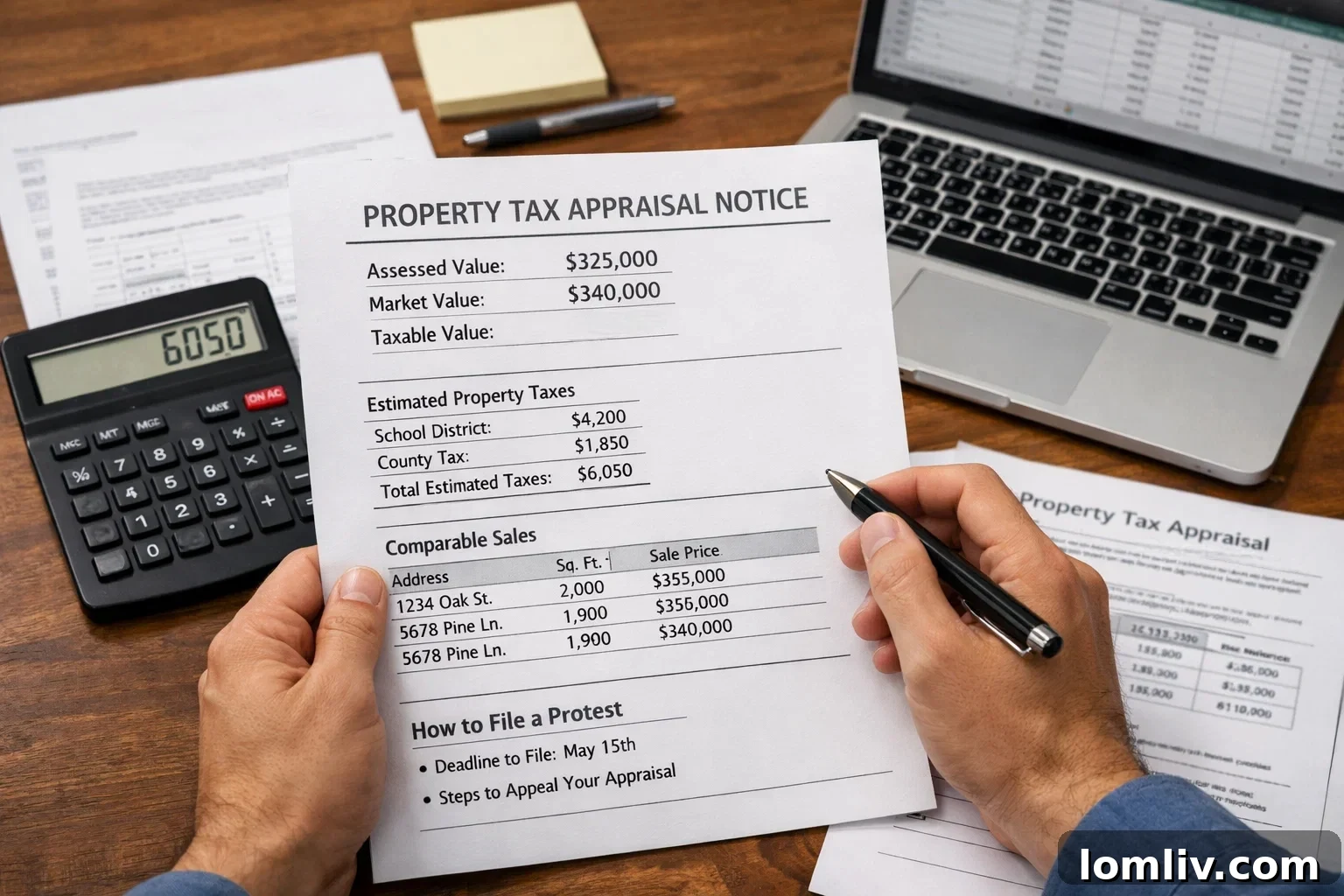
Last year, Dallas County property owners achieved a remarkable feat, saving nearly $1 billion. This substantial saving, according to the Dallas Central Appraisal District (DCAD), was not a stroke of luck but the direct result of a proactive step many homeowners overlook: protesting their property tax assessments.
This isn’t an exaggeration. In 2024, the average successful protest saved property owners over $1,000 on their annual tax bill. Despite these compelling statistics, a significant majority—approximately 76% of Dallas County property owners—did not file a protest. This leaves a vast number of homeowners potentially overpaying thousands of dollars annually.
As a seasoned DFW rental property owner, I have personally experienced the profound impact of this process. Since 2020, I’ve consistently protested the assessments on my six properties, yielding substantial savings. For instance, my Lake Texoma boat storage property alone has seen total tax savings exceeding $10,000 since I initiated protests. This hands-on experience and a deep understanding of the system motivated me to become a licensed property tax consultant and launch TaxDrop, a service designed to simplify property tax protests for all owners. If you’re among the majority who haven’t challenged your assessment, it’s highly probable that you are contributing more than your fair share to local coffers.
This comprehensive guide will demystify the property tax protest process in Dallas County, explaining why it’s crucial for every homeowner and providing actionable steps on how to effectively challenge your assessment.
Dallas Property Taxes: A Burden Nearly Double the National Average
The Dallas-Fort Worth (DFW) metroplex, a booming economic hub, unfortunately also carries one of the highest property tax burdens in the entire country. Among major metropolitan areas, DFW ranks an alarming sixth, with a median property tax bill of $5,106. This translates to an effective tax rate of 1.73%, which is nearly double the national average of 0.90%. This significant disparity means DFW homeowners shoulder a disproportionately higher tax responsibility compared to their counterparts across the U.S.
Adding to this burden, these bills show no signs of plateauing. Dallas County residential market values experienced a staggering 15.56% increase last year alone, following a substantial 12.67% rise the year prior. Such rapid appreciation, while beneficial for equity, directly translates to higher assessed values and, consequently, higher tax bills. However, a critical piece of information often eludes property owners: the assessed value determined by DCAD is an estimate, not an irrefutable truth. Many homeowners mistakenly believe that DCAD’s valuation is final, failing to realize that these assessments can be challenged, potentially saving them thousands in overpaid taxes every single year.
Understanding Property Taxes and the Power of Protest
Property taxes in Texas are calculated using a simple yet impactful formula:
Assessed Value × Tax Rate = Annual Property Taxes
Each year, the Dallas Central Appraisal District (DCAD) is tasked with determining your property’s assessed value. This value is an estimation of what your home would likely sell for on the open market as of January 1st of that year. Once DCAD establishes this value, local taxing entities – including the county, city, school district, and various special districts – apply their specific tax rates to it. The crucial distinction here is that while you generally cannot influence the tax rates set by these entities, you absolutely can challenge the assessed value that forms the foundation of your tax bill. This is precisely where the property tax protest system becomes an invaluable tool for homeowners.
Texas law unequivocally grants every property owner the right to dispute their assessment if they believe it is excessive or inaccurate. Understanding the legitimate grounds for protest is the first step toward a successful appeal:
- Market Value: This is arguably the most common ground for protest. It asserts that your property’s assessed value, as determined by DCAD, exceeds its true market value—what it would actually sell for in a competitive market. For instance, if recent sales data indicates that similar homes in your neighborhood are selling for an average of $380,000, but DCAD has assessed your property at $430,000, you have strong evidence that you are being overcharged. Your goal here is to demonstrate, with solid comparable sales data, that DCAD’s figure is inflated.
- Unequal Appraisal: This ground for protest addresses fairness and equity. It argues that your property is assessed at a higher value than comparable properties within your immediate vicinity, even if DCAD’s valuation might be close to actual market value. Imagine your home is nearly identical in size, age, and condition to your neighbor’s, yet your assessment is $50,000 higher. This constitutes unequal treatment, and it is a perfectly valid and often highly successful reason to file a protest. The law aims to ensure that properties of similar characteristics are assessed consistently.
Successfully navigating these protest grounds requires gathering compelling evidence, which we will delve into further.
The Numbers Don’t Lie: Dallas County Protest Statistics
For those hesitant about the efficacy of protesting, the data from Dallas County paints a clear and encouraging picture. The 2024 Dallas County Protest Statistics offer compelling proof of the system’s effectiveness and the high likelihood of success for homeowners:
- 84% Success Rate for Informal Protests: This statistic is incredibly empowering. It means that more than eight out of ten property owners who filed an informal protest walked away with a reduction in their assessed value. The informal protest stage, where property owners or their consultants negotiate directly with DCAD appraisers, is designed for amicable resolution and is overwhelmingly in the homeowner’s favor.
- 206,170 Accounts Protested: This number represents a significant increase from 162,060 accounts protested in 2023, indicating growing awareness and participation among Dallas County residents. As more homeowners realize the potential for savings, the collective impact continues to grow.
- $928 Million in Total Tax Savings: This nearly billion-dollar figure represents the collective financial relief enjoyed by Dallas County property owners in a single year. It underscores the massive financial impact that individual protests collectively contribute to.
The 84% informal success rate isn’t just a number; it reflects a system where reasonable arguments and valid evidence are often recognized and rewarded. DCAD appraisers regularly reduce values by 10% to 15% for homeowners who present a well-researched and compelling case. These reductions are not marginal; they represent substantial savings.
Consider the financial impact: on a $400,000 home with a 1.73% tax rate, a conservative 15% reduction in assessed value translates to over $1,000 in annual savings. What’s more, this isn’t a one-time saving. A lower assessed value established this year becomes the baseline for future assessments, creating a compounding effect. That initial $1,000 saved could easily snowball into $10,000 or more over the next decade, freeing up significant capital for other investments or simply keeping more money in your pocket.
Key Indicators You Might Be Overassessed
Unsure if you have a valid reason to protest your property taxes? Many homeowners are, which is why they often miss out on significant savings. Recognizing the red flags that indicate an overassessment is crucial. Look for these common signs that suggest your property’s value may be unfairly high:
- Your Assessment Exceeds Recent Sales in Your Neighborhood: This is a powerful indicator. Take the time to research what similar homes in your immediate area have actually sold for within the past 6 to 12 months. Pay attention to properties with comparable square footage, number of bedrooms/bathrooms, age, and overall condition. If your assessed value is 10% or more above the sales prices of these comparable homes, you have very strong grounds for a market value protest. Accessing recent sales data is key.
- Your Property Value Jumped Significantly More Than Neighbors’: DCAD’s mass appraisal system aims for consistency. Therefore, properties that are similar in nature and location should generally see similar increases or decreases in value year-over-year. If your home’s assessed value increased by 20% while an identical house next door only saw an 8% rise, this strongly suggests an unequal appraisal. This discrepancy is one of the most compelling arguments you can present during a protest, highlighting an unfair assessment.
- Your Property Records Contain Errors: DCAD’s vast database isn’t infallible. Errors in your property’s records can directly inflate your assessment. Common mistakes include incorrect square footage (either too high or too low, though usually inflated), inaccurate room counts, listing features your property doesn’t possess (such as a swimming pool, detached garage, or extra outbuildings), or outdated condition ratings that don’t reflect current wear and tear. These errors create an artificially high valuation. It’s essential to meticulously review your property’s details on the DCAD website.
- Physical Issues Are Not Reflected in Your Assessment: While DCAD’s mass appraisal system works efficiently, it can’t always account for every property-specific condition issue. Does your home have significant foundation problems requiring costly repairs? Is your roof nearing the end of its lifespan and in need of replacement? Are the HVAC systems old and inefficient? Do you have widespread water damage, outdated plumbing, or electrical issues? These physical deficiencies directly reduce your property’s market value, but they may not be factored into DCAD’s assessment. Documenting these issues with photos, repair estimates, or inspection reports can be powerful evidence.
- You Purchased Your Home at the Market Peak: If you bought your property in 2021 or 2022, when real estate prices in Dallas-Fort Worth were at their historical peak, your initial assessment might still reflect that elevated value. However, market conditions have cooled since then, and it’s possible your current assessed value hasn’t adjusted downwards to reflect current market realities. If you paid top dollar during the peak, your current assessment may now be above true market value.
Identifying these signs is the first step towards building a successful protest case. For a more detailed walkthrough and additional insights, here’s a complete guide to the Dallas County property protest process, including key deadlines, required documentation, and effective strategies.
Real-World Impact: What a Successful Protest Delivers
To truly grasp the financial benefits of a property tax protest, let’s examine some real numbers based on a typical Dallas home. These scenarios demonstrate how even a modest reduction can lead to significant annual and long-term savings.
Before the Protest:
- Assessed Value: $425,000
- Tax Rate: 1.73% (Dallas County average)
- Annual Taxes: $7,353 ($425,000 * 0.0173)
Now, let’s consider the impact of a successful protest:
Scenario 1: After a Moderate 12% Reduction (Often Achievable with Basic Evidence)
- New Assessed Value: $374,000 (a reduction of $51,000)
- Annual Taxes: $6,470 ($374,000 * 0.0173)
- Annual Savings: $883 ($7,353 – $6,470)
Imagine saving almost $900 every year for just a few hours of effort. That’s money that stays in your pocket, not sent to the tax office.
Scenario 2: After a Strong 18% Reduction (Achievable with Robust Evidence and Expertise)
- New Assessed Value: $348,500 (a reduction of $76,500)
- Annual Taxes: $6,029 ($348,500 * 0.0173)
- Annual Savings: $1,324 ($7,353 – $6,029)
A reduction of this magnitude, often possible when presenting compelling evidence of market value or unequal appraisal, results in over $1,300 in savings annually. Now, extend these savings over the typical period of homeownership: 5, 10, or even 20 years. A single afternoon spent on a protest or a minimal fee to a consultant can easily translate into tens of thousands of dollars returned to you over the lifespan of your property. This demonstrates that protesting isn’t just about small adjustments; it’s about significant, compounding financial relief that empowers homeowners to retain more of their hard-earned money.
How to Get Started with Your Property Tax Protest
Dallas property owners possess far more control over their tax bills than many realize. The nearly $1 billion in savings achieved last year stands as irrefutable proof that protesting your property tax assessment works. When it comes to initiating this process, homeowners have two primary avenues:
Option 1: Hiring a Licensed Property Tax Consultant (The Hassle-Free Approach)
For those who prefer a professional to navigate the complexities of the protest process, hiring a licensed property tax consultant offers expertise, time-saving benefits, and peace of mind. Services like TaxDrop specialize in property tax appeals, handling the entire process on your behalf. A key advantage of many consultants, including TaxDrop, is their contingency-fee structure: they typically charge a percentage of your realized savings (e.g., 25%), meaning you pay nothing upfront and only pay if they successfully reduce your bill. If no savings are achieved, you owe nothing. This model aligns the consultant’s success directly with yours.
Hiring a consultant like TaxDrop is designed to be seamless. Simply visit TaxDrop.com, enter your property address to receive an estimated savings projection, and then enroll for service in approximately 3 minutes. This minimal effort can yield maximum results without you lifting a finger.
Option 2: DIY Property Tax Protesting (The Hands-On Approach)
For homeowners who are comfortable with a more hands-on approach and have the time to dedicate to the process, protesting independently is also a viable and often successful option. Here are the fundamental steps:
- Look Up Your Property Value: Your first step is to access your current assessed value and property details directly from the source. Visit dallascad.org and use their property search tool. Note your official assessed value, as well as the property characteristics they have on file (square footage, number of rooms, features, etc.).
- Compare Your Assessment to Recent Sales: This is where you gather your evidence for a market value protest. Utilize online real estate platforms (e.g., Zillow, Realtor.com, Redfin), local realtor resources, or county appraisal district data from comparable properties to identify recent sales of similar homes in your neighborhood. Focus on sales within the last 6-12 months. Document these comparables, paying attention to price, square footage, age, and condition.
- Document Any Errors or Condition Issues: If you’re pursuing an unequal appraisal or challenging inaccurate data, meticulously document any discrepancies. Take photos of physical defects (foundation cracks, aging roof, outdated fixtures, water damage). Gather repair estimates if available. If DCAD records show incorrect features (like a pool you don’t have), gather evidence to refute this.
- File Your Protest Online: DCAD provides an online portal for filing protests. Follow the instructions on their website to submit your protest by the deadline (typically May 15th or 30 days after your Notice of Appraised Value is mailed, whichever is later). Be prepared to indicate your grounds for protest and potentially upload initial evidence.
At worst, you might invest a few hours of your time and end up with the same tax bill. However, at best, you stand to save $1,000 or more every single year. It’s crucial to remember that DCAD will not proactively inform you that you are overpaying. The onus is on the homeowner to identify potential overassessments and initiate the protest process. Taking action is the only way to potentially reduce your property tax burden and secure significant savings for your household.
AUTHOR BIO:
Ryder Meehan is the Co-Founder and COO of TaxDrop (taxdrop.com), an innovative property tax appeal platform dedicated to helping homeowners in Texas and California successfully reduce their property tax bills. A licensed property tax consultant with extensive experience and an active DFW real estate investor since 2010, Ryder is deeply passionate about empowering everyday homeowners by making the complex process of property tax protests accessible and straightforward for everyone.