The Enduring Battle for Kessler Park’s Historic Stone Stairways
Kessler Park, a venerable and picturesque neighborhood in Dallas’s Oak Cliff district, is renowned for its tree-lined streets, elegant homes, and a rich history that dates back to the early 20th century. However, beneath its tranquil surface lies an ongoing debate surrounding a seemingly modest yet profoundly significant piece of its heritage: the historic stone steps connecting Canterbury Court and Edgefield Avenue. This issue, far from being a simple matter of urban decay, has become a microcosm of broader challenges in historic preservation, urban planning, and community dynamics, drawing battle lines among residents and engaging city officials in a complex quest for resolution. As highlighted by Rachel Stone at the Oak Cliff Advocate, this “unexpectedly contentious issue” has captured the community’s attention, revealing deep-seated divisions and aspirations for the future of this cherished Dallas enclave.
A Glimpse into Kessler Park’s Founding Vision and Its Architectural Heritage
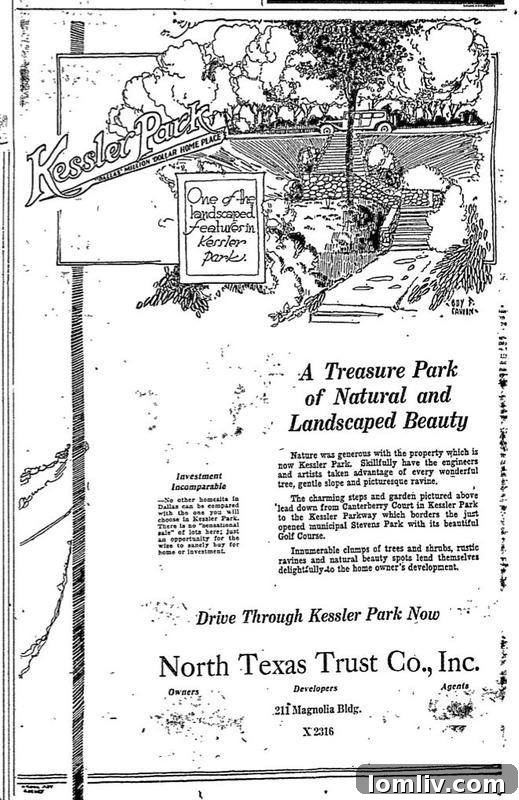
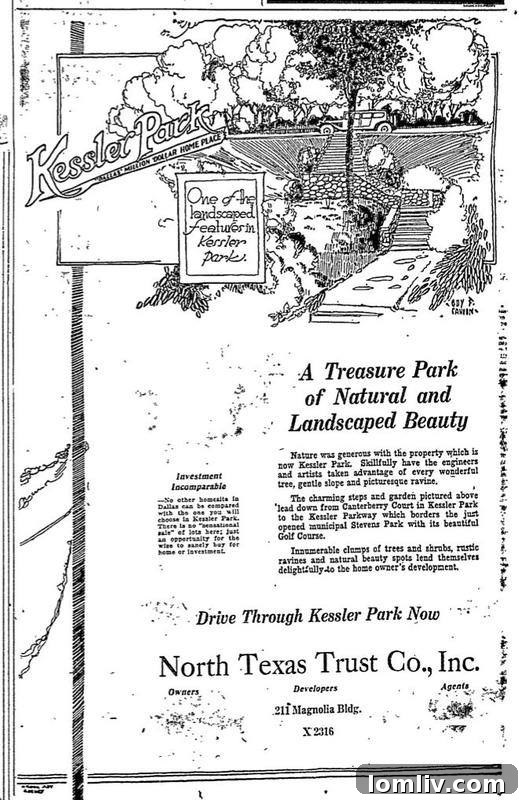
To truly understand the controversy surrounding these stone steps, one must delve into the origins of Kessler Park itself. Developed by the North Texas Trust Co. in the early 1920s, Kessler Park was conceived as an affluent garden suburb, designed to attract wealthy families seeking a harmonious blend of natural beauty and sophisticated living. The developers meticulously planned a landscape that featured winding roads, lush green spaces, and a network of pedestrian pathways, including what were then known as “pocket parks.” These smaller, intimate green areas, often featuring elements like the stone stairways, were not merely decorative; they were integral to the neighborhood’s original ethos, promoting walkability, community interaction, and a deep connection to the natural environment.
The stone walkway between Canterbury Court and Edgefield Avenue stands as a tangible link to this pioneering urban design. Crafted with care and built to last, these steps were intended to provide convenient, safe passage for residents navigating the hilly terrain, connecting different sections of the neighborhood in a manner that prioritized pedestrian access over vehicular traffic—a remarkably progressive vision for its time. These steps are more than just a means to traverse a slope; they are a historical artifact, embodying the architectural and planning principles that shaped Kessler Park into the distinctive community it is today. Their very existence speaks volumes about the early foresight of urban planners who understood the value of pedestrian infrastructure in fostering a vibrant, interconnected neighborhood.
The Decline, Disrepair, and the Unclear Path Forward
Despite their original grandeur and purpose, the nearly 100-year-old stone steps have, like many pieces of aging urban infrastructure, fallen into a state of considerable disrepair. Over the decades, neglect and the relentless march of nature have taken their toll. The once-clear path is now often overgrown with dense vegetation, including thick bamboo, obscuring the historic stonework and rendering the steps impassable or, at best, treacherous. This decline raises significant safety concerns for anyone attempting to use them. The deterioration is not merely aesthetic; it represents a functional failure, as a vital pedestrian link has been effectively severed.
A primary factor contributing to this state of disrepair has been the long-standing ambiguity surrounding their ownership and, consequently, responsibility for their maintenance. For many years, it wasn’t clear whether these steps belonged to the city, to an adjacent property owner, or perhaps to a historical entity no longer actively involved. This lack of clarity created a bureaucratic impasse, preventing any concerted effort towards restoration. The steps became a classic example of “tragedy of the commons” where shared responsibility often translates into no responsibility, leading to gradual decay and neglect. This ambiguity transformed a simple physical structure into a complex legal and administrative puzzle, prompting city officials and community members alike to embark on a meticulous investigation into historical records to ascertain the rightful custodian of this forgotten pathway.
Councilman Griggs Enters the Fray: Unraveling the Legal Knot
The struggle to clarify the ownership and maintenance responsibilities of the Canterbury-Edgefield steps eventually drew the attention of Dallas City Council member Scott Griggs. Recognizing the dual importance of historical preservation and public safety, Griggs initiated a comprehensive inquiry into the matter. He understood that before any restoration work could begin, the foundational legal questions had to be unequivocally answered. His Facebook post, shared with the community, underscored the complexity of the situation and the methodical approach required:
Thank you to everyone for your patience. Please know that work is underway on the issue of the ownership of the Canterbury-Edgefield steps. I expect the City Attorney’s Office to have the opinion completed soon. I met with the senior City Attorney assigned to the case on Wednesday and requested the opinion by October 24. Hopefully, it will be done. I was hoping to already have an opinion.
As the matter is adversarial, the City Attorney’s Office is understandably proceeding with caution. The issues include ownership, grant of easement, type of grant of easement and by whom/to whom, who built the stairs, who is responsible for maintenance of the stairs, and was the responsibility for the maintenance of the stairs ever transferred. Other issues include how the Kessler Park Conservation District may affect the standard to which the stairs must be maintained.
And foremost, as always, is public safety. A distant second to public safety is money – who pays for what and how – and what to do if there is insufficient funding available.
Charles Hatfield has done a great job finding some old records. Other records are not digitized and being searched by hand. All the documentation the City has is public and, as I have said, I will make available to any outside real-estate attorney who would like to render an opinion. Just message me.
I appreciate everyone’s kind comments. Thanks, in advance.
Griggs’s detailed explanation highlights the bureaucratic labyrinth involved. The City Attorney’s Office had to meticulously examine old property deeds, original development plans, and historical city records, many of which were not digitized and required manual searching. The legal questions are multi-faceted: defining clear ownership, understanding the nature and terms of any existing easements, identifying the original builders, tracing the history of maintenance responsibility, and determining if that responsibility was ever formally transferred. Furthermore, the existence of the Kessler Park Conservation District adds another layer of complexity, as any restoration work would likely need to adhere to specific preservation standards, potentially increasing costs and requiring specialized expertise. Griggs rightly prioritized public safety as the paramount concern, followed by the financial implications – determining funding sources and how to proceed if resources are limited. His transparency in offering documentation to external attorneys underscores his commitment to a fair and thoroughly researched resolution.
The “Adversarial” Core: Community Divided
Councilman Griggs’s use of the term “adversarial” to describe the discussion surrounding the steps’ ownership and responsibility is particularly striking and reveals the deep divisions within the Kessler Park community. The issue isn’t just about legal technicalities; it’s about conflicting visions for the neighborhood’s future and differing priorities among residents. Rachel Stone’s reporting sheds further light on the roots of this contention:
About a year ago, City Councilman Scott Griggs found bond money that could’ve paid to reopen and restore the steps. But some neighbors living closest to the steps, on Canterbury, opposed reopening them. So Griggs instead used the bond funds to extend the Coombs Creek Trail.
Since the steps are on a 30-foot public right of way between homes, a few neighbors took it upon themselves to clear the steps, working with machetes to cut away tall bamboo.
Because there are no sidewalks in the neighborhood, the steps are convenient for pedestrians wishing to walk from Kessler Parkway toward Colorado.
“It can be dangerous to walk on Edgefield,” says Kessler Park resident Don Sanders.
Sanders says neighbors living closest to the steps have shooed people trying to clear the steps and even threatened to call the police, claiming they were trespassing.
This excerpt illustrates the core of the conflict. On one side are residents, often those who value pedestrian access and historical preservation, advocating for the steps’ restoration. They highlight the practical need for the steps, particularly given the lack of sidewalks in the neighborhood, making walking on streets like Edgefield Avenue “dangerous.” For these residents, the steps represent a crucial pedestrian link from Kessler Parkway toward Colorado, enhancing walkability and community connectivity. Their commitment is evident in the proactive efforts of some neighbors who took it upon themselves to clear the overgrown path with machetes, demonstrating a tangible desire to reclaim this public right-of-way for its intended use.
Conversely, a vocal contingent of residents, particularly those whose properties border the steps on Canterbury Court, staunchly oppose their reopening. Their opposition stems from concerns about privacy, increased foot traffic, potential noise, and perceived security risks that might arise from making the pathway publicly accessible once more. For these neighbors, the overgrown, forgotten steps offer a natural barrier, preserving the tranquility and seclusion of their immediate surroundings. Their strong resistance, even going so far as to “shoo people trying to clear the steps and even threatened to call the police, claiming they were trespassing,” underscores the intensity of their conviction. This fundamental disagreement — between public access and private amenity, community benefit and individual impact — is what makes the issue so deeply “adversarial.” It represents a classic tension in urban planning where the needs of the wider community sometimes clash with the immediate concerns of those directly affected.
The Long Road to Resolution: Griggs’ Plan and Broader Implications
Despite the entrenched positions and legal complexities, Councilman Griggs has continued to push for a resolution. Following extensive research and consultations, he has formulated a plan for restoring the steps, which was outlined in a memo to the city and community members. This plan represents a significant step forward, aiming to provide a pathway for official city involvement in the restoration process, contingent upon addressing the legal ambiguities and securing necessary funding. The existence of such a detailed memo signals a serious commitment from city leadership to revive this piece of Kessler Park’s heritage.
However, as the saying goes, “nothing’s set in stone”—especially when dealing with century-old stone steps mired in community dispute. The implementation of Griggs’ plan faces ongoing challenges, not least of which is navigating the continued opposition from some residents and securing the substantial funding required for a sensitive, historically appropriate restoration. The City Attorney’s opinion, once finalized, will be crucial in establishing a clear legal framework for ownership and maintenance. Yet, even with legal clarity, the social and political will to move forward will depend heavily on sustained community dialogue, potential compromises, and a shared vision for Kessler Park’s future.
The saga of the Canterbury-Edgefield steps transcends a mere local dispute; it offers valuable insights into broader urban challenges. It highlights the critical importance of maintaining public infrastructure, particularly in historic districts, and the profound impact that such elements have on a neighborhood’s character and functionality. It underscores the delicate balance between historical preservation and adapting to modern urban life, where walkability and pedestrian-friendly environments are increasingly valued. Furthermore, this case exemplifies the intricate dance between city governance, legal frameworks, and passionate community advocacy. It serves as a reminder that urban revitalization often requires not just capital and labor, but also patience, negotiation, and a deep understanding of local history and community sentiment. For Kessler Park, the journey to restore these historic steps is not just about physical reconstruction; it’s about rebuilding consensus and reaffirming the collective identity of a cherished Dallas neighborhood.
You can find the detailed plan in the document below, providing further insight into the proposed restoration efforts:
Final Memo: Stairway Path From Canterbury to Kessler