Embracing the Micro-Trend: Can Dallas Learn from Austin’s Small Space Revolution?
The urban landscape is continuously evolving, and with it, our understanding of what constitutes an ideal living space. In bustling city centers across the globe, a growing movement toward small space living and micro-apartments is reshaping how people envision their homes. This trend, driven by rising urban housing costs, a desire for sustainable living, and a push for minimalist lifestyles, has become particularly prominent in vibrant locales like Austin, Texas. But what about the sprawling metropolis of Dallas? Can the “Big D,” known for its larger-than-life ethos, truly embrace the charm and efficiency of living small?
For years, finding truly tiny yet stylish apartments in Dallas has been a significant challenge. Our beloved city, with its vast expanses and a cultural leaning towards more generous living quarters, hasn’t historically jumped on the “living small” bandwagon with the same enthusiasm seen in its sister city, Austin. In Austin, however, the landscape is dramatically different. Sky-high home prices and escalating rents have propelled a surge in demand for compact, efficient housing solutions, making it a hotbed for micro-living innovation.
Austin’s Micro-Living Movement: A Blueprint for Smart Urban Living
Austin’s rapid growth and soaring popularity have created a unique housing market. Young professionals, artists, and innovators flock to the city, seeking its vibrant culture and economic opportunities. Yet, the cost of living, particularly housing, has become a significant barrier. This pressure cooker environment has inadvertently fostered a thriving ecosystem for tiny apartment living, where residents learn to live large in small footprints. These creative solutions allow individuals to remain close to the downtown buzz, enjoying urban amenities without the exorbitant price tag typically associated with spacious city residences.
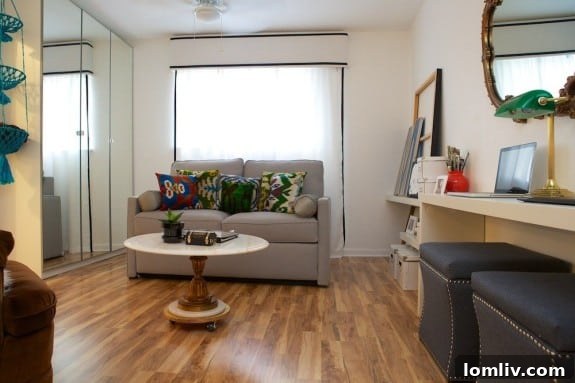
A prime example of Austin’s ingenious approach to small space design is the remarkable apartment renovated by Mary Lee, an inspiring individual previously featured on KEYE TV Austin and highlighted on Apartment Therapy. This humble dwelling, measuring just 300 square feet, defies expectations by offering a living experience that is both supremely stylish and highly functional, proving that square footage is not the sole determinant of quality of life.
Designing for Compact Living: The Art of Maximizing 300 Square Feet
Mary Lee’s apartment stands as a fantastic testament to what can be achieved with thoughtful design and clever curation in a small living space. Rather than feeling cramped or restrictive, it exudes an open, airy ambiance. The secret lies in a combination of intelligent layout, multi-functional furniture, and a meticulous selection of decor that enhances, rather than overwhelms, the compact footprint. This apartment truly feels like a complete home, offering distinct zones for living, working, and relaxation.
One of the most surprising and delightful features of this micro-apartment is the inclusion of a full bathtub – a luxury often foregone even in much larger urban dwellings. This detail underscores the philosophy that small space living doesn’t necessarily mean sacrificing comfort or essential amenities. The kitchen, while compact, is incredibly well-appointed, boasting a gas range and a refrigerator, along with an abundance of cleverly integrated storage solutions. These features demonstrate that a compact kitchen can be every bit as functional as its larger counterparts, enabling residents to cook and entertain with ease.
The only amenity arguably missing from this well-equipped kitchen is a dishwasher. However, this raises a fundamental question at the heart of the minimalist living movement: “Do you truly need a dishwasher, or can manual dishwashing suffice?” In a home designed for efficiency and intentional living, every item’s utility is carefully weighed. The answer often points to prioritizing core needs and embracing simpler solutions, reducing clutter, and minimizing reliance on non-essential appliances.
The Philosophy of Living Small: Redefining Needs vs. Wants
The decision to embrace tiny home living or a micro-apartment lifestyle often involves a profound shift in mindset. It’s a journey of self-reflection where individuals constantly challenge conventional notions of necessity. People who consciously choose to live small frequently ask themselves critical questions about their possessions and their living arrangements:
- “Do I really need a dedicated dining table that takes up valuable floor space, or will a versatile breakfast bar or a folding table serve just as effectively for meals and social gatherings?”
- “Do I truly need a traditional, stationary bed, or would a convertible couch, a stylish futon, or an innovative Murphy bed system offer greater flexibility, allowing the bedroom to transform into a living area during the day?”
These questions extend beyond furniture to every aspect of daily life, encouraging residents to prioritize experiences over excessive material possessions. It’s about being intentional with every square foot, every item, and every design choice. This philosophy fosters creativity in spatial planning, encouraging the use of vertical space, hidden storage, and multi-functional pieces that serve dual or even triple purposes. The goal is to create a living environment that supports a rich and fulfilling life, free from the burden of excessive maintenance, clutter, and higher living costs.
The Benefits of a Compact Lifestyle
Beyond the undeniable financial advantages of lower rent or mortgage payments, and reduced utility bills, compact living offers a plethora of lifestyle benefits:
- Financial Freedom: Smaller spaces often translate to lower housing costs, freeing up income for travel, savings, or investments.
- Reduced Environmental Footprint: Less space to heat, cool, and light, contributing to a more sustainable lifestyle.
- Less Clutter, More Focus: Encourages minimalism, leading to a decluttered physical space and a clearer mental state. With fewer possessions, there’s less to organize, clean, and maintain.
- Increased Mobility and Flexibility: Easier to move, and often allows for prime urban locations that would otherwise be unaffordable.
- Designed with Intent: Every item and design choice in a small space is usually deliberate, reflecting personal taste and maximizing utility.
- More Time, Less Stress: Less time spent on household chores and maintenance means more time for hobbies, personal growth, and social connections.
Dallas’s Potential for Tiny Living: A Shifting Landscape
While Austin has been at the forefront of the small space movement, Dallas is slowly but surely recognizing the appeal and necessity of more compact urban living. Historically, Dallas’s urban planning and real estate market have catered to a preference for larger homes, driven by available land and a culture that values spaciousness. However, as the city continues its rapid urbanization, faces increasing traffic congestion, and experiences its own surge in property values, the demand for walkable, efficient, and affordable urban housing is escalating.
Developers in Dallas are beginning to respond to these shifts, with an increasing number of studio apartments and thoughtfully designed micro-units appearing in prime downtown and uptown locations. This evolution suggests that the “Big D” is gradually moving towards embracing innovative housing solutions that cater to a new demographic of residents – young professionals, empty nesters, and individuals who prioritize location and lifestyle over expansive square footage. The success stories from cities like Austin provide a compelling model for how Dallas can adapt and thrive in this emerging housing trend, proving that quality of life doesn’t always scale with square feet.
Beyond Apartments: The Broader Tiny Home Movement
The concept of small space living extends far beyond conventional apartments. The broader tiny home movement encompasses a diverse array of creative housing solutions, from converted shipping containers to beautifully crafted tiny homes on wheels. These innovations offer unparalleled flexibility and demonstrate the boundless possibilities when rethinking traditional housing models. These mobile dwellings, in particular, represent the ultimate expression of freedom and intentional living, allowing residents to take their homes wherever adventure calls.
Stay tuned for more insightful features on how the spirit of small living is taking root in Dallas and beyond. We’ll explore various facets of this exciting trend, including an exclusive tour of the fascinating “tiny home on wheels” belonging to blogger B.A. Norrgard, creator of “A Bed Over My Head.” These upcoming explorations will further showcase how individuals are finding creative and sustainable ways to live purposefully and efficiently, proving that a rich life doesn’t require an abundance of space.
(All photos: Mary Lee/Apartment Therapy)