By Daniel Lalley
Special Contributor
The narrative of a significant population shift, often dubbed the “California mass exodus,” has become a prominent topic across various sectors, from the intensely competitive housing markets to the legislative halls of Congress. While the onset of the COVID-19 pandemic certainly accelerated this trend, sparking a rapid increase in relocations, statistics reveal that an eastward migration was already well underway before the era of widespread stay-at-home orders and stringent social distancing protocols. Long before the much-publicized move of Tesla’s headquarters to Texas and Joe Rogan’s influential presence began to reshape the Austin housing market, the Lone Star State was already experiencing an annual influx of approximately 80,000 residents from the West Coast.
This substantial interstate relocation often prompts bewilderment among outsiders. With California’s famed bright weather, a seemingly robust economy, and some of the world’s most iconic coastlines, many struggle to comprehend why individuals would choose to uproot their lives, leaving behind established friends, family, and careers for a new beginning so geographically distant. The perceived allure of California often overshadows the underlying challenges that drive such significant decisions.
As a former resident of San Francisco, I offer a firsthand perspective on this complex matter. My personal journey mirrors that of many others, and I can attest that the reasons for packing up, navigating the length of California, and leaving it all behind in the rearview mirror are numerous and compelling. It’s a decision often born out of a confluence of factors, ranging from economic pressures to shifts in lifestyle and a search for new opportunities and a different quality of life.
My Personal Journey: From Golden State Dreams to the Lone Star State Reality
A decade ago, I embarked on a new chapter, moving to San Francisco with an idealistic vision. I was attending the University of San Francisco, drawn by the vibrant promise of a city renowned for fostering artistic freedom and creative expression. For a considerable time, I genuinely adored the city. Its unique architectural tapestry, the distinct atmosphere that permeated its streets, and the breathtaking coastal roads leading south to the majestic Big Sur and north to ancient redwood forests all captivated me. Of course, even then, there were undeniable drawbacks – the notoriously gritty Tenderloin district and a transit system that often left much to be desired. But these were accepted as inherent quirks of big-city living, part of San Francisco’s distinct character.
The turning point, however, arrived with the escalating political tensions that reached a fever pitch in 2016. As the nation witnessed a significant political shift that fall, the ensuing pushback from opposition movements became increasingly intense, at times almost maliciously defiant. San Francisco, a self-proclaimed mecca of progressive politics, felt the profound impact of this cultural and political upheaval. The years that followed brought a noticeable erosion of the city’s appeal. We observed an proliferation of local regulations, often coupled with a perceived loosening of restrictions on issues such as homelessness, drug use, crime, and public corruption. When the pandemic hit, layering its own brand of chaos onto an already strained urban environment, the city began to feel eerily post-apocalyptic.
I distinctly recall a day when the sky above our Japantown neighborhood turned an unsettling dark orange, casting an otherworldly glow that made our familiar streets resemble the surface of Neptune. This vivid image became a stark symbol of the tumultuous summer, punctuated by civil unrest, stringent lockdowns, and devastating large-scale wildfires. It was during this period, when Governor Gavin Newsom publicly stated he had no intention of California ever returning to its pre-pandemic “normal,” that my wife and I collectively realized we had reached our breaking point. The dream we had once pursued in San Francisco had fundamentally changed, and it was time for a new direction.
Navigating a New Beginning: Avoiding Culture Shock in Deep Ellum
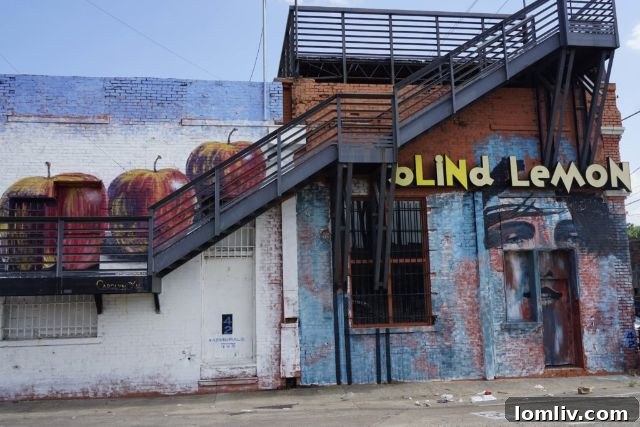
My roots are in Texas, and my wife hails from Hawaii, but our paths serendipitously crossed in San Francisco. When I broached the idea of relocating, the choice narrowed down to either Dallas or Oahu. Much to my initial surprise, and perhaps a touch of dismay, my wife firmly advocated for a move to Dallas. Having previously lived near Lower Greenville earlier in my life, I had a foundational understanding of Dallas’s diverse urban landscape and vibrant atmosphere. This insight led me to suggest Deep Ellum as our initial landing spot. Friends had assured me it was an emerging, dynamic neighborhood, and we found ourselves particularly interested in a stylish high-rise apartment complex known as the Case Building.
With a leap of faith, we signed a 15-month lease for a one-bedroom apartment at the Case Building, completely sight unseen. To our delight, it was a fantastic space: a well-appointed one-bedroom with a generously sized bathroom and an abundance of closet and kitchen storage. The interior aesthetic was precisely what we sought – modern yet cozy, perfectly conducive to the mid-century, Eames-inspired decor I envisioned. The apartment boasted stylish exposed concrete, impressive high ceilings, sophisticated recessed lighting, and a remarkably fluid layout. All of this came at just under $2,000 monthly, a price point that, when considering the expansive room and extensive amenities, is bound to impress even the most hesitant West Coast transplants accustomed to far higher costs of living.
Deep Ellum itself provides a distinctive cultural flavor, flourishing on the periphery of downtown Dallas. Its inherent walkability, coupled with a diverse array of independent shops, restaurants, and entertainment venues, created an ideal transitional environment for my wife, easing her into a new city with a distinctly different, often more relaxed, pace than San Francisco. For urbanites moving from high-density cities like Los Angeles, Oakland, or San Francisco, Deep Ellum serves as an excellent bridge. I strongly recommend this approach: avoid the immediate jolt of moving straight into suburban cul-de-sac communities. Instead, allow yourself and your family to gradually acclimate by exploring an area that offers a more familiar urban pulse, yet at a more accessible cost and with a burgeoning sense of community.
From Renting in Dallas to Realizing the American Dream in Plano
By March of this year, with a comfortable understanding of our new environment, we felt ready to take the significant next step: homeownership. The comparatively lower rent we paid in Dallas, especially relative to what we would have endured in San Francisco, allowed us to build a substantial nest egg for a down payment. Our experience entering the fiercely competitive Dallas housing market, however, defied the typical “Californian” narrative often sensationalized in media. While we didn’t arrive with a limitless all-cash offer or the ability to close on a property in mere hours, we were fortunate enough to have a solid down payment and funds for closing costs. Despite the intense competition, a stroke of luck played a crucial role in our journey.
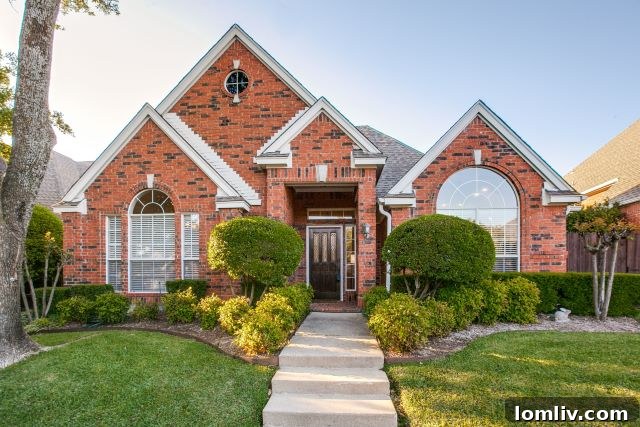
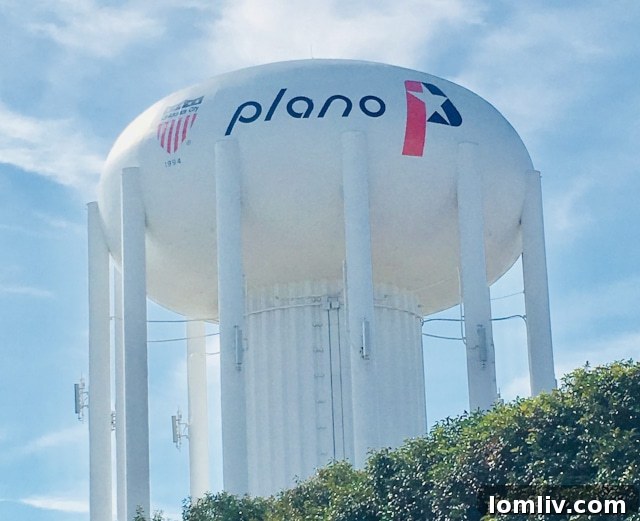
Our decision to purchase a home in Plano was largely influenced by my wife securing a new job in Addison. Though my work is situated in the Design District, my brand-new Mustang makes the commute an enjoyable part of my day. This brings me to a valuable piece of advice for other transplants: consider investing in a nicer vehicle here in Texas. Unlike the often punishing conditions of urban California driving and notoriously scarce parking, Texas offers ample parking and generally less congested, smoother commutes, allowing you to truly appreciate your car without constant worry of damage or inconvenience.
The home search itself was a grueling process. We faced repeated disappointments, losing out on a handful of offers to buyers with more aggressive terms. We then stumbled upon an incredible four-bedroom, three-bathroom home spanning 2,400 square feet, ideally located off Legacy Drive, listed for just over $400,000. Despite our enthusiasm, we were advised by many, including our Realtor, not to even bother. The market was flooded with all-cash offers, some soaring as much as $60,000 above the asking price – a truly daunting landscape for traditional buyers.
Reluctantly, we instructed our Realtor not to spend any more time on what seemed like a futile pursuit. Yet, a few days later, we received an unexpected call. The seller, after revoking her contract with an investor, made a remarkable decision: she would only consider offers from “real families.” Seizing this rare opportunity, we quickly assembled our offer, drafted a heartfelt letter to this incredibly empathetic seller, and against all odds, secured the house of our dreams for $10,000 under the appraised value. In the current Dallas-Fort Worth market, such an outcome is virtually unheard of, a testament to timing and perhaps a touch of serendipity.
The Next Chapter: Settling Into Our Texas Home
As I put the finishing touches on this very article, the exciting news just came in: we are officially clear to close on our new home in Plano! In less than a week, my wife and I will become official homeowners, marking a significant milestone in our journey and solidifying our roots in the Lone Star State.
The moral of our story is clear: if the Golden State is no longer aligning with your aspirations or heading in a direction you desire, take a courageous chance on Dallas. From the unparalleled diversity of its food culture to the genuinely friendly and welcoming people I’ve encountered at every turn, this vibrant city has, without a doubt, exceeded our expectations. Dallas offers a dynamic urban core brimming with opportunities, complemented by excellent suburban options like Plano for those looking to establish or grow a family in a supportive community.
Indeed, the only thing truly missing from our new life here is the expansive ocean. However, the remarkable benefits – including a more accessible cost of living, abundant space, a thriving job market, and a tangible sense of community – far outweigh that single absence. Our move from California to Texas has not just been a change of address; it has been a profound upgrade in our quality of life and a rediscovery of opportunity.