

The U.S. housing market is currently navigating a significant shift, signaling an end to the frenzied pace that defined the past two years. Recent reports indicate a clear cooling trend, with existing home sales experiencing a notable decline. According to the latest data from the National Association of Realtors (NAR), existing home sales saw a significant 5.9 percent decrease in July compared to the previous month. This marks the sixth consecutive month of declining sales activity, painting a picture of a market grappling with new economic realities. The slowdown isn’t isolated; statewide statistics further underscore this cooling trend. For instance, the MetroTex Association of Realtors recently reported a substantial 16.1 percent drop in closed sales for July across Texas, reflecting a broader market recalibration from the peaks of previous months. This ongoing adjustment points to a more balanced, albeit challenging, environment for both buyers and sellers as the market adapts to evolving economic pressures.
Decoding the Shift: Rising Inventory Amidst Fewer Sales
As the momentum of home sales decelerates, a parallel trend is gaining prominence: an increase in housing inventory. This dynamic interplay between declining sales and growing supply is a critical indicator of the market’s trajectory. Nationally, the inventory of unsold existing homes expanded to 1.31 million units in July. At the current sales pace, this translates to approximately 3.3 months of housing supply available on the market. This figure represents a noticeable easing compared to the extremely tight inventory levels experienced during the height of the pandemic-driven housing boom, where properties often sold within days of listing.
In Texas, the increase in available housing has been even more pronounced, rising by nearly a full month to reach 2.5 months of inventory. While this represents a significant increase, it’s crucial to contextualize these numbers. A truly balanced market, where neither buyers nor sellers hold a distinct advantage, is typically characterized by approximately 6.5 months of inventory, as advised by the Texas Real Estate Research Center. Therefore, despite the recent increases, the market remains far from a balanced state, suggesting that while the intense competition has somewhat abated, inventory levels are still relatively constrained compared to historical norms. This means that while buyers may find slightly more options, the market still leans towards sellers in many respects.
The conventional wisdom might suggest that with fewer sales and more homes available, prospective buyers should find it easier to secure their ideal property. However, the reality on the ground is more nuanced, according to NAR Chief Economist Lawrence Yun. Yun notes that the ongoing decline in sales primarily reflects the significant impact of mortgage rates, which peaked around 6 percent in early June. This rapid increase in borrowing costs effectively priced many potential buyers out of the market or significantly reduced their purchasing power. However, there’s a glimmer of optimism on the horizon. Yun suggests that home sales may soon stabilize as mortgage rates have shown signs of easing, falling back to near 5 percent. This slight dip could provide an additional boost to purchasing power, potentially drawing some buyers back into the market who were previously sidelined by higher rates.
Understanding these shifts in inventory and their relationship with sales volume is paramount for anyone navigating the current real estate landscape. While the market is undoubtedly cooling from its prior feverish pace, it’s not yet a full-fledged buyer’s market. The gradual increase in supply offers some relief, but the persistent gap between current inventory levels and what constitutes a balanced market indicates that underlying demand remains robust, even if constrained by affordability challenges.
The Nuance of “Price Improvement” and Market Resilience

Amidst the narrative of a cooling market, a term frequently surfacing is “price improvement.” In the Dallas-Fort Worth (DFW) metropolitan area, this trend has been particularly evident, with an impressive 3,824 listings reporting price reductions within a recent seven-day period. While the term “price improvement” is often used euphemistically, it signals a significant shift from the past two years, where bidding wars and offers above asking price were the norm. These reductions indicate that sellers are adjusting their expectations to meet the new market realities, where buyers are less willing or able to pay premium prices.
Despite these price adjustments, the overarching challenge for many prospective homebuyers remains the elevated interest rates. While mortgage rates have recently dipped to around 5 percent, offering some relief, they are still a stark contrast to the significantly lower rates of 3.6 percent to 3.9 percent prevalent in the months leading up to the pandemic. This difference of one to two percentage points translates into hundreds of dollars in monthly mortgage payments, effectively diminishing affordability and keeping a segment of buyers out of the market entirely. For many, the dream of homeownership becomes more distant when borrowing costs are substantially higher, even if property prices show signs of stabilizing or slightly decreasing.
Lawrence Yun accurately characterizes the current situation as a “housing recession” concerning declining home sales and building activity. However, he offers a critical distinction: it is “not a recession in home prices.” This insight is crucial for understanding the market’s resilience. Despite the slowdown in transactions, national inventory levels remain comparatively tight, preventing a widespread collapse in home values. In fact, nearly 40 percent of homes across the nation are still commanding their full list price, indicating sustained demand and a degree of pricing power for sellers in many areas. This suggests that while the pace of price appreciation has undoubtedly slowed, and some localized price adjustments are occurring, a broad-based decline in home values is not yet underway.
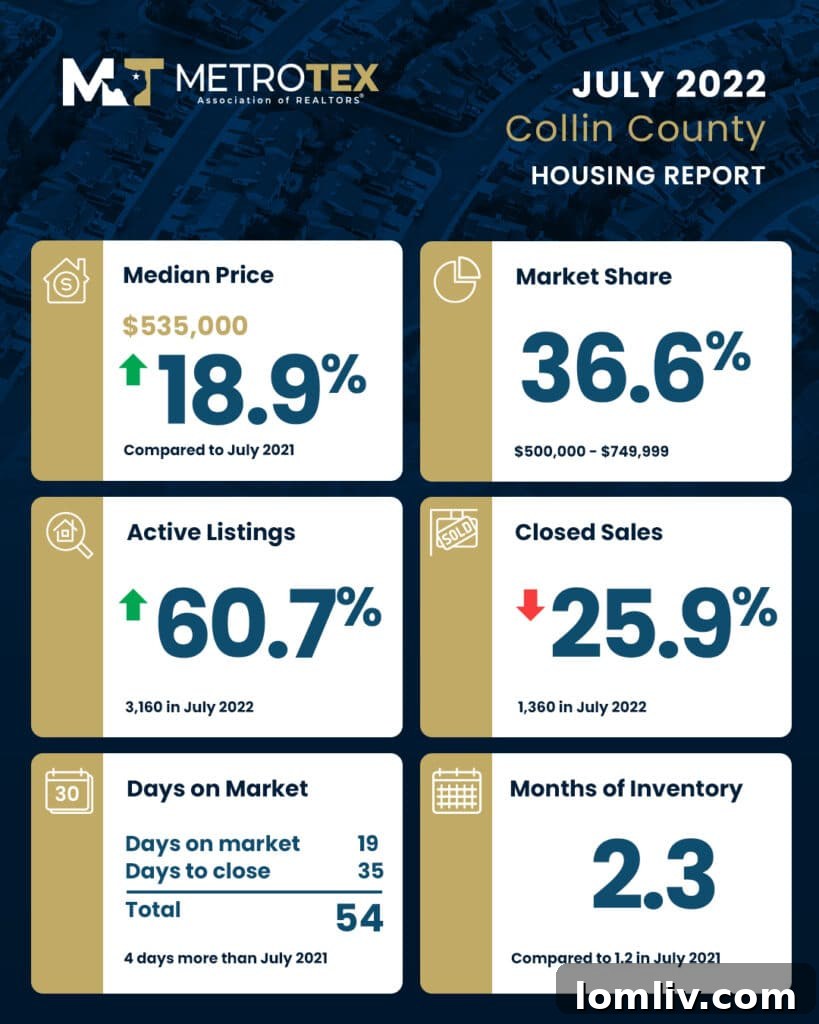
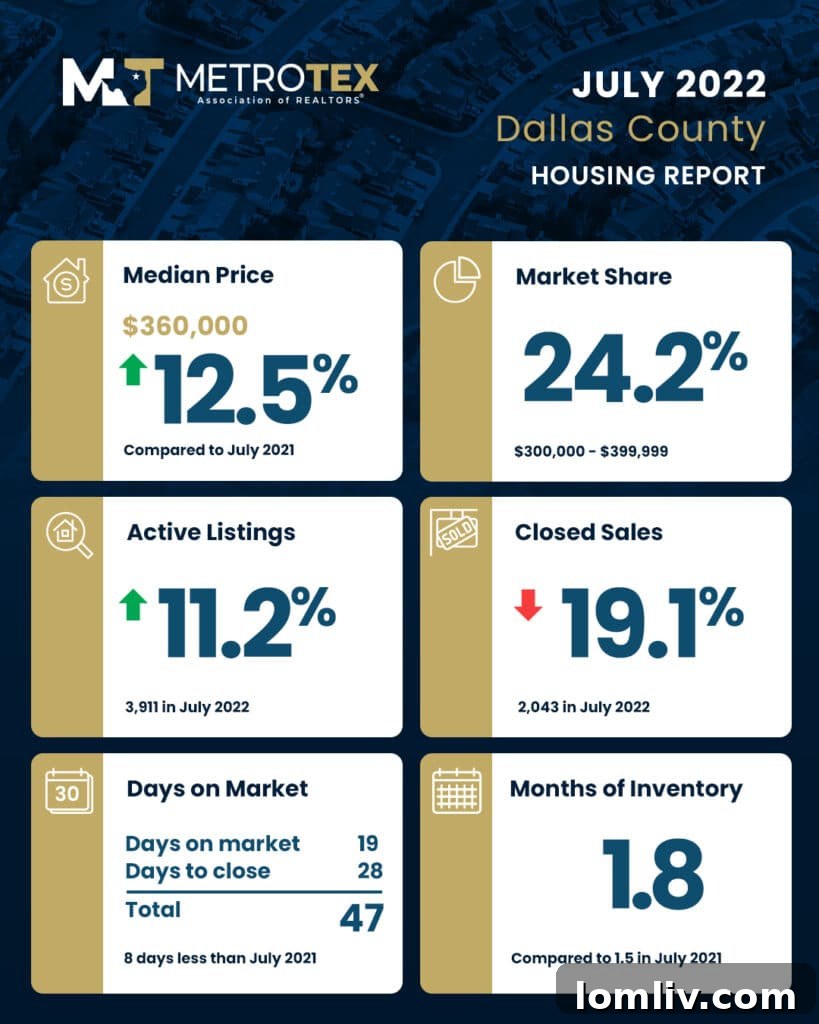
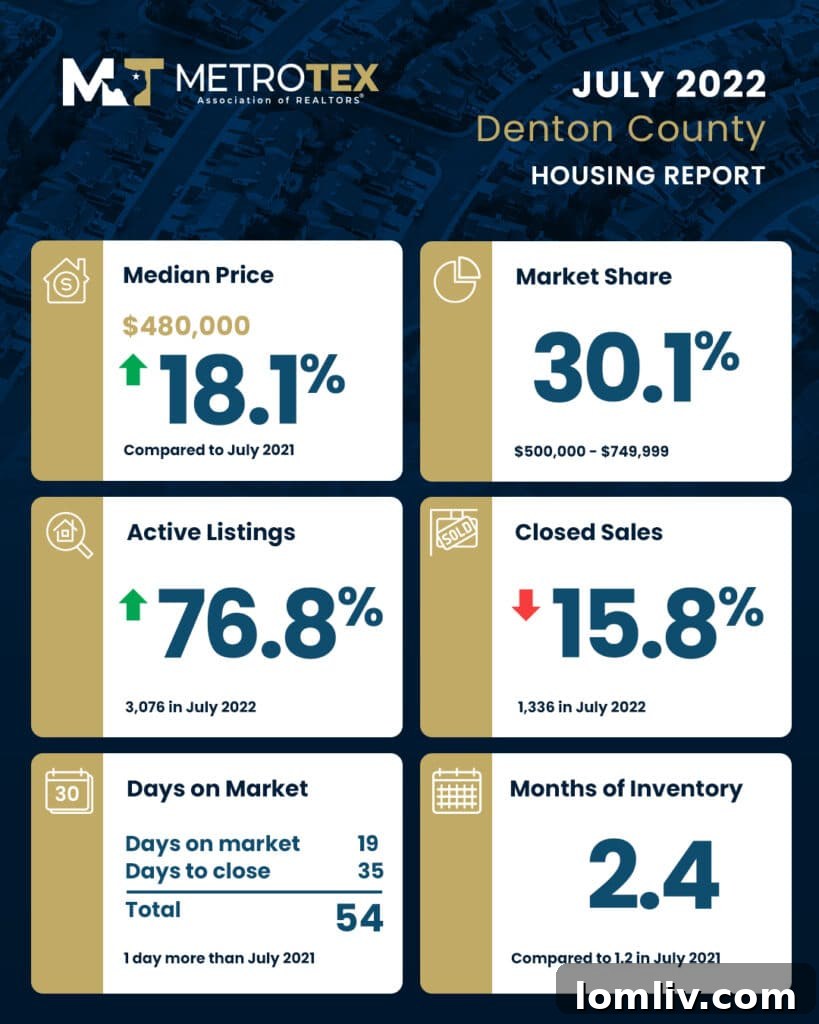
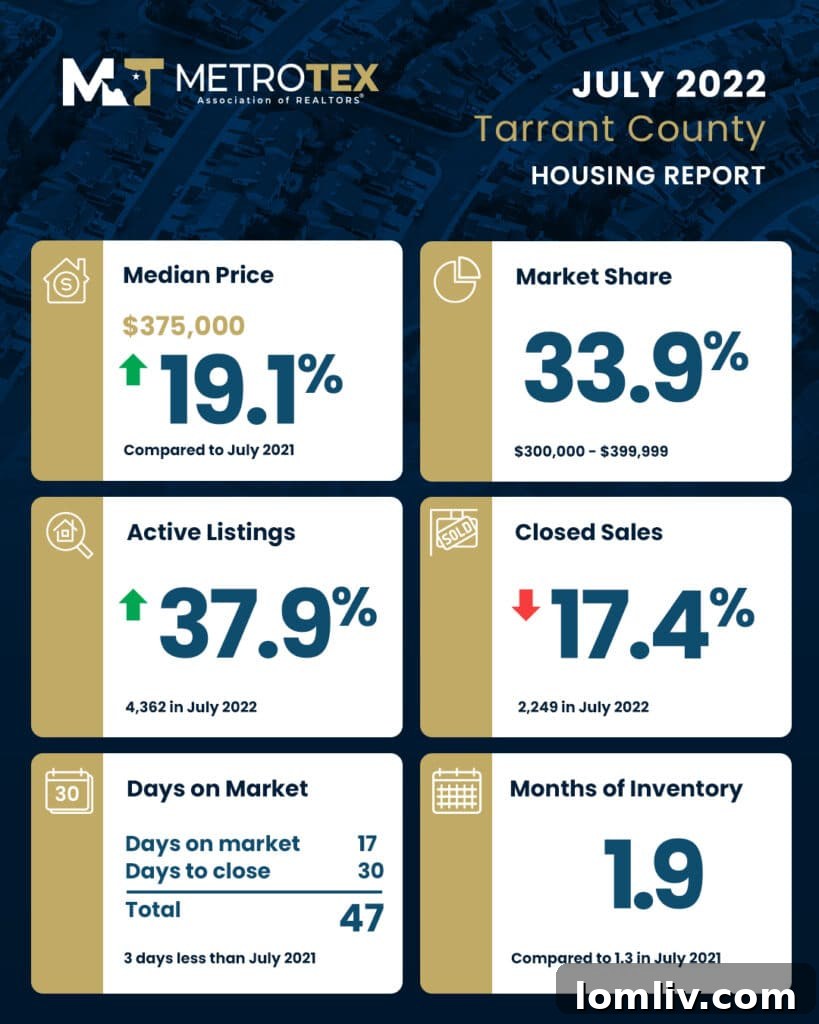
Another key metric shedding light on market dynamics is the “days on market” (DOM). Fewer days on market generally signal higher demand and a more competitive environment for buyers. MetroTex’s most recent figures for the DFW region provide valuable insights into this indicator. In Dallas, Denton, and Collin counties, listings are typically remaining on the Multiple Listing Service (MLS) for an average of 19 days. Tarrant County, a vibrant part of the DFW metroplex, shows even faster sales, with listings lingering on the market for just 17 days. For the most part, these figures represent fewer days on market compared to July 2021, suggesting that despite the overall cooling trend, demand in these specific Texas counties remains robust, and homes are still selling relatively quickly. The sole exception is Denton County, which experienced a marginal increase of just one day on market compared to the previous year. This resilience in DOM in key DFW counties further supports Yun’s assessment that while sales volumes are down, the underlying market fundamentals, driven by demand, are not entirely collapsing.
The concept of “price improvement” therefore reflects a market in transition. While it offers a glimmer of hope for buyers seeking better value, the persistent challenge of higher mortgage rates continues to be a formidable barrier. The overall picture is one of a market correcting itself, but with strong underlying demand and relatively tight inventory preventing a significant downturn in home prices. This delicate balance requires both buyers and sellers to approach the market with informed strategies and realistic expectations.
Economic Tailwinds and Headwinds: Jobs, Wages, and the Housing Outlook
Understanding the trajectory of the housing market requires a keen eye on broader economic indicators, particularly those related to employment and consumer purchasing power. If the market isn’t yet balanced, if days on market remain relatively short in key areas, and if elevated interest rates continue to challenge buyer affordability, what then is the significance of the recent jobs report? The answer, as often in economics, presents a mix of good news and lingering concerns.
On the positive front, the July jobs report delivered a robust performance, showcasing a solid increase of 528,000 net new payroll additions. This impressive figure signifies a full recovery of the 20 million jobs lost during the initial months of the COVID-19 lockdown. As Lawrence Yun pointed out, more Americans are employed today than at any point in history, and the unemployment rate stands at a remarkable 3.5 percent, matching a 50-year low. This strong employment picture typically acts as a powerful support for the housing market, ensuring a steady stream of potential homebuyers with stable incomes.
However, the good news from the jobs report is tempered by concerns about inflation and wage growth. While employment is robust, wages have only increased by 6.2 percent, according to the most recent report from the U.S. Bureau of Labor Statistics. This figure, while positive in isolation, falls short of keeping pace with the current 9 percent rate of inflation. The disparity means that despite earning more, many Americans are experiencing a decline in their real purchasing power. This erosion of disposable income makes it more challenging for prospective homebuyers to save for a down payment or to afford higher monthly mortgage payments, even if wage increases are anticipated in the pipeline.
Yun succinctly explains the hierarchy of factors impacting the current housing market: “In other words, home sales are more impacted by mortgage rate changes than jobs.” This statement highlights a crucial insight. While a strong job market is a necessary condition for a healthy housing sector, it is not always a sufficient one. The rapid and substantial increase in mortgage rates has acted as a more immediate and direct impediment to sales than the positive momentum in employment. The cost of borrowing, rather than the availability of employment, has become the dominant gatekeeper for homeownership in the current climate.
Looking ahead, there is cautious optimism. Yun’s analysis suggests that the recent stabilization of mortgage rates around the 5 percent mark could be a turning point. If rates remain at these levels or even experience further slight declines, it could alleviate some of the pressure on buyers, leading to a stabilization in home sales. He anticipates that the housing market, having navigated a period of significant adjustment, is likely to make “steady gains in 2023.” This forecast suggests that while the era of hyper-growth may be over, the market is poised for a more sustainable and predictable trajectory, albeit one that continues to be closely tied to the movements of interest rates and broader economic conditions.
For individuals considering entering or exiting the housing market, these economic indicators present a complex but navigable landscape. A strong job market provides a fundamental bedrock of stability, but inflation and mortgage rates remain pivotal in determining affordability and market activity. The next few months will be critical in observing whether the stabilization in mortgage rates truly translates into renewed buyer confidence and a more consistent recovery in home sales, setting the stage for the projected steady gains in the year to come.