The Perils of DIY Gone Wrong: Why Expert Home Inspections Are Crucial
At Green Scene Home Inspections, we have a unique vantage point into the intricate workings of countless homes across the region. Every week, our detail-oriented team provides invaluable insights, giving Daltxrealestate.com readers an education through our popular series, “Upon Closer Inspection.” While many homeowners diligently maintain their properties, and some issues are simply a product of age, we frequently encounter a more concerning category of problems: those stemming from well-intentioned but ill-executed do-it-yourself (DIY) projects or work performed by unqualified contractors.
These aren’t merely cosmetic flaws or minor inconveniences. Often, these “bad ideas” introduce significant safety hazards, compromise a home’s efficiency, and can lead to costly repairs down the line. A home should be a sanctuary, a place of comfort and security, not a ticking time bomb due to improper installations or shortcuts. Our mission is to identify these potential dangers, illuminate the underlying issues, and empower homeowners and buyers with the knowledge needed to ensure their property is safe, sound, and a wise investment. Let’s delve into some real-world examples of when DIY goes terribly wrong, and why a professional perspective is non-negotiable.
Hazardous Dryer Venting: A Silent Fire Risk
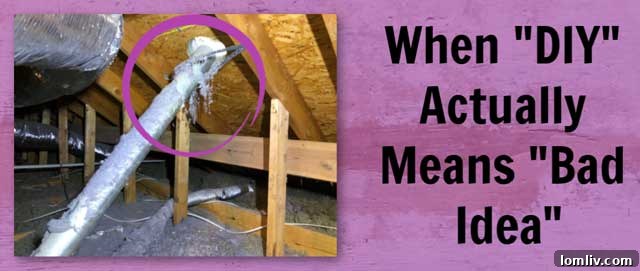
One of the most common and alarming issues we uncover during home inspections involves improper dryer vent installation. Take this example: the dryer vent doesn’t quite reach the exterior wall, leaving a significant gap within the attic space. To the untrained eye, this might seem like a minor oversight, perhaps even an “acceptable” shortcut. However, as experienced home inspectors, we immediately recognize this as a severe fire hazard and a significant efficiency drain.
Dryer lint is highly combustible. When a dryer vent doesn’t properly terminate to the outside, it expels hot, moist air laden with lint directly into an enclosed space, such as an attic or crawl space. The image above speaks volumes: the huge pile of dryer lint accumulating in the attic is not just unsightly; it’s a dry tinderbox waiting for a spark. A clogged or improperly vented dryer is a leading cause of residential fires, accounting for thousands of incidents annually.
Beyond the obvious fire risk, poor dryer venting also leads to decreased appliance efficiency. Your dryer has to work harder and longer to dry clothes, consuming more energy and increasing your utility bills. The warm, moist air also creates an ideal environment for mold and mildew growth within your home’s structure, potentially leading to costly remediation and adverse health effects. Proper dryer vents should be constructed from rigid metal ducting, be as short and straight as possible, and terminate securely to the outside with a proper vent cap to prevent pests from entering. Regular cleaning of the vent line is also critical to prevent lint buildup and maintain safety.
The Dangers of Flex Pipe in Range Hoods: A Kitchen Firetrap
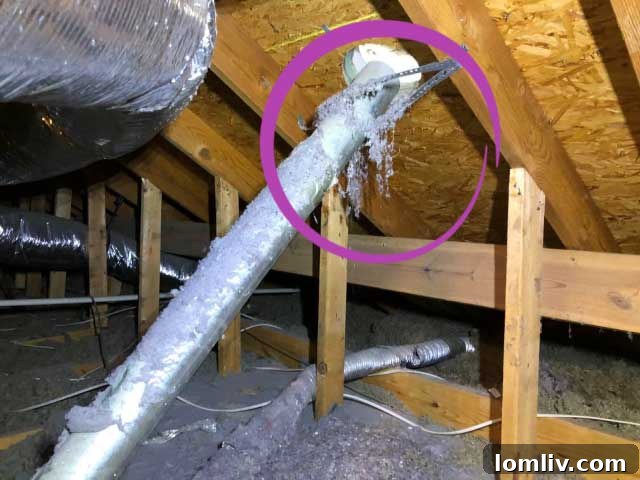
Kitchen ventilation is vital for maintaining good indoor air quality and preventing the accumulation of grease and moisture. Range hoods are designed to extract cooking fumes, smoke, and airborne grease particles from your kitchen, expelling them safely outdoors. However, the effectiveness and safety of a range hood depend entirely on proper ducting. Here, we observe a prime example of improper installation: the use of flexible ductwork for the range hood exhaust pipe.
Building codes are very clear on this matter: flex pipe, particularly the corrugated vinyl or foil type, is prohibited for range hood exhaust. The pipe must be rigid, smooth, and typically made of metal. The reason is straightforward yet critical for safety. Grease and other cooking particles can easily become trapped in the ridges and crevices of flexible ductwork. Over time, this buildup creates a highly flammable residue that is incredibly difficult, if not impossible, to clean effectively. Should a grease fire erupt on the stovetop, these trapped deposits can quickly ignite, allowing the fire to spread rapidly through the ventilation system and into the walls or ceiling of your home.
Furthermore, flexible ducting creates more airflow resistance, reducing the efficiency of your range hood. This means smoke and odors linger longer in your kitchen, leading to poor air quality, grease accumulation on surfaces, and potential respiratory issues. A properly installed range hood exhaust system utilizes smooth, rigid metal ducts, ensuring efficient airflow and minimizing fire risks. This detail is often overlooked by DIY enthusiasts but is a non-negotiable safety standard for professionals.
Scalding Risks: When Water Heater Settings Are Too High
Hot water is a modern convenience we often take for granted, but its temperature must be carefully managed for both safety and energy efficiency. While it might be tempting to crank up the dial on your water heater to ensure “really hot baths,” as one homeowner desired, setting the temperature too high is a dangerous oversight. The image illustrates a water heater set to an excessive temperature, likely around 150 degrees Fahrenheit, which poses a severe burn risk to anyone using the hot water taps.
Medical experts and safety organizations uniformly recommend that residential water heaters be set between 120 and 125 degrees Fahrenheit. At 120°F, it takes several minutes of exposure to suffer a third-degree burn. However, at 140°F, severe burns can occur in just five seconds, and at 150°F, a third-degree burn can happen in as little as two seconds. This risk is particularly acute for vulnerable populations, including young children, the elderly, and individuals with disabilities who may not react quickly enough to excessively hot water.
While some argue for higher temperatures to combat bacteria like Legionella, modern water heaters and proper maintenance generally mitigate this risk at recommended settings. Furthermore, maintaining water at extremely high temperatures significantly increases energy consumption, leading to higher utility bills without providing a practical benefit beyond the point of safety. Adjusting your water heater temperature is a simple task, but it requires understanding the balance between comfort, safety, and efficiency. Always consult your water heater’s manual or a plumbing professional if you are unsure how to safely adjust the settings.
DIY Electrical Nightmares: The Dangers of Permanent Extension Cord Wiring
Electricity is fundamental to modern living, but it demands respect and adherence to strict safety protocols. Of all the DIY blunders we encounter, improper electrical work ranks among the most hazardous. The video linked above, titled “Extension Cord DIY Fail,” serves as a stark reminder of how quickly amateur electrical work can transform convenience into a deadly hazard. Using extension cords for permanent wiring is not just a “bad idea”; it’s a catastrophic one that violates every safety standard and building code imaginable.
Extension cords are designed for temporary use only. They are not built to withstand the rigors of permanent installation, nor do they possess the same insulation, wire gauge, or protective sheathing as proper Romex or conduit wiring. When used permanently, extension cords can easily become overloaded, leading to overheating, insulation breakdown, and ultimately, electrical fires. They also pose significant tripping hazards when run across floors or through doorways, and their exposed nature makes them susceptible to damage, which can lead to electric shock.
A “DIY electrical genius” attempting to bypass standard wiring practices by using extension cords is creating a silent killer within their home. Proper electrical installations require a thorough understanding of circuit loads, grounding, overcurrent protection, and the National Electrical Code (NEC). Any modifications or additions to a home’s electrical system should always be performed by a licensed and qualified electrician. Cutting corners with electricity risks not only property damage but also serious injury or fatality from fire or electrocution. If you’re unsure about any electrical task, the safest and smartest course of action is always to call a professional.
Beyond the Obvious: Other Common DIY Pitfalls and Hidden Dangers
The examples above highlight some of the most critical DIY mistakes we regularly observe, but the list of potential hazards is extensive. Many homeowners embark on projects with good intentions, only to inadvertently create new problems or exacerbate existing ones due to a lack of specialized knowledge, proper tools, or adherence to building codes. Here are a few more areas where DIY attempts often fall short and create significant risks:
Improper Attic Ventilation and Insulation
While seemingly simple, correctly ventilating and insulating an attic is crucial for a home’s energy efficiency and structural integrity. DIY efforts often involve blocking soffit vents with insulation, leading to inadequate airflow. This traps heat and moisture, which can cause ice dams in winter, premature roofing material degradation, and the perfect breeding ground for mold and mildew. Proper attic ventilation, combining soffit and ridge vents, ensures a healthy and energy-efficient attic space, protecting your home’s structure and indoor air quality.
Amateur Plumbing Installations and Repairs
Plumbing might appear straightforward, but a poorly executed repair can lead to devastating water damage, mold growth, and expensive remediation. Common DIY plumbing mistakes include incorrect pipe connections, using incompatible materials, inadequate sealing, and improper drain slopes. These errors can result in persistent leaks, sewage backups, and even cross-contamination of potable water supplies, posing serious health risks. Licensed plumbers understand water pressure, drainage systems, and local codes to ensure leak-free and sanitary plumbing.
Unsafe Structural Modifications
Perhaps the most dangerous DIY project is one that involves structural changes without professional consultation. Removing walls, altering beams, or making modifications to the foundation without proper engineering assessment can severely compromise the structural integrity of your entire home. This isn’t just a repair issue; it’s a risk to the building’s stability and the safety of its occupants. Always consult a structural engineer and obtain necessary permits before embarking on any project that might affect your home’s load-bearing elements.
The Indispensable Value of Professional Home Inspections
These cautionary tales underscore a fundamental truth: while the spirit of DIY is commendable, some tasks are best left to licensed professionals. This is precisely where the expertise of a professional home inspection service, like Green Scene Home Inspections, becomes invaluable. Our trained and certified inspectors bring a keen eye, specialized tools, and an in-depth understanding of building science and codes to every property.
A comprehensive home inspection goes far beyond what a homeowner or a general contractor might observe. We meticulously evaluate hundreds of components, from the foundation to the roof, including critical systems like electrical, plumbing, HVAC, and ventilation. Our goal is to identify not just obvious defects but also hidden dangers, potential future problems, and areas of non-compliance with safety standards. For prospective home buyers, an inspection provides critical negotiation leverage and peace of mind, protecting your investment from unforeseen liabilities. For current homeowners, it’s an excellent diagnostic tool to prioritize maintenance, address safety concerns, and preserve property value.
Prioritizing Safety and Expertise in Your Home
In conclusion, while the allure of saving money and the satisfaction of completing a project yourself are strong motivators, the potential risks associated with improper DIY work are simply too high to ignore. From fire hazards posed by faulty dryer vents and range hood exhaust systems to scalding risks from improperly set water heaters and lethal dangers from amateur electrical wiring, the consequences can be devastating.
Your home is likely your most significant investment, and its safety should never be compromised by shortcuts or a lack of professional knowledge. At Green Scene Home Inspections, we believe that education and vigilance are key to preventing these costly and dangerous mistakes. Trusting seasoned professionals for complex tasks and utilizing expert home inspections for a thorough evaluation ensures that your home remains a safe, efficient, and valuable asset for years to come. Don’t let a “bad idea” turn into a home disaster – always prioritize safety, consult experts, and build smart.