Reviving History: The Remarkable Transformation of 2300 Willing Avenue in Fort Worth
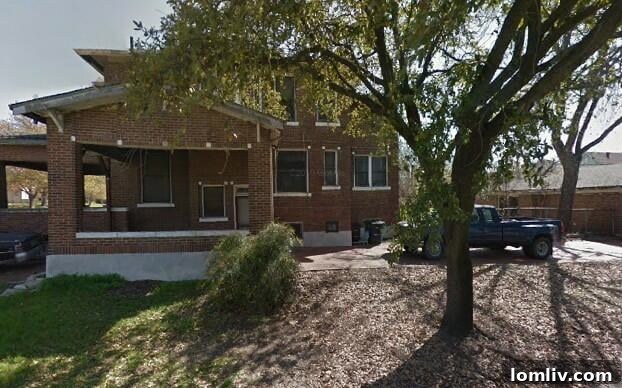
There are certain houses that capture the imagination, whispering tales of bygone eras and igniting a sense of wonder. For residents of Fort Worth’s esteemed Ryan Place neighborhood, 2300 Willing Avenue was one such enigma. For years, this grand old dame stood at the edge of the historic district, a spectral presence shrouded in an advanced state of decay. Its dilapidated facade, crumbling masonry, and general air of abandonment made it seem utterly uninhabitable, a silent sentinel weathering the relentless march of time.
As I often strolled through the picturesque streets of Ryan Place, my gaze would invariably drift towards the house on Willing Avenue. It possessed a peculiar charm, a haunting beauty that hinted at a glorious past, even as it succumbed to neglect. It was the kind of structure that sparked neighborhood legends, much like the iconic Boo Radley house from literary lore – a place both mysterious and strangely compelling. One particular evening, while returning home, a flicker of unexpected warmth pierced the gloom: a faint chink of yellow light emanating from behind a tattered shade. This subtle sign of life was a revelation, shattering the long-held assumption that the house was entirely deserted. It signaled not only habitation but perhaps, a hidden narrative waiting to unfold, a promise of renewal.
In a vibrant city like Fort Worth, celebrated for its rich history and unwavering commitment to preserving architectural treasures, such a structure rarely meets an inglorious end. While it appeared destined to collapse under its own weight before any intentional demolition, the strong spirit of historical preservation in Fort Worth often intervenes, promising a brighter future for these vintage dwellings. And so, a happier destiny indeed awaited this magnificent 1922-vintage residence, poised on the brink of a spectacular revival.
A Visionary Restoration Begins: Enter Brent Hull and Hull Historical
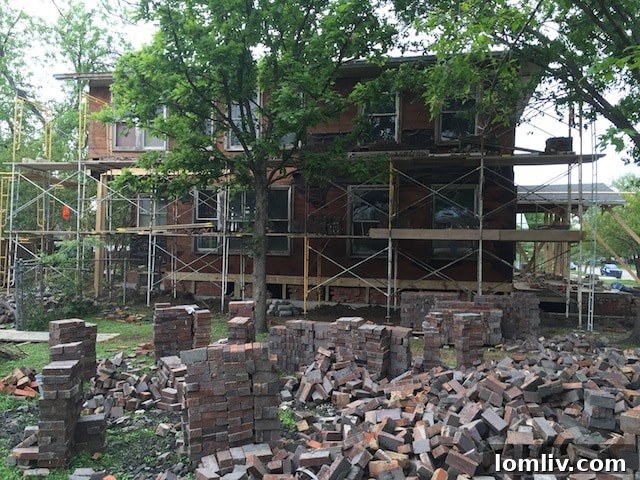
The promise of renewal manifested itself quite dramatically in a remarkably short span. Just two weeks later, during another routine neighborhood walk, I was met with an astonishing sight. The house at 2300 Willing Avenue, which had so recently epitomized decay, was now dramatically transformed. Every single one of its original bricks lay meticulously stacked on the ground, revealing the skeletal framework of the structure, now entirely enveloped in an extensive, intricate network of scaffolding. It was a powerful visual testament to the commencement of a monumental undertaking in historic home restoration.
This ambitious and deeply sensitive preservation project is spearheaded by none other than Brent Hull, the esteemed founder of Hull Historical Architectural Millwork. For those familiar with architectural preservation and the restoration of period-sensitive properties, Brent Hull is a name synonymous with unparalleled craftsmanship and a profound respect for historical integrity. His journey into this specialized field began with rigorous training in museum-quality preservation at the highly prestigious North Bennet Street School in Boston. This intensive education instilled in him not just advanced techniques, but a deep philosophical understanding of how to restore and recreate elements that honor a building’s original intent and architectural era.
Hull’s formidable reputation precedes him; his bespoke mouldings and custom millwork have graced some of the most iconic and historically significant public buildings in Texas. These include the majestic Tarrant County Courthouse, a beacon of classical architecture, and the historic Santa Fe Pacific Terminal, each project a testament to his company’s unwavering commitment to precision and authenticity. Beyond these grand public commissions, Hull Historical has also amassed an impressive portfolio of residential projects, numbering in the hundreds, specifically within Fort Worth’s treasured historic neighborhoods. His work isn’t merely about renovation; it’s about breathing new life into structures while meticulously preserving their soul, ensuring that the legacy of masterful craftsmanship endures for generations to come, truly defining Fort Worth preservation efforts.
The Art and Science of Preservation: Inside the Renovation Process
Upon a recent visit to the site, the project was already well underway, a whirlwind of focused activity. Brent Hull, known for his efficiency and meticulous planning, revealed an ambitious timeline: this extensive historic home restoration is slated for completion in a mere eight weeks. Such a rapid turnaround for a project of this scope speaks volumes about the expertise, coordinated effort, and specialized knowledge of his team in handling vintage dwelling renovations.
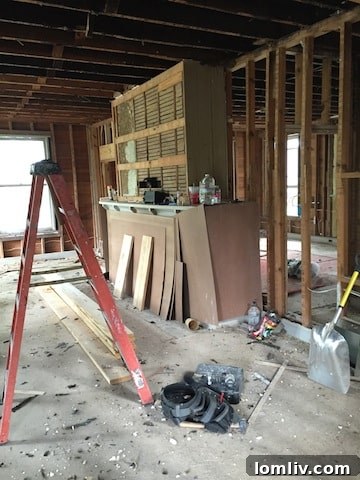
The initial phase, the “tear-out,” was nearly completed, systematically stripping away the layers of time and neglect. This careful deconstruction allowed access to the underlying infrastructure, paving the way for crucial modern upgrades. Electricians were busily engaged in the complex task of pulling modern cabling, replacing the antiquated and often hazardous knob-and-tube wiring that had served the house for decades. This essential upgrade not only ensures the safety and energy efficiency of the future occupants but also brings the home’s electrical system up to contemporary standards, capable of supporting modern living demands without compromising its historical aesthetics.
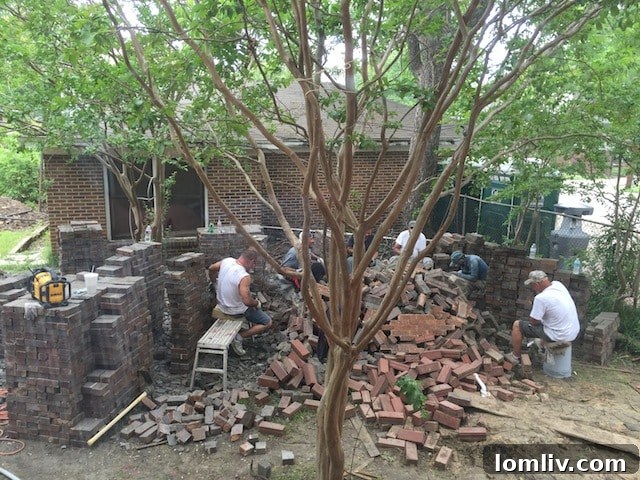
In the rear of the property, a different but equally vital process was unfolding. Workers meticulously cleaned and carefully stacked every single original brick. This painstaking effort highlights a core principle of Hull’s preservation philosophy: wherever possible, existing materials are salvaged and repurposed. As Mike Sherrill, tasked with overseeing the structural integrity of the project, sagely observed, “You’d never match this brick with anything being made today.” The unique character, patina, and composition of vintage bricks are virtually irreplaceable, making their careful reuse paramount to maintaining the home’s authentic charm and historical accuracy. This commitment to original materials is a hallmark of true period-sensitive renovation.
Sherrill also drew attention to one of the project’s immediate structural crises: the front porch. Completely detached from the main house and precariously close to imminent collapse, it was one of the first areas to receive urgent attention. Framing was hastily installed to provide essential support, a stark reminder of the hidden challenges often encountered in historic home renovations. Such interventions are crucial, not just for safety but for preserving the very entrance that welcomes one into the home’s narrative, ensuring its foundation is as strong as its history.
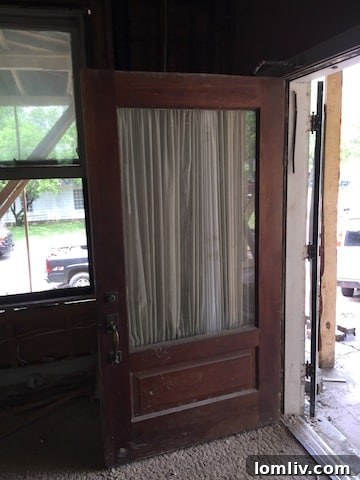
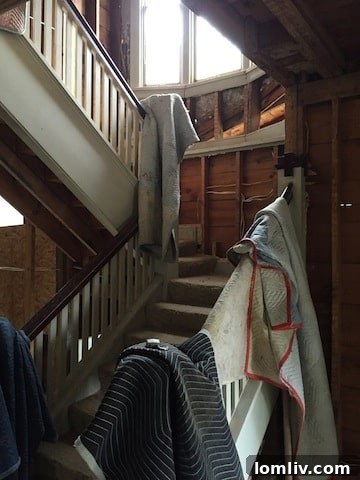
Venturing past the now-stabilized porch, I cautiously stepped into the 3,200-square-foot interior, a space destined to become a three-bedroom, two-bath sanctuary. Even amidst the chaos of renovation, glimpses of its former grandeur were evident. The hefty, intricately designed chimney piece and the handsome, sturdy staircase stood as proud remnants of better days, hinting at the quality and craftsmanship that defined its original construction. Hull acquired this remarkable property for clients of his millwork company who shared a common vision: to establish a Fort Worth base, specifically within an older, historically significant residence that could be lovingly restored, seeking the unique character only a vintage dwelling can offer.
Brent Hull articulated his guiding principle for the project with conviction: “We want to restore as purely as possible, reusing the existing materials where we can, hiding a modern HVAC system, and utilizing the original registers.” This commitment to purity means a delicate dance between historical accuracy and contemporary comfort. The discreet integration of modern amenities, such as a state-of-the-art HVAC system, is a masterstroke in period-sensitive renovation, ensuring climate control without visually intruding upon the home’s vintage aesthetic. The decision to retain and restore original registers further exemplifies this dedication, allowing practical elements to contribute to the home’s authentic character and historical architecture.
The project benefits immensely from the house’s unique history. With only two owners throughout its long life, the second family having resided there for nearly 85 years, a treasure trove of historical information was available. This lineage provided not just anecdotes but invaluable historic photographs and a wealth of practical details that are proving instrumental in guiding the restoration work, ensuring that every decision is informed by the home’s true past and preserving its unique narrative.
Blending Past and Present: The Heart of the Home and Future Showcases
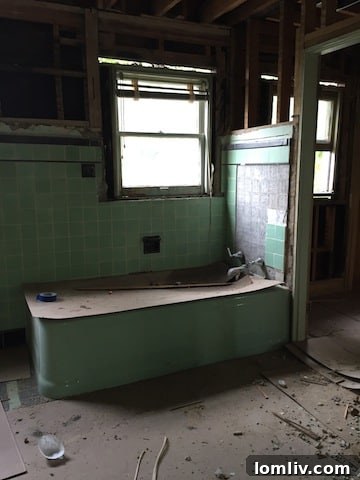
While the overall philosophy is one of pure restoration, some strategic modifications are deemed necessary and appropriate for modern living. A notable fire in 1933 significantly damaged the rear of the house, prompting a substantial rework to that section. This historical event, ironically, provided Brent Hull with what he termed “moral permission” to thoughtfully alter and expand the kitchen area. In contemporary home design, the kitchen has unequivocally reclaimed its status as the true heart of the house, supplanting the traditional hearth. It serves not merely as a place for culinary creation but as a central hub for family gatherings, entertaining, and daily life. Therefore, modernizing this space, while still respecting the home’s overarching historical aesthetic, is a sensible and crucial choice to ensure the house serves its new owners effectively for decades to come, marrying historical charm with modern functionality.
The journey of 2300 Willing Avenue from dilapidated specter to rejuvenated landmark is so compelling that it has caught the attention of a major cable network. While the specific network cannot yet be disclosed, the renovation will be the subject of a dedicated series, meticulously documenting every stage of its transformation. This is a tremendous opportunity, not just for the homeowners and the Hull Historical team, but for enthusiasts of historic preservation and home design across the nation. Audiences will gain an intimate look into the intricate processes, the challenges, and the triumphs of restoring a vintage dwelling to its former glory, all while adapting it for modern comfort and functionality. This exposure will undoubtedly shine a spotlight on the exemplary preservation efforts in Fort Worth, inspiring others and showcasing the profound beauty and enduring value of historic homes. We eagerly anticipate the announcement of the series and encourage everyone to “watch this space” for updates on this exciting television event, which promises to be a masterclass in Fort Worth home renovation.
About the Author
Eric Prokesh is an accomplished interior designer whose innovative work has been featured on HGTV, and in prestigious books and publications including D Home, Southern Accents, House Beautiful, and House and Garden. In January 2005, HG recognized Eric as one of the 50 tastemakers in America, and D Home has consistently included him as one of Dallas’ Best Designers for a remarkable 10 years. Having spent the majority of his life in Dallas, he now proudly calls Fort Worth home and serves as one of our esteemed experts on the beautiful Fort Worth Dirt, sharing insights into the city’s unique charm and evolving landscape.