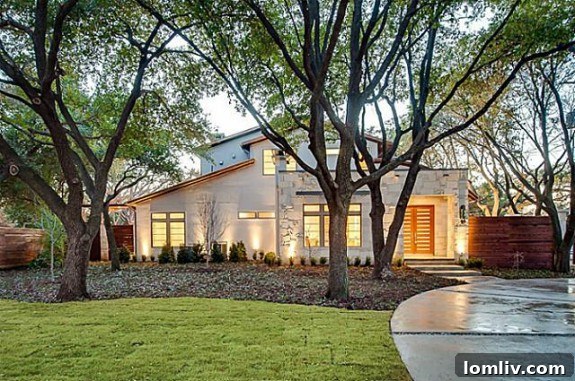
Texas’ Luxury Real Estate Market Soars: A Deep Dive into Million-Dollar Home Sales
The Texas real estate landscape, particularly in its high-end sector, has been experiencing remarkable growth, cementing its status as a magnet for prosperity and sophisticated living. A comprehensive analysis from the 2014 Texas Luxury Home Sales Report, compiled by the Texas Association of Realtors with robust data from the Real Estate Center at Texas A&M University, revealed an unprecedented surge in demand for properties valued at $1 million or more. This insightful report, covering the period between January and October 2013, highlighted that every major metropolitan area across Texas witnessed double-digit growth in these coveted luxury price ranges, signaling a vibrant and rapidly expanding market.
This boom in million-dollar homes isn’t just a fleeting trend; it underscores a deeper economic transformation occurring within the Lone Star State. As Dan Hatfield, then chairman of the Texas Association of Realtors, eloquently stated, “Data from the Texas Luxury Home Sales Report shows that million-dollar homes are playing an increasingly important role in the Texas housing market. The housing slump is behind us and as Texas’ economy and population continue to accelerate, we’re going to see increasing development and demand in larger, higher-priced homes with luxury amenities.” His comments emphasize the enduring strength of the Texas economy and its direct impact on the high-end residential sector.
Unpacking the Growth: Key Metropolitan Performance
The report detailed impressive year-over-year increases in luxury home sales across Texas’s largest cities, showcasing distinct growth drivers for each region:
Austin: The Tech Hub’s Meteoric Rise in Luxury Homes
Austin, the state capital and a burgeoning technological powerhouse, led the pack with an astonishing 55 percent increase in luxury home sales. This dramatic surge firmly positions Austin as one of the nation’s most dynamic and competitive real estate markets for high-net-worth individuals. The city’s appeal is multi-faceted: it offers a vibrant culture, a burgeoning food scene, world-class educational institutions, and, critically, a robust influx of high-paying tech jobs. Major tech companies continue to establish or expand their presence in Austin, attracting a skilled workforce with significant purchasing power. This demand, however, has also led to discussions regarding market valuation, with some analyses, like Trulia’s assessment at the time, suggesting that Austin’s properties were becoming “way overvalued.” Yet, the persistent demand and rapid sales cycles indicate that buyers are willing to pay a premium for the unique lifestyle and economic opportunities Austin offers, making it a prime destination for luxury living and investment.
Houston: Fueling High-End Real Estate with Energy Wealth
Coming in a strong second, Houston experienced a substantial 46 percent increase in luxury home sales. This growth is largely attributed to the city’s role as a global energy capital. The robust oil and gas sector generates significant wealth, which in turn fuels demand for high-end residential properties. Houston’s diversified economy, coupled with its status as a major port and healthcare hub, further contributes to its attractiveness. The city offers a wide array of luxury amenities, from sprawling estates to sophisticated urban penthouses, catering to a diverse demographic of executives, entrepreneurs, and international investors drawn to its economic vibrancy and lower cost of living compared to other major global cities. The steady appreciation and brisk sales volume in Houston’s luxury market reflect a confident local economy driven by its foundational industries.
Dallas: A Blend of Finance and Fortunes Driving Luxury Growth
Dallas, a vital economic engine in North Texas, recorded a healthy 22 percent increase in luxury home sales. The Dallas-Fort Worth metroplex boasts a diverse and resilient economy, underpinned by a flourishing financial sector, a strong corporate presence, and, similar to Houston, a significant contribution from the oil and gas industry. This blend creates a brisk job market that attracts affluent individuals and families seeking executive positions, entrepreneurial ventures, and a high quality of life. Dallas is renowned for its upscale neighborhoods, world-class shopping, fine dining, and cultural institutions, making it an ideal destination for luxury homebuyers. The consistent growth in its high-end market signals not only economic strength but also an appreciation for the sophisticated lifestyle Dallas affords, attracting both primary residents and those considering second homes or strategic investments within the state.
San Antonio: Steadfast Growth in a Historic Luxury Market
Not to be overlooked, San Antonio posted a solid 18 percent increase in its luxury home sales. While its percentage growth was more modest than Austin or Houston, it nonetheless demonstrates a healthy expansion within its high-end market. San Antonio’s economy is supported by its strong military presence, burgeoning tourism industry, and a growing tech and healthcare sector. The city’s rich history, unique culture, and more accessible luxury price points compared to its larger Texas counterparts, make it an appealing option for those seeking high-end living in a distinctive setting. This steady increase highlights a broadening base of luxury demand across diverse Texas markets.
Drivers of Demand: What’s Powering the Texas Luxury Market?
The consistent uptick in luxury home sales across Texas is not coincidental; it’s a direct reflection of several powerful economic and demographic trends. Primarily, the influx of high-paying jobs, particularly in the technology sector for cities like Austin, and the robust performance of the oil and gas industry in Houston and Dallas, are key drivers. These sectors generate substantial wealth, translating directly into increased demand for high-end real estate. Furthermore, Texas continues to be a magnet for corporate relocations and expansions, attracting a highly skilled and affluent workforce from across the nation and even globally. The state’s business-friendly policies, lack of state income tax, and relatively lower cost of living (even at the luxury tier, when compared to coastal megacities) make it an attractive proposition for both companies and individuals.
Beyond economic fundamentals, the quality of life offered in Texas cities plays a crucial role. From vibrant cultural scenes and renowned culinary experiences to top-tier educational opportunities and abundant recreational activities, Texas offers a comprehensive package for discerning buyers. This combination of economic opportunity and lifestyle appeal fosters a strong sense of confidence among consumers and investors, leading to sustained appreciation in property values and a dynamic luxury housing market. It also raises an interesting question: how many of these million-dollar-plus properties are being acquired as second homes or as strategic investment vehicles, further fueling the market’s intensity?
Market Dynamics: Inventory, Sell Time, and the Evolving Buyer Pool
The luxury housing market typically operates under different dynamics than the general housing market. As Jim Gaines Ph. D., an economist with the Real Estate Center, explains, “It’s common for luxury homes to have a significantly longer sell time and higher housing inventory than the average home simply because the pool of interested homebuyers is so much smaller.” This principle holds true in many markets. However, the 2013 Texas data presented a compelling counter-narrative, indicating unusually strong demand for high-end properties.
For instance, in Austin, homes priced at $1 million or higher represented close to 10 percent of all active listings and were selling in less than six months. This rapid turnover is extraordinary for luxury properties and underscores the intense buyer competition driven by the city’s tech boom. Similarly, Houston demonstrated robust demand with a housing inventory of only 7.4 months. An inventory level typically indicates how long it would take to sell all currently listed homes at the current sales pace. For luxury homes, anything under 12 months often suggests a seller’s market, and Austin and Houston were well below that threshold, signaling very active conditions.
These figures illustrate a departure from traditional luxury market behaviors, where longer listing periods are the norm. The swift absorption of high-value properties in these metropolitan areas points to an exceptionally strong buyer confidence and a vibrant economic environment that supports sustained investment in premium real estate. This vigorous activity challenges the typical slow pace associated with exclusive listings and instead reflects a market energized by significant wealth creation and a growing desire for upscale Texas living.
A Closer Look: The Dallas-Fort Worth Luxury Market
The Dallas-Fort Worth (DFW) metroplex, a sprawling economic powerhouse, presented a nuanced yet robust picture within the luxury report. From January to October 2013, the DFW area recorded the sale of 809 luxury homes. While this volume was significant, luxury home sales constituted a modest 1.1 percent of the total housing market in the region, reflecting the vast scale of DFW’s overall real estate activity. Nevertheless, the luxury segment demonstrated remarkable vitality, experiencing a substantial 22 percent increase in sales compared to the corresponding period in 2012. This growth rate slightly outpaced the 19 percent year-over-year increase observed in the Dallas-Fort Worth housing market as a whole, highlighting the premium segment’s strong performance even within a generally expanding market.
As of October 2013, the DFW luxury market had 922 active luxury home listings, which accounted for 4.1 percent of all active listings on the market. The housing inventory for a luxury home in DFW stood at 11.4 months. This figure, while higher than Austin’s or Houston’s, is crucial to interpret. It represented 8.4 additional months compared to the inventory of the Dallas-Fort Worth housing market at large, which typically hovers around 3-4 months. An 11.4-month inventory for luxury homes suggests a more balanced market, perhaps leaning slightly towards sellers, but certainly not indicating a glut. It reflects a healthy pace for properties that inherently cater to a smaller, more discerning buyer pool. This stability, coupled with consistent sales growth, positions the DFW luxury market as a strong and attractive segment for both domestic and international buyers seeking premium residences in a thriving metropolitan area.
The Future of Texas Luxury Real Estate: Sustained Growth and Opportunity
The insights from the 2014 report, while based on 2013 data, laid a foundational understanding of the enduring appeal and economic strength driving the Texas luxury real estate market. The double-digit growth across major metropolitan areas, fueled by diverse economic engines—from technology and finance to oil and gas—underscores Texas’s unique position as a top destination for wealth creation and high-end living. As the state’s economy continues its trajectory of acceleration and population growth, the demand for sophisticated, amenity-rich homes is only expected to intensify.
The increasing importance of million-dollar homes within the broader Texas housing market highlights a fundamental shift, moving beyond recovery from past slumps towards a new era of robust expansion. Developers and investors are keenly observing these trends, anticipating continued opportunities in constructing and selling properties that cater to an affluent demographic seeking the unparalleled blend of economic prosperity, lifestyle quality, and diverse cultural experiences that Texas cities uniquely offer. The Lone Star State remains a vibrant and promising frontier for luxury real estate, poised for sustained growth in the years to come.