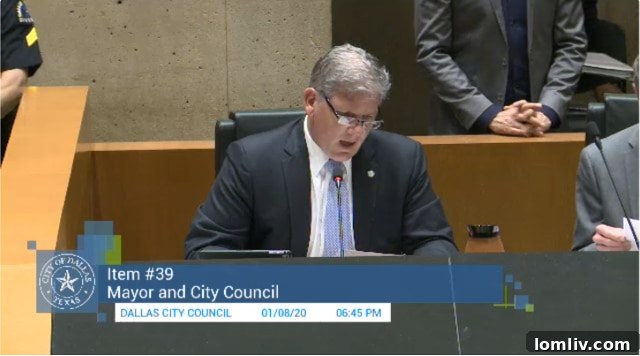
The fate of Reverchon Park, a cherished century-old Dallas landmark, recently hung in the balance before the Dallas City Council. Following a critical intervention by District 14 Council Member David Blewett, who resurrected the controversial reconstruction project from its December stalemate, the Council convened for a passionate and lengthy session. Arguments both for and against the ambitious proposal were heard in a fiery late afternoon and evening meeting, ultimately culminating in a decisive new vote that would reshape the future of the historic ballpark.
A Pivotal Vote: Reverchon Park Project Approved with Overwhelming Support
What began as a contentious tie vote in December transformed into an undeniable mandate, with the project passing by a significant margin of 11-4. Among those voting in favor was District 12 Councilperson Cara Mendelsohn, representing far North Dallas, who endorsed the plan to hand over the iconic ballpark to Reverchon Park Sports and Entertainment LLC. This formidable group is spearheaded by Dallas Mavericks general manager Donnie Nelson, bringing significant sports industry clout to the initiative. An integral, and seemingly philanthropic, component of the proposal involves the construction of an all-abilities baseball field. This specialized facility will be built by Dallas native and Los Angeles Dodgers pitcher Clayton Kershaw and his wife Ellen’s esteemed foundation, Kershaw’s Challenge, strategically located along the chain-link fence bordering the Texas Scottish Rite Hospital for Children. Since its inception in 2011, Kershaw’s Challenge has channeled over $7.5 million into various communities, and Dallas is now set to benefit from its profound impact. On the surface, the entire proposition radiated an aura of philanthropy, athletic dedication, and a focus on children’s well-being and recreational joy.
However, as is often the case with significant real estate and public-private agreements, the true complexities and potential pitfalls frequently lie hidden within the fine print. The surface appeal, while compelling, often masks deeper issues that warrant closer scrutiny.
To address the previous deadlocked vote and garner broader support, Council Member Blewett introduced several crucial adjustments and enticing incentives to the original December motion:
- The initial projected ticket revenues were significantly increased from $30,000 to a more substantial $106,000, promising greater financial returns for the city.
- A firm commitment was made to ensure 15 days of free public play at the newly revitalized baseball field, aimed at enhancing community access.
- The proposal included the creation of a user advisory group. This body would be tasked with convening regularly to address critical community concerns, such as sound transmission from events, public safety, traffic management, and proper signage notifications.
- A pledge for two annual community meetings was incorporated, fostering ongoing dialogue and engagement between the project developers and local residents.
- A key stipulation mandated that the Reverchon Park Beautification fund must be exclusively utilized for the continued maintenance and aesthetic upkeep of the park, ensuring its long-term appeal.
- The plan guaranteed the provision of 10 percent of tickets, equivalent to 2,000 tickets, for free distribution to the community.
- Ticket discounts were to be offered to specific deserving groups, including teachers, first responders, and military veterans, broadening access to events.
Despite these amendments, a critical debate unfolded before the final vote. District 2 Council Member Adam Medrano, whose district encompasses the majority of Reverchon Park, put forth a motion to postpone the vote for an additional month. His rationale was clear: a prevailing message from the opposition underscored a severe lack of information and insufficient community outreach. Medrano argued that the city had a responsibility to grant residents this extra time to conduct meaningful public meetings, allowing for more comprehensive engagement and potentially swaying public opinion through informed discussion. Regrettably, his motion failed, securing only five supporting votes. Interestingly, District 1 Council Member Chad West, representing Oak Cliff, was the sole individual to initially support the 30-day delay, yet he ultimately voted in favor of Blewett’s amended proposal, indicating that while community involvement was important to him, it wasn’t a deal-breaker.
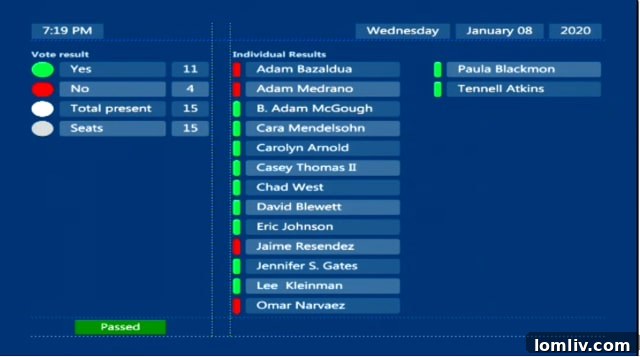
The irony of the situation was palpable. Many council members who ultimately voted for the project’s passage, including Jennifer Gates, Cara Mendelsohn, and Chad West, voiced strong criticisms regarding the flawed process and the glaring absence of robust community outreach. Yet, their concerns were not sufficiently potent to warrant a mere 30-day extension, a timeframe that could have fostered greater transparency and public buy-in. Their collective sentiment often echoed a future-oriented promise: “we have to do better in the future,” a convenient deferral of responsibility to a hypothetical time when all circumstances might align more favorably.
District 12’s Cara Mendelsohn, during the debate, presented a series of striking statistics concerning the city’s park agreements. Her data revealed that across the entire city, only eight such agreements exist, and a mere four of those generate any tangible income for the municipality. This revelation prompts a critical question for taxpayers: Did the City of Dallas knowingly enter into agreements that yield no “rent” or revenue from city-owned land? Furthermore, of the four income-producing parks, a total of $126,000 is generated annually for the city. This revenue is primarily derived from management companies, which generate $96,000 from ticket sales and a substantial $1.374 million from other revenue streams, with the city receiving approximately a 10 percent cut or return. These figures suggest that, on its face, the City of Dallas appears to negotiate less than optimal deals for its valuable public properties. Perhaps, as humorously suggested, the council might benefit from enrolling in a course at the esteemed Champions School of Real Estate to sharpen its negotiation skills.
Among the dissenting voices, District 7’s Adam Bazaldua offered a poignant critique, arguing that the Reverchon Park Request for Proposal (RFP) had fundamentally deviated from its initial purpose. He contended that the project had evolved to cater to two inherently competing interests: the noble goal of creating a ballpark for inner-city children and the stark reality of a profit-making commercial operation. Bazaldua emphasized that one cannot ethically leverage a genuine community need to achieve a lucrative financial objective. He asserted that while the initiative began as a benevolent effort to rehabilitate the Reverchon Ball Field for the benefit of children, it had regrettably mutated into a profit-driven enterprise over the past three years. This shift inevitably raised a pressing question: profit for whom?
The structured rhythm of the council meeting added an intriguing dynamic to the proceedings. Speakers, whether in support or opposition, were each allotted a concise one-minute timeframe to articulate their positions, lining opposing walls of the council chambers. This format, while ensuring efficiency, often limited the depth of discourse. Following these public testimonies, the Council adjourned for a closed-door executive session, a period of confidential deliberation, before reconvening to cast their votes and finalize motions. This opaque interlude only fueled public skepticism about the transparency of the decision-making process. The public arguments, however, provided a clear dichotomy of perspectives:
Arguments Against The Plan: Voicing Community Concerns
The arguments put forth against the Reverchon Park proposal echoed familiar concerns often raised in contentious zoning and urban development cases. These critical issues included the project’s overall scale, the inevitable increase in traffic congestion, inadequate parking solutions, potential noise pollution from events, a perceived rushed approval process, and, most significantly, a pervasive lack of transparency and secrecy surrounding the deal. While these concerns are inherently valid, their true extent and impact remain difficult to assess due to the very secrecy that was being protested. Many opponents stated that their stance might not be entirely against the project if they had been provided with more comprehensive information and if proper public meetings had been held, allowing for genuine community input and dialogue.
Another discerning citizen highlighted a common pitfall of public-private partnerships: the tendency for a private entity to reap substantial profits while the burden of maintenance for public spaces is effectively privatized. The question was raised: if such significant financial gains are to be made, why couldn’t the city, as the rightful owner, develop and manage the project independently? One speaker pointed out that the average minor league baseball team generates approximately $2 million annually in revenue, underscoring the potential profitability. Yet, another noted a crucial context: the same league had announced in November 2019 plans to cut 42 teams, representing about a quarter of the league, with no Texas teams affected at that time. This raises a pressing question: if Reverchon were to lose its biggest potential paying customer in the future, who or what entity would absorb the financial void and ensure the viability of the 20-year contract, which also includes two additional five-year extensions? The longevity of the contract, spanning TWENTY (20) years, with optional extensions, makes these considerations particularly critical for the city’s long-term financial exposure.
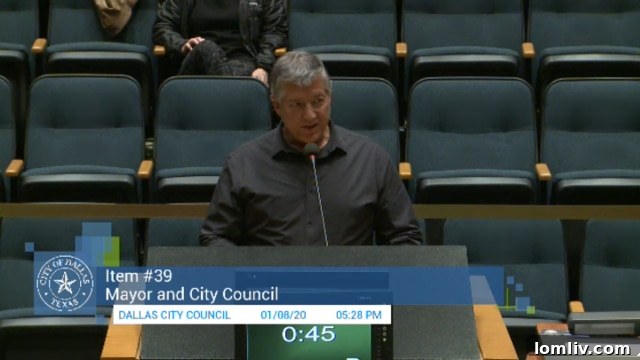
Adding another layer of complexity, it was noted that the Ball Field holds a “historic designation.” However, in Dallas, the significance of such designations often appears to be overshadowed by development ambitions. A particularly astute observation came from one speaker, who suggested that a majority of the individuals supporting the proposal as-is either possessed a vested financial interest or were paid to be present as lobbyists. This assertion stood in stark contrast to the opposition, which was comprised almost exclusively of local residents, highlighting a potential imbalance in representation and influence within the democratic process.
Arguments For The Plan: Perspectives of Supporters
As observed, a significant proportion of those advocating for the Reverchon Park plan had a specific, often self-serving, interest in its approval. This group included numerous athletic organizations, ranging from amateur rugby leagues to representatives from North Dallas High School and current baseball users of the field. North Dallas High School, being landlocked and devoid of its own playing fields, relies on Reverchon as its de facto home ground. However, the field has reportedly become unplayable, forcing the school’s teams to seek alternative venues. Consequently, the students and administration of North Dallas High School emerged as key stakeholders, strongly aligning with the plan’s proponents, viewing the renovation as essential for their athletic programs.
Current and former members of the Parks Board expressed considerable indignation toward the council—the very body that appointed them—for daring to reconsider the project. They appeared aghast at being second-guessed. Calvert Collins-Bratton (D13), the current President of the Park and Recreation Board, went so far as to accuse the opposition of disseminating falsehoods. However, the only “lie” that appeared evident was perhaps a misunderstanding or a lack of sophistication in explaining the intricate mechanics of a public-private partnership. The underlying sentiment from the opposition was often a fundamental desire not to be required to purchase a ticket simply to visit or enjoy a public park, a reasonable expectation for public spaces.
The project also garnered support from various “Friends of” groups, including the Friends of Katy Trail and the Friends of Reverchon Park. However, a significant question lingered: where were the resident groups who owned property in the immediate vicinity? And crucially, where was the proactive outreach to them, the individuals most directly impacted by the proposed changes?
One individual drew a comparison, noting that within a minute on the bustling Katy Trail, 25 people might pass by, whereas during a walk around Reverchon Park (outside its high season), perhaps only 25 people could be found in the entire park. This comparison, however, conflates distinct types of park utilization. A 3,500-seat venue is unlikely to significantly increase casual use on non-event days. Furthermore, the utilization map for a traditional park, where people run, play, and picnic, is fundamentally different from that of a long, straight exercise path like the Katy Trail. Conflating these two distinct use cases represents a wishfully poor mathematical and logical argument.
An engaging presentation was delivered by the representative for Arlington Hall and Oak Lawn Park (formerly Lee Park), who eloquently spoke about the successful partnership that transformed what was once a dilapidated park and facility. While acknowledging the success of their model, it was pointed out that no one suggested bulldozing Arlington Hall and rebuilding it five times larger to achieve that success. The core issue at Reverchon was not merely renovation, but a massive scale increase for commercial purposes.
An appropriate level of emotional appeal was generated on behalf of the children, or “kiddies.” One North Texas High School speaker lamented that even if construction began immediately, current freshmen would not be able to utilize the field until they reached their junior year. This heartfelt plea, however, overlooked a critical point: if the field was primarily intended for DISD students, why wasn’t the school district contributing more substantially to the ball field’s maintenance and refurbishment? The notion that serving children somehow necessitates the creation of a large-scale, for-profit commercial venue was a recurring argument, yet it remained as misguided as it was frequently repeated.
The Unanswered Question: Why 3,500 Seats?
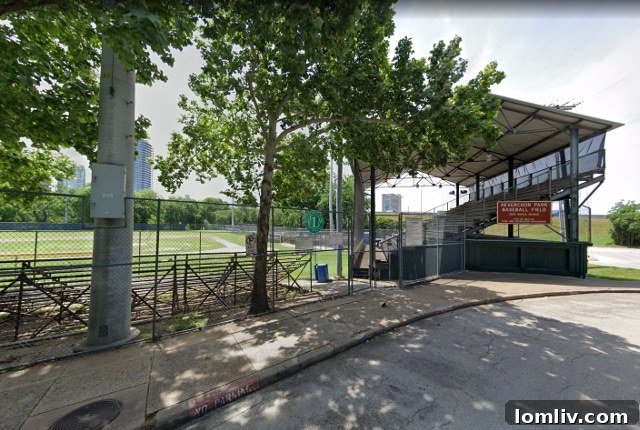
Perhaps the most significant and glaring omission in the proponents’ arguments, and a critical vulnerability in the project’s overall logic, was the unanswered question: why 3,500 seats? This capacity represents a staggering five-fold increase in size compared to the original facility and an additional 1,100 seats more than even a previous proposal from just a year prior. No one adequately addressed this fundamental question. As one astute proponent inadvertently highlighted, “There aren’t 3,500 people coming to see me play baseball,” thereby underlining the incongruity of such a large venue purely for local sports. This brings us back to the core query: what is the compelling business case that necessitates such an enormous capacity, and is it truly the only viable path forward for the park?
The many baseball jersey-clad supporters consistently emphasized the sporting aspect of the project, while conspicuously downplaying the significant potential for concerts and other large-scale events, which are explicitly stated as an option within the city’s Request for Proposal (RFP). If concerts were indeed so “inconsequential,” as suggested, why was there no offer to remove this option from the proposal? Why was there not even a willingness to limit the hours of operation for such events, which would directly impact noise and traffic for nearby residents?
Similarly, the supporters consistently failed to provide concrete solutions for the projected increase in urban infrastructure demands. They did not come forward and articulate, “Here’s precisely how we plan to manage the five-fold increase in parking needs. Here’s our comprehensive strategy for handling five times the current traffic volume.” These concerns were not left unanswered due to a fear of “spoilers” or tactical secrecy; rather, it strongly suggests that the proponents simply do not have adequate solutions or, perhaps, have not thoroughly considered the magnitude of these impacts. This lack of detailed planning further fueled skepticism about the project’s readiness and its potential strain on the surrounding community.
Ultimately, the public’s fervent desire for greater input into what was perceived as an unnecessarily secretive process failed to sway the council. This outcome was particularly surprising given Council Member Blewett’s established practice of holding numerous community meetings for zoning cases within his own district to gather crucial input. Yet, in this instance, he actively championed a deal situated in Medrano’s district, seemingly disregarding Medrano’s earnest pleas for community meetings and aggressively pushing the project through. This raises a troubling question: are these actions a precursor to a similar approach by Blewett in other future developments?
Blewett’s strategic addition of a few “sprinkles” – the amendments and sweeteners – to the original December deal ultimately convinced four key votes to shift in favor of moving the project forward. The approval was framed as merely “step three in a five-part process,” implying that further opportunities for public input and adjustment would arise. This felt less like a genuine commitment to ongoing engagement and more like a convenient rationalization for the evening’s decisive vote, echoing the problematic sentiment of “We’ll catch you on the flip side.” As experience consistently demonstrates, such promises of future rectification rarely materialize into meaningful change, leaving communities to grapple with the long-term consequences of rushed decisions.

Remember: High-rises, HOAs, and renovation are my primary focus. However, I also deeply appreciate modern and historical architecture, always striving to balance it against the principles of the YIMBY movement. My dedication to quality real estate journalism has been recognized by the National Association of Real Estate Editors, which honored my writing with three Bronze (2016, 2017, 2018) and two Silver (2016, 2017) awards in 2016, 2017, and 2018. If you have a compelling story to share, a perspective to offer, or even a marriage proposal to make, please don’t hesitate to reach out via email at [email protected]. You’re also welcome to look for me on Facebook and Twitter, though finding me there might prove to be a delightful challenge.