
In an unexpected turn of events that has ignited spirited discourse among residents and local officials, Council Members Blackmon and Schultz have chosen to withdraw their endorsement from a pivotal memo addressing urban density and minimum lot size. This decision, following thorough deliberation and extensive discussions with their constituents, underscores the complex and often contentious nature of urban planning and its profound impact on community development.

The Unforeseen Reversal: Council Members Recant on Density Memo
The memo, initially perceived as a significant step towards shaping the city’s future urban landscape, proposed stricter regulations concerning housing density and minimum lot sizes. Its aim was to address growing concerns about urban sprawl, infrastructure strain, and the preservation of neighborhood character. However, the retraction by Council Members Blackmon and Schultz has cast a shadow of uncertainty over these proposed regulations, prompting a cascade of questions and sparking intense debate across the community.
Many residents who had initially championed the stricter regulations now find themselves questioning the council members’ motivations. The sudden shift in stance has led to widespread speculation: some suggest the council members may have succumbed to pressure from influential developers or powerful interest groups, whose financial stakes could be significantly impacted by new limitations. Others, however, offer a more benevolent interpretation, believing that Blackmon and Schultz genuinely listened to the diverse concerns of their constituents, assimilating new information and adjusting their positions to better serve the broader community’s interests.
Beyond the speculation, the practical implications of this retraction are profound. With the withdrawal of two key council members’ support, the future viability of the proposed regulations remains precarious. It is now uncertain whether the memo will garner sufficient backing to even be formally considered by the full council, let alone passed. This development has further divided residents, with some passionately advocating for a revised version of the memo that addresses the concerns leading to the retraction, while others contend that the entire proposal should be abandoned, perhaps paving the way for entirely new approaches to urban development.
The Complex Nature of Urban Planning and Housing Policy
This controversy vividly highlights the inherent complexities of urban planning and the formidable challenges faced by local officials. Balancing the often-conflicting needs and desires of various stakeholders – from long-term residents concerned about neighborhood integrity to developers seeking to meet housing demand, and from environmental advocates to affordability campaigners – is a delicate act. Regulations pertaining to housing density and minimum lot size are not merely bureaucratic details; they are fundamental instruments that profoundly shape the character, livability, and economic vitality of residential areas. These policies dictate everything from green space preservation and traffic flow to infrastructure burden and housing availability.
Proponents of stricter regulations argue forcefully that such measures are indispensable for preserving the unique identity of existing neighborhoods, safeguarding precious green spaces, and preventing overcrowding that can strain public services and diminish quality of life. They envision cities with ample parks, manageable traffic, and a strong sense of community. Conversely, opponents argue with equal conviction that excessively strict regulations stifle much-needed development, severely limit housing options, and exacerbate the already pressing issue of rising housing costs, making cities unaffordable for many working families and young professionals. They emphasize the need for dynamic growth to accommodate expanding populations and foster economic prosperity.
The Daunting Task of Finding a Middle Ground in Urban Development
As this multi-faceted debate continues to unfold, it becomes increasingly clear that forging a consensus and finding a viable middle ground will be an exceptionally daunting task. The council members’ decision to withdraw their support has, without doubt, further complicated an already contentious issue. It injects an additional layer of unpredictability into future discussions on housing density and minimum lot size regulations. The community now waits to see how this pivotal development will influence subsequent policy debates and whether innovative, alternative proposals will emerge to constructively address the legitimate concerns raised by Council Members Blackmon and Schultz, aiming for solutions that can garner broader support.
Diverse Perspectives on Proposed Housing Regulations
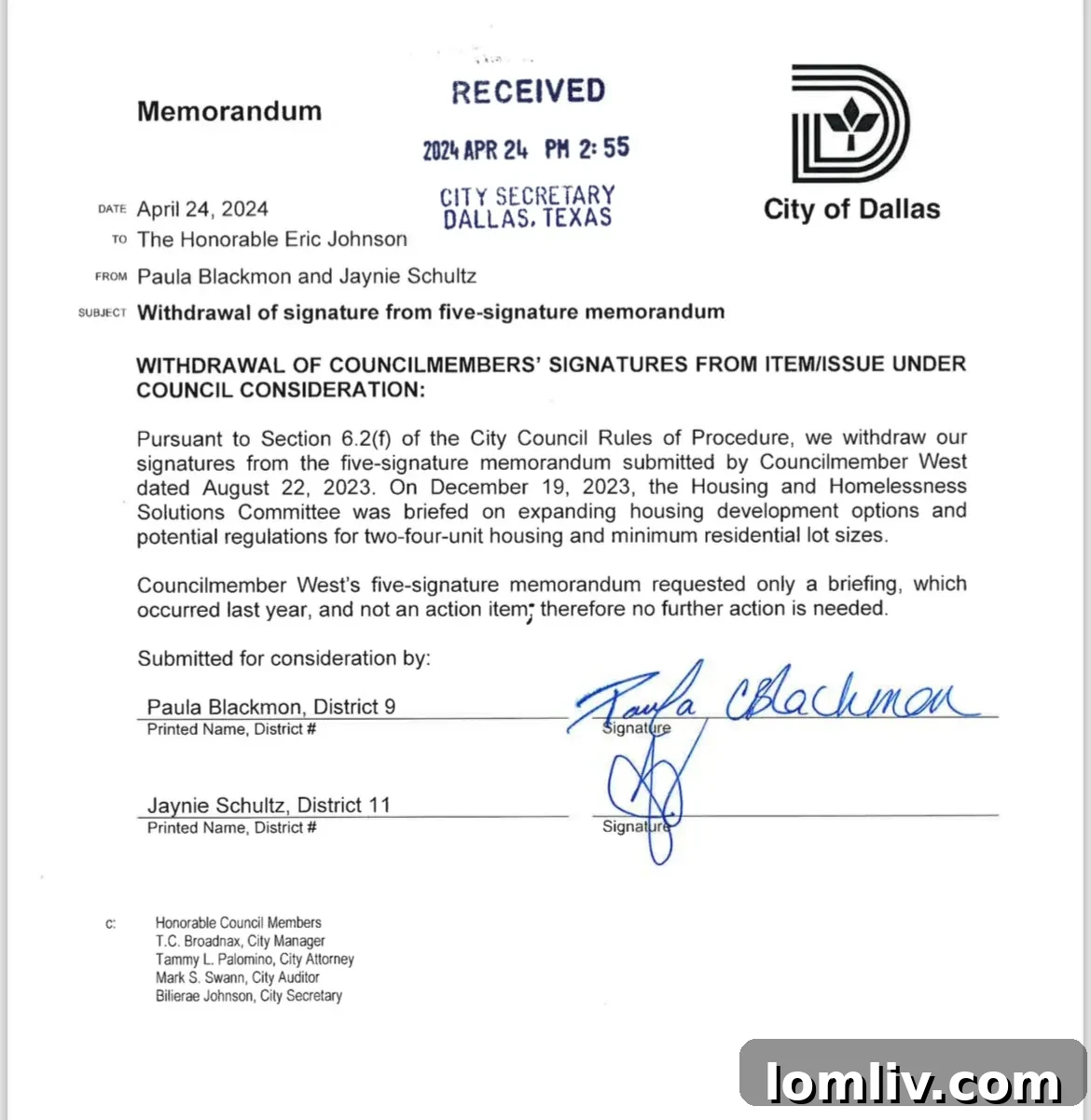
The controversy surrounding the memo on housing density and lot sizes rapidly gained momentum, resonating throughout the community as residents, advocacy groups, and local businesses voiced their opinions through a myriad of public forums, social media channels, and local news outlets. Each stakeholder brought a unique perspective to the table, underscoring the broad implications of such policy changes.
Supporters of the proposed regulations articulated grave concerns regarding the escalating problem of overcrowding within the city. They pointed to undeniable evidence of increased traffic congestion, significant strain on public services such as schools, waste management, and emergency response, and a perceived decline in property values and overall quality of life in densely populated areas. Their core belief was that implementing clear limits on the number of housing units per lot and increasing minimum lot sizes would serve as a vital mechanism to alleviate these pressing issues, thereby safeguarding the distinctive character and stability of established neighborhoods that residents had come to cherish.
Conversely, opponents of the memo raised equally compelling arguments, primarily focusing on the potential negative ramifications for housing affordability and availability. They contended that by restricting the allowable number of units on a single parcel of land and mandating larger lot sizes, the cost of housing would inevitably skyrocket. This, they argued, would make it even more challenging for low-income individuals, young families, and essential workers to secure affordable housing options within the city limits, pushing them further out to the periphery. Developers, a critical voice in this debate, also expressed significant apprehension, asserting that such restrictive regulations would severely impede their capacity to respond effectively to the ever-growing demand for housing, which is crucial for the city’s economic vibrancy and demographic growth.
Stakeholder Engagement and Evolving Solutions in Community Planning
The debate intensified further as a diverse array of stakeholders weighed in, transforming the discussion into a comprehensive community dialogue. Community organizations, dedicated advocacy groups, and even local businesses, recognizing the profound ripple effects of housing policy, actively joined the conversation. Each group presented their distinct perspectives, often accompanied by innovative proposed solutions that sought to reconcile competing interests. Some forward-thinking suggestions included incentivizing the development of affordable housing units through public-private partnerships, implementing more nuanced and flexible zoning regulations to encourage responsible and sustainable development rather than outright restriction, and exploring adaptive reuse strategies for underutilized commercial properties to create new residential spaces.
The Challenges Faced by City Officials in Policy Formation
As tensions mounted and opinions diverged, city officials found themselves navigating an increasingly complex and emotionally charged environment. Their role demanded an intricate balancing act: addressing the legitimate concerns of long-term residents, accommodating the practical needs of developers, and ultimately ensuring the overall well-being and sustainable growth of the entire community. To facilitate this, a series of public hearings were meticulously organized. These forums served as vital platforms, allowing residents from all walks of life to voice their concerns directly, present their arguments, and offer potential compromises, fostering a sense of participation in the democratic process.
The Indispensable Importance of Public Input in the Democratic Process
Ultimately, the fate of the controversial memo, and indeed any significant urban development policy, rests on a foundation of democratic principles. City officials are tasked with the critical responsibility of carefully considering all viewpoints, meticulously evaluating the evidence presented, and weighing the potential long-term benefits against the drawbacks of any proposed regulations. Their decisions must take into account the multifaceted impact on housing affordability, the preservation of cherished neighborhood character, and the overarching quality of life for all city inhabitants. Council Members Blackmon and Schultz’s change of heart, while initially perplexing to many, serves as a powerful testament to the transformative power of robust public input.
Public input is, without question, a vital cornerstone of the decision-making process within any governing body. It acts as an indispensable mechanism, ensuring that the diverse voices, concerns, and aspirations of the public are not only heard but actively considered when crafting and enacting policies that profoundly affect the community. The unfolding saga around the density and lot size memo stands as a compelling reminder of why such democratic engagement is so critically important.
When elected officials are entrusted with the responsibility of making decisions on behalf of their constituents, their mandate includes diligently gathering as much information and input as possible. This necessitates proactively seeking out the opinions and specific concerns of the public through a variety of accessible avenues, including but not limited to public hearings, well-advertised town hall meetings, comprehensive surveys, and open forums that encourage dialogue. By actively and genuinely soliciting public input, council members can cultivate a far more nuanced and comprehensive understanding of the intricate issues at hand, enabling them to make more informed, equitable, and ultimately more effective decisions.
Furthermore, robust public input is instrumental in fostering both transparency and accountability within the decision-making framework. When elected officials consistently engage with the public, actively listening and integrating their perspectives, it cultivates a profound sense of trust and confidence in the democratic system itself. This collaborative approach empowers the public to hold their representatives accountable for their actions and decisions, ensuring that policies are crafted and implemented in the absolute best interest of the entire community, rather than specific factions or special interests.
The decision by Council Members Blackmon and Schultz to withdraw their names from the memo is a clear and unequivocal demonstration of the significant weight they place on public input. By taking this step, they unequivocally signal their willingness to listen attentively to their constituents, to critically reconsider initial positions, and to adapt based on new insights. This courageous act underscores a deep-seated commitment to truly representing the diverse interests of the community and engaging in a meaningful, ongoing dialogue that is essential for responsive governance.
In essence, public input is not merely an optional courtesy; it is an indispensable component of the democratic decision-making process. It facilitates a more comprehensive understanding of complex issues, promotes transparency and accountability, and crucially ensures that decisions are made with the holistic well-being of the community at their core. Elected officials bear a fundamental responsibility to actively seek public input and to genuinely consider the opinions and concerns of those they serve. By embracing this imperative, they can make more informed and resilient decisions, thereby effectively representing the collective interests of the community they have sworn to serve.
Pathways to Sustainable Urban Growth: Exploring Innovative Solutions
In light of the ongoing uncertainty surrounding density and minimum lot size regulations, it is imperative to explore and implement innovative, adaptable solutions that can address the multifaceted challenges of urban development while fostering community harmony. One promising approach gaining traction in contemporary urban planning is the implementation of a nuanced tiered zoning system. Such a system would categorize neighborhoods based on their existing density levels and established character, thereby allowing for distinct and appropriate regulatory frameworks for each category.
For instance, neighborhoods characterized by low density, expansive green spaces, and larger lot sizes could be thoughtfully designated as “preservation zones.” Within these zones, stricter regulations would be enacted to meticulously maintain the existing character, architectural integrity, and spaciousness that residents value. Conversely, areas exhibiting higher existing density or identified as prime locations for future growth could be classified as “growth zones.” Here, more flexible and progressive regulations would be permitted and even encouraged, fostering responsible development and expanding housing options to meet evolving demographic needs. This tiered approach offers a sophisticated framework that acknowledges the unique characteristics and diverse needs of different neighborhoods, allowing for a more targeted and effective strategy in balancing growth with preservation.
Beyond tiered zoning, a critical consideration for the future of housing density and lot size regulations must be the integral role of affordable housing. As urban centers continue their inevitable expansion and housing prices escalate, it becomes not just a social imperative but an economic necessity to ensure that accessible and affordable housing options are readily available for all segments of the population. One potent strategy to achieve this is through the implementation of inclusionary zoning policies. These policies would mandate that developers, as part of new residential projects, allocate a specific percentage of units as affordable housing. This not only contributes to a more diverse and inclusive community fabric but also provides crucial opportunities for individuals and families who might otherwise be priced out of the burgeoning housing market, thus fostering socio-economic equity.
Furthermore, it is essential to comprehensively consider the profound benefits of mixed-use developments as an effective response to the challenges posed by density and minimum lot size regulations. By thoughtfully integrating residential, commercial, retail, and recreational spaces within a single, cohesive development, mixed-use projects have the transformative potential to create vibrant, walkable, and highly functional communities. These integrated developments can significantly alleviate some of the pressures associated with increased residential density by providing essential amenities and services within close proximity, thereby reducing the reliance on long commutes and promoting active transportation. Additionally, mixed-use developments contribute substantially to a more sustainable and environmentally friendly urban environment, minimizing carbon footprints and enhancing overall urban resilience.
In conclusion, while the precise trajectory of density and minimum lot size regulations remains an area of ongoing debate, a clear path forward involves embracing strategic, adaptive, and community-centric approaches. By strategically implementing tiered zoning systems, prioritizing the creation and preservation of affordable housing through progressive policies like inclusionary zoning, and actively exploring the extensive benefits of innovative mixed-use developments, cities can effectively navigate the delicate balance between necessary urban growth and vital neighborhood preservation. This integrated approach ensures that the needs of all residents are met, fostering resilient, equitable, and thriving urban environments for generations to come.