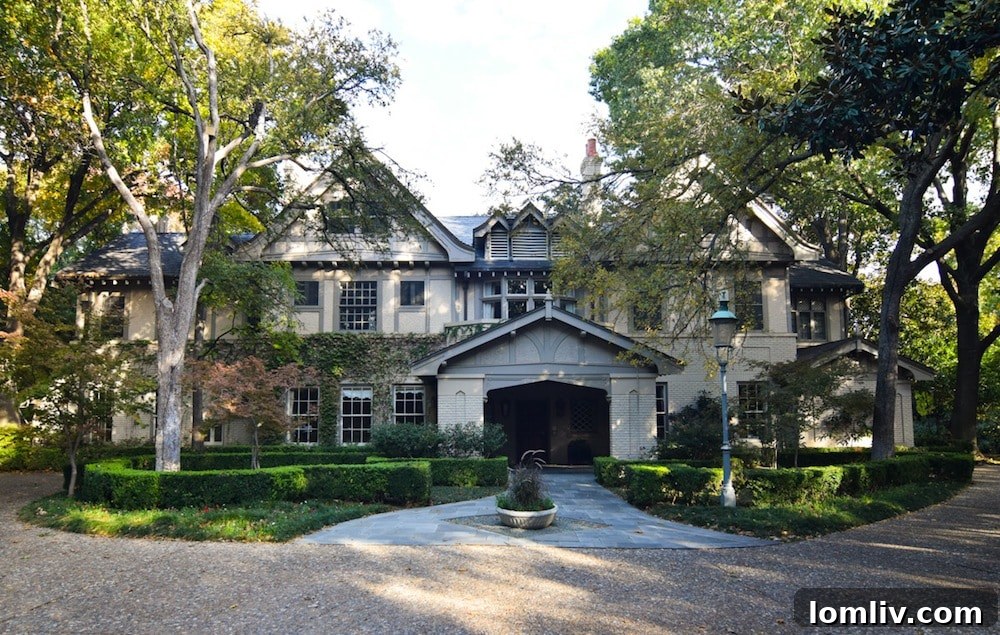
Demolition of Dallas’s Historic Trammell Crow Estate Stirs Controversy
A wave of dismay has swept through the Dallas community and preservation circles following the announcement that the venerable Trammell Crow estate, a cornerstone of Highland Park’s architectural heritage, is slated for demolition. This majestic property, steeped in over a century of history and once home to the legendary real estate magnate Trammell Crow, was acquired just last year by billionaire Andy Beal. The news of its impending destruction has ignited a passionate debate about the delicate balance between private property rights, rapid development, and the invaluable imperative of historic preservation in one of Texas’s most prestigious neighborhoods.
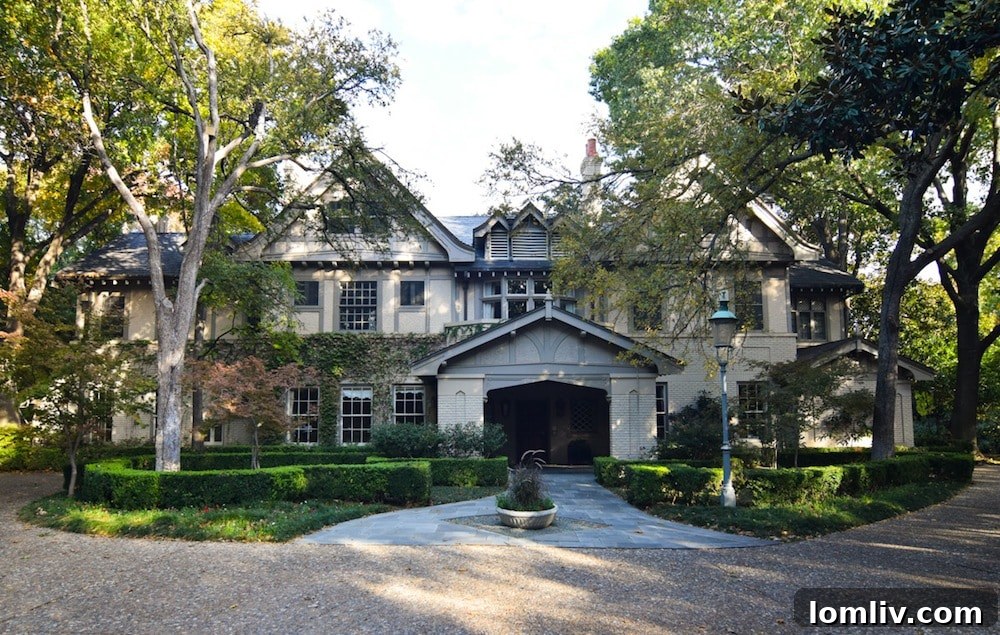
A Legacy Under Threat: The Trammell Crow Estate’s Storied Past
The Trammell Crow estate, situated proudly at 4500 Preston Road, is far more than just a large house; it is a profound testament to Dallas’s rich history and architectural evolution. Originally constructed in 1912, this splendid residence was designed by the esteemed architect C.D. Hill for its first owner, Edgar Flippen, a figure whose name is still honored through Highland Park’s picturesque Flippen Park. Hill’s architectural prowess is evident in the home’s timeless design, a reflection of the elegance and craftsmanship prevalent in the early 20th century.
For over five decades, the estate served as the cherished family home of Trammell Crow, one of the most influential real estate developers and philanthropists in American history. Crow’s vision shaped much of modern Dallas, and his family residence stood as a quiet symbol of his monumental impact on the city’s landscape and economy. Living within its walls, the Crow family undoubtedly created countless memories, anchoring the property not just to the land but to the very fabric of Dallas’s social and economic narrative. The home itself, therefore, represents a unique fusion of architectural significance and profound human history.
The Billionaire’s Acquisition: Andy Beal’s Real Estate Moves
The news of the estate’s demolition comes less than a year after its acquisition by Andy Beal, a Dallas-based billionaire known for his ventures in banking and investments. Beal’s purchase of the Crow estate was part of a significant real estate spending spree, which also included the highly publicized acquisition of Walnut Place, also known as the Crespi Hicks estate. The simultaneous acquisition of two of Dallas’s most iconic properties by a single individual underscored the dynamic nature of the ultra-luxury real estate market in the region.
While Walnut Place, an even larger and perhaps more globally recognized estate, has recently been re-listed by Allie Beth Allman, the Trammell Crow estate faces a starkly different fate. This contrast highlights a growing concern among preservationists: that even the most historically significant properties are vulnerable to demolition when private ownership prioritizes redevelopment over heritage. The decision to raze such a landmark challenges the community’s understanding of what constitutes progress and what sacrifices are made in its pursuit.
Shock and Disbelief: Community Reaction to the Demolition
The news of the demolition, surprisingly, did not come through official channels or a formal announcement. Instead, it surfaced through a less conventional medium: an advertisement for a pre-demolition sale of interior fixtures posted on a local Highland Park garage sale group. This informal revelation immediately sent shockwaves through the community, turning what would typically be a local event into a focal point of widespread concern and disappointment.
Many residents and architectural enthusiasts expressed profound sadness and even anger at the prospect of losing such an irreplaceable piece of Highland Park’s legacy. The Trammell Crow estate was not merely a house; it was a symbol of an era, a reflection of the grand architectural traditions that define the character of Highland Park. The unexpected nature of the announcement only amplified the sense of loss and the feeling that something precious was being quietly taken away.
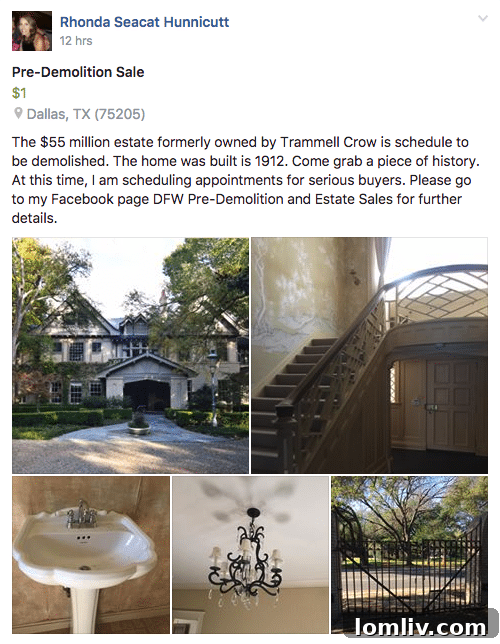
The Pre-Demolition Sale: Salvaging History, Piece by Piece
With the demolition confirmed, attention has now turned to the pre-demolition sale, an opportunity for bargain hunters and preservation enthusiasts alike to acquire pieces of this historic dwelling. While the house itself cannot be saved, efforts are being made to salvage some of its unique architectural elements and high-end fixtures. Candy, who spoke with the estate sale operator, revealed fascinating details about what’s available and what elements hold particular sentimental and historical value.
Among the most remarkable items being salvaged are unique architectural components, including elegant paneling that originally came from a castle – a testament to the home’s exquisite and often international flair. Additionally, two robust, old bank vault doors, likely used for secure storage within the residence, are up for grabs, along with a distinctive office desk that was built directly into the wall. These items are not just fixtures; they are fragments of history, each telling a story of the luxurious lifestyle and meticulous craftsmanship that defined the estate.
Beyond these unique treasures, the sale also presents a chance to acquire high-quality appliances and other household elements. Homeowners with a keen eye and a truck can find significant deals on luxury kitchen items, including a substantial Viking range, a premium $15,000 Vent-a-hood, and older but still functional Sub-Zero refrigerators. Kitchen cabinets, pieces of the stone landscaping, and virtually anything else not yet destined for the scrap heap are available, offering a final opportunity for parts of the Trammell Crow estate to find new life in other homes.
It’s heartening to note that at least one member of the Crow family, a daughter of Trammell Crow, is actively involved in ensuring that as much of the architectural structure as possible is preserved and repurposed. Her efforts underscore the deep personal connection the family maintains with the home and their desire to honor its legacy even in its final moments.
Preservation Efforts and Future Considerations
In response to the news, the Park Cities Historic and Preservation Society (PCHPS) has been contacted for comment. Organizations like PCHPS play a critical role in advocating for the protection of historic structures, often working to balance the rights of property owners with the public interest in preserving cultural heritage. While a formal statement has yet to emerge, the incident will undoubtedly fuel ongoing discussions about how best to safeguard Dallas’s irreplaceable architectural treasures from the wrecking ball.
Interestingly, while the structure itself will be demolished, the estate sale operator conveyed that Mr. Beal intends to pay “extra loving attention to preserving the trees and fantastic landscape” surrounding the property. This commitment, if meticulously followed, offers a small glimmer of hope that at least a part of the estate’s natural beauty and mature ecosystem will endure, providing a green foundation for the new estate home that is planned to rise in its place. The preservation of the mature trees, a hallmark of Highland Park’s sylvan charm, is a crucial consideration, as these natural elements contribute significantly to the area’s aesthetic and environmental value.
The Unfolding Landscape of Dallas Real Estate and Heritage
The demolition of the Trammell Crow estate serves as a poignant reminder of the challenges facing historic preservation in rapidly developing urban centers like Dallas. As land values soar and demand for new, custom-built luxury homes increases, historic properties often find themselves at a precarious crossroads. The debate between preserving the past and building for the future is complex, involving legal, economic, and emotional dimensions.
This event prompts a critical reflection on how communities can better protect their heritage without infringing unduly on private property rights. It highlights the need for stronger dialogue between developers, preservationists, and local governments to find innovative solutions that honor history while accommodating growth. The legacy of Trammell Crow will continue to shape Dallas, but the physical embodiment of his family’s home will soon exist only in photographs and memories, a stark reminder that once a historic structure is gone, it is lost forever.
For those interested in seeing the property in its full splendor before its demolition, a video showcasing the estate during its marketing phase by Allie Beth and Pierce Allman provides a valuable glimpse into its magnificent presence: