The allure of urban living, coupled with skyrocketing housing costs, has ignited a global trend: tiny living. From bustling metropolises to charming small towns, people are increasingly embracing the philosophy of “less is more,” opting for smaller, more efficient living spaces. While cities like Austin have enthusiastically adopted this movement, often driven by intense market pressures and a youthful, dynamic population, Dallas has historically shown a more measured approach. The question, then, looms large for the Big D: Can Dallas truly live small?
For years, many have attempted to discover the charming, compact apartments that define micro-living within the Dallas landscape. The truth, however, is that our beloved city has not quite embraced the “living small” trend with the same fervor as its neighbor to the south. Austin, a city renowned for its vibrant culture and rapidly growing tech sector, has seen home prices and rental rates soar to unprecedented heights, inevitably pushing residents towards innovative housing solutions, including significantly smaller dwelling units. This economic reality, combined with a desire among young professionals to live close to the city center, has made tiny living not just a trend, but a necessity for many Austinites.
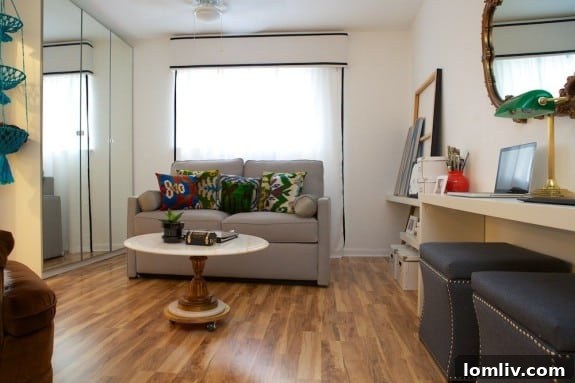
One of the most compelling examples of this micro-living phenomenon in Austin comes to us through the insightful reporting by KEYE TV Austin. They spotlight an extraordinary apartment meticulously renovated by Mary Lee, a visionary in compact design previously featured on Apartment Therapy. Her personal dwelling, a remarkably humble 300 square feet, stands as a testament to how intelligent design can transform a small footprint into a super stylish and eminently livable space, defying the conventional notion that larger spaces inherently equate to better living.
Mary Lee’s apartment is not just a living space; it’s a masterclass in spatial efficiency and aesthetic curation. It serves as a fantastic illustration of a well-designed small living environment that genuinely doesn’t feel cramped or restrictive. Despite its modest dimensions, this thoughtfully arranged home provides ample room for essential daily activities – whether it’s working remotely, relaxing, entertaining a guest, or even enjoying the luxury of a full bathtub, a feature often sacrificed in smaller dwellings. The kitchen, a crucial hub in any home, is remarkably well-equipped, boasting a gas range, a generously sized refrigerator, and an abundance of cleverly integrated storage solutions. While it might lack a built-in dishwasher, this leads to a fundamental question central to the tiny living philosophy: do you truly need a dishwasher when you have capable hands? This mindful approach to amenities highlights a broader re-evaluation of what constitutes a truly essential convenience versus a perceived necessity.
The philosophy underpinning tiny living encourages a profound introspection into one’s personal needs and wants. It prompts individuals to critically assess their possessions and lifestyle choices, asking themselves questions that challenge societal norms of consumerism and spatial indulgence. For instance, do I really need a sprawling dining table that accommodates eight, or would a versatile breakfast bar suffice for my daily meals and occasional guests? Similarly, is a traditional, bulky bed an absolute requirement, or could a chic futon or a multi-functional convertible couch serve both sleeping and lounging needs effectively, freeing up valuable floor space during the day?
These aren’t mere rhetorical questions; they represent a fundamental shift in mindset. Embracing a smaller footprint often means a conscious decision to declutter, to prioritize experiences over possessions, and to live more intentionally. The benefits extend far beyond just having a compact space. Financially, tiny living can unlock significant advantages, including lower rent or mortgage payments, reduced utility bills, and potentially lower property taxes. This financial freedom can translate into greater savings, opportunities for travel, or investment in personal growth and passions. Environmentally, the reduced consumption of resources, smaller energy footprint, and minimized waste align perfectly with sustainable living principles, contributing positively to ecological preservation.
From a lifestyle perspective, the advantages are equally compelling. A smaller home often means less time spent on cleaning and maintenance, freeing up precious hours for hobbies, social activities, or career pursuits. It forces a certain level of organization and minimalism, resulting in a less cluttered environment that can foster peace of mind and reduce stress. Furthermore, tiny homes, especially micro-apartments in urban cores, often place residents in the heart of vibrant communities, offering easy access to amenities, cultural attractions, and public transportation, thereby reducing reliance on personal vehicles and fostering a more walkable, interactive lifestyle.
So, where does Dallas stand in this evolving narrative of urban densification and minimalist living? Historically, Dallas has been characterized by its expansive suburban developments, a strong car culture, and a preference for larger homes, often tied to the availability of more affordable land compared to older, denser East Coast cities. This cultural backdrop has made the widespread adoption of tiny living a slower process. However, the dynamics are shifting. Dallas is experiencing significant demographic changes, attracting a growing influx of young professionals, tech workers, and empty nesters who are increasingly seeking walkable, vibrant urban environments. These groups often prioritize proximity to work, entertainment, and cultural hubs over sprawling square footage.
Areas such as Uptown, Downtown, Deep Ellum, Bishop Arts District, and parts of the Medical District are ripe for micro-living developments. The increasing demand for affordable housing options in prime locations, coupled with a desire for a lower carbon footprint, is beginning to reshape the city’s housing landscape. Developers in Dallas are starting to recognize this burgeoning market, exploring innovative designs for smaller units that maximize space through clever layouts, built-in furniture, and multi-purpose rooms. The challenge lies in balancing the existing urban planning frameworks with the creative solutions required for high-density, small-scale housing.
The future of small living in Dallas is promising, albeit distinct from Austin’s trajectory. Instead of a purely reactive response to extreme housing costs, Dallas’s embrace of tiny living may be driven more by a strategic vision for sustainable urban growth, a desire for diverse housing options, and an evolving lifestyle preference among its residents. As more people seek efficiency, affordability, and a richer urban experience, Dallas is poised to see an increase in innovative housing solutions that cater to this demand. The conversation is no longer about simply fitting into a small space, but about designing a life that is intentional, sustainable, and rich in experiences.
Stay tuned as we continue to explore the burgeoning world of living small in Dallas, bringing you more features, insights, and tours. Our next exciting segment will include an exclusive look inside the unique tiny home on wheels owned by “A Bed Over My Head” blogger, B.A. Norrgard – a true pioneer in the mobile minimalist movement!
(All photos: Mary Lee/Apartment Therapy)