

Purchasing a home is one of the most significant investments you’ll ever make. Unless you’re embarking on a custom build with an unlimited budget, it’s inevitable that the home you acquire will present a few elements you wish were different, or aspects requiring attention and repair. This is precisely where a professional home inspection becomes an indispensable tool. Far more than a mere formality, the home inspection report offers a comprehensive overview of the property’s condition, serving multiple critical purposes for a discerning buyer. It’s a powerful asset for negotiation during the purchase process, an educational resource for understanding your new home’s intricate systems, and a proactive guide for future maintenance and renovation projects.
Understanding how to effectively utilize the insights provided in your home inspection report can save you significant time, money, and stress down the line. It goes beyond identifying immediate problems; it’s about gaining foresight into potential long-term issues and understanding the health of your prospective property. The report acts as a detailed blueprint of the house’s current status, highlighting both its strengths and its weaknesses. By carefully reviewing its contents, you equip yourself with the knowledge needed to make informed decisions, whether that involves requesting repairs from the seller, adjusting your offer, or planning for future home improvements. In essence, a thorough home inspection empowers you to navigate the complexities of homeownership with confidence and clarity.
As we’ve previously explored, the integrity of a house hinges on five major areas: the foundation, plumbing, HVAC (heating, ventilation, and air conditioning), electrical systems, and the roof. These components are not only the most vital for a home’s functionality and safety but are also typically the most expensive to repair or replace. Consequently, these “big five” should always be your primary focus when reviewing a home inspection report. Addressing issues within these critical systems can prevent cascading problems and significantly impact your long-term satisfaction and financial outlay. Following our in-depth look at these core areas, we will continue this multi-part series, delving into more specific details and common findings that can appear in your home inspection report in the coming weeks.
Foundation Cracks: Distinguishing Minor Flaws from Major Concerns
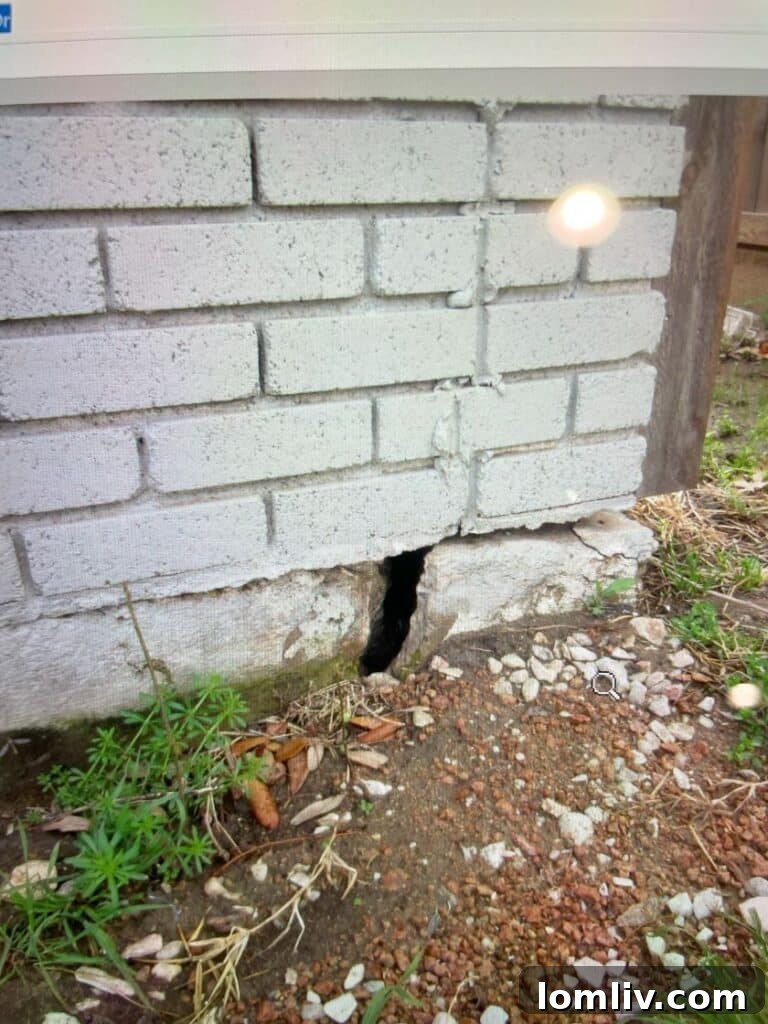
Foundation integrity is paramount to the structural stability of any home. While hairline cracks in concrete are often common, resulting from normal settling or concrete curing, a significant fissure demands immediate and serious attention. The image above illustrates a crack far beyond the realm of “common” – it’s an alarmingly large opening that poses multiple threats. Such a gaping hole not only provides easy access for pests and rodents into the crawlspace or basement but, more critically, allows water—the foundation’s most formidable adversary—to penetrate unimpeded. This unchecked water intrusion can lead to erosion, further structural damage, mold growth, and a compromised moisture barrier, severely undermining the home’s long-term health.
A foundation crack of this magnitude is a definitive red flag on any home inspection report. For a prospective buyer, this isn’t just a minor repair; it signals a potentially significant structural issue that could lead to extensive and costly remediation. If your report highlights such a defect, your immediate course of action should be to seek further evaluation from qualified professionals. This includes consulting with a structural engineer to assess the underlying cause and extent of the damage, as well as obtaining estimates from reputable foundation repair companies. Furthermore, it is crucial to inquire with the seller about any past foundation work, warranties, or disclosures related to the issue. Understanding the history and severity of the problem is essential for informed decision-making and negotiation, ensuring you don’t inherit a hidden structural burden.
Plumbing Predicaments: The Dangers of DIY Delusions
While an accordion might be a charming musical instrument, its place is certainly not beneath your kitchen sink. Yet, as detailed in our previous article highlighting peculiar home inspection finds, inspectors frequently discover these flexible, corrugated pipes installed in drain lines. This common DIY plumbing mistake is problematic for several reasons. The primary issue stems from the folds and ridges inherent in accordion-style pipes, which act as perfect traps for food debris, grease, hair, and other waste. Over time, these obstructions accumulate, leading to persistent clogs, slow drainage, and an unsanitary environment under your sink. Beyond clogs, the irregular inner surface can promote bacterial growth and is significantly more prone to leaks and failure than rigid PVC or ABS piping.
Detecting accordion pipes during a home inspection is a strong indicator that previous plumbing work may have been performed by an unlicensed individual or an amateur. This often suggests a broader pattern of shortcuts or non-standard practices within the home’s plumbing system. Such findings should prompt concern, as other, less visible issues might be lurking, from improper venting and inadequate traps to cross-contamination risks or incorrect pipe sizing. If your inspection report flags this or similar amateur plumbing installations, it is highly advisable to schedule a thorough evaluation by a licensed professional plumber during your option period. A professional can assess the entire plumbing system, identify any other potential hazards or code violations, and provide an accurate estimate for necessary repairs, giving you peace of mind before you take ownership of the property.
HVAC Efficiency: The Hidden Costs of Compromised Ductwork
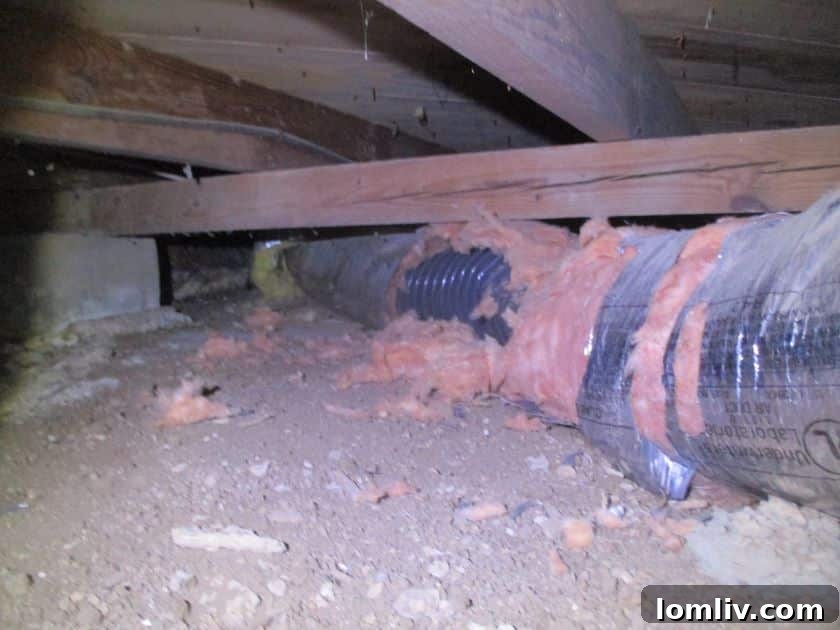
The efficiency of your home’s HVAC system is directly tied to the condition of its ductwork. Flexible ductwork, while convenient for navigating tight spaces and corners during installation, is susceptible to wear and tear that can significantly compromise your heating and cooling efficiency. The image provided illustrates a damaged length of flexible AC ductwork, a common sight in many older homes or those where installation shortcuts were taken. Flexible ducts are often favored due to their lower cost and ease of installation compared to rigid ducting. However, this convenience comes with potential drawbacks. Over time, flexible ducts can bend, kink, sag, and as seen in the photo, physically break down or tear. These deformities restrict airflow, forcing your HVAC system to work harder to maintain desired temperatures, which translates directly into higher energy bills and reduced system lifespan.
Beyond inefficient operation, compromised ductwork can also lead to poor indoor air quality. Tears and gaps allow unconditioned air from attics or crawlspaces, along with dust, allergens, and even pests, to be drawn into your living spaces. If your home inspection report reveals damaged or improperly installed flexible ductwork, it warrants immediate attention. It’s crucial to have an HVAC professional assess the full extent of the damage and provide an estimate for repairs or replacement. Furthermore, the presence of severely degraded ductwork often suggests that the overall HVAC system may have been neglected. This could mean overdue maintenance, dirty coils, low refrigerant levels, or other issues that an HVAC specialist should investigate. Addressing these issues promptly will ensure optimal system performance, improve air quality, and prevent more extensive and costly repairs in the future, ultimately protecting your investment and comfort.
Electrical Mysteries: Ensuring Safety and Proper Functionality
Electrical systems are the backbone of any modern home, providing convenience and comfort. However, they also represent a significant safety concern if not properly installed and maintained. The “electrical mystery” depicted in the Instagram reel, where a GFCI detector indicates proper wiring despite potentially mislabeled breakers, highlights a common but critical issue. While the inspector’s GFCI test confirms that the outlets themselves are correctly wired for ground-fault protection (as indicated by the light), mislabeled circuit breakers can create confusion and pose a safety risk. In an emergency, or during routine maintenance, homeowners rely on accurate breaker labels to quickly identify and shut off power to specific areas. Incorrect labeling can lead to frustration, extended troubleshooting, or, more dangerously, accidentally working on a circuit that is still live, risking electrical shock or fire.
Given that this particular home is new construction, the buyer has a unique opportunity to address such discrepancies directly with the builder before moving in. It is paramount to ensure that all electrical systems are not only correctly wired but also accurately labeled and fully compliant with current electrical codes. The buyer should insist that the builder arrange for a licensed electrician to verify and rectify any mislabeled breakers, along with conducting a comprehensive review of the entire electrical panel and associated circuits. Obtaining official sign-off from a qualified electrician confirms that all installations meet safety standards and are fully functional. This proactive approach ensures the safety of the occupants and prevents future headaches, avoiding potential issues with insurance claims or resale down the line. Beyond mislabeled breakers, home inspectors also look for other critical electrical issues such as outdated wiring (e.g., knob and tube, aluminum wiring), exposed wiring, overloaded circuits, and the absence of necessary GFCI or AFCI protection in appropriate areas, all of which demand professional intervention.
Roof Rafters and Fire Risks: Addressing Water Damage and Safety Hazards
@greenscenehome After it rains, it’s a great time to get up in the attic to check for leaks. These soaking wet rafters are a bad sign that this roof is in poor condition allowing that much water to get through. #askahomeinspector #homeinspection #roofinspection #roofrepair #leakyroof #roofleak #homeinspector #dallasrealestate #fortworthrealestate
♬ original sound – Green Scene Home Inspections – Green Scene Home Inspections
The roof is your home’s primary defense against the elements, and its compromised condition can lead to a cascade of expensive problems. The video clip vividly illustrates a severe roof leak, evidenced by soaking wet rafters in the attic. This level of water intrusion is a definitive sign of significant roof damage, suggesting that the roofing materials have failed to adequately protect the interior. Extensive leaks like this can lead to damaged insulation, compromised structural wood (rafters and sheathing), and the proliferation of mold and mildew, all of which pose health risks and require costly remediation. Beyond the immediate water damage, inspector Tracy also astutely points out another critical safety concern: the water heater flue’s inadequate clearance to combustible materials, coupled with visible charring on the wood. This is an extremely dangerous fire hazard that demands immediate professional attention.
If your home inspection report unveils such extensive damage, particularly with both water infiltration and a fire risk, you’ll need to initiate a multi-pronged approach. Firstly, regarding the roof, you should immediately consult with your Realtor to discuss negotiating with the seller for repair or full replacement, depending on the damage’s scope. It’s crucial to determine if the seller’s home insurance might cover a portion of the repair or replacement costs, as well as any associated attic damage. Secondly, the water heater flue issue requires prompt attention from a licensed plumber. They will need to inspect the flue and ensure it meets current safety codes for clearance from combustible materials, providing an estimate for necessary modifications or replacement. Addressing both these critical issues before closing is paramount to safeguarding your investment and, more importantly, the safety of your future home. A comprehensive roof inspection, often involving both visual checks and an attic assessment, is vital for identifying these hidden dangers that can quickly escalate into major emergencies.
When reviewing issues related to the major systems of a house, especially those hinting at potentially costly repairs, it is always prudent to obtain several estimates from qualified professionals. These estimates provide concrete figures that can be leveraged during negotiations with the seller. Your real estate agent plays an invaluable role here, guiding you on the most effective strategies to use your home inspection report to your advantage, whether that means requesting specific repairs, negotiating a credit at closing, or adjusting the purchase price. Having this detailed information empowers you to make informed decisions about how to proceed with the home purchase, ensuring that you’re not caught off guard by unexpected expenses after the sale.
Beyond the immediate transaction, remember that your home inspection report is a living document. It serves as an invaluable checklist for ongoing home maintenance and for prioritizing future projects and improvements. By understanding the current condition of your home’s various systems, you can proactively plan for necessary upkeep, allocate budgets for future upgrades, and extend the lifespan of your home’s most critical components. Think of it as your personalized home maintenance manual, providing a roadmap for responsible homeownership.
Don’t forget to check back next week as we continue our series on how to effectively utilize your home inspection report. We’ll delve deeper into the fascinating world of minor details and peculiar finds – uncovering everything from uneven walls and unusual fan installations to inventive (and often questionable) DIY dishwasher setups that expert home inspectors encounter on a regular basis. These smaller details, while not always deal-breakers, contribute to the overall picture of a home’s condition and can influence your comfort and long-term expenses.